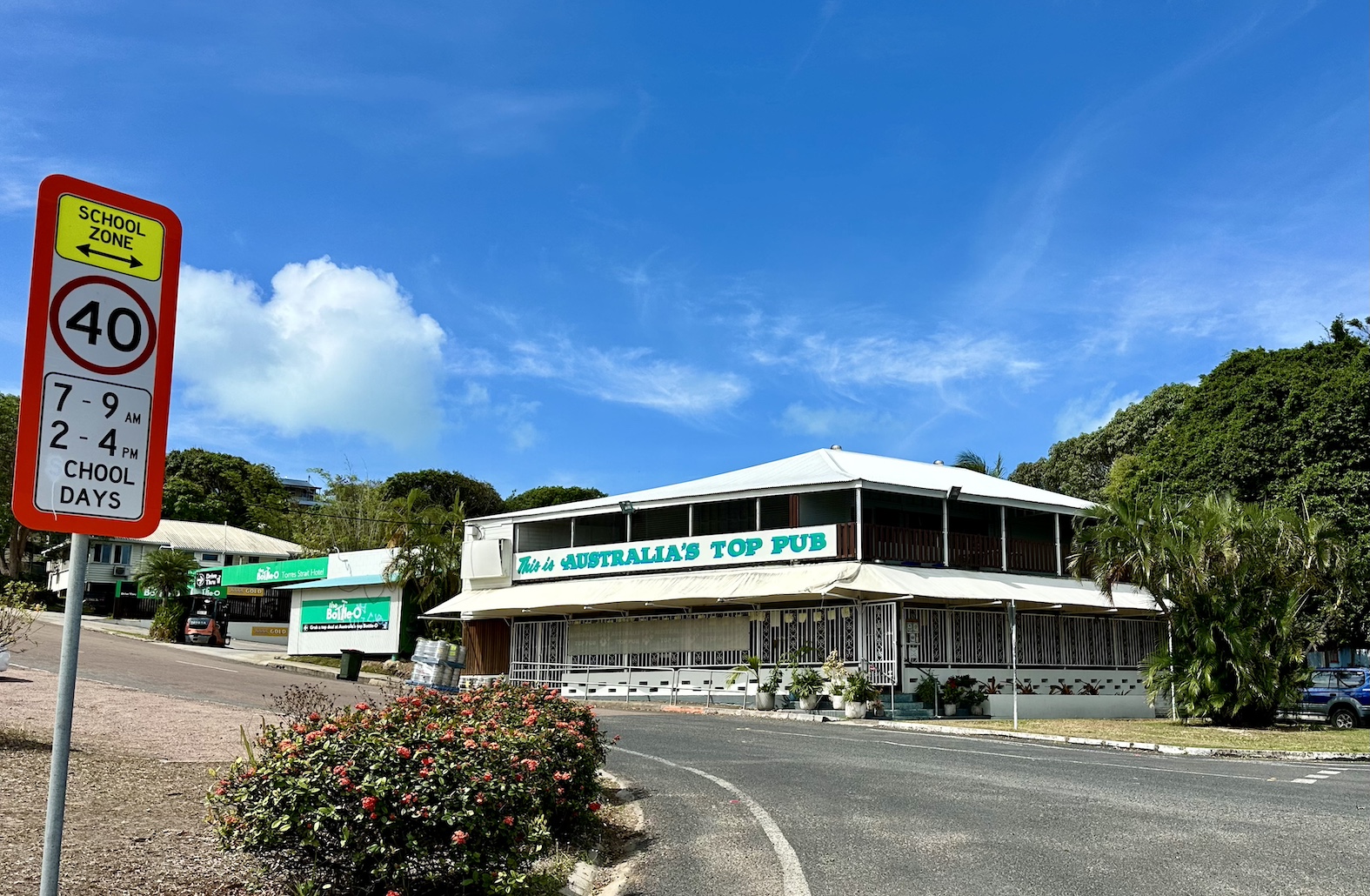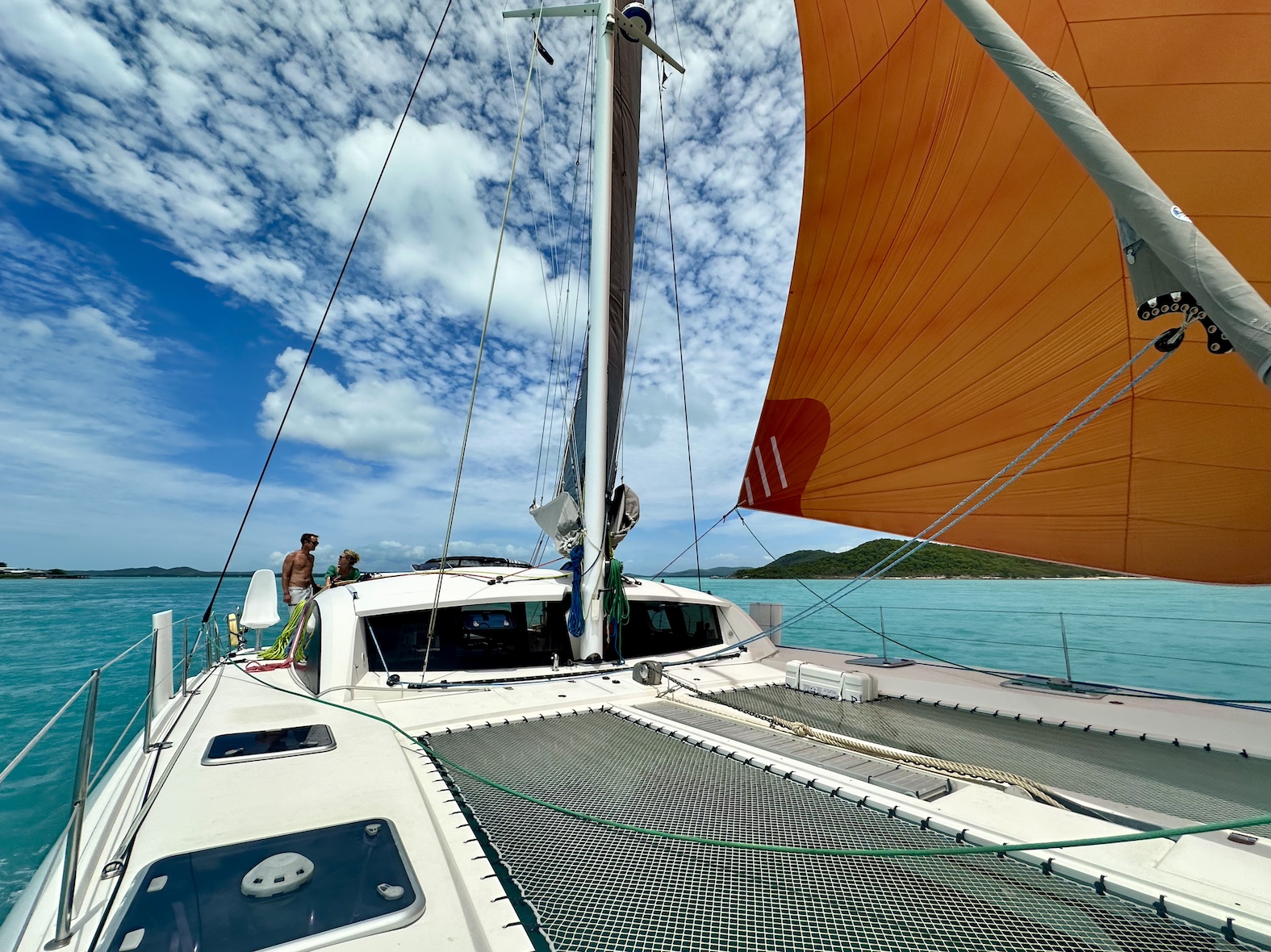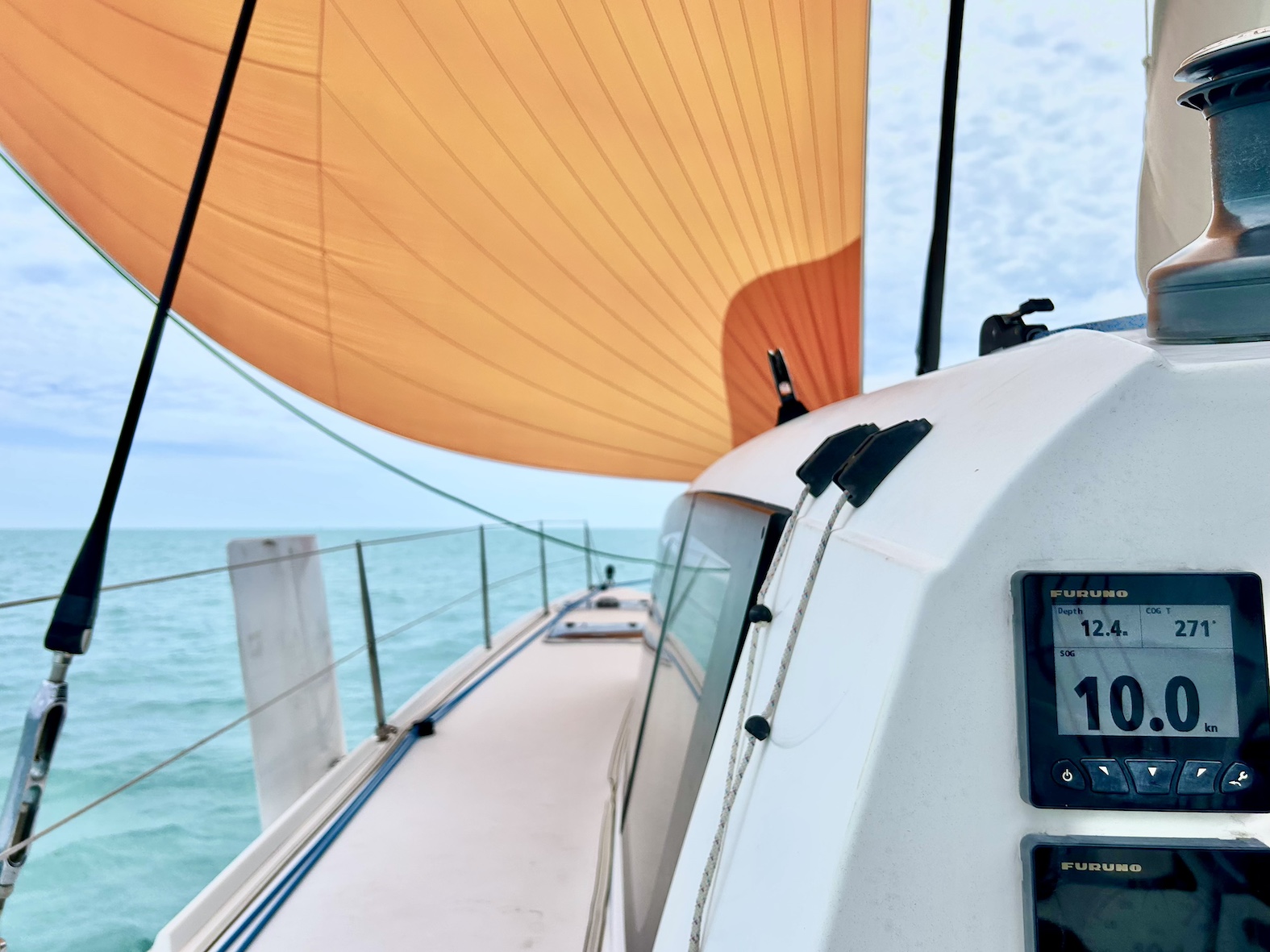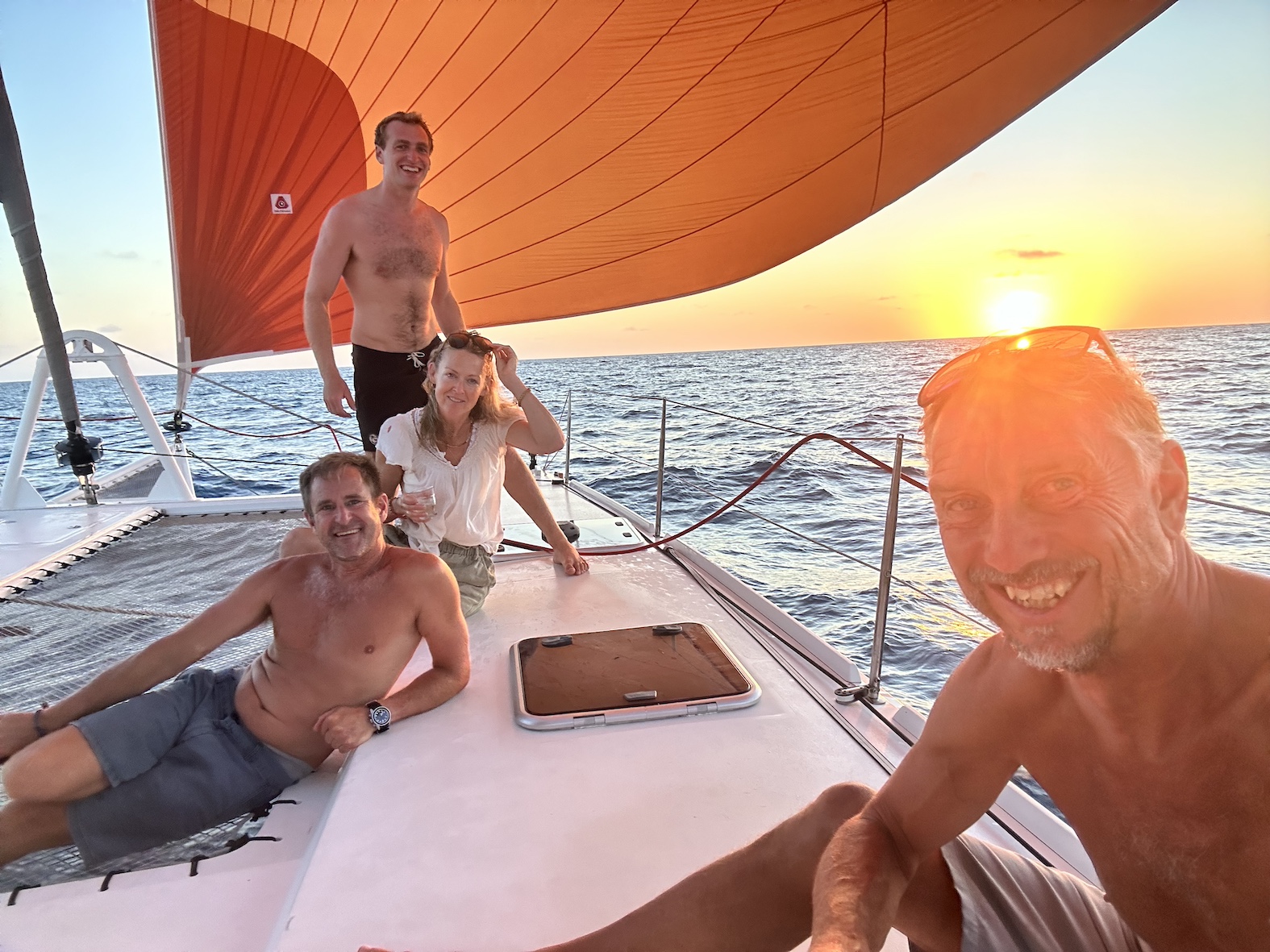
Menu Close

escapade sailing

life on the ocean

Across the Savu Sea.

The treasure map.

I was at home on Guernsey this summer, clearing out a drawer full of memories when I came across a dusty cardboard tube containing an old scroll of paper with yellowed edges.  It is a map dated 1867, marked on the back: “Steel engraving hand coloured.”  It was gift from my friend Kathy a while ago.  She knows that I like an old map or chart, and it was gratefully received at the time. (Before being stuffed in that drawer). 

That was before I had set foot in Indonesia.  The map depicts an obscure corner of that vast archipelago and though it’s beautifully engraved, the images and names meant nothing to me.

But unrolling it now, I recognise the shapes of those islands and can see the connections between their old English names and the modern Indonesian ones.  I have sailed those seas!  The geography comes to life.  Now I can trace the new line that Escapade has drawn across that old map.  We have dodged squalls, calms and volcanic eruptions in those waters, which were also the setting for an epic and unexpected surf trip.  Several of these blog posts have been lived among those blue tinted islands, with a brief foray into the yellow tinted section on our route south.

Thanks Kathy I love it.  In fact it may get an upgrade from the old cardboard tube to a frame on the wall.

Meanwhile, back on Rote..

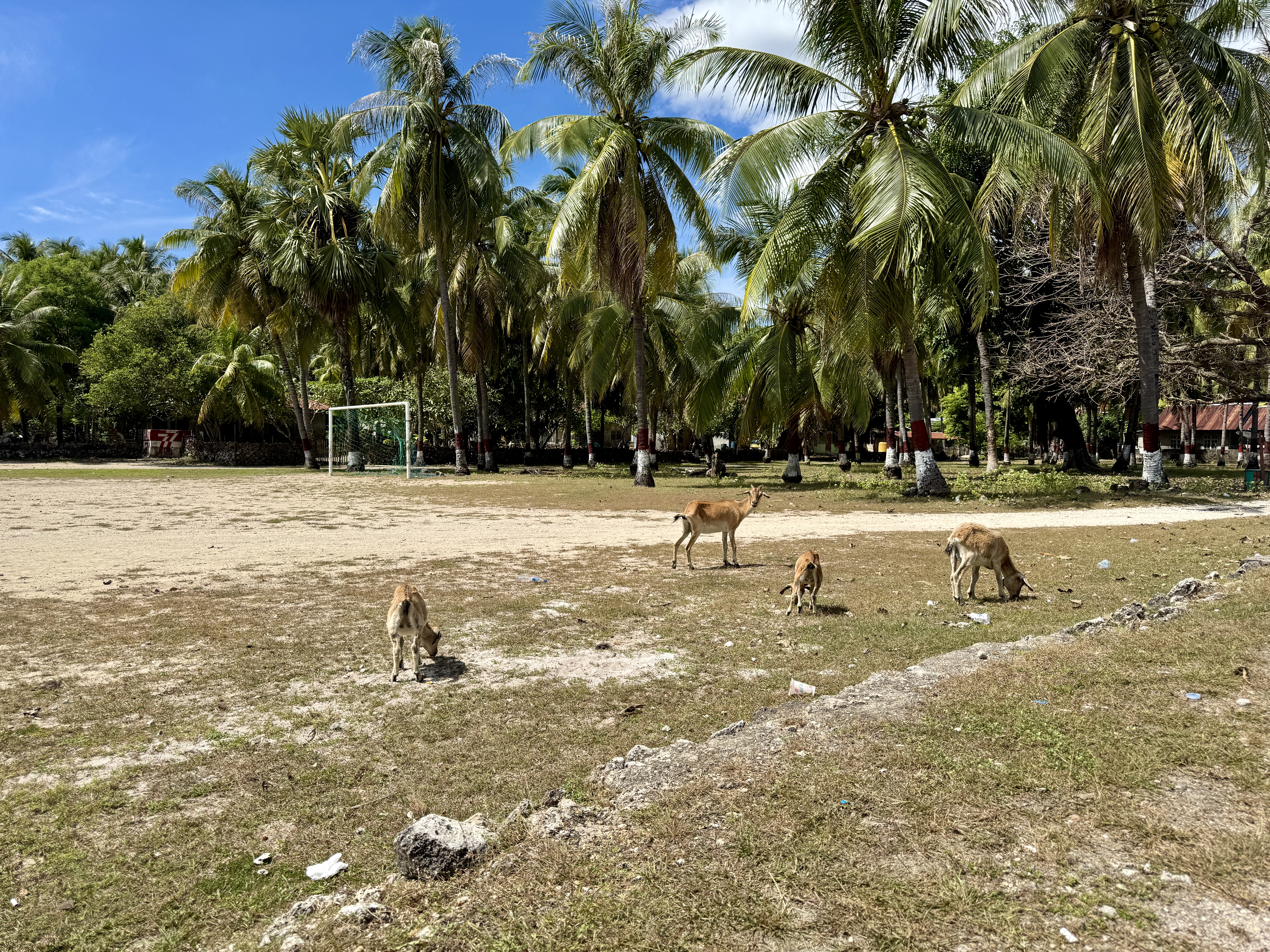
At some point in May I had been commenting on the beautiful goats foraging around Oeseli.  I was exasperated by the never ending saga of the heat-exchanger.

By now we had sent it by Uber 400 miles from Brisbane, then by car to Sydney, hand-carried to Bali, where it was seized by customs, finally liberated weeks later after multiple failed attempts, (A major flood and a full power cut hit Bali airport) a $1000 ‘fine’ was paid (and later refunded) many scooter rides, documents to be signed, cancelled planes, cancelled ferries. I couldn’t take much more of this.  In one particularly carnivorous moment, I declared that if we ever got this damn thing fitted to the engine, I would celebrate by sacrificing one of the goats.

Well my Guernsey summer is over and here we are in the first week of September, back on the boat and hard at work preparing Escapade for her next voyage.  Bryan spent some long days in the engine bays, servicing the Volvos and finally fitting that well travelled heat exchanger.  

We have two new crew members for this trip, Jack and Trent are joining us to make a film about Escapade’s adventures, hoping to find some foilable waves between Rote and Lombok.  But first they got roped into that prep work. 

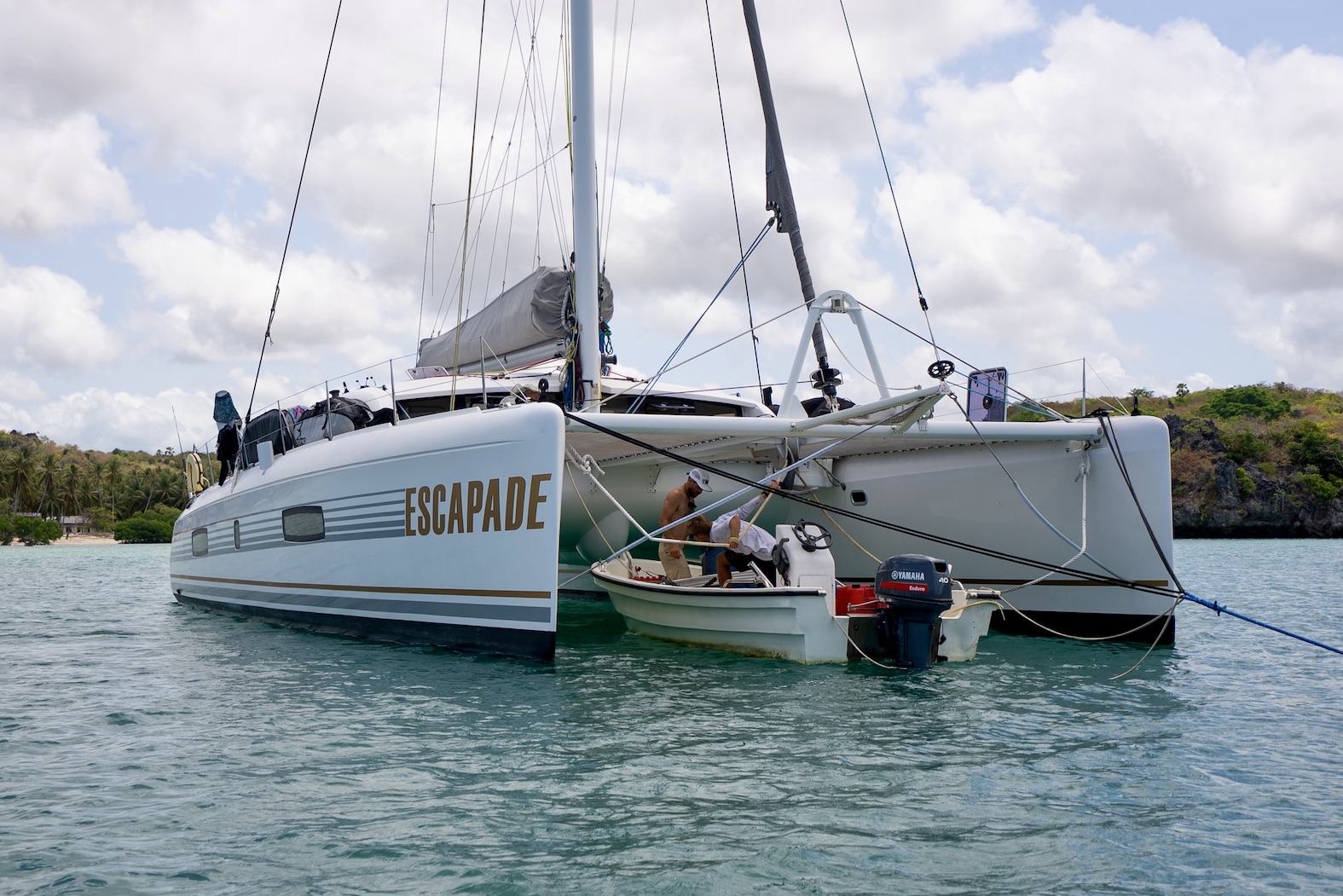
In a land with no fuel docks, we innovated a bulk diesel delivery using half a windsurf mast to carry a 200 litre drum down the beach.  It was manhandled on to a borrowed boat, which was positioned under our trampolines, then fuel was pumped from the drum, through a filter and up into Escapade’s tanks. 

Oeseli is a great place for all that, flat water to work on, a supply of chilled coconuts to keep us all hydrated and a peaceful shady spot to relax, with those friendly goats foraging around.  

After a few busy days: engines running, fuel loaded, laundry done, fresh provisions on board, jib hoisted, all systems functioning.  We were finally ready to go.  So we ate the goat.

The unfortunate animal was skilfully dispatched and cooked over a fire by the boys at Oeseli, served in the local style.  We all shared the feast and toasted our starboard engine.  

Almost immediately we needed a different part for the port engine.  I’ll be patient.

A full moon and big tide allowed us to leave the protected lagoon at Oeseli, out through the narrow pass between the reefs, fish-traps and seaweed farms.  

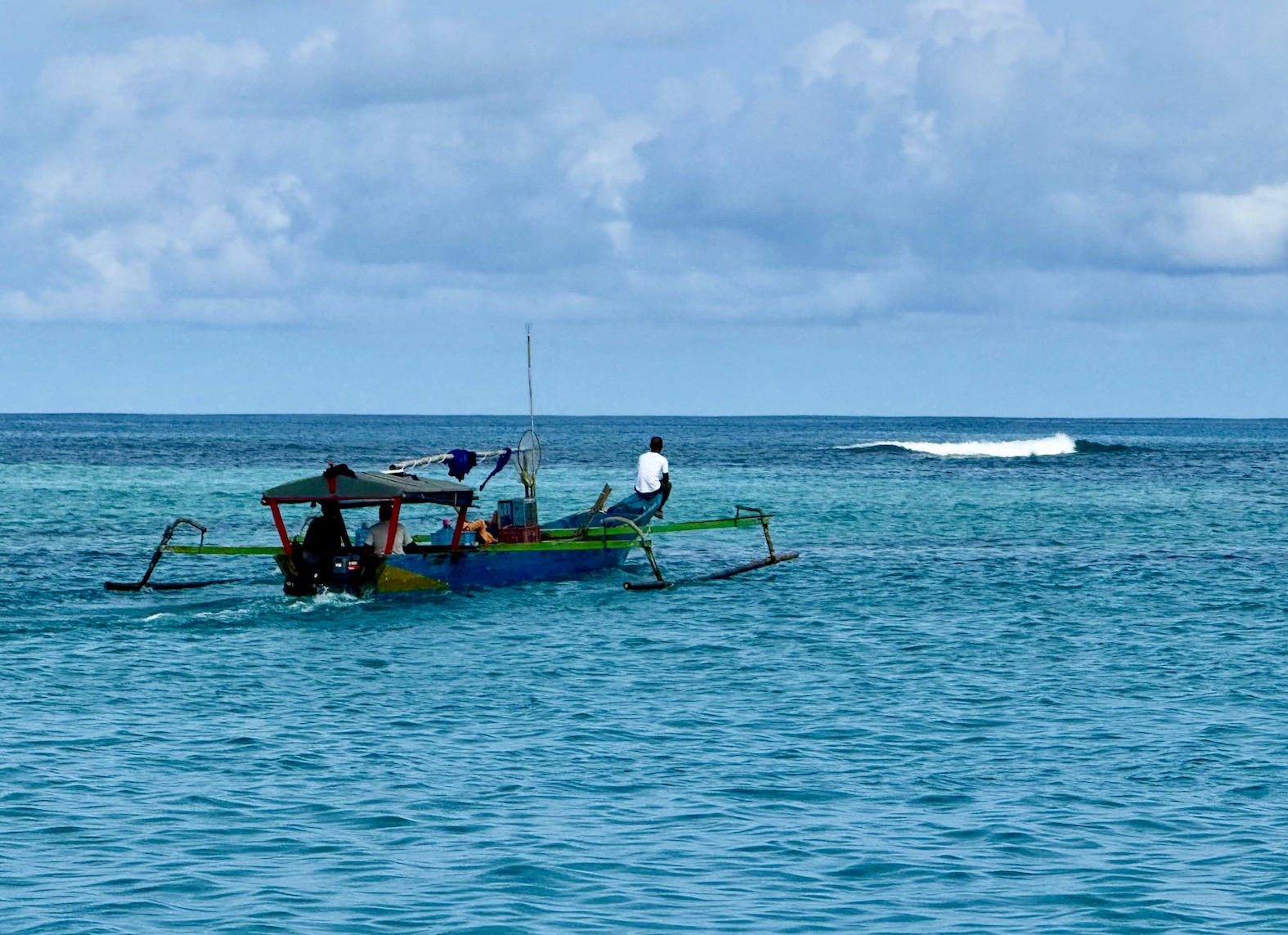
We hoisted a sail and returned to our favourite anchorage at Nembrala.  Home to several of these squid fishermen in this season.

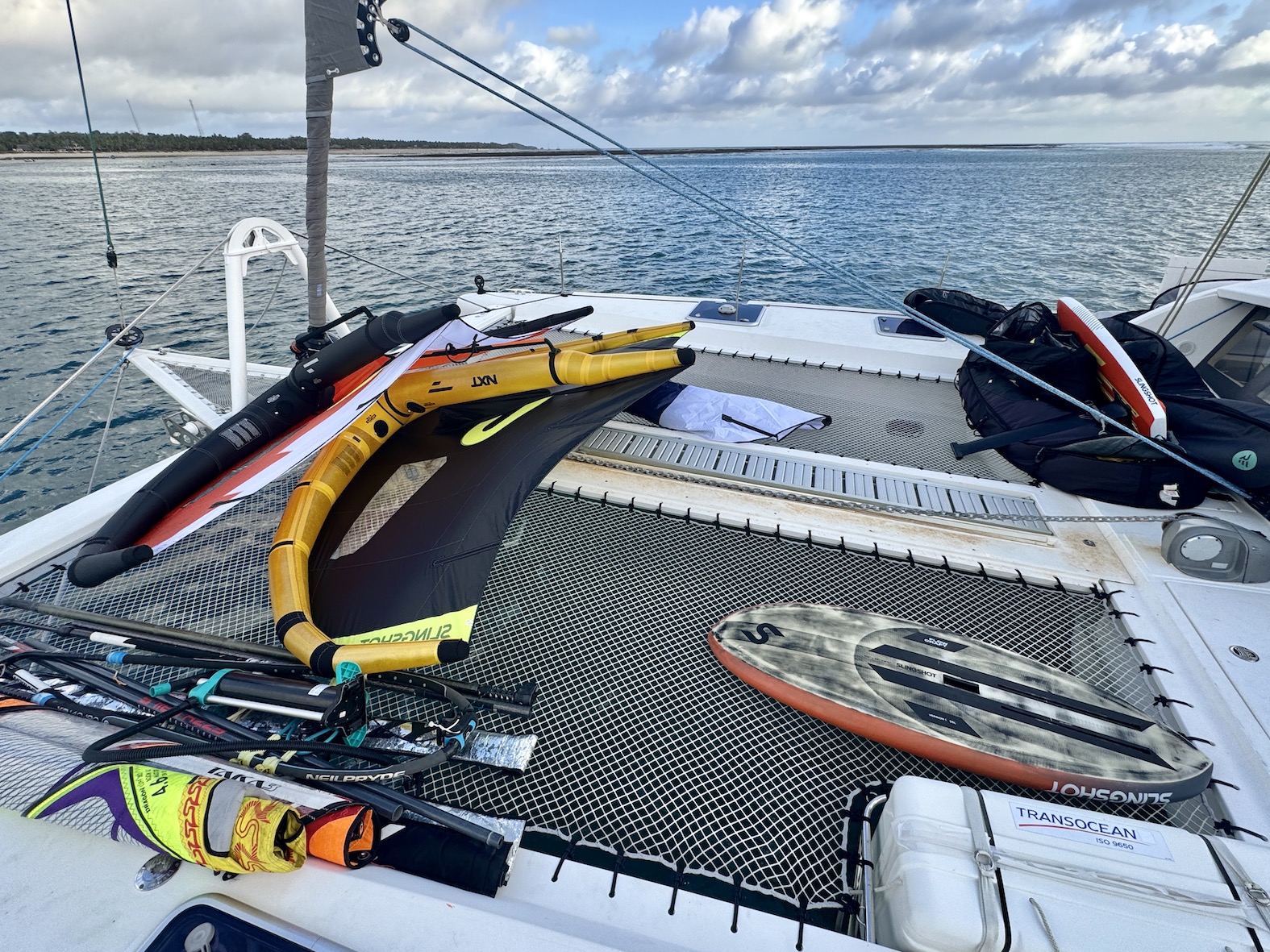
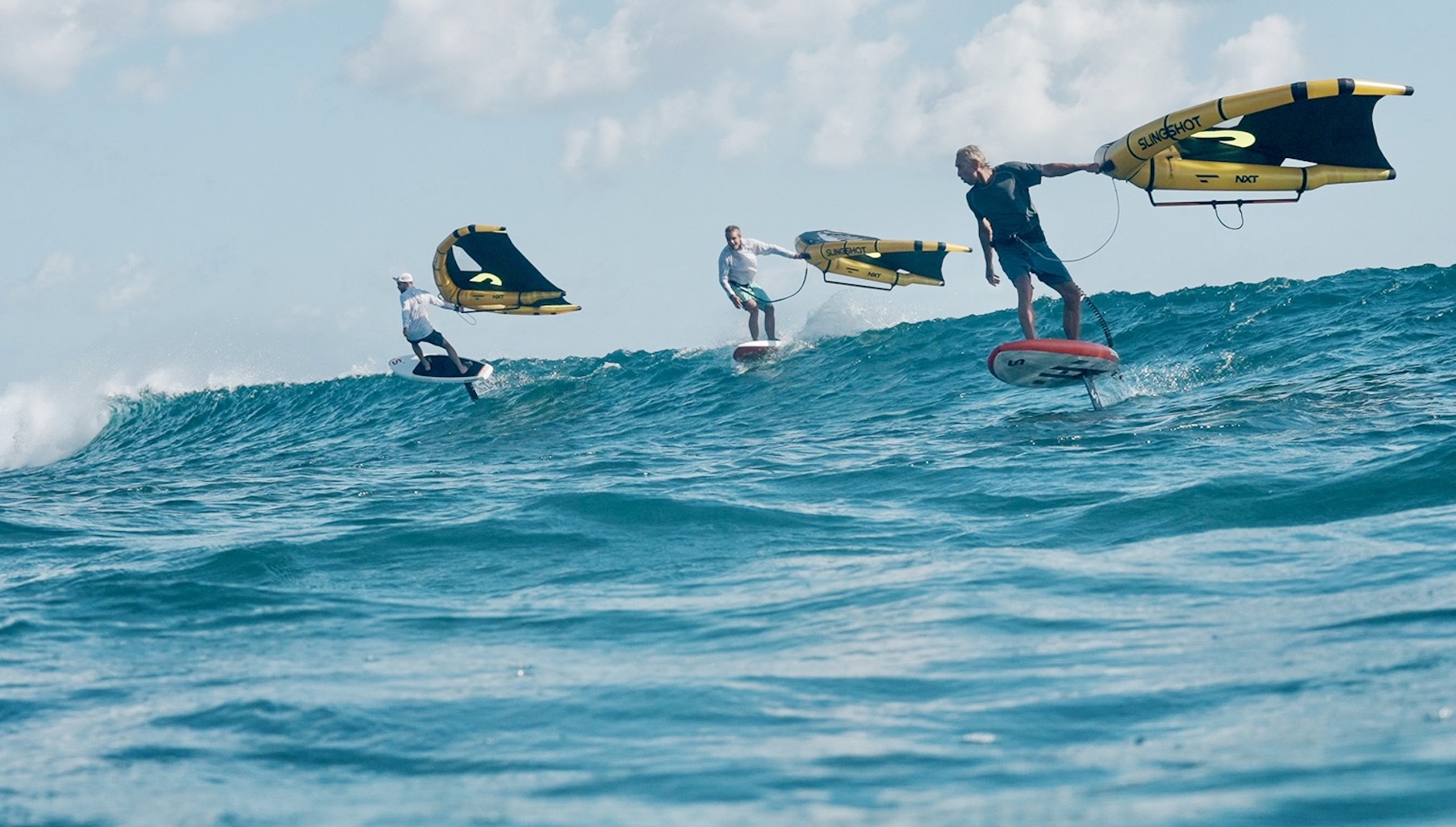
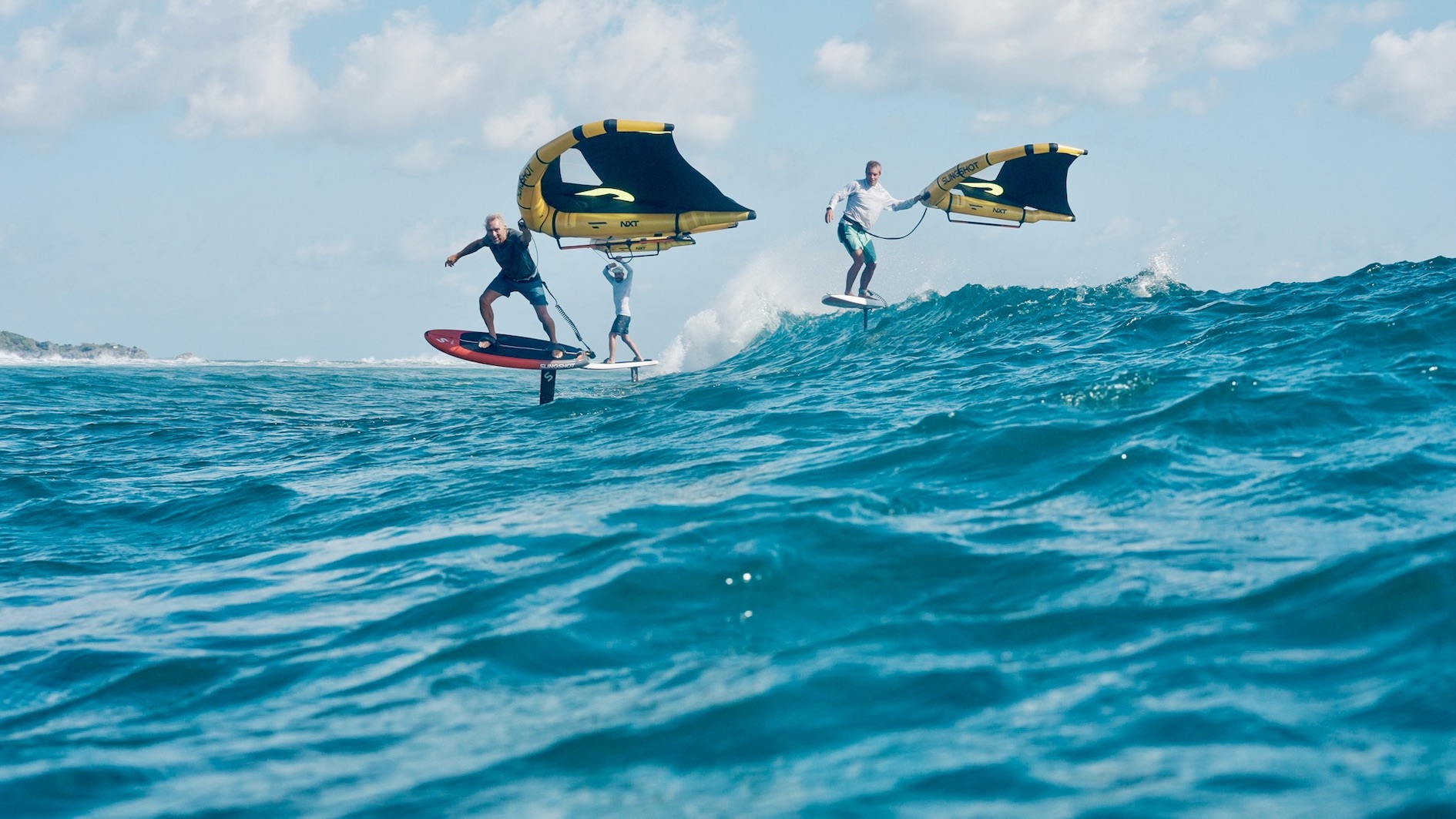
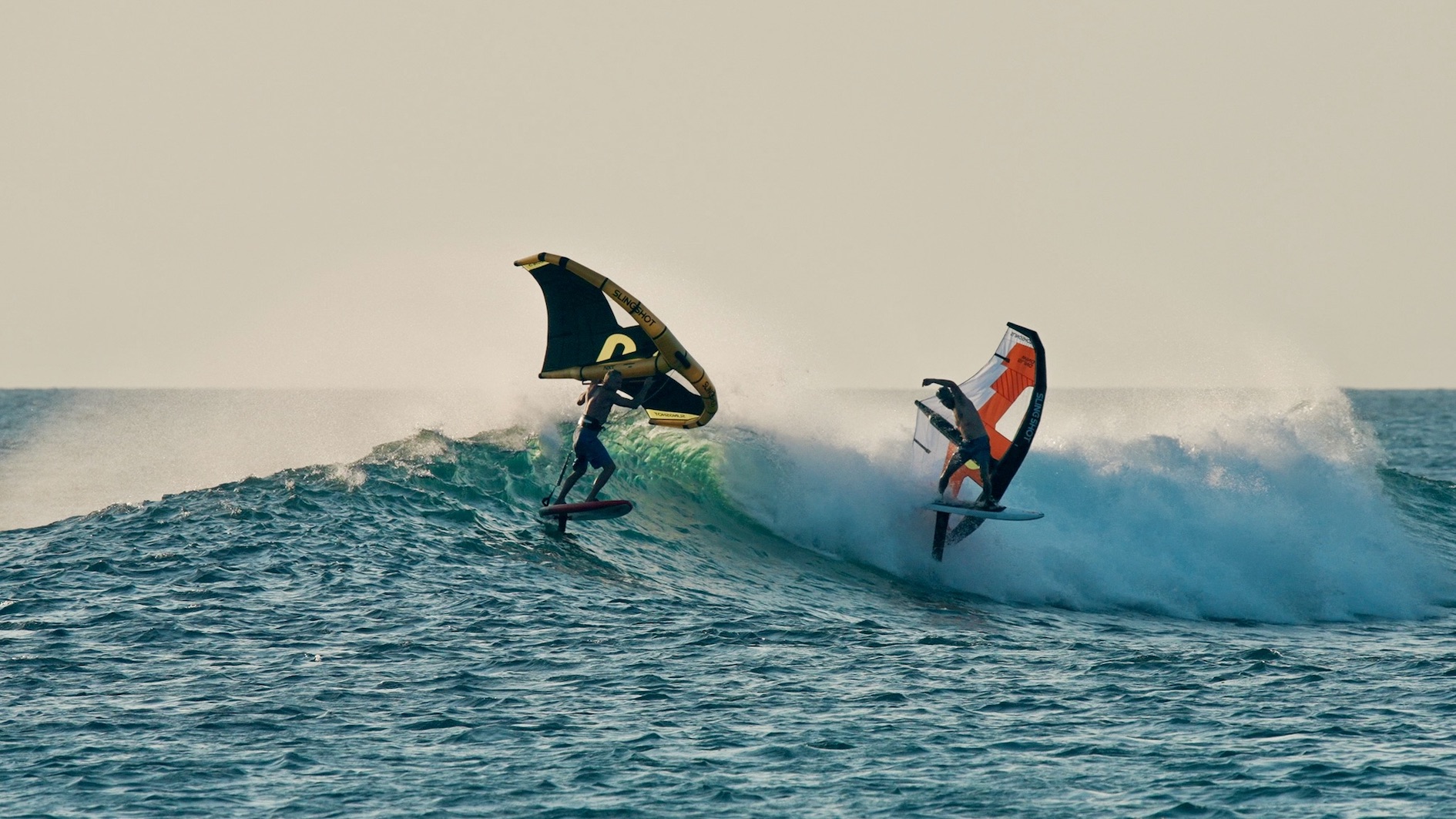
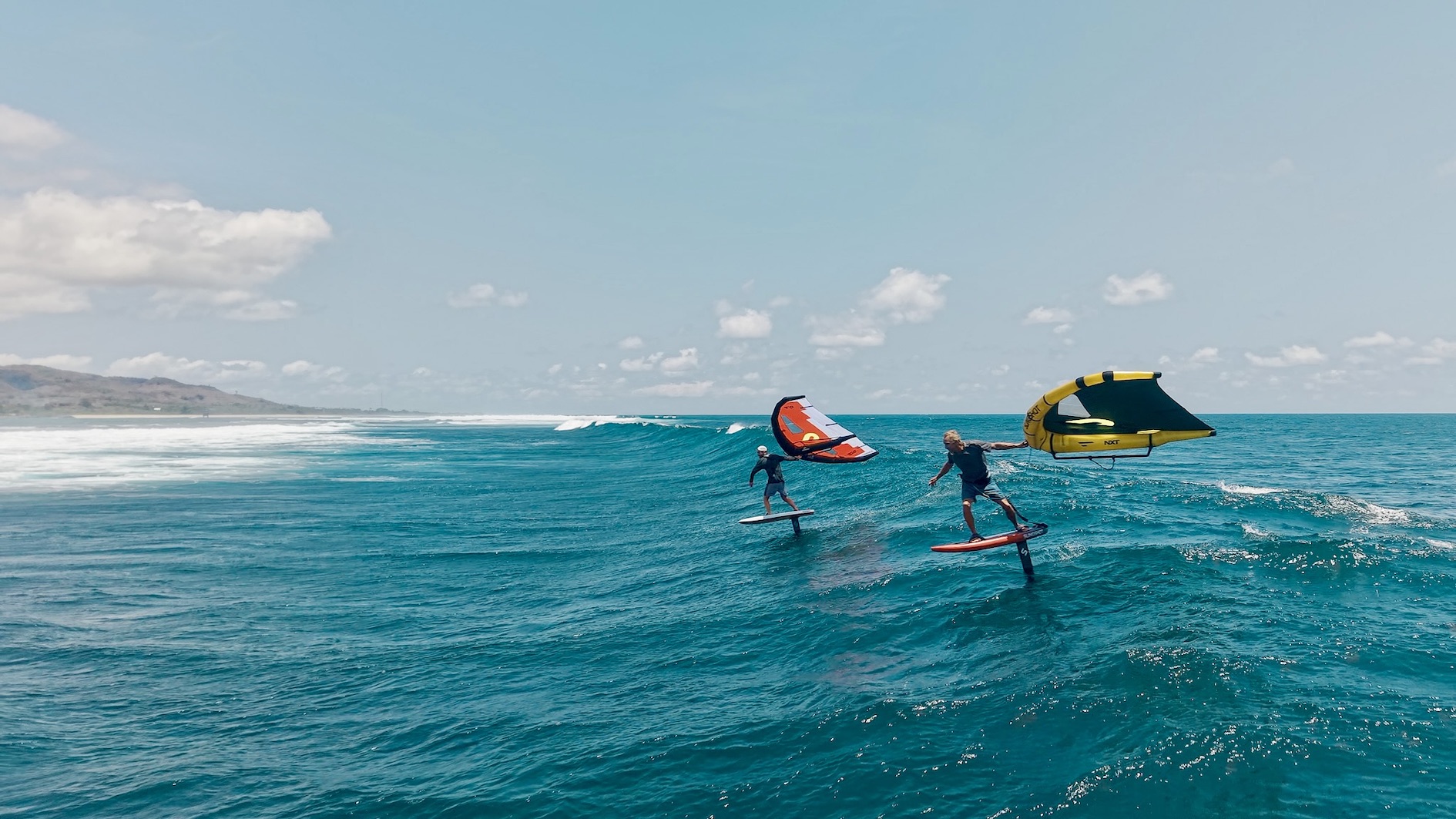
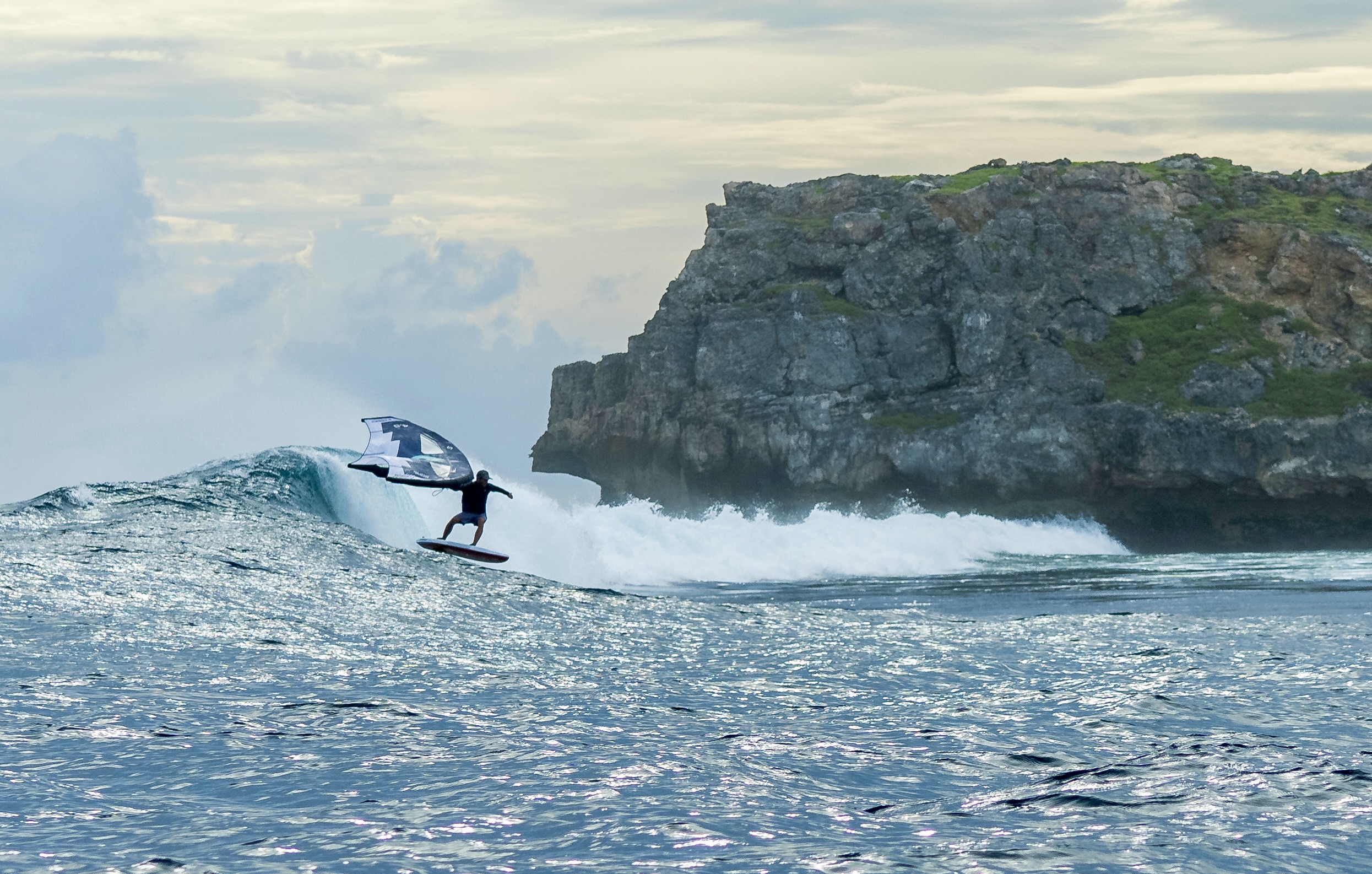
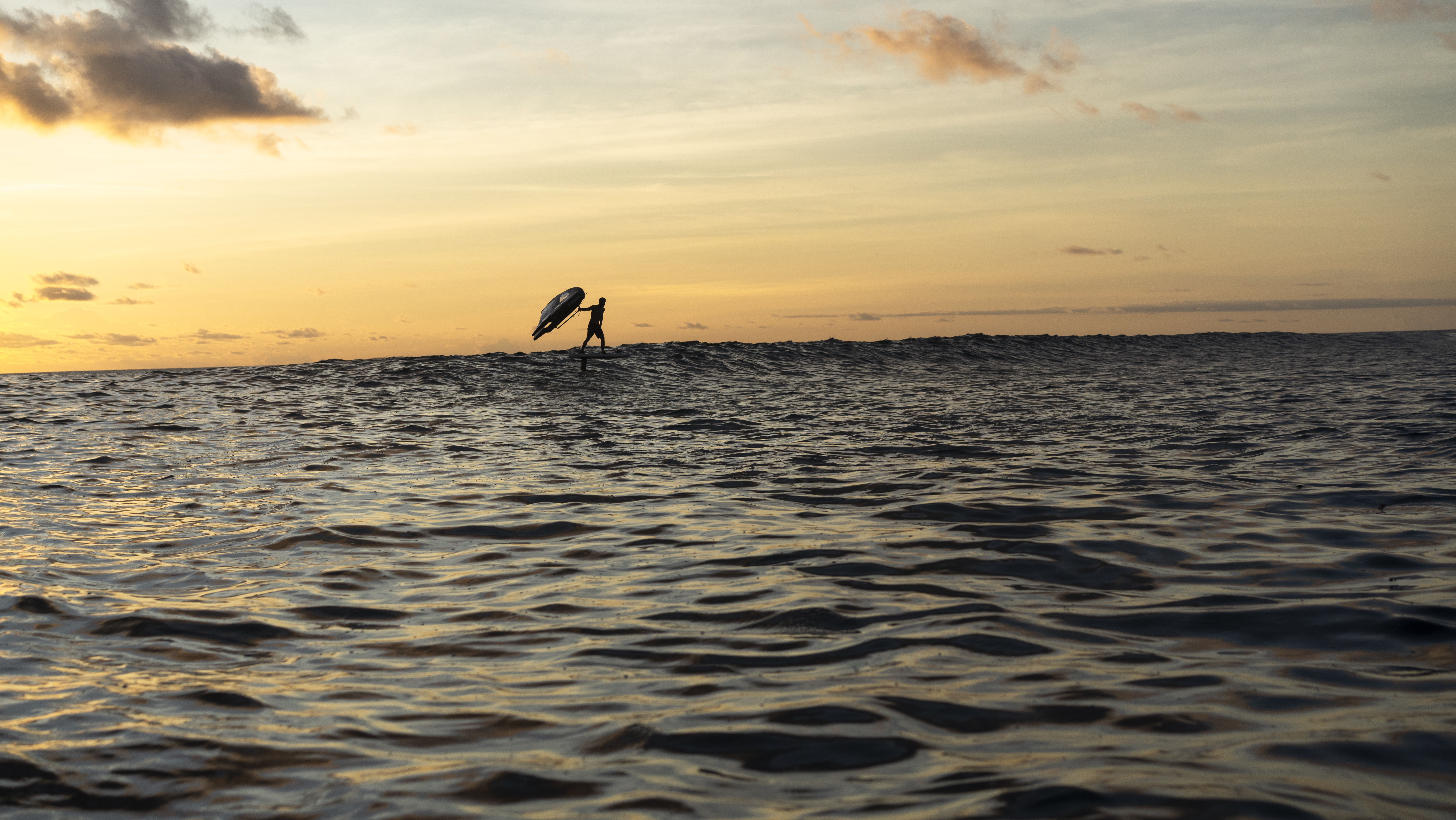
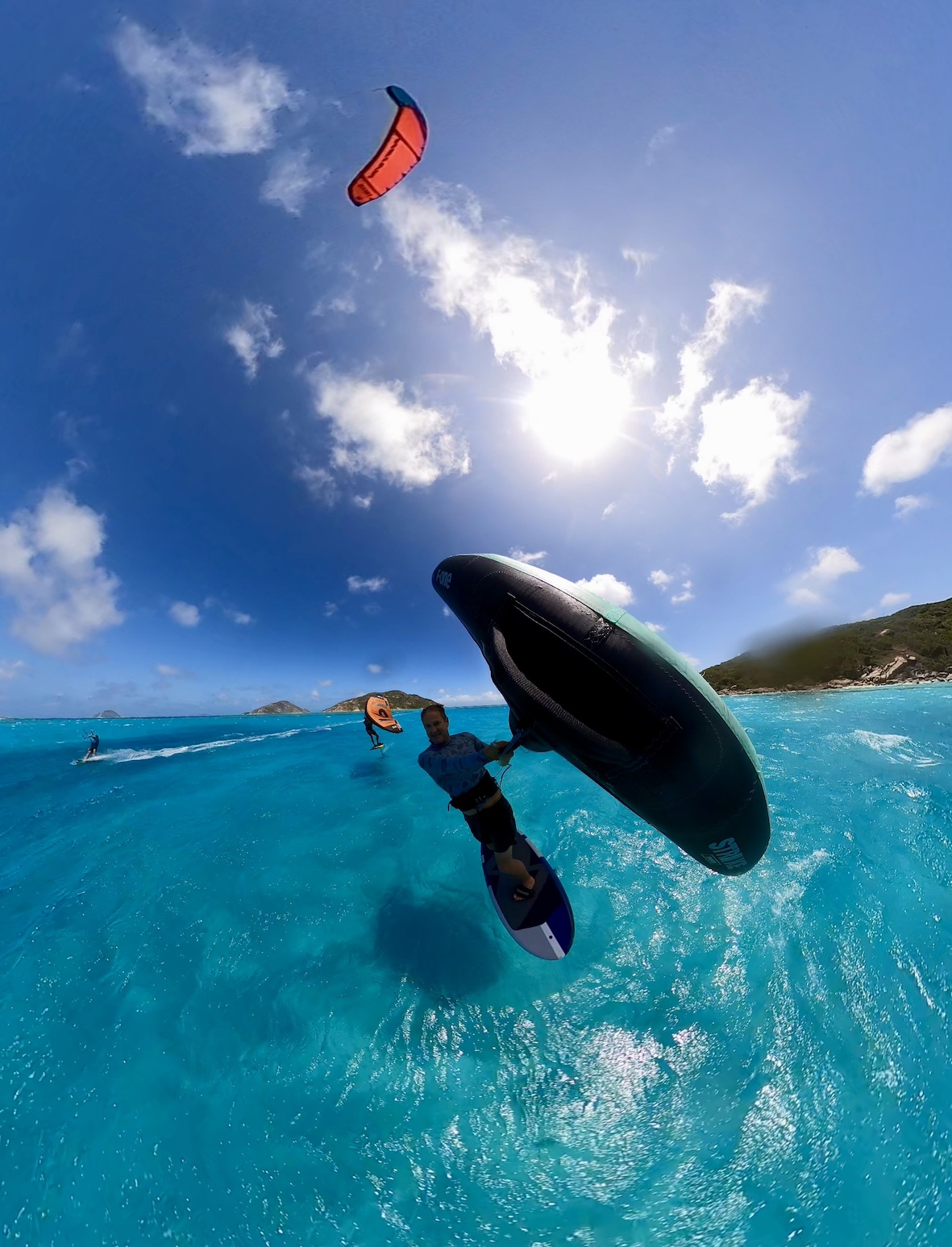
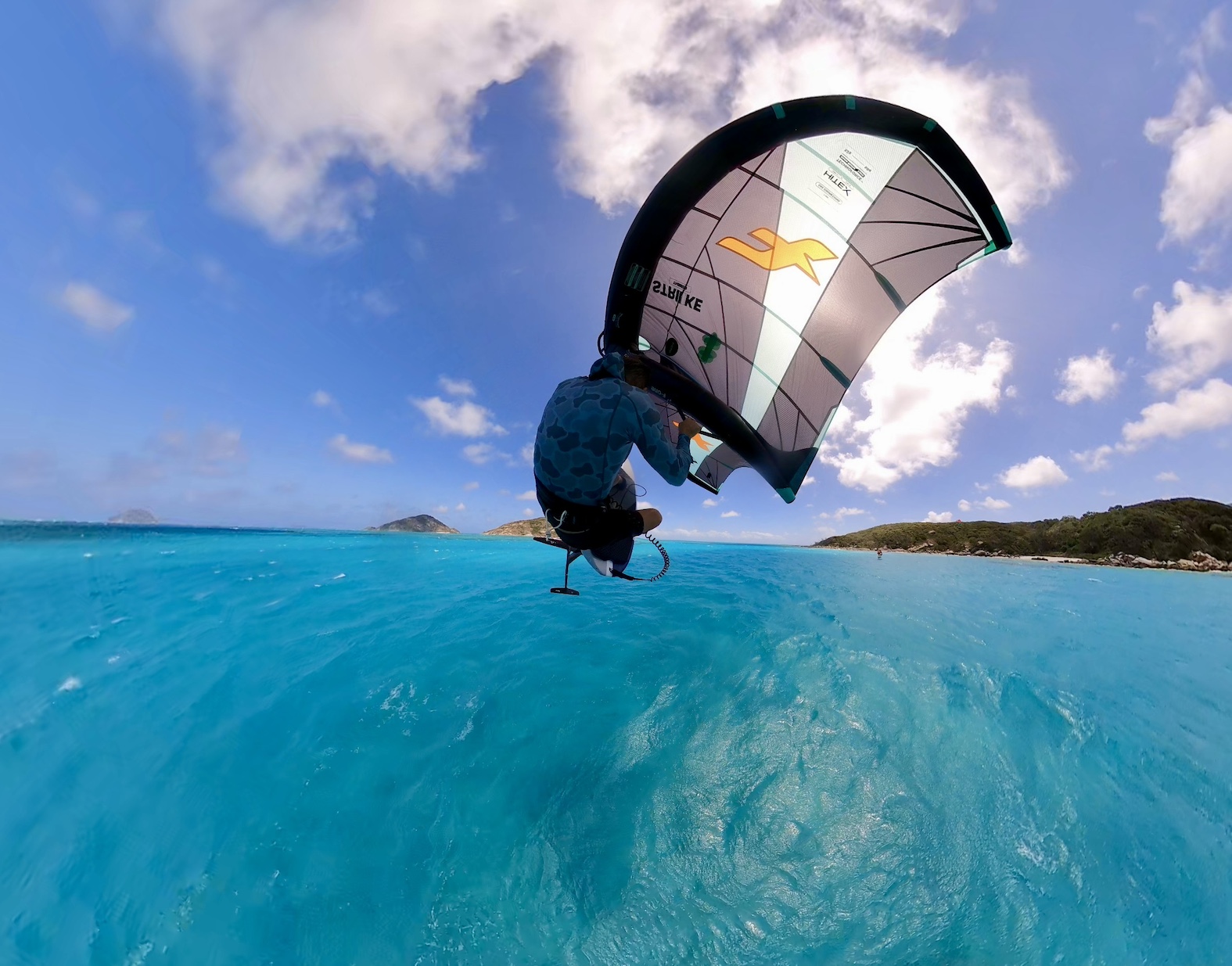
The wind and waves co-operated and the boys were able to deploy an arsenal of wings, boards, foils and start filming.  

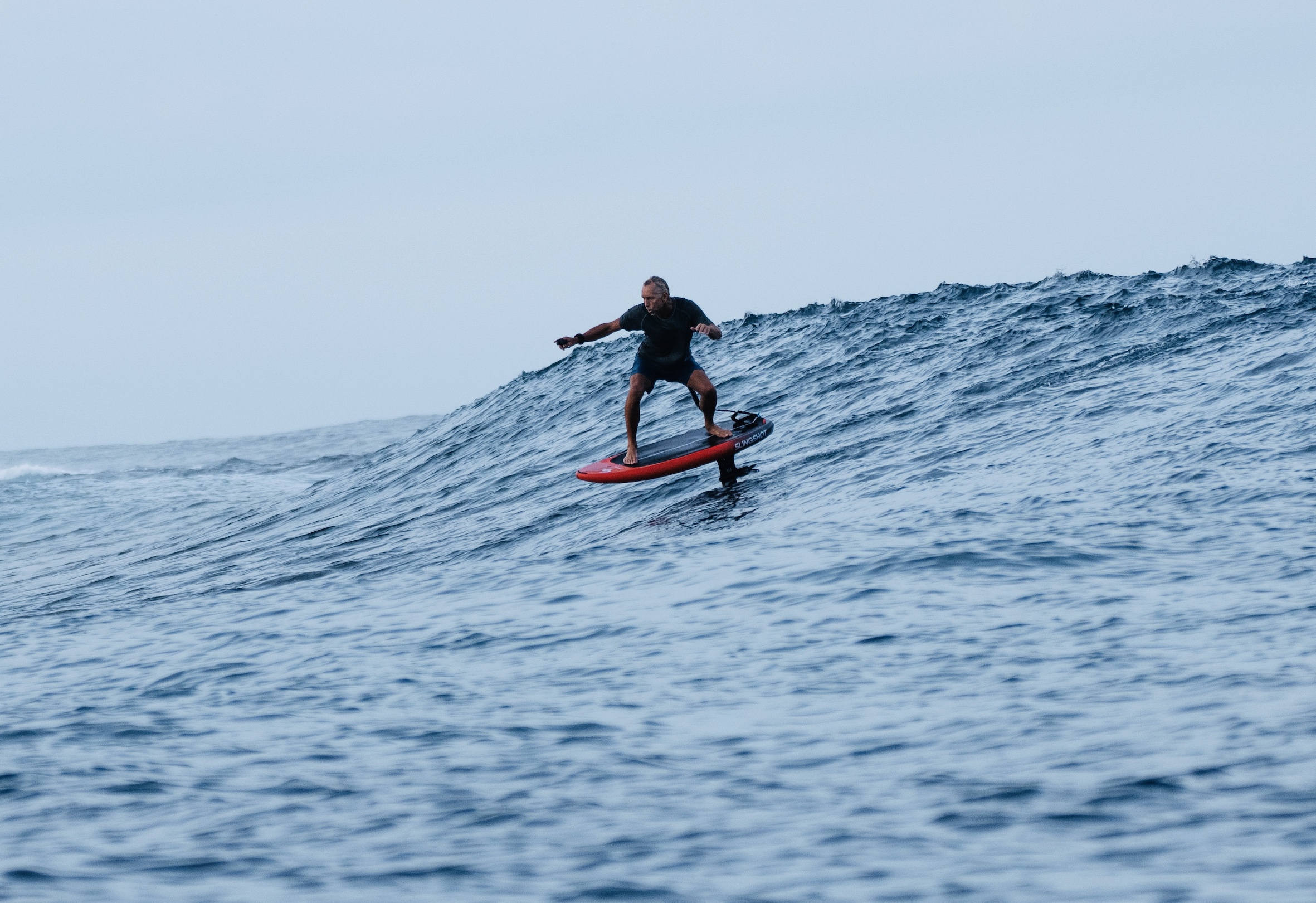
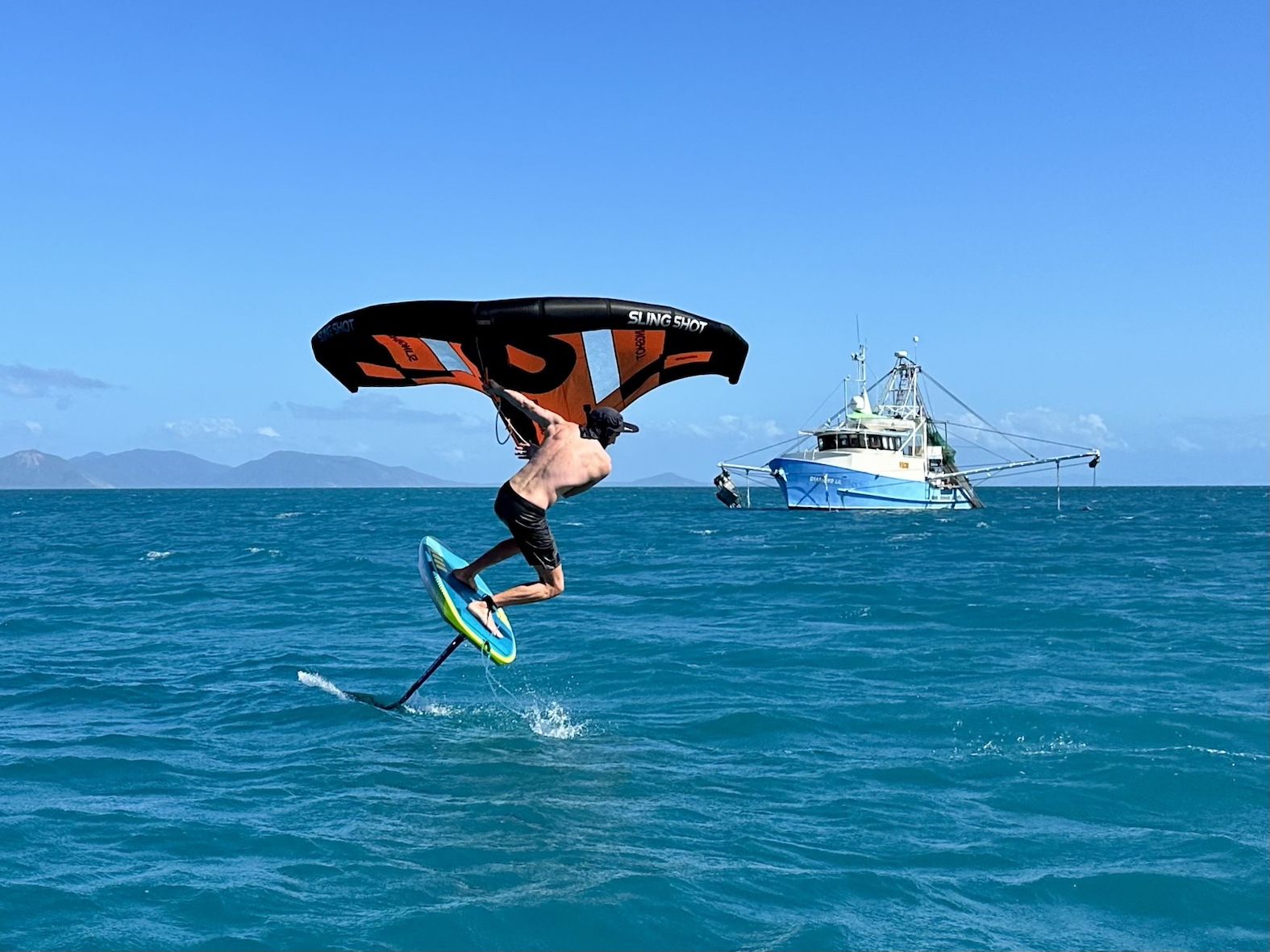
Jack is a camera-man and film maker, shooting from the water, from the boat, and from his drone.  Trent is a talented wing foiler, prone foiler, downwind racer and Slingshot team rider.  Oh and they both surf whenever off duty, so they were getting lots of exercise.  

Once again I find myself and my boat happily hijacked by the needs of the watersports industry.

Everyone was enjoying Nembrala, the local waters are a wonderful playground.  Some fun wing sessions.  

Trying to avoid the crowds, but sometimes we were the crowd.

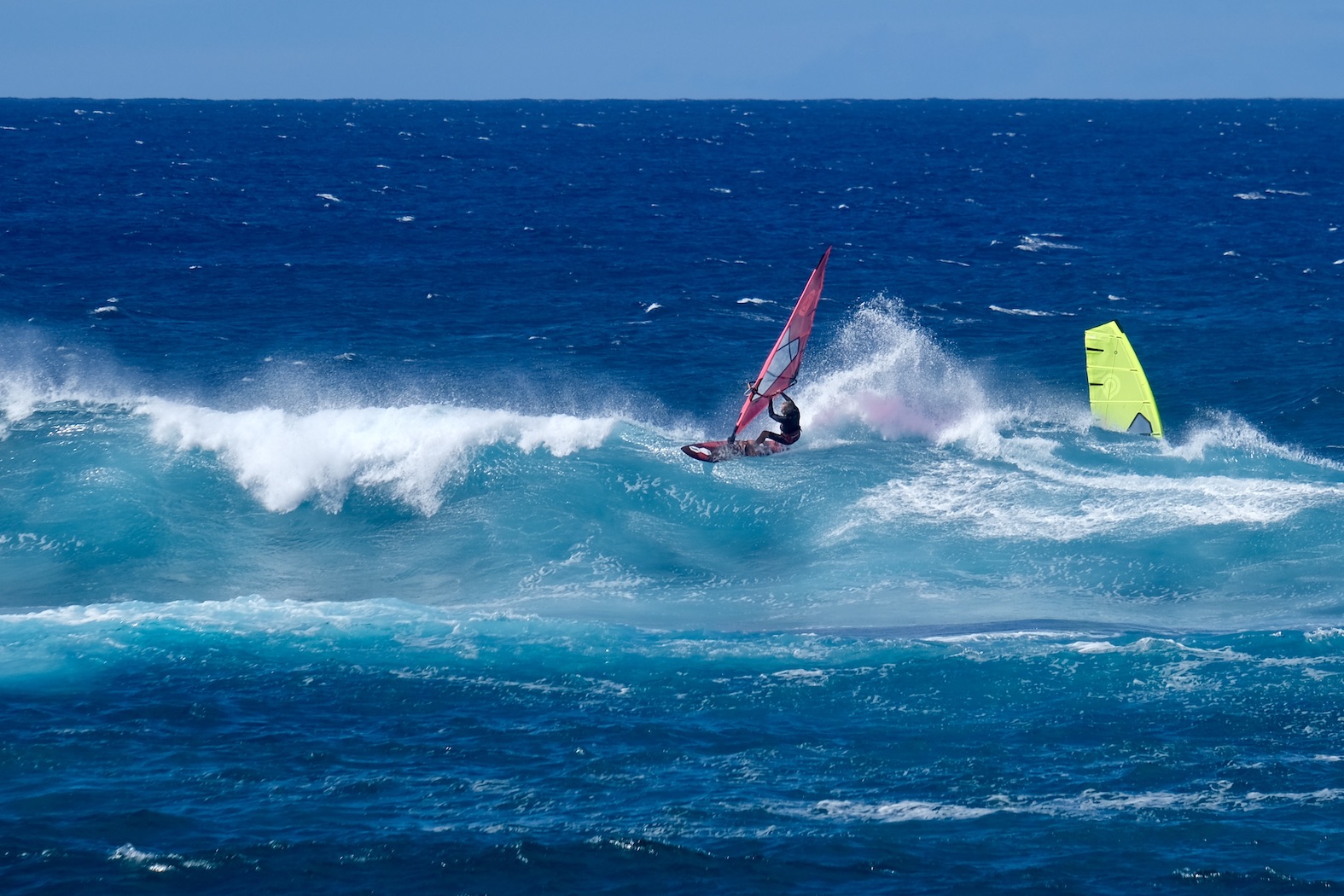
We even got the windsurf gear out.

This fun-size wave appeared right next to the anchorage at low tide.

Bryan and I sharing a few..

So Nembrala is great, but like any well-known wave these days, it gets pretty busy.  You are unlikely to be surfing alone there.

But if you spread out a chart, there are so many islands to explore!  Some that can only be reached by boat.  Just over the horizon, more whispers of quiet anchorages and uncrowded waves.  All we had to do was drag our crew away from Rote.  Which took a while. 

Westbound

One morning we left early and Rote finally slid over our eastern horizon.  From here on this was new territory for all of us.

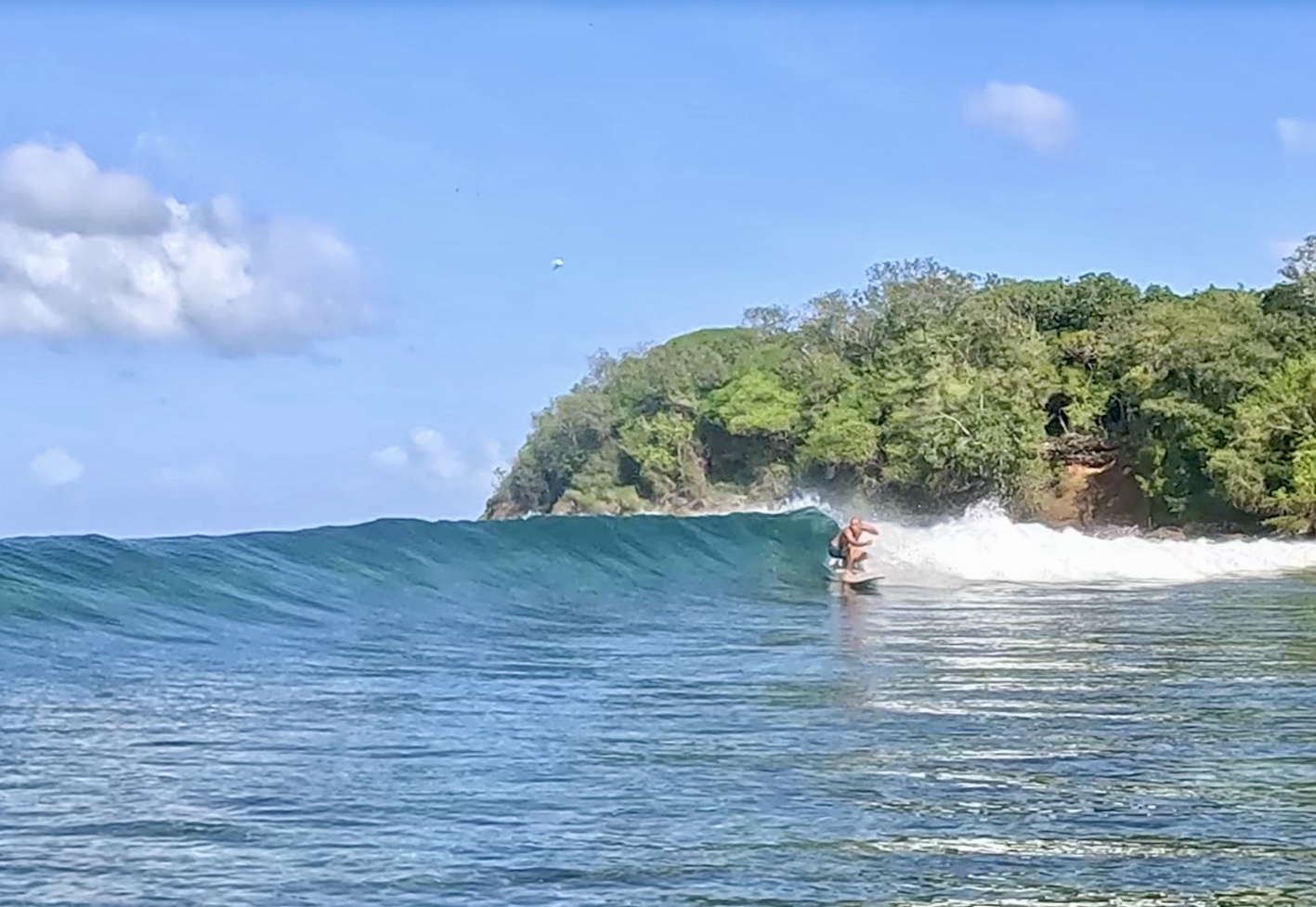
The first stop offered our favourite combination, a comfortable anchorage and a choice of quality waves within a short paddle from the boat.  

We stayed until we ran out of food.  

One evening I decided it would be good to stretch our legs ashore, so we hiked up a hill to see the sunset. 

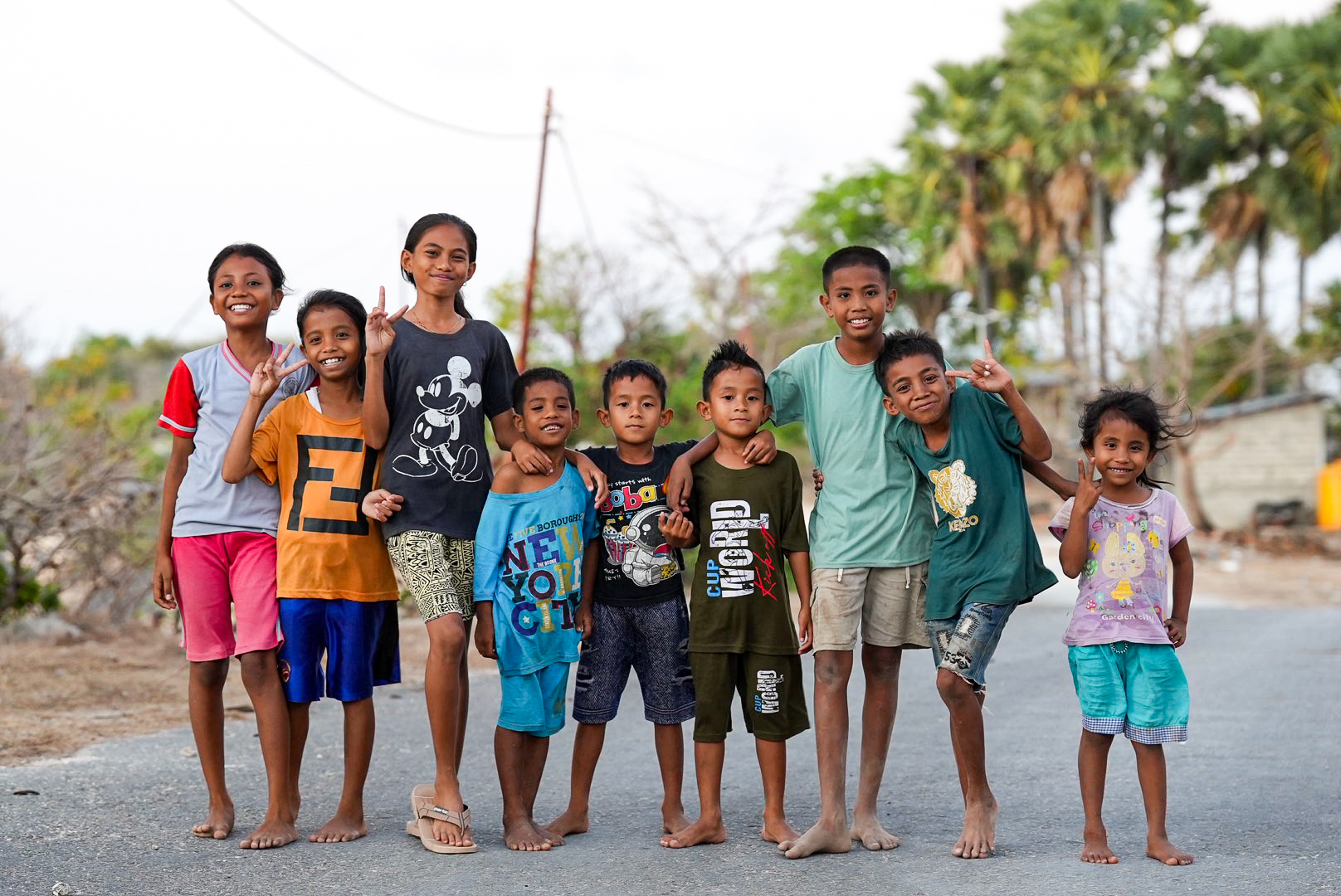
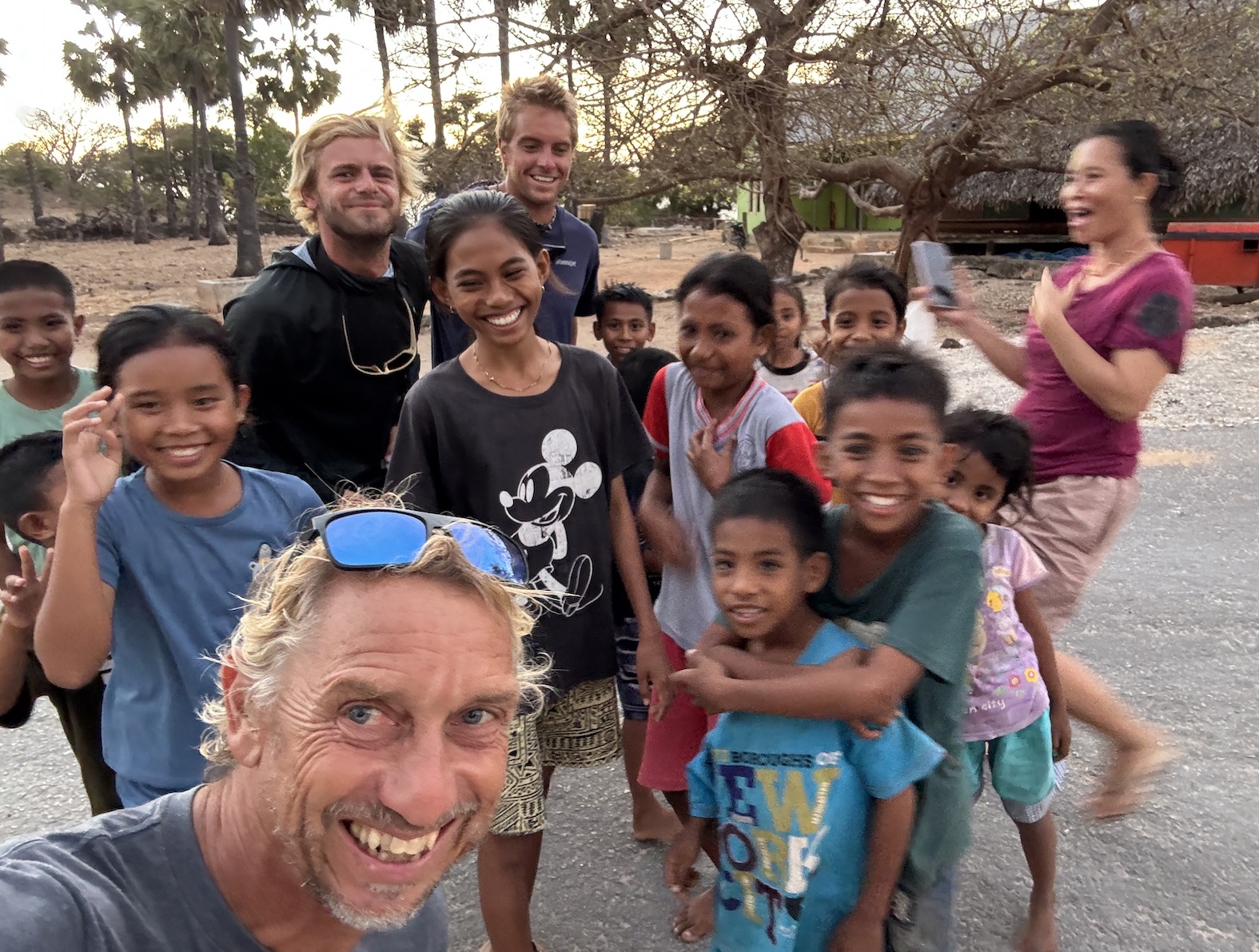
Then we ran into this bunch of hoodlums. 

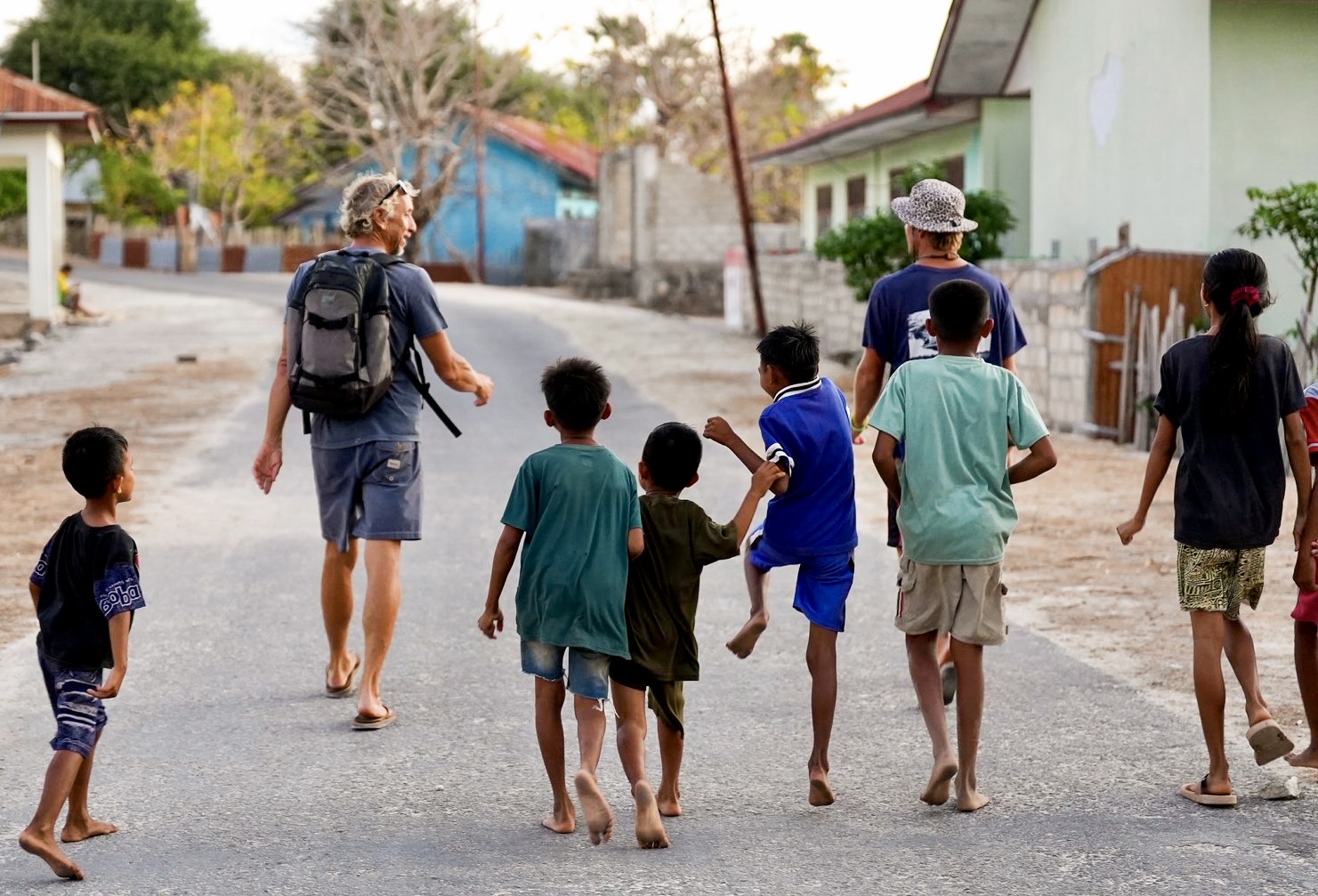
They marched us up the hill to the local kiosk. 

We were gradually joined by every child in the village. 

By the time we arrived at the kiosk, we had accumulated 19 children, so I bought 19 lollipops. 

The collective sugar-rush led to an impromptu volleyball session outside the school.

Re-provisioned and off again down the island chain, finding obscure waves and winging locations, always with one eye on the wind forecast.

We are keen to visit a tiny, uninhabited speck in the Indian Ocean.  Satellite photos show it clearly, but there’s really no protected anchorage in the prevailing SE wind.

Then we are gifted a rare calm spell, very light or south wind, maybe we could be comfortable there for a couple of days.  So we go.  

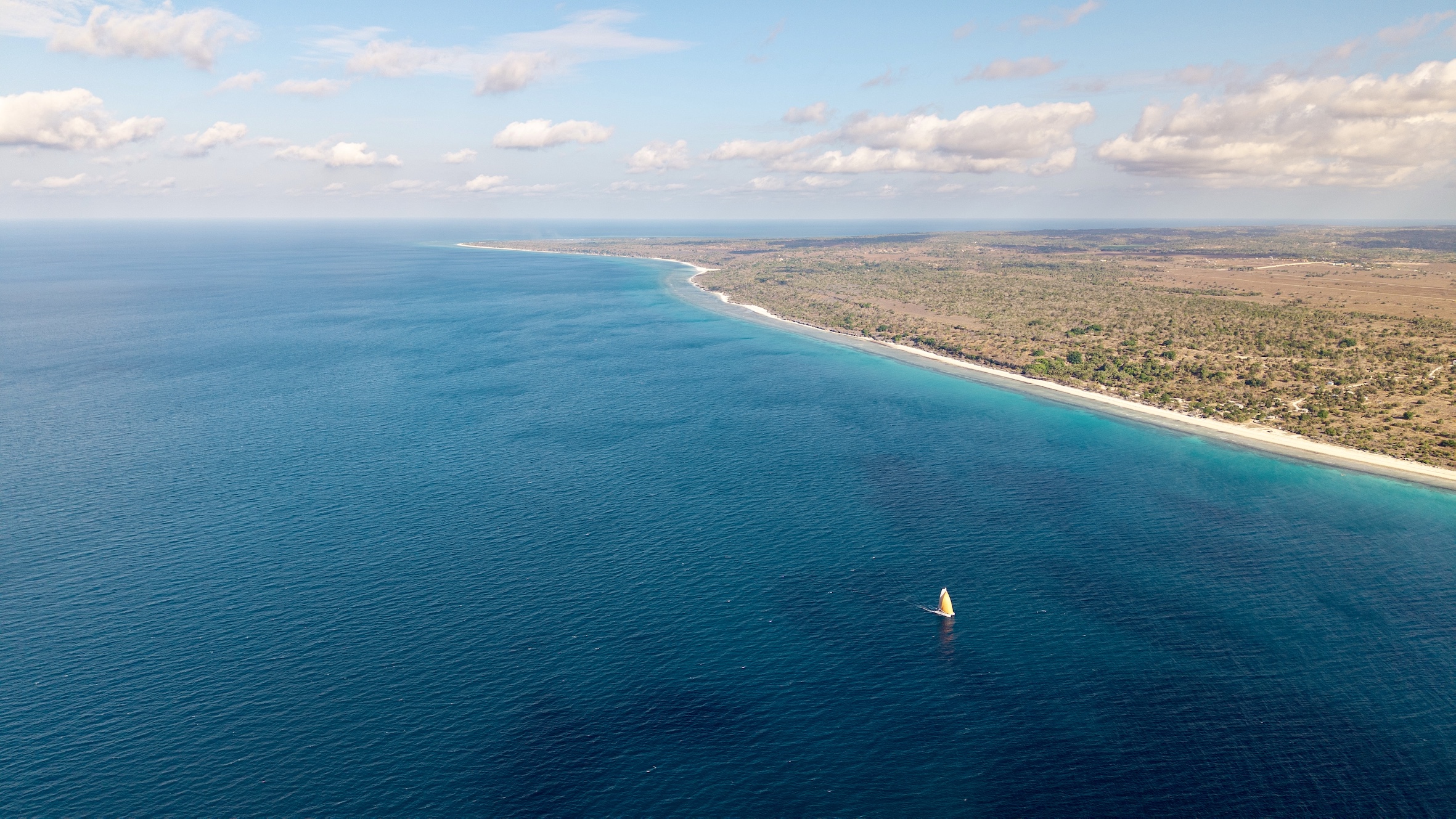
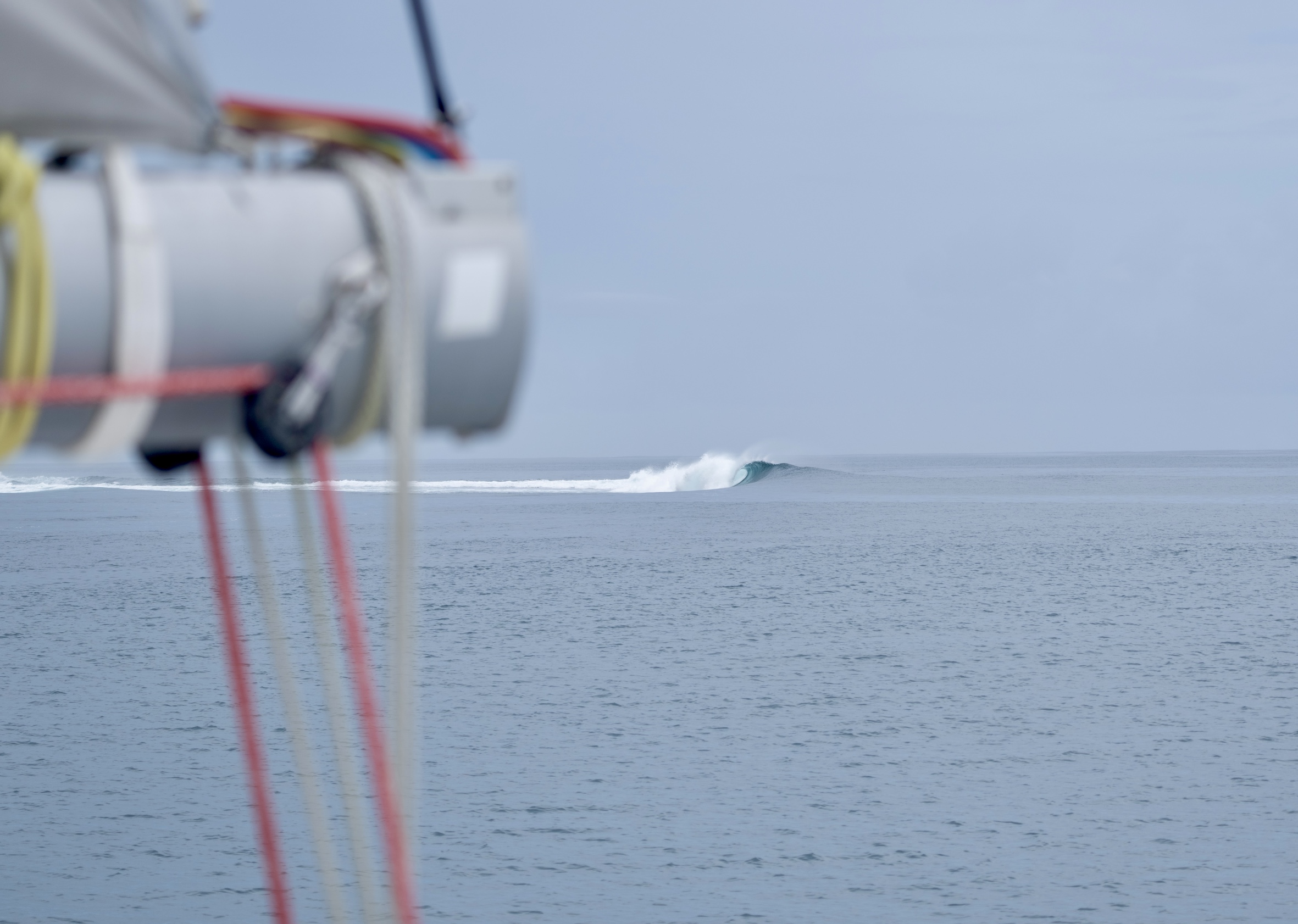
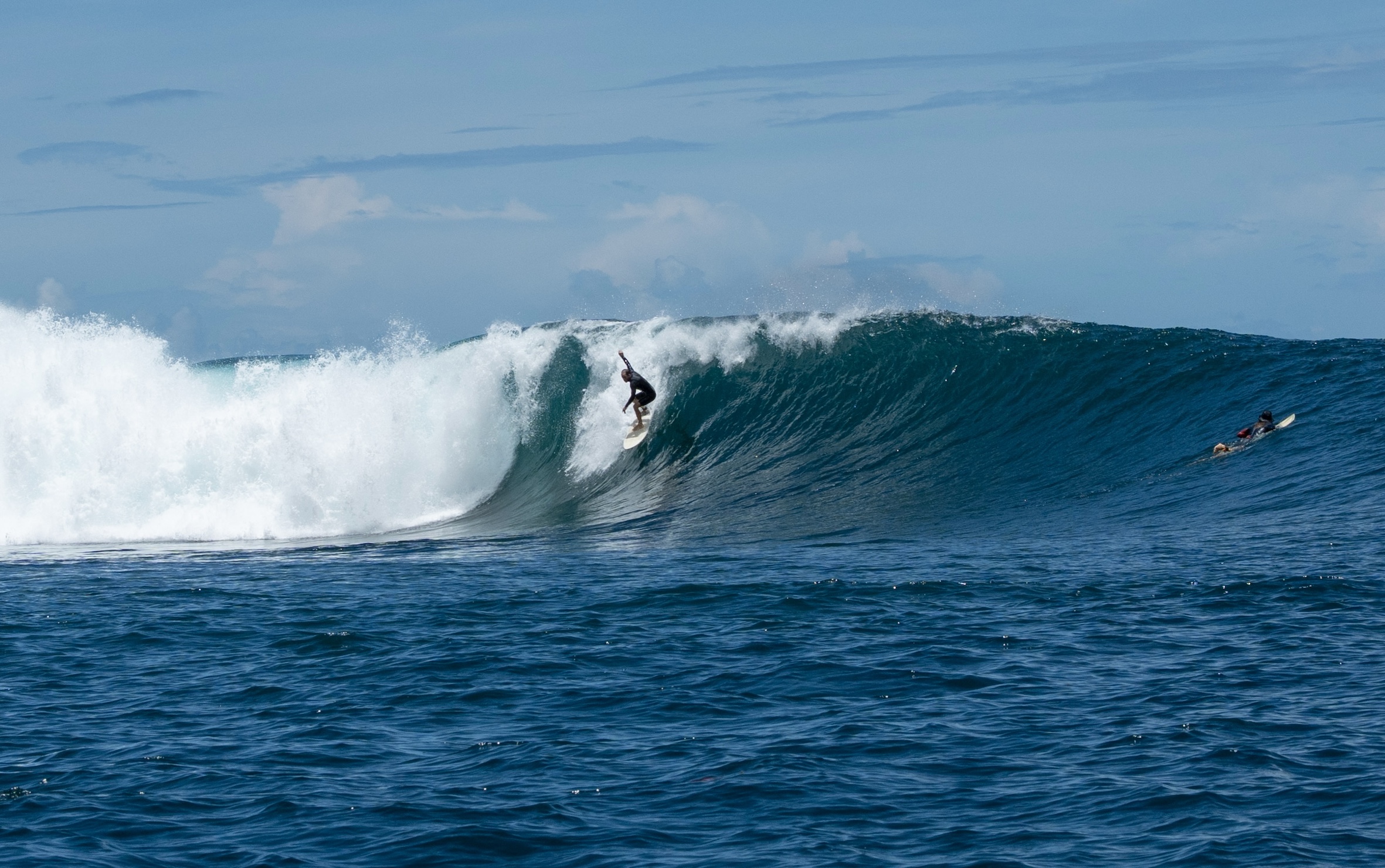
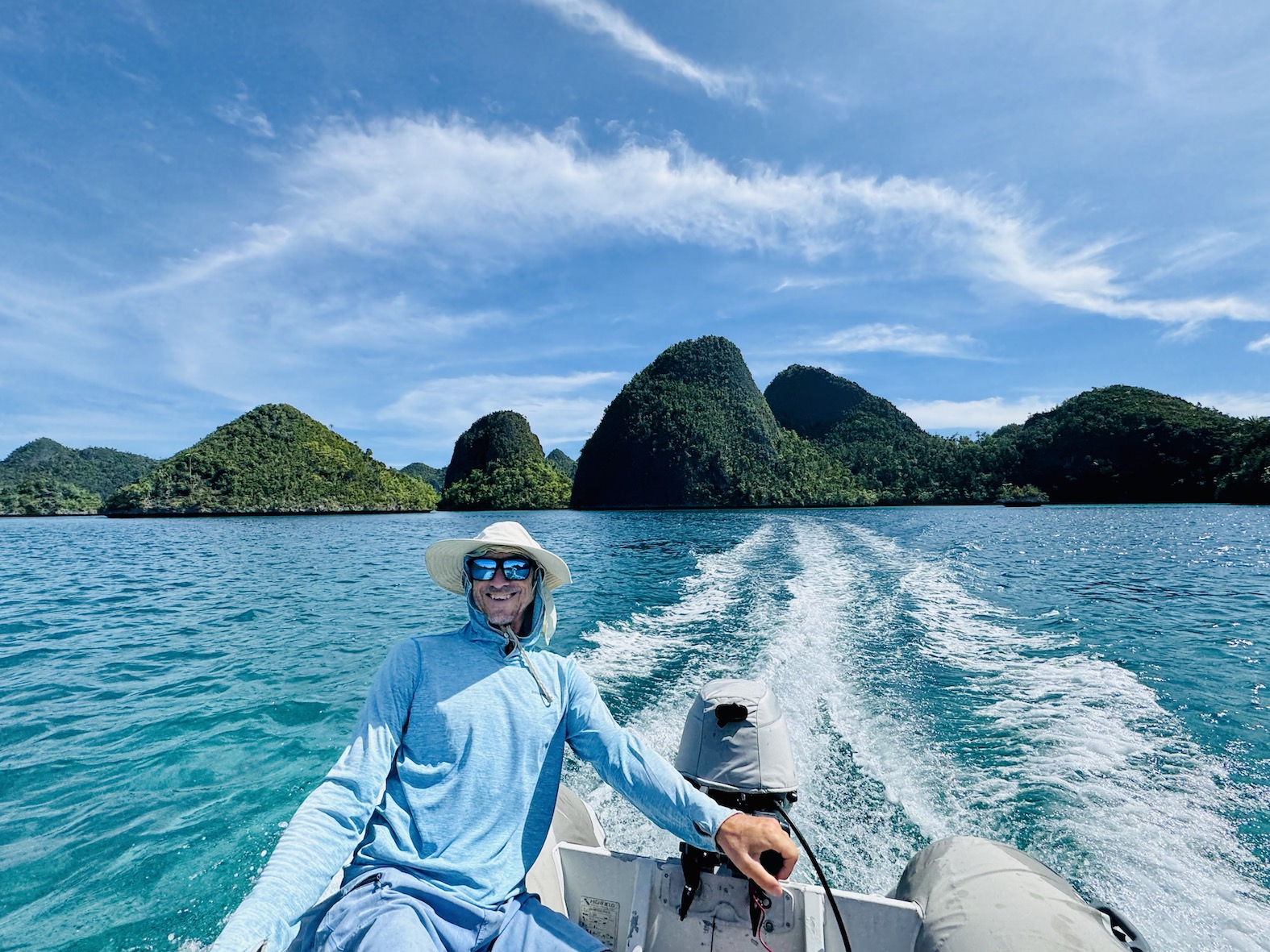
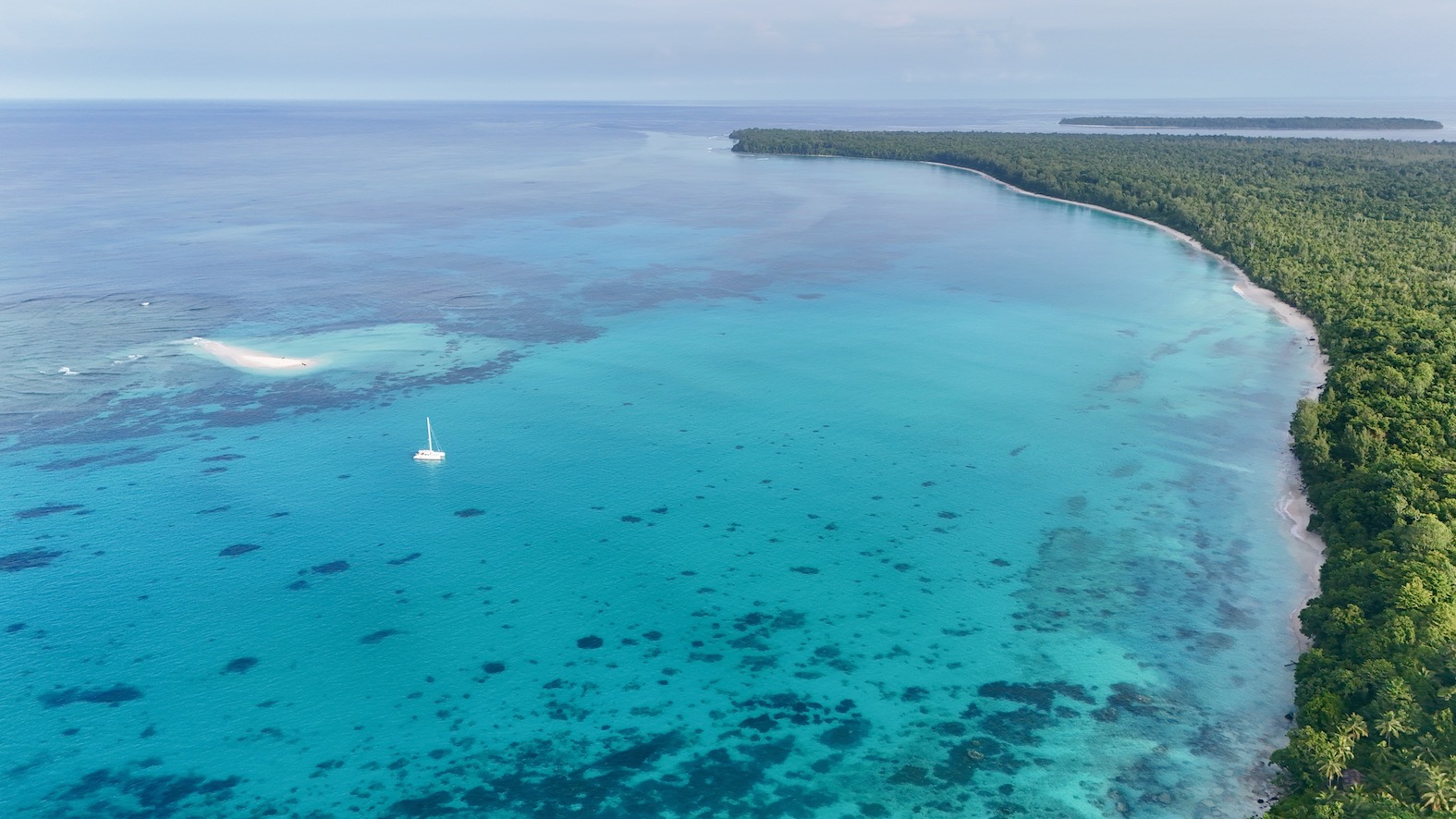
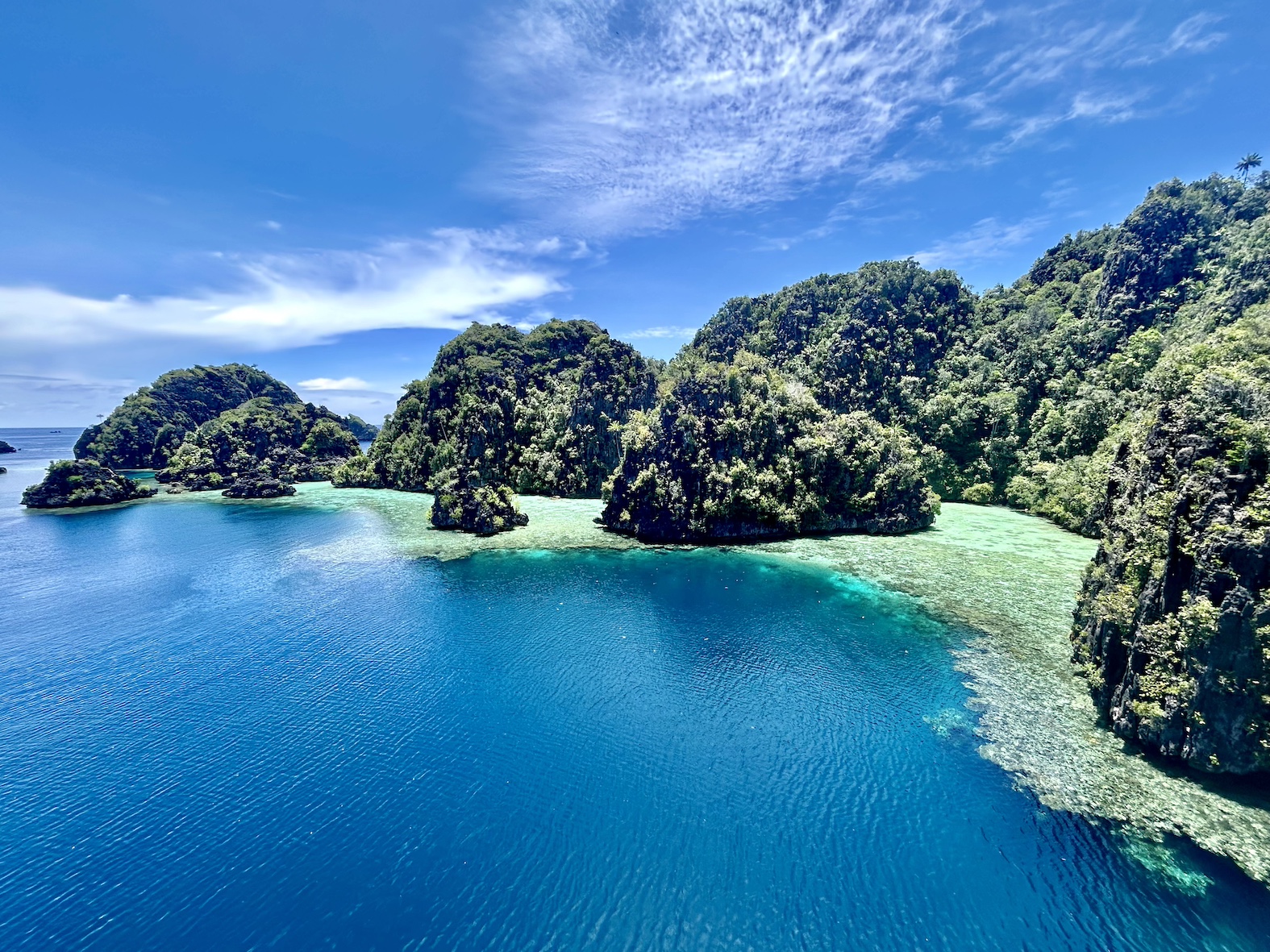
Arriving soon after sunrise we drop the anchor and take it all in.  Elaborate limestone rock formations, clear water, the most eye popping shade of blue I can remember, and waves wrapping around the island into rideable lefts and rights. 

We explored the right hand wave with the dinghy.

This is a very remote spot and the waves were much bigger than we had realised.  I towed Bryan and Trent into some clean lines, with Jack piloting his drone from Escapade and calling sets to my handheld VHF.  The boys courageously dropped the tow rope and sped off into unknown territory.

More exploration, the reefscape around us set up some fun surfing, towing and light-wind winging. 

What a place, all the more special as we knew how lucky we were to even be able to anchor there.

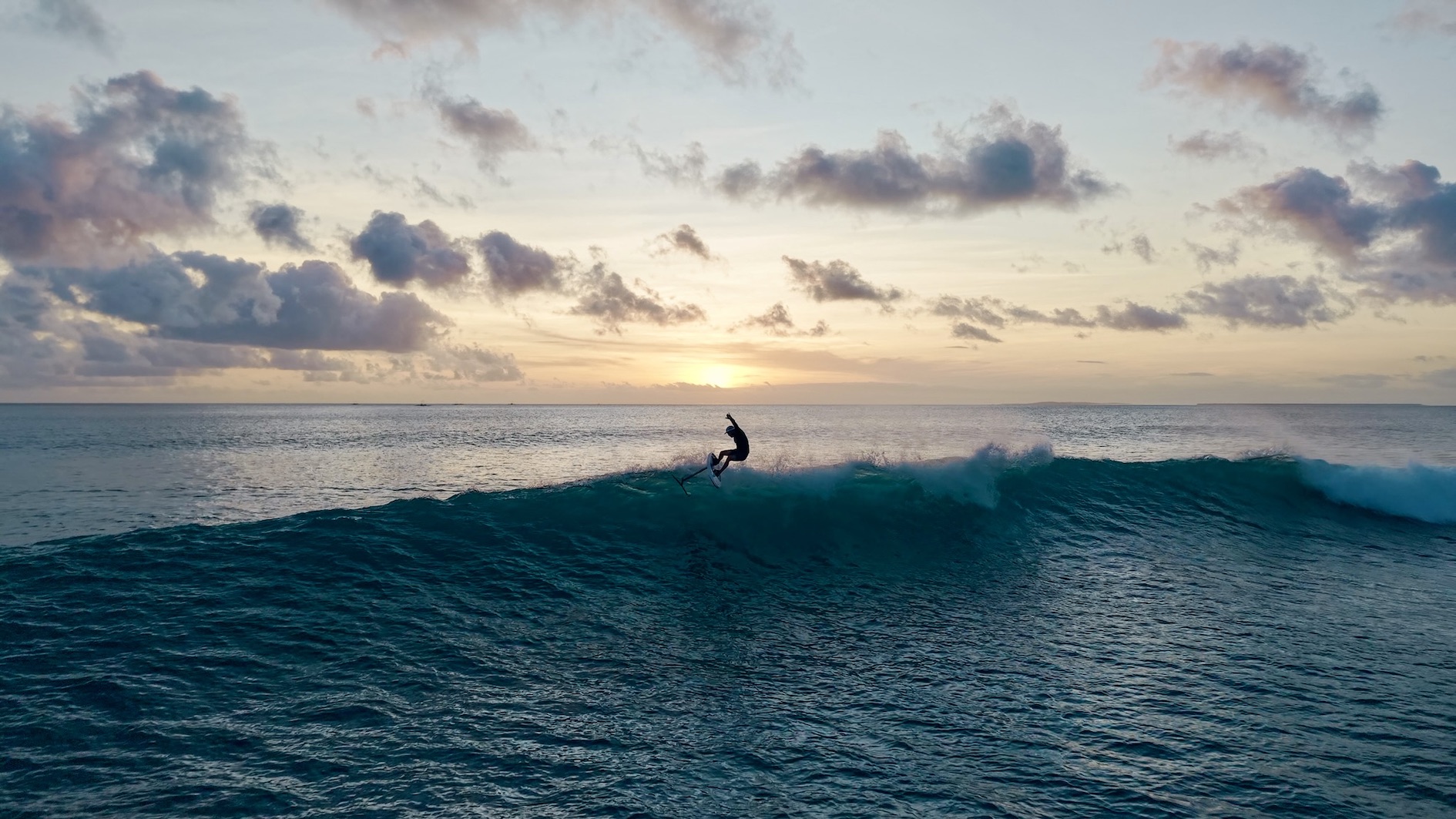
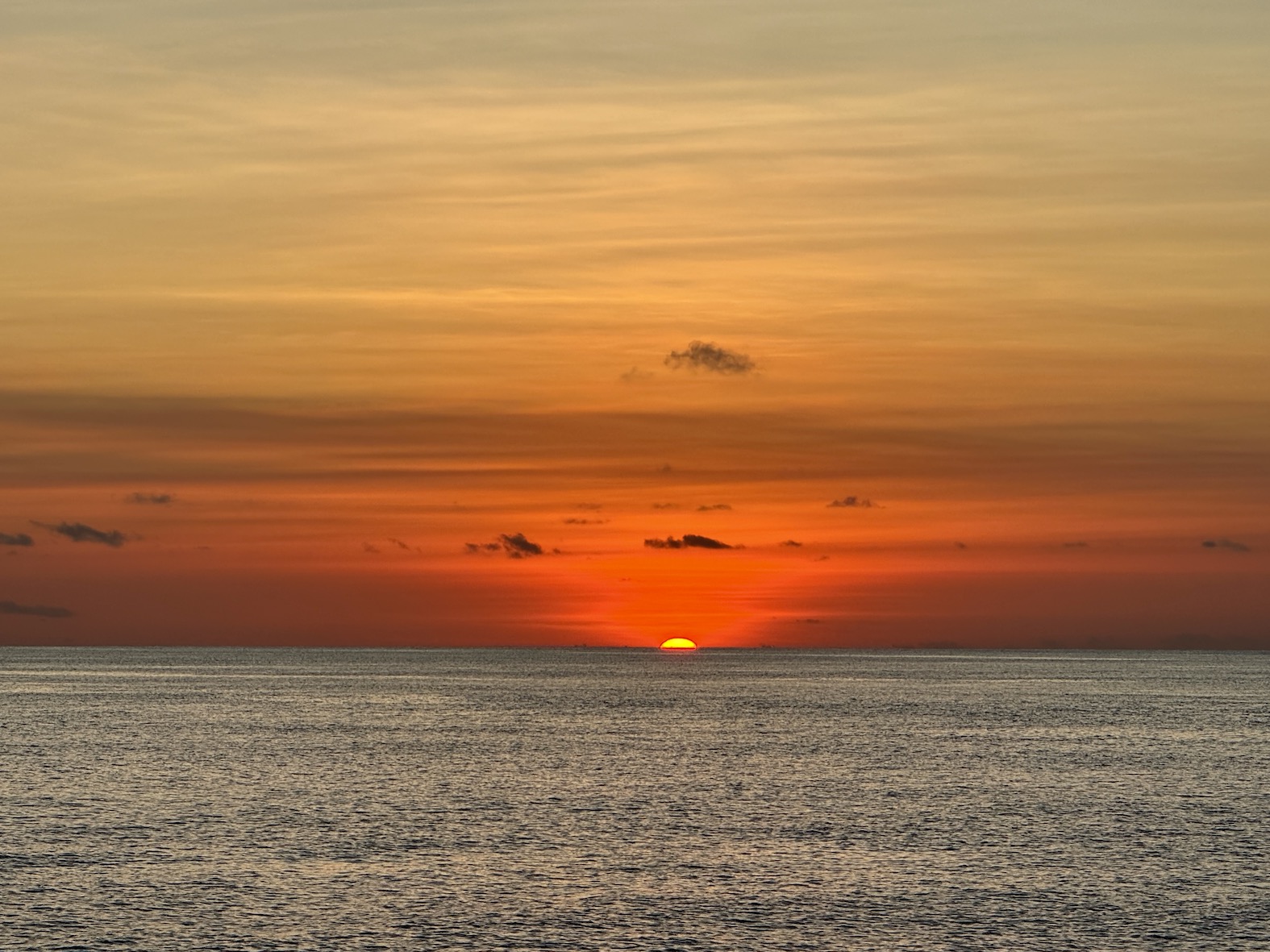
Sunset sessions, surfing the left until nightfall.  Strong magic.  

We stayed until the forecast chased us along again.  (That forecast was actually wrong. We should have stayed another day)

Next stop were some islands off of SE Sumba, the swell was still pumping.

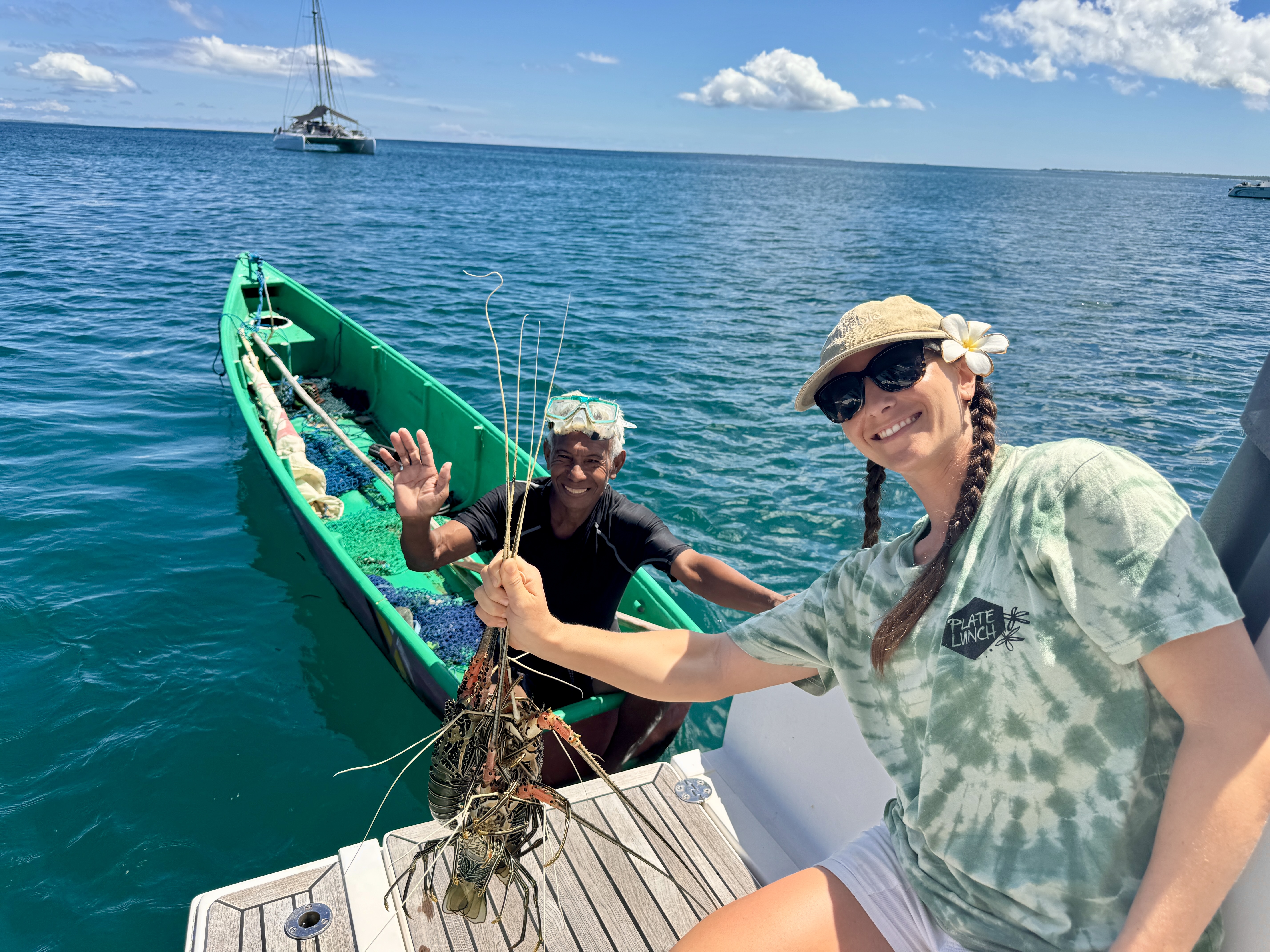
Fishing update:  Bryan arrived on this trip with a whole new armoury of trolling lures.  Huge glittery things with multiple hooks and googly eyes.  They dive deep and slow the boat down.  We had been dragging them around for about 200 miles when we finally had a bite and Bryan triumphantly produced a ‘two dinners’ Spanish Mackerel.  

Two dinners on this trip by the way, is an enormous amount of food.  Trent and Jack can eat.  (After witnessing their first couple of meals in Nembrala, I hastily recalculated my provisioning and panic-bought an extra 60 eggs, all the noodles we could carry and a 10kg sack of rice.)

At the end of the trip Jack reeled in this, his first Mahi-Mahi.  Barely one square meal.

Coconut delivery service.

Escapade’s solar array is keeping up with Jack’s drones and camera charging requirements. The water-maker is working hard to provide everyone’s hydration, plus all that water to cook the mountains of rice and pasta that Jack and Trent need every night.  

On the plus side, they don’t seem to wash, so there’s a saving there.

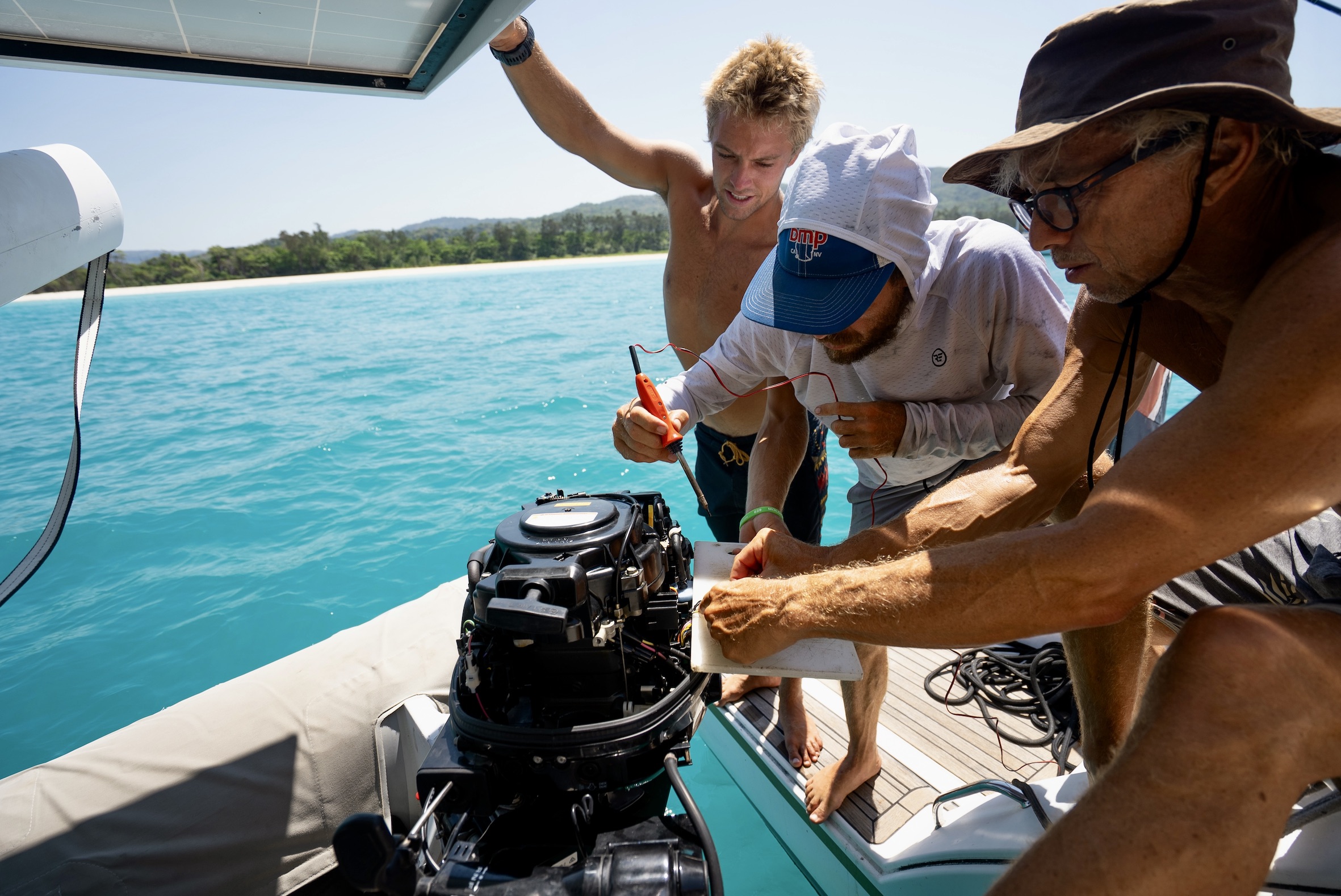
Our newish outboard motor developed a fault and suddenly refused to start.  We diagnosed a failed fuel pump and needed our friend Julius to help with the logistics.

Simple. Import from Suzuki Japan to Jakarta, ship to Northern Sumba, be patient, then arrange for an entire family to spend all day driving over the jungly mountains to deliver it to us on a remote beach on the south coast of Sumba.  No problem for Julius and his far-reaching network of contacts.  Thank you Ersy and family!  That night the sun had set when the new pump was fitted and the outboard re-assembled.  But still wouldn’t start.  That was a low point, it wasn’t the fuel pump!  A very frustrated Bryan was poking around by torchlight and discovered the actual fault.  A broken electrical connection hiding deep inside the motor.  Next morning he was back to that motor at first light.  The fault was re-wired, soldered, and much better than new. 

So good to hear that motor running again.  Another big swell was due to arrive, and the dinghy was a key part of our hair-ball plan to get riders on to waves and have some safety cover.

The long period swell arrived and we decided to explore the reef off the next headland.

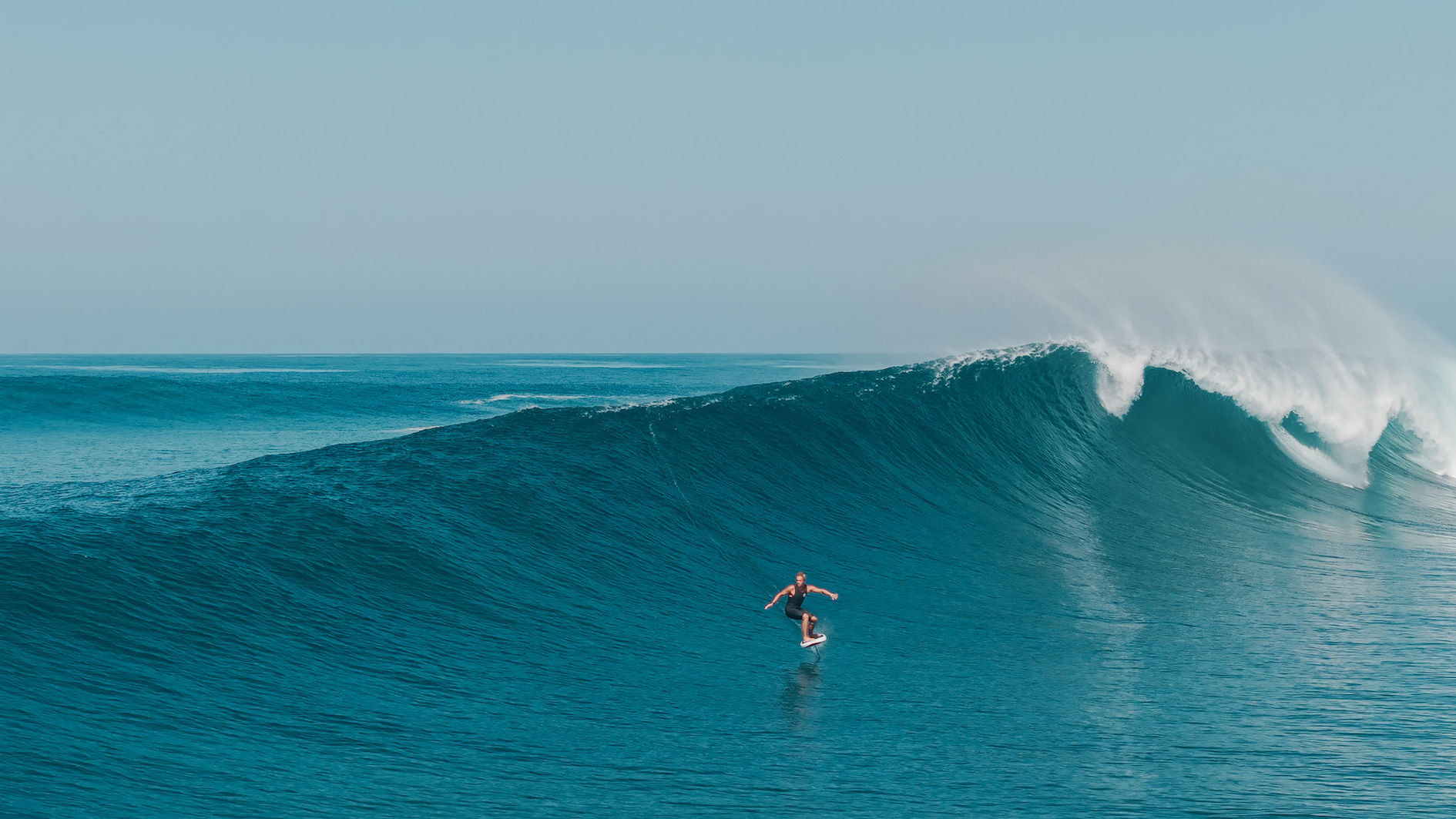
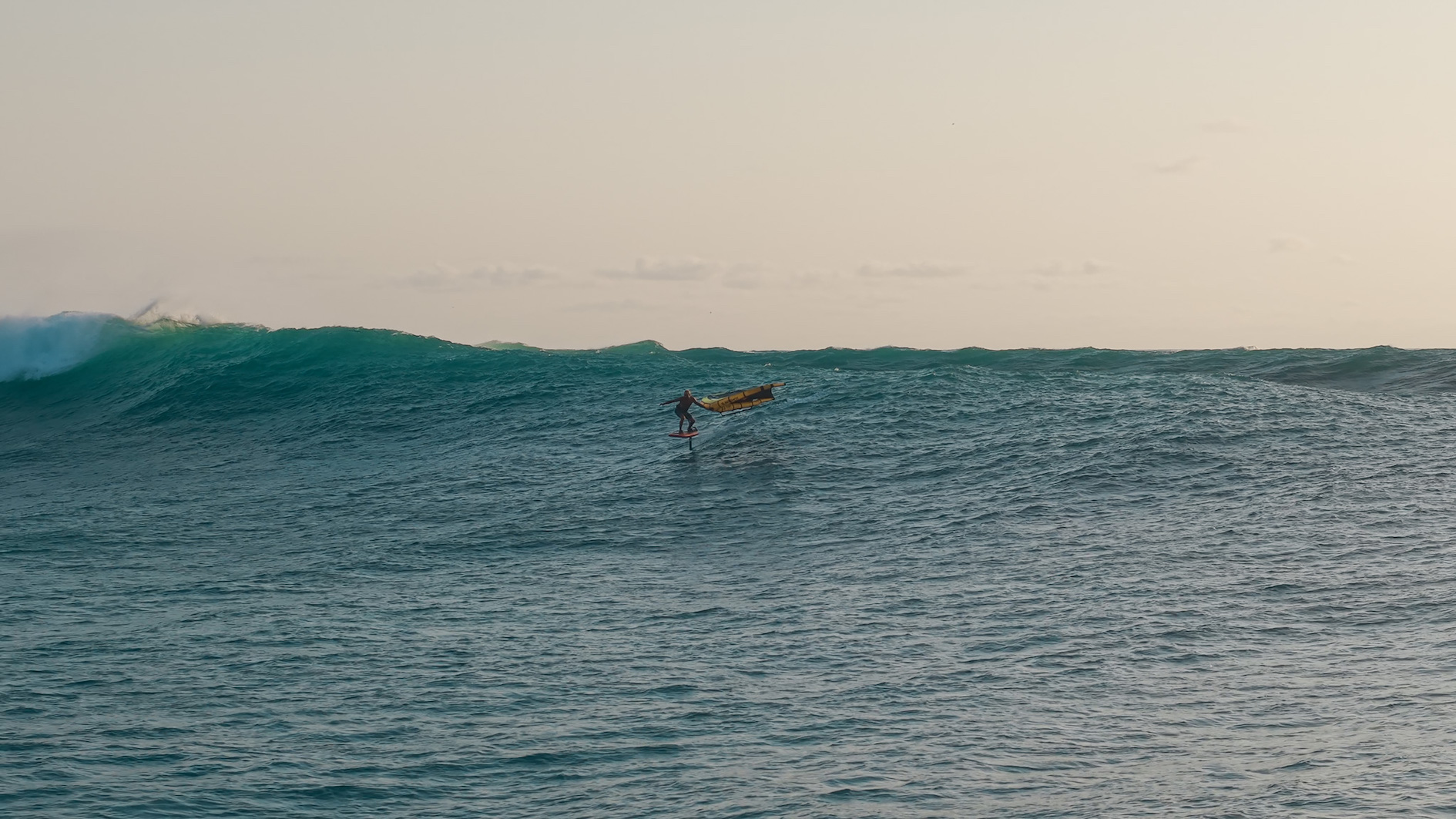
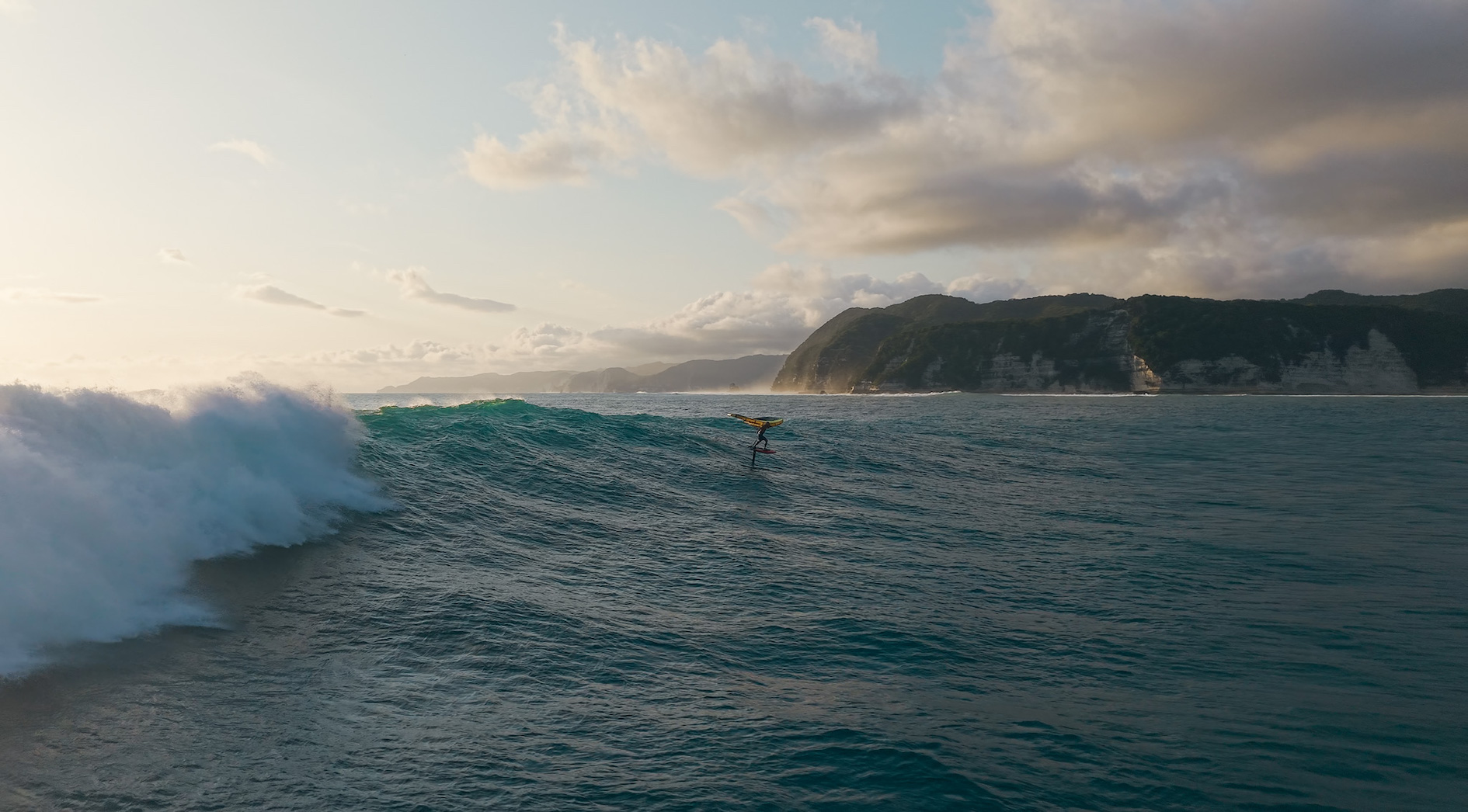
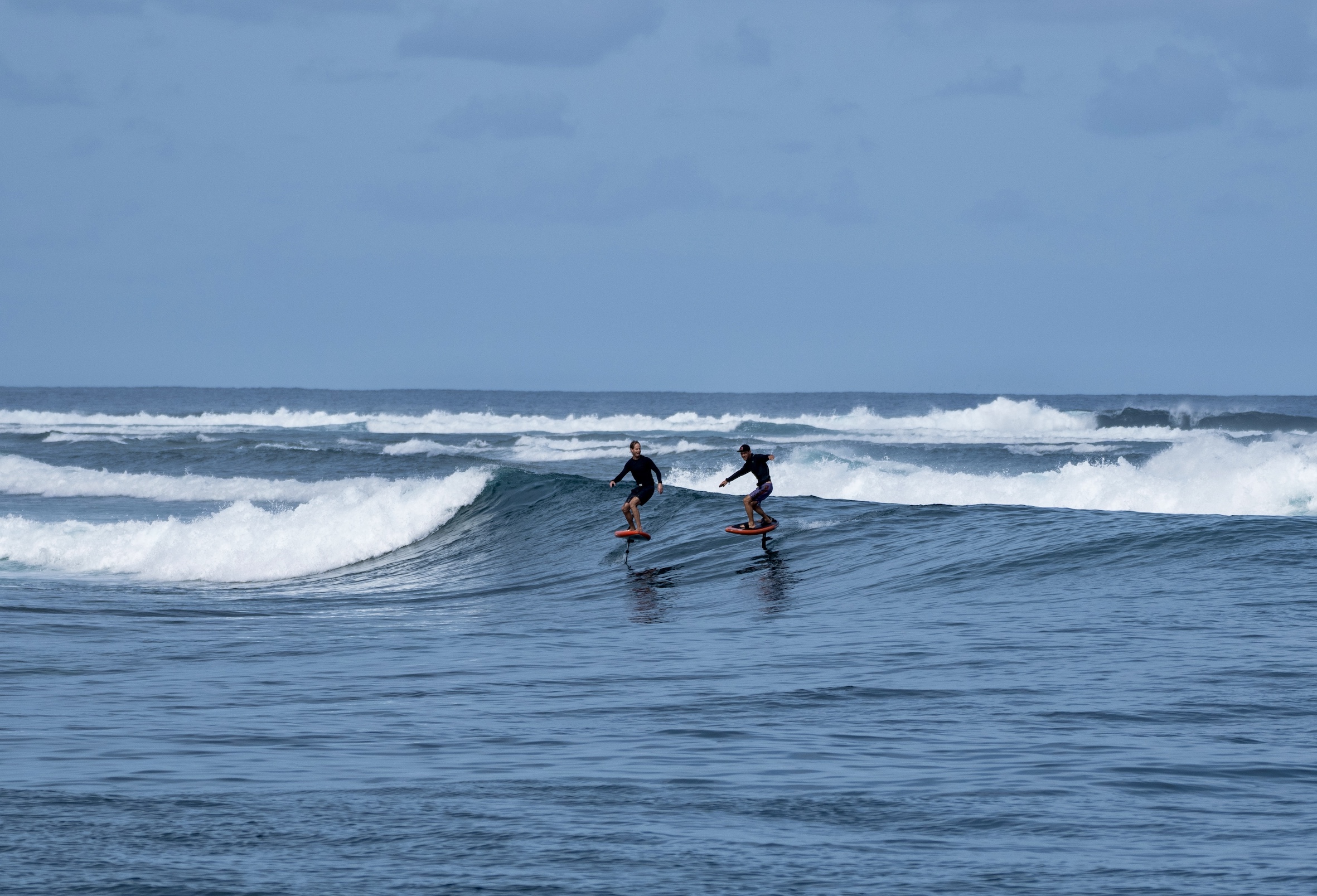
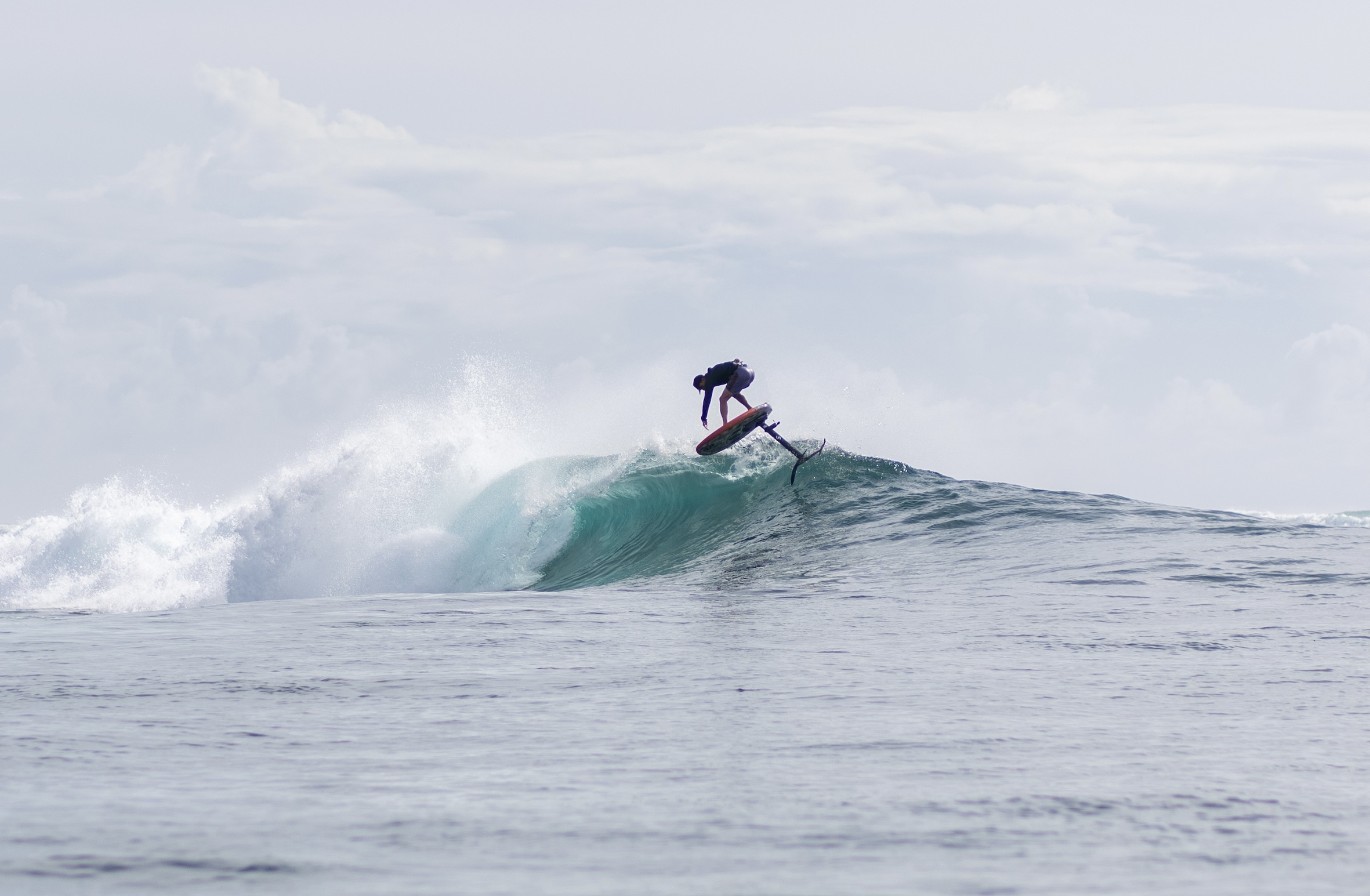
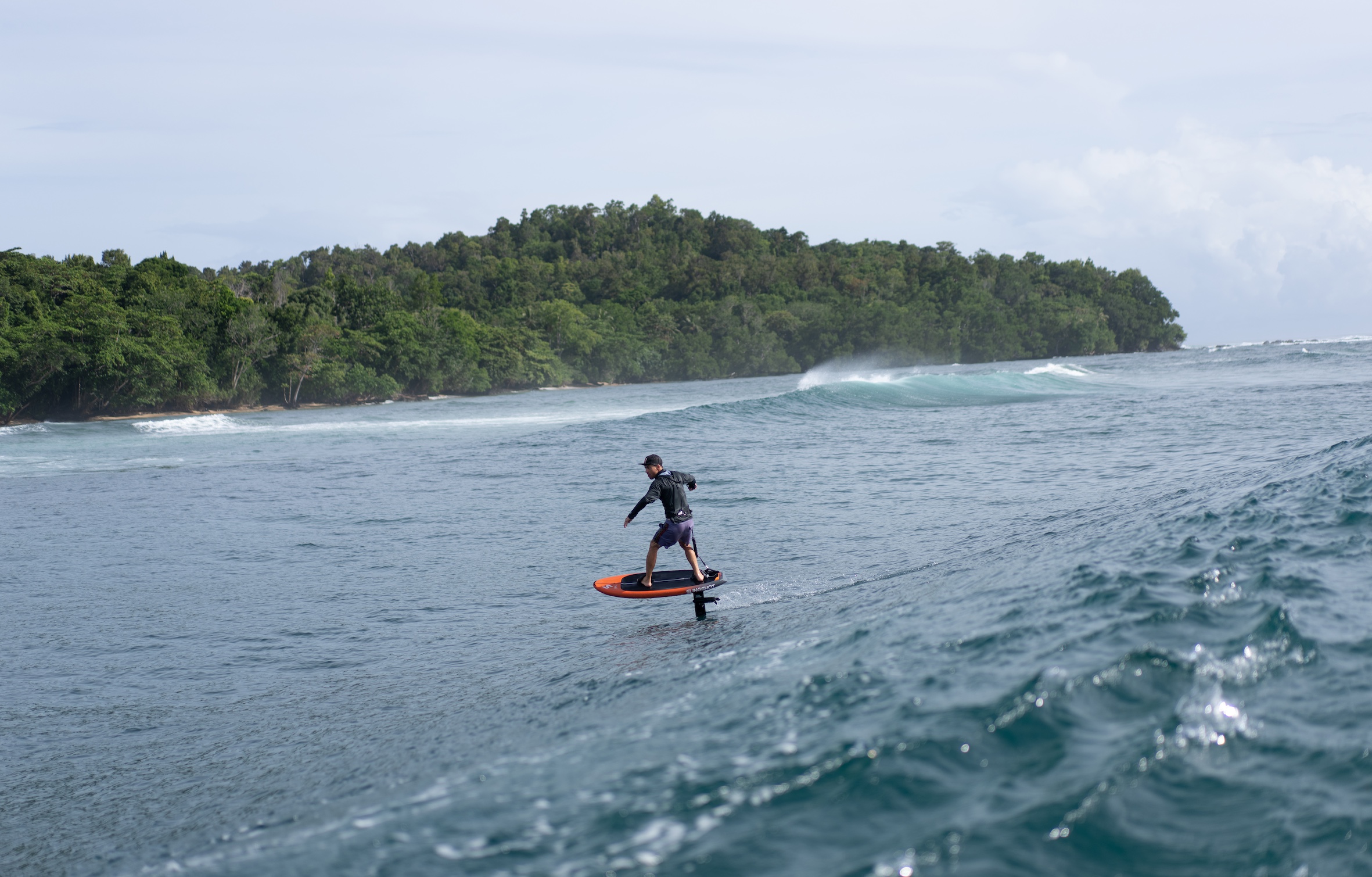
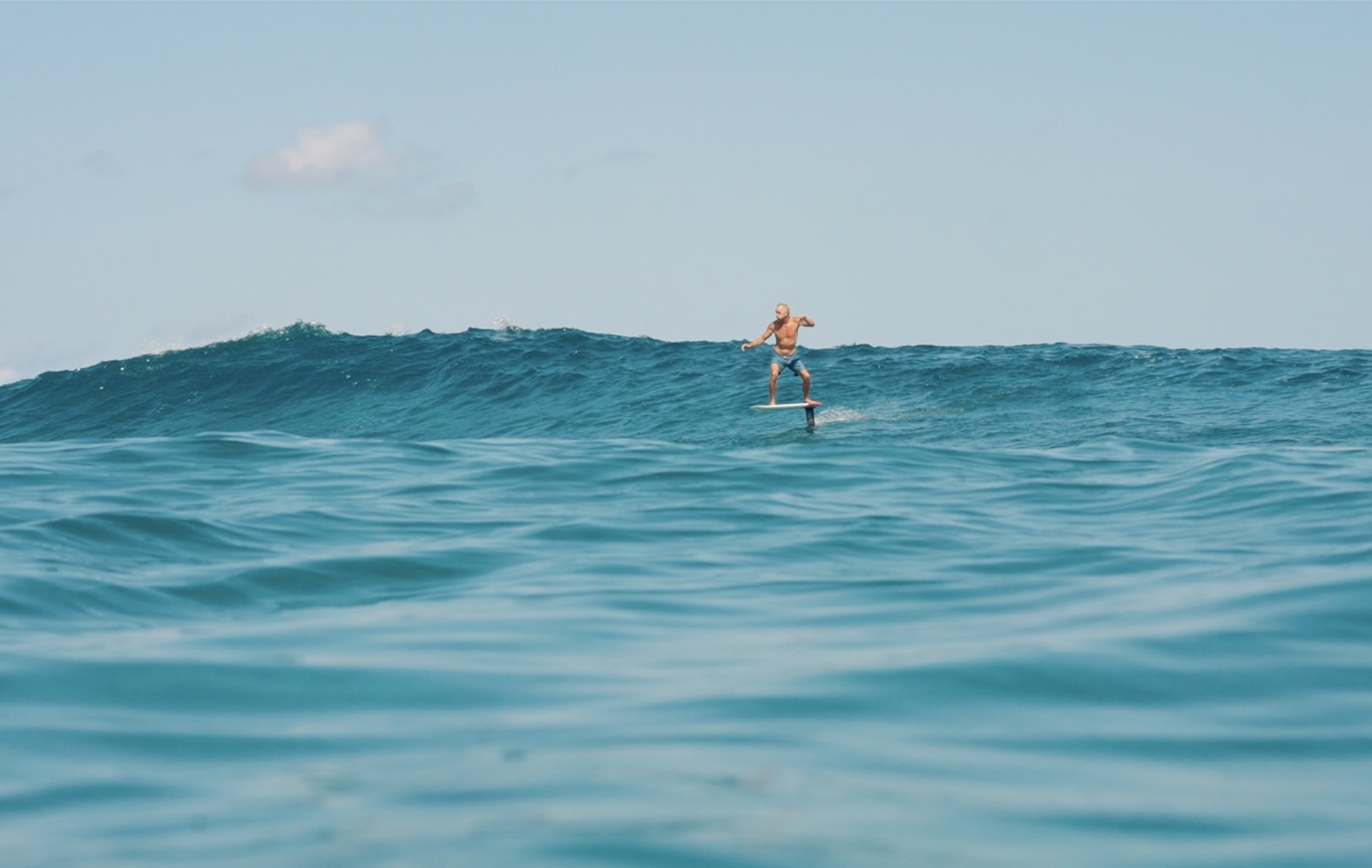
Bryan foiled into some big blue walls:

The dinghy is useful to tow foil boards, but it’s not a ski.  If you get caught inside you’re on your own.

Here’s Bryan between a set and a rocky shore, getting creative with his foil board:

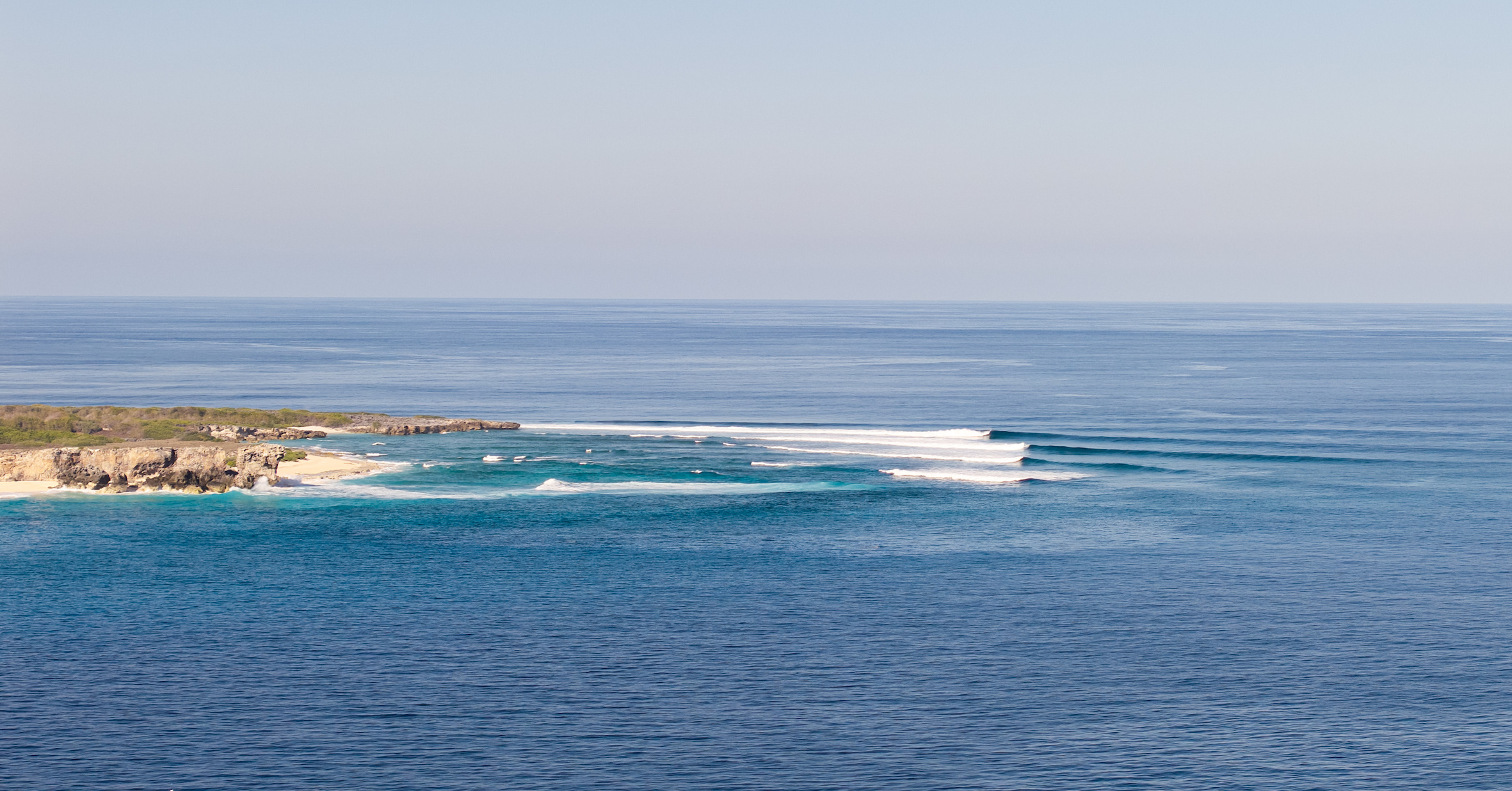
We had noticed this outer reef as we arrived.  The swell was standing up over the reef but not breaking, we thought it could be a fun foiling wave.  You can just see the lines way beyond the boat in this drone shot, farthest out to sea.

On the morning of the big swell, it looked like this:

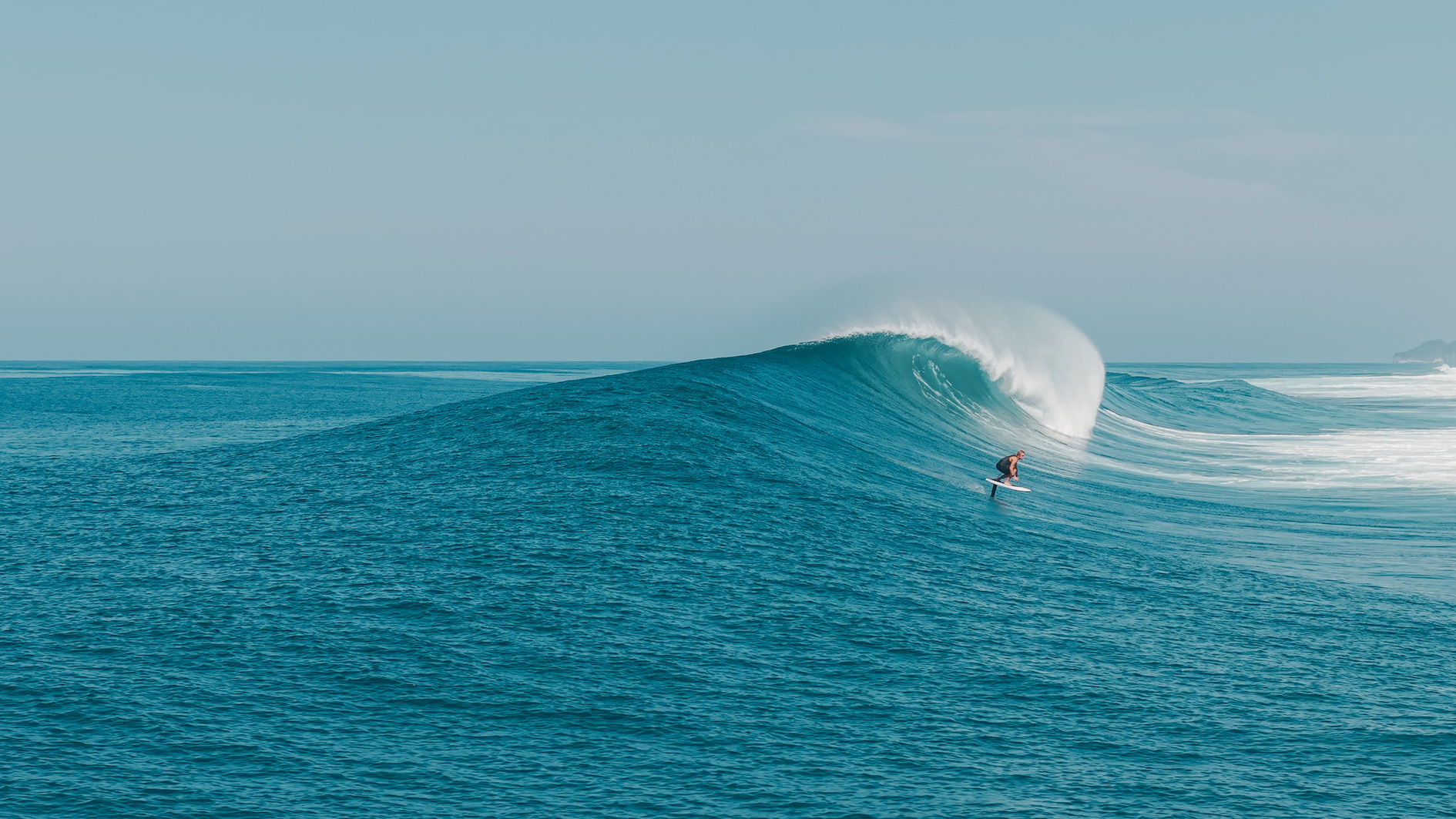
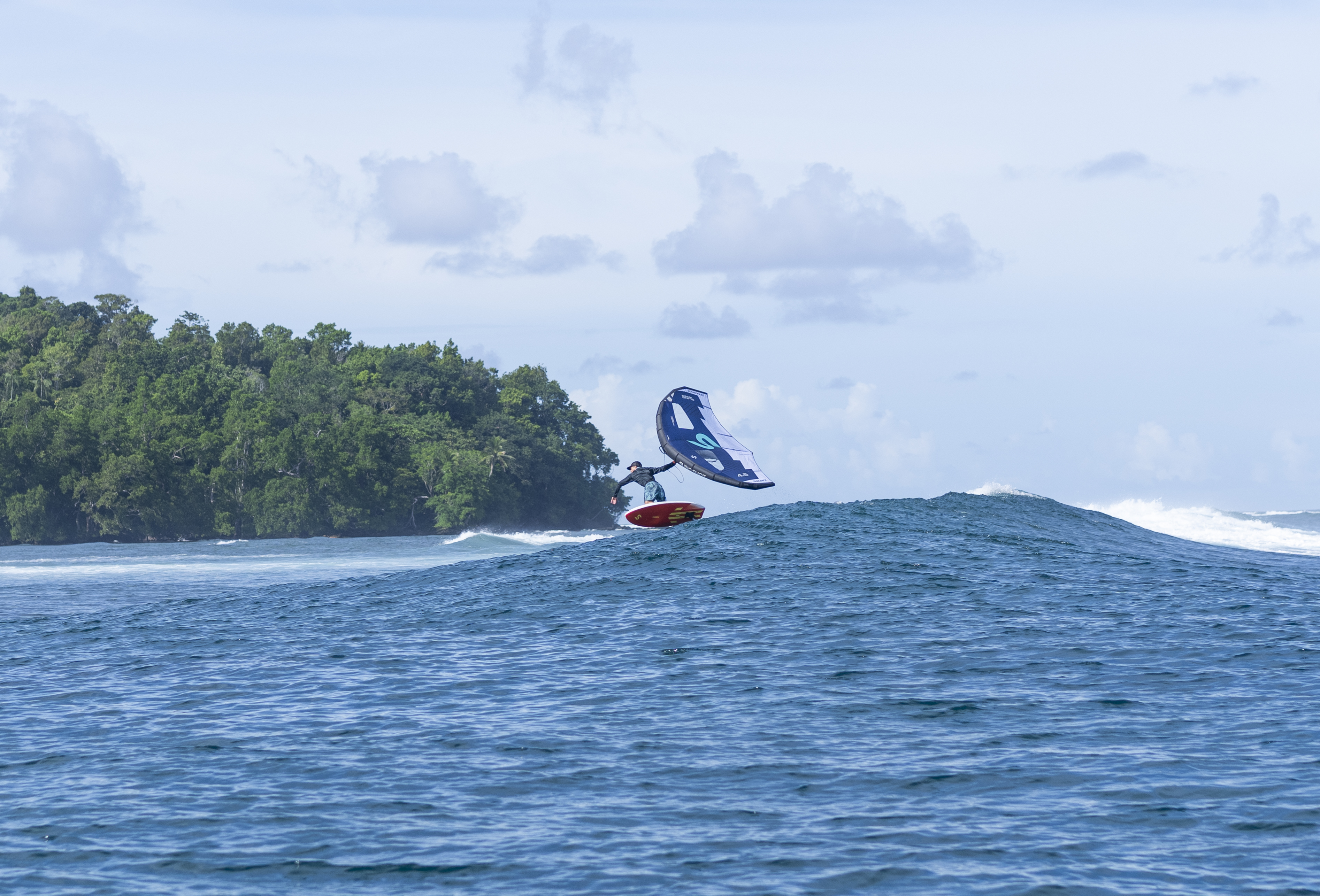
That afternoon, Bryan thought there was just enough wind to wing there.  He proved it to us by inflating his 4.5, jumping off a moving Escapade as we motored past, pumping up onto foil and dropping in to a huge set wave.

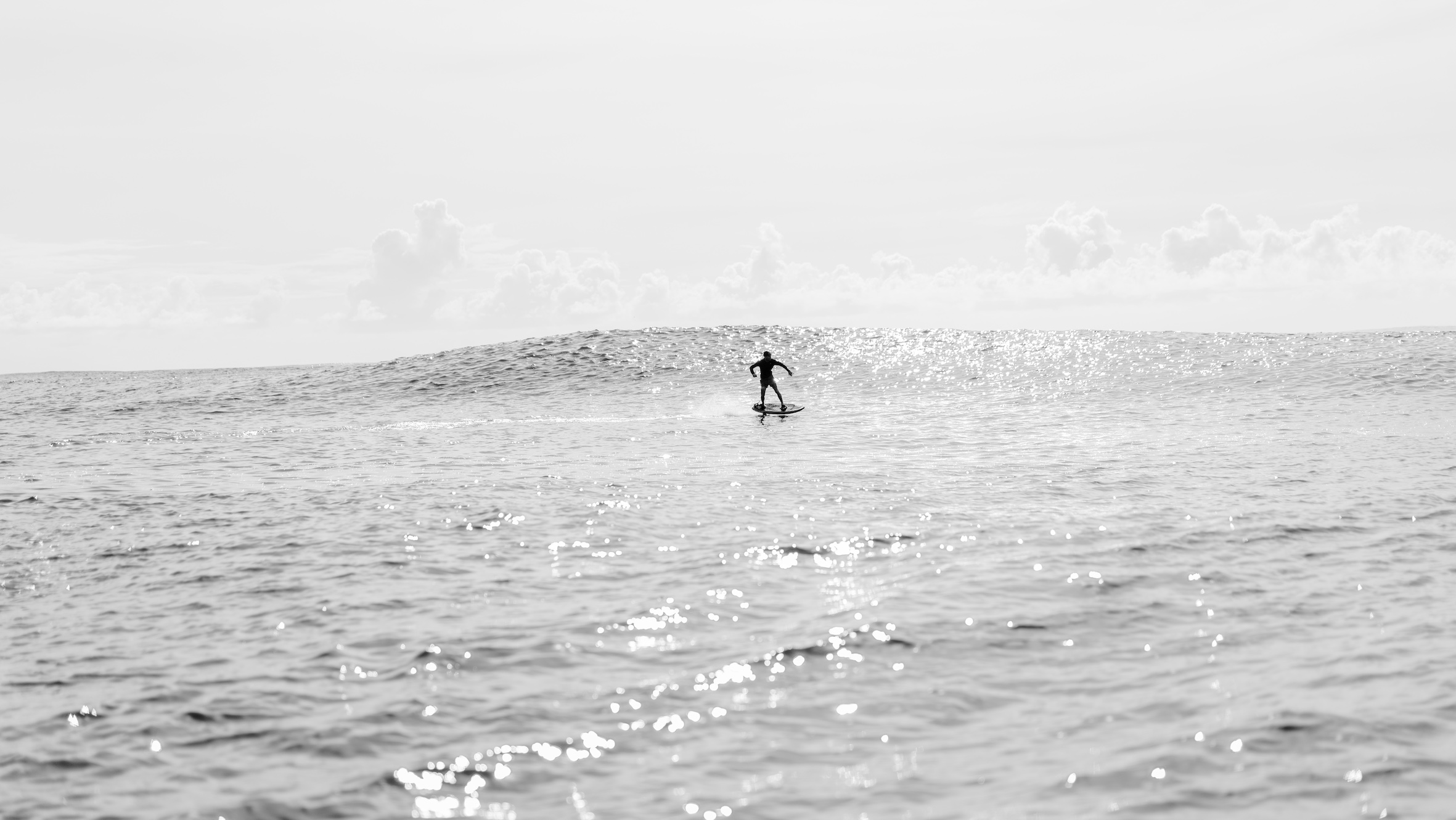
Convinced, we re-anchored Escapade and pumped up some big wings.  Trent and I went off to ride the biggest waves I have ever tried to wing on.  Very grateful to have Bryan in the dinghy on safety patrol for that session. 

Light wind, huge waves, and consequences.  The entire session was a constant risk-assessment, from our first waves to sundown.

Time and space

The boys were joking that Escapade was their space ship, and we were certainly floating through plenty of space.  It can feel like that after a few weeks without much contact with land.  The modern world can be a bit noisy, good to have an escape capsule.  

One morning I was wondering if we had travelled through time as well. I was on deck at first light, pink mist above the reefs. The overture to another day in our splendid isolation.  I scan the vast scene, from lined up waves to the cliffs and wild forested hills and valleys beyond.  No sign of human life, no trace.  Not a person or a building across all the visible miles.  Not another boat in our bay or on the horizon.  Perhaps we had slipped back a few millennia, or just a few hundred years. I doubt this bay looked much different when Captain James Cook sailed through here in the 1700’s.

Here’s that bay (you may need a big screen). You can see Trent and Jack hard at work, bottom right of this photo.

These are some shots Jack took that morning, while Bryan flew the drone.

Trent is modelling a new helmet.

Looks like Jack needs one too.

This morning our left was breaking in shallow water over colourful coral.

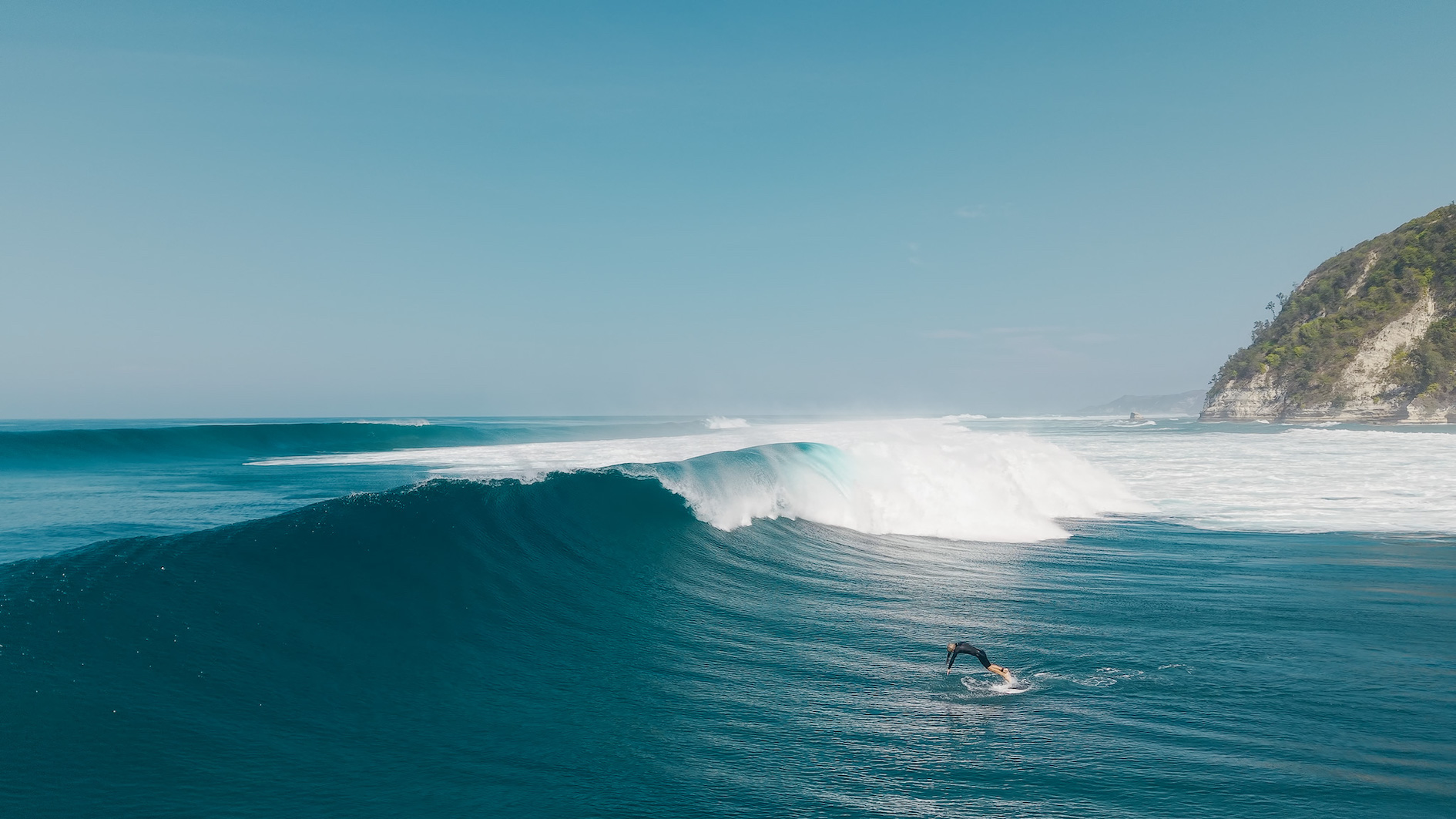
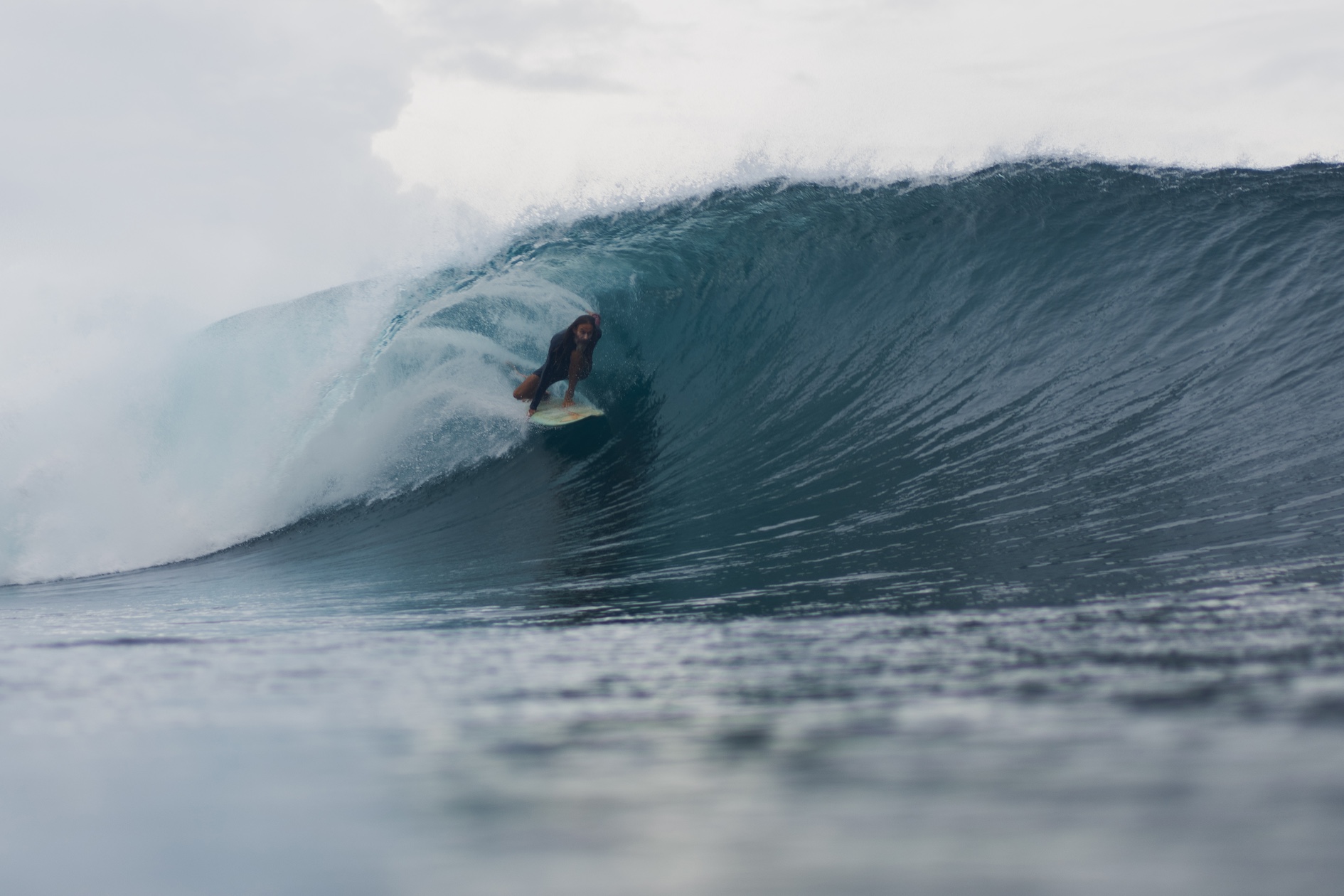
Smooth blue walls peeling perfectly towards us.  Silence between the sets, spray hanging under the limestone cliffs, all lit by the low morning sun.

Just the four of us, scanning the horizon, watching the sets arrive.  Endless waves.  Escapade is a 10 minute paddle away, swinging at anchor in the huge empty bay.  Forest covered hills, white sand beaches.  No wind yet, still no other humans in sight. These really are the moments.  The ones when the whole Escapade project makes sense.  

Riding down a glassy prism of seawater with the reef flashing by under the board.  Dazzling.  Kick out before the end section which gets very fast, and shallow.  A turtle breaks the surface to breathe next to me.  My shoulders are sore from days of paddling, but maybe just one more wave before breakfast.

I still love to be in those wild places, just us and nature.  Anchored in a giant amphitheatre of a bay with our private surf breaks.  Splendid isolation indeed.

Talking of isolation.  Bryan likes being on the boat.  I’m often keen to swim ashore, interact with some native islanders, see some local colour, buy some fruit, try to practise some Bahasa. 

Bryan would rather be on Escapade.  He doesn’t like swimming, insects, or having to walk somewhere, particularly up a hill.  We were anchored off Sumba for two weeks and he didn’t set foot on land.  In fact apart from one quick sprint across an uninhabited island to retrieve his leashless board, I think he hasn’t been ashore for a month. 

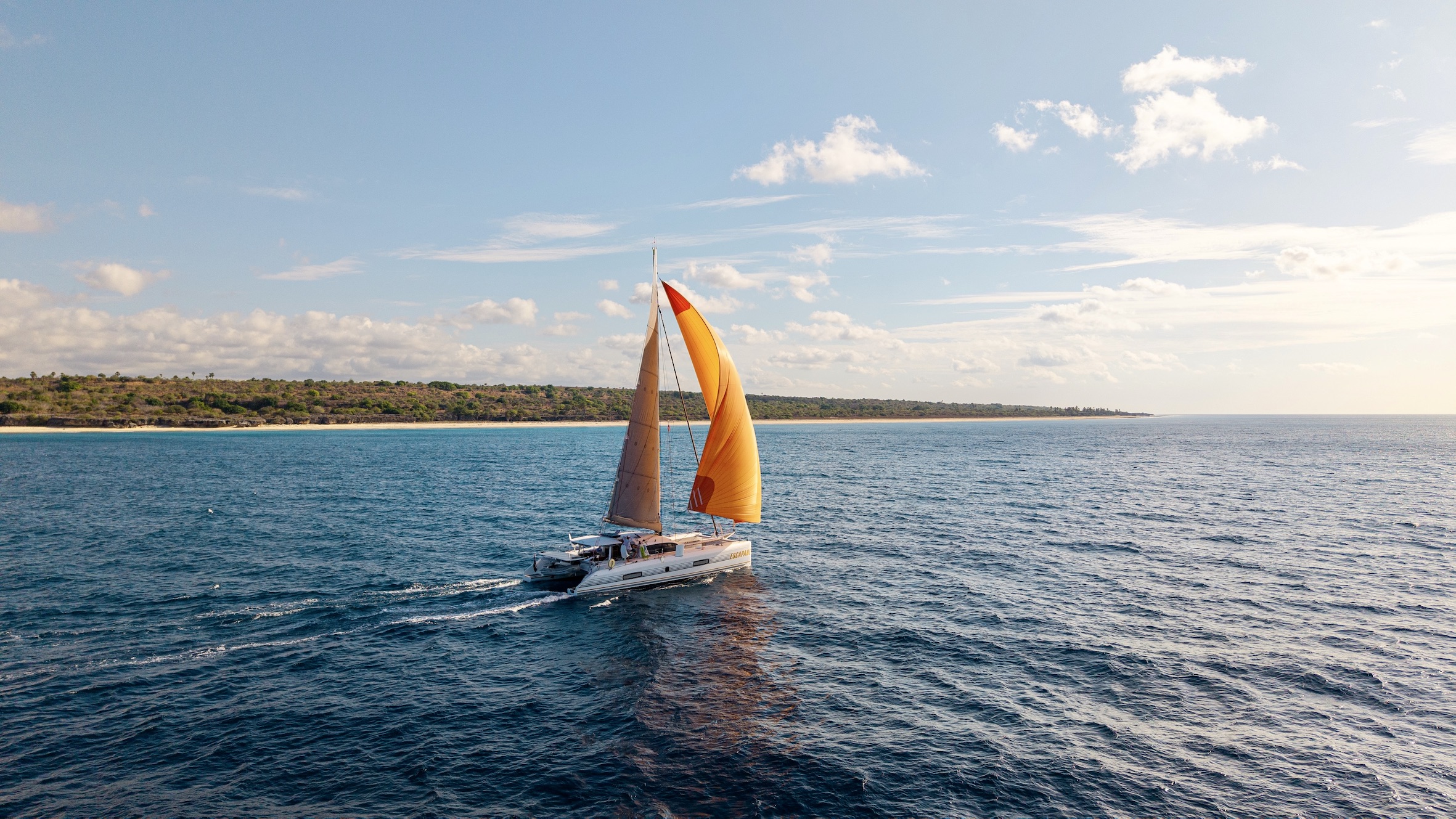
The trip to Sumbawa was too far to sail in the hours of daylight, so Trent and Jack experienced their first overnight passage.  The new crew are enjoying sailing the boat.  The winds were so light that in six weeks they never even had to pull down a reef, but the big red gennaker was furled and unfurled without a raised voice.  

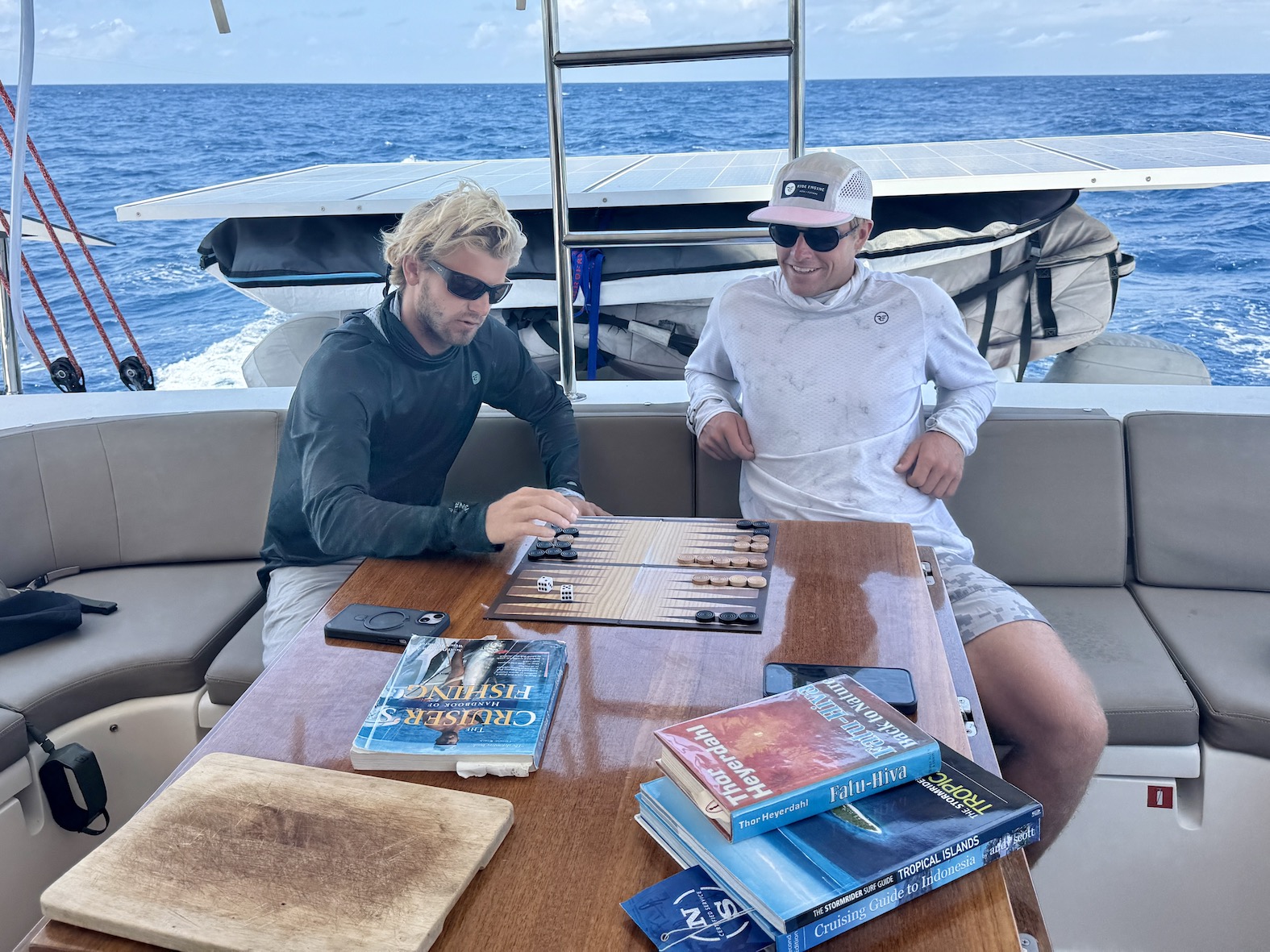
Here they are competing as usual. Backgammon was soon replaced by a month-long chess tournament.

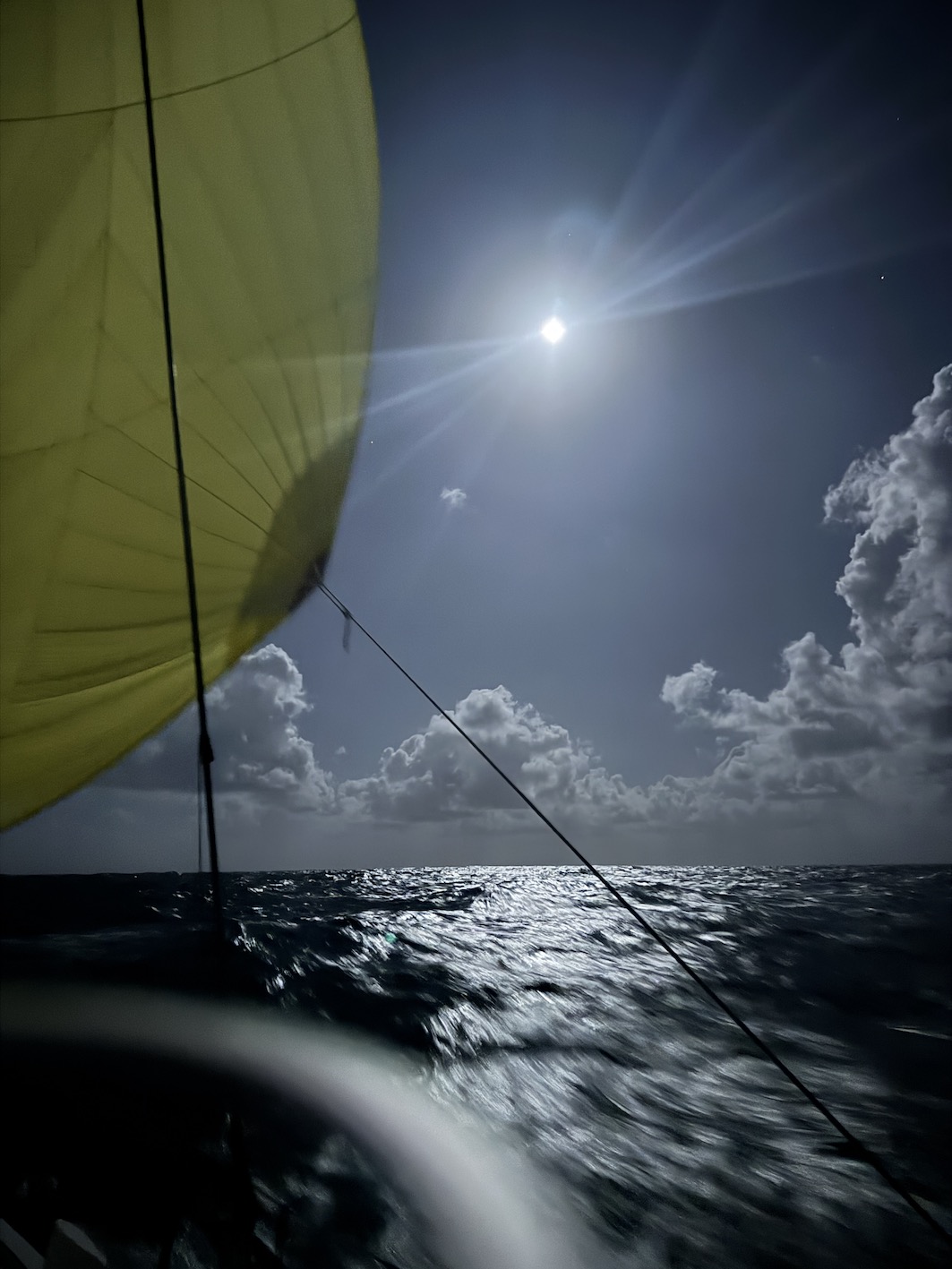
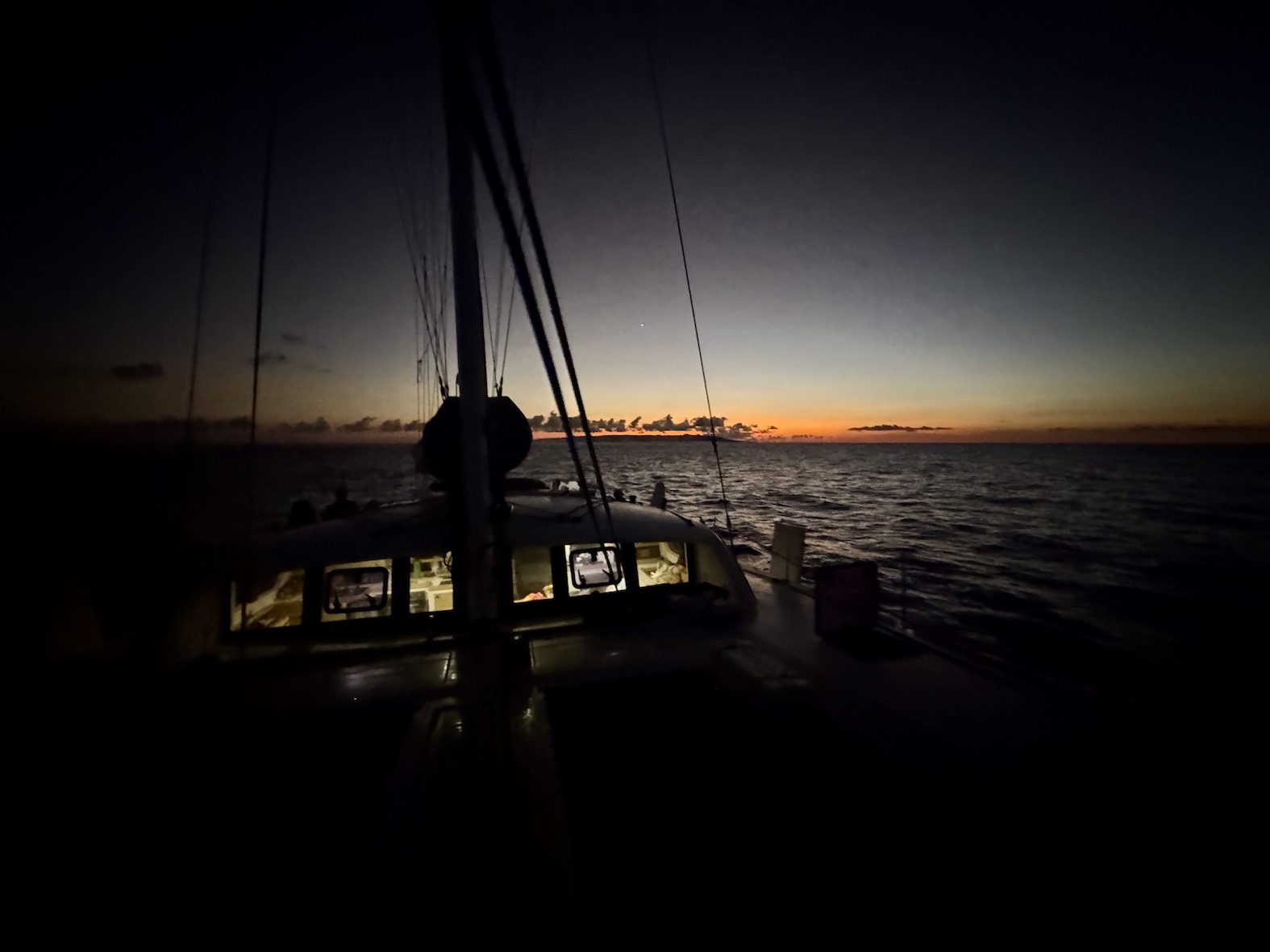
A smooth, moonlit night brought us to Sumbawa.  

Moonset on my daybreak watch:

Another anchorage tucked between a right and a left.  And a windy few days to play with the wings.

The sessions piled up.  

The crew are busy riding and filming.  It’s relentless.  Jack and Trent bring boundless youthful energy to the project, in the water for hours every day.  Bryan is a veteran of years of photo shoots; chasing forecasts, finding locations, seeing the angles, setting it all up, getting the shot.  Plus dealing with all the camera gear and housings out in the field.  Now he’s able to share some of that hard-won wisdom.  Everyone benefits.  That young energy fills the ship, this crew can surf all day.  The non stop-banter starts around 5am if there’s a glassy morning, continues through the multiple sessions in the water, the cooking and eating of all that food, and is still going long after I have retired to my bunk.

Surfing and winging, day after day takes it’s toll.  Whether you’re 23 or 60, now everyone is hurting.  Shoulders, necks and backs need stretching and a massage in the village.  And maybe a Bintang.  We finally got Bryan onto some land, with the promise of a bar and a pizza.

A chance conversation with a local led us to a remote headland twenty miles away.

Only reachable by boat, perhaps there’s a wave, perhaps there’s an anchorage.  It wasn’t much of a detour, and we found yet another private playground.

So it was a very full and wave-rich trip.  But also a very challenging one, technically.  Escapade demanded far more attention than usual. Two diesel engines and the outboard, faults to be diagnosed and corrected, problems to be solved, spare parts to be procured in the most remote locations.  Bryan is a wizard, he will not be defeated by a problematic combustion engine.  Or even a complex network of electronic marine instruments.  We had an intermittent fault which flickered through the readings from the wind, heading, depth and GPS sensors.  I called it a ‘ghost in the machine’.  It got worse, eventually leading to loss of data to the auto-pilot, imagine that, we actually had to steer the boat!

In a final stroke of genius at the end of the trip, Bryan doggedly worked through a process of elimination to find and fix the fault.  His forensic research found my ghost hiding in a circuit in the wind-processor unit.  He wired a by-pass to solve it.  Ghost busted.  All instruments working again!  Lucky there were no goats around that day.
Escapade is now tied up in Lombok while the wet season blows through.

Thanks again to my crew, it was great sailing with you. 

Special thanks to Jack for all the action shots! 

Getting Stuck In Rote

The long story of a failed engine part that delayed us long enough to fall under the spell of a special island.

So just to re-cap:  Bryan and I were at the end of a long sail south, two weeks of sailing mainly by day but sometimes at night.  We were aiming for Rote.

It was the start of April, towards the end of the cyclone season, which is followed by the SE monsoon.  We hoped that SE wind would waft us all the way to Lombok, where I had a mooring reserved for Escapade.

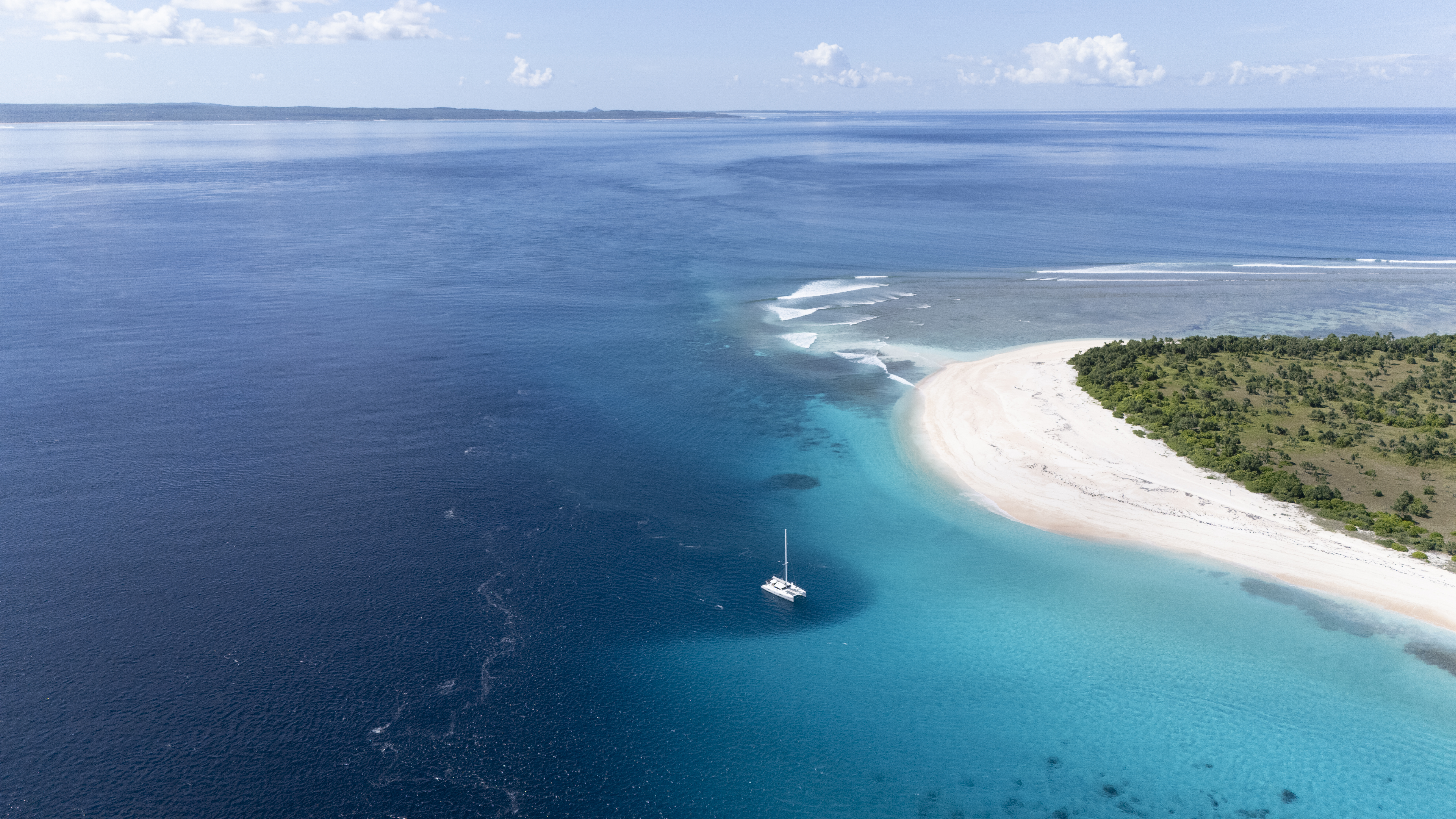
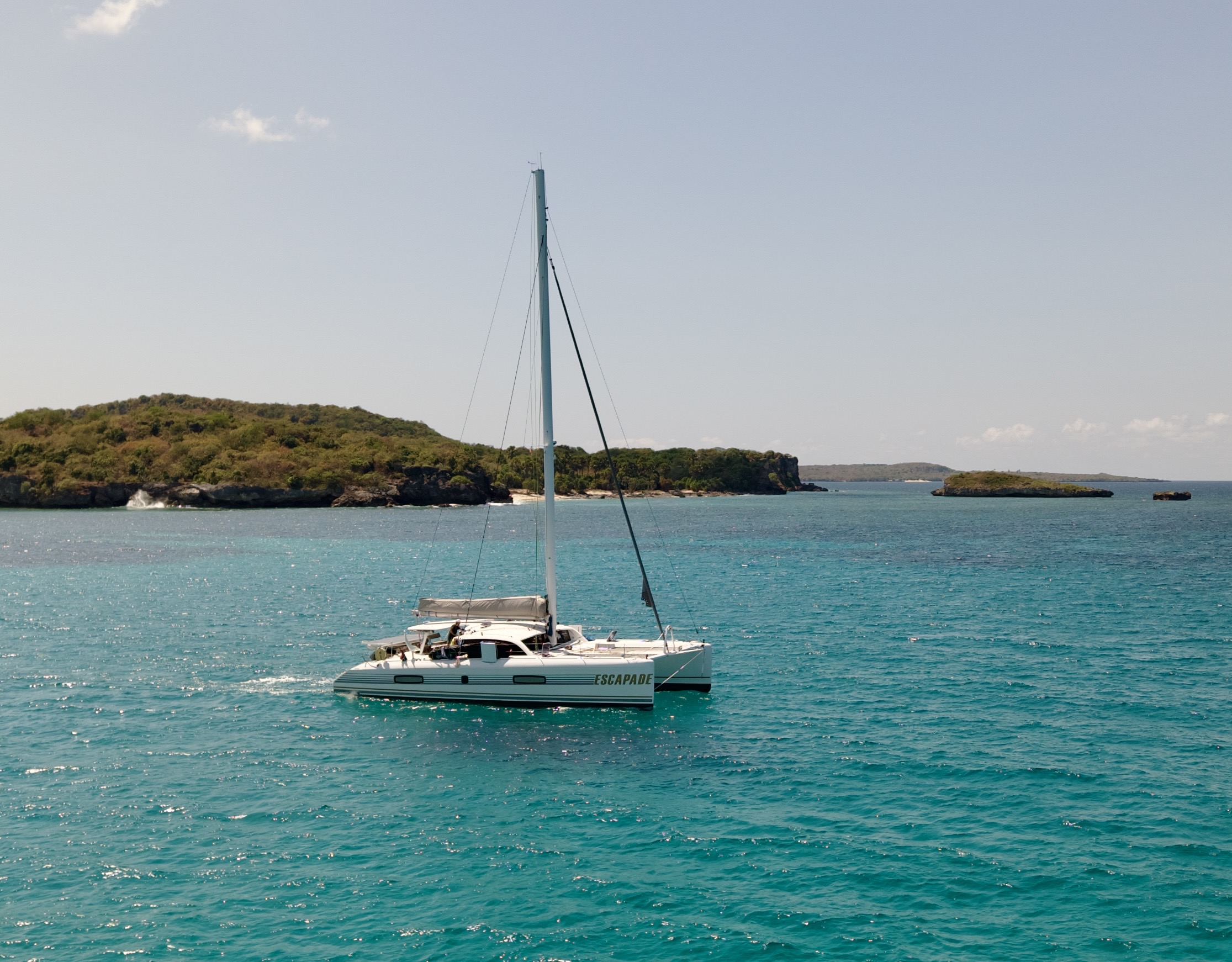
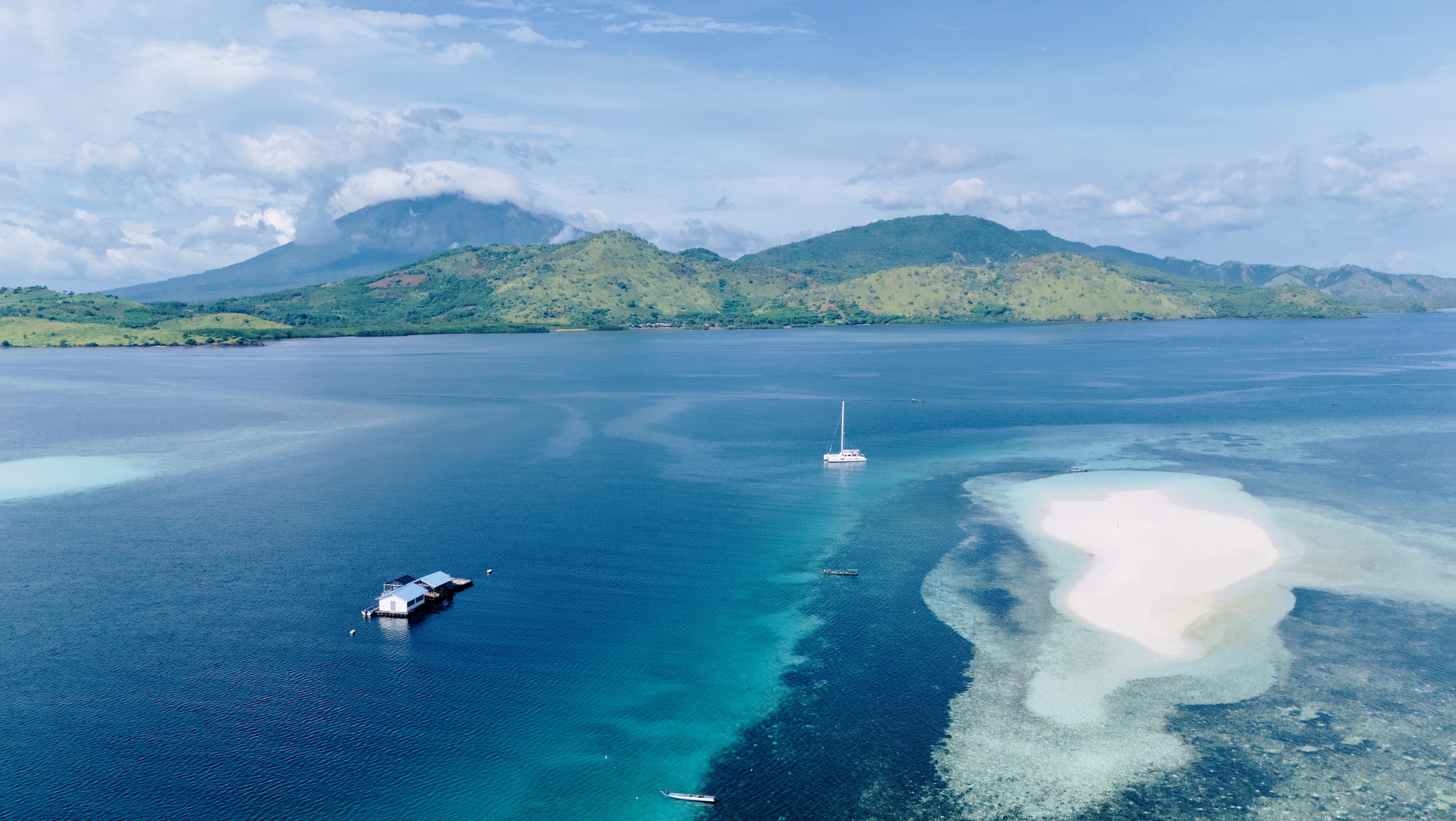
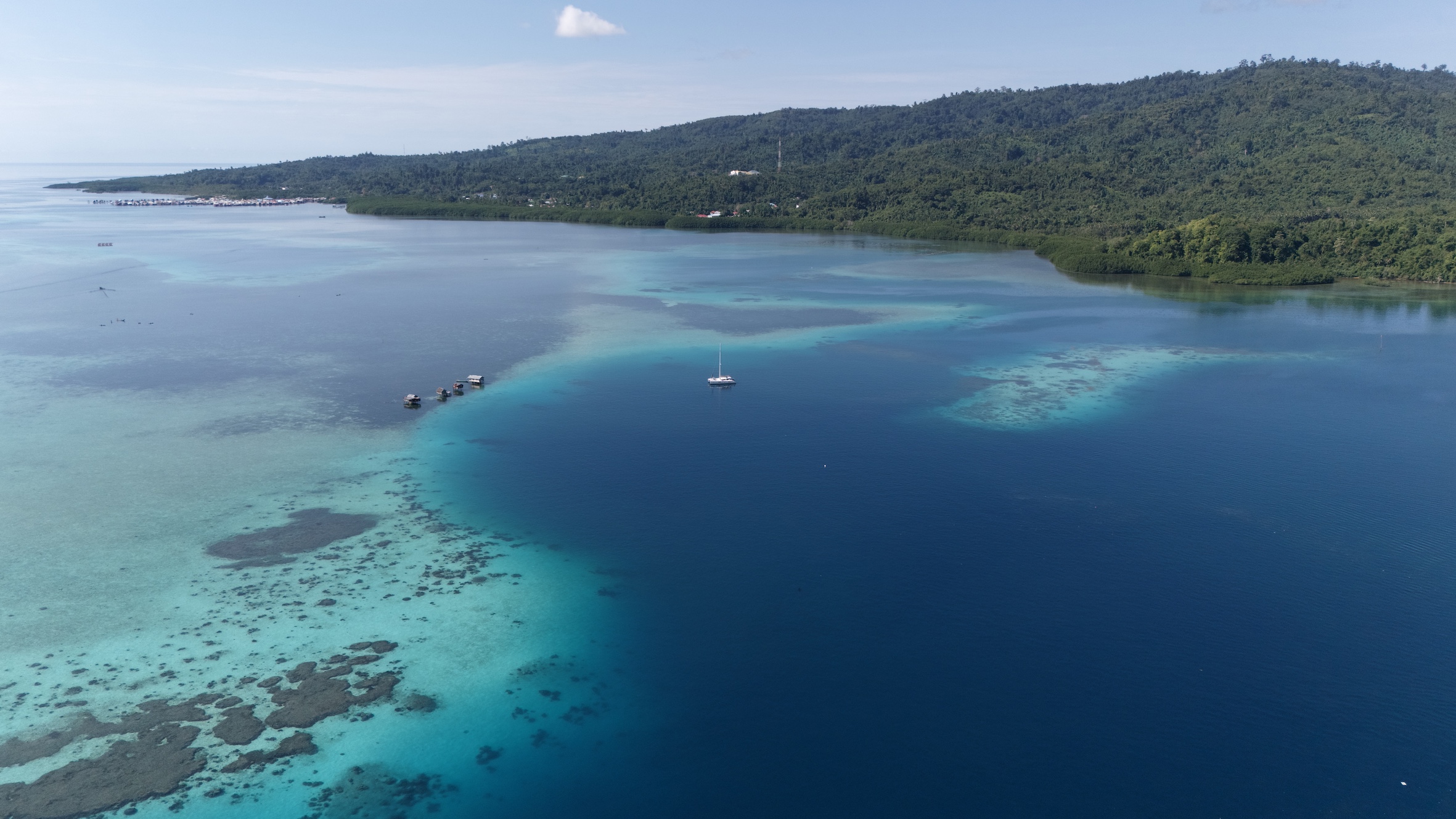
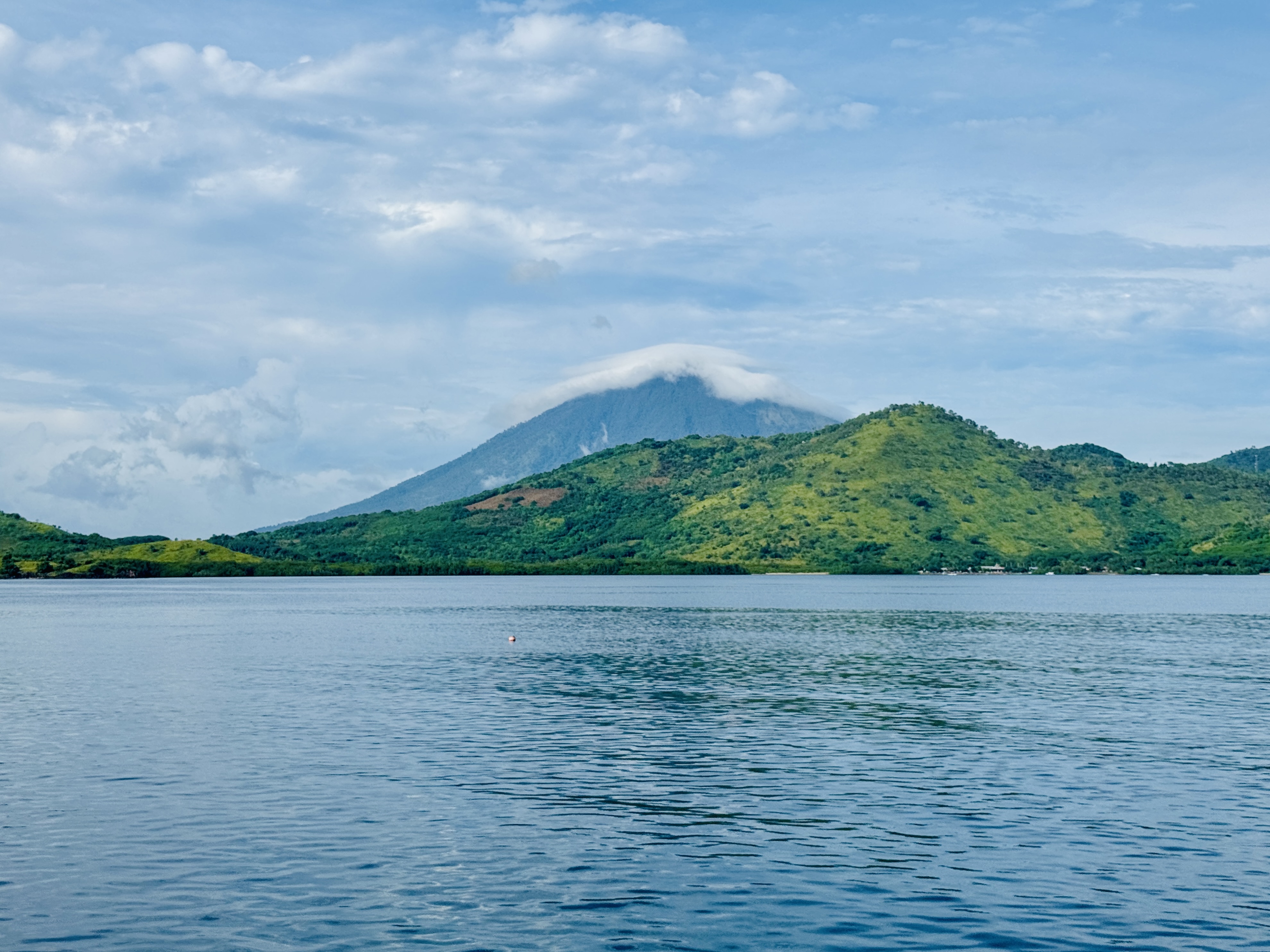
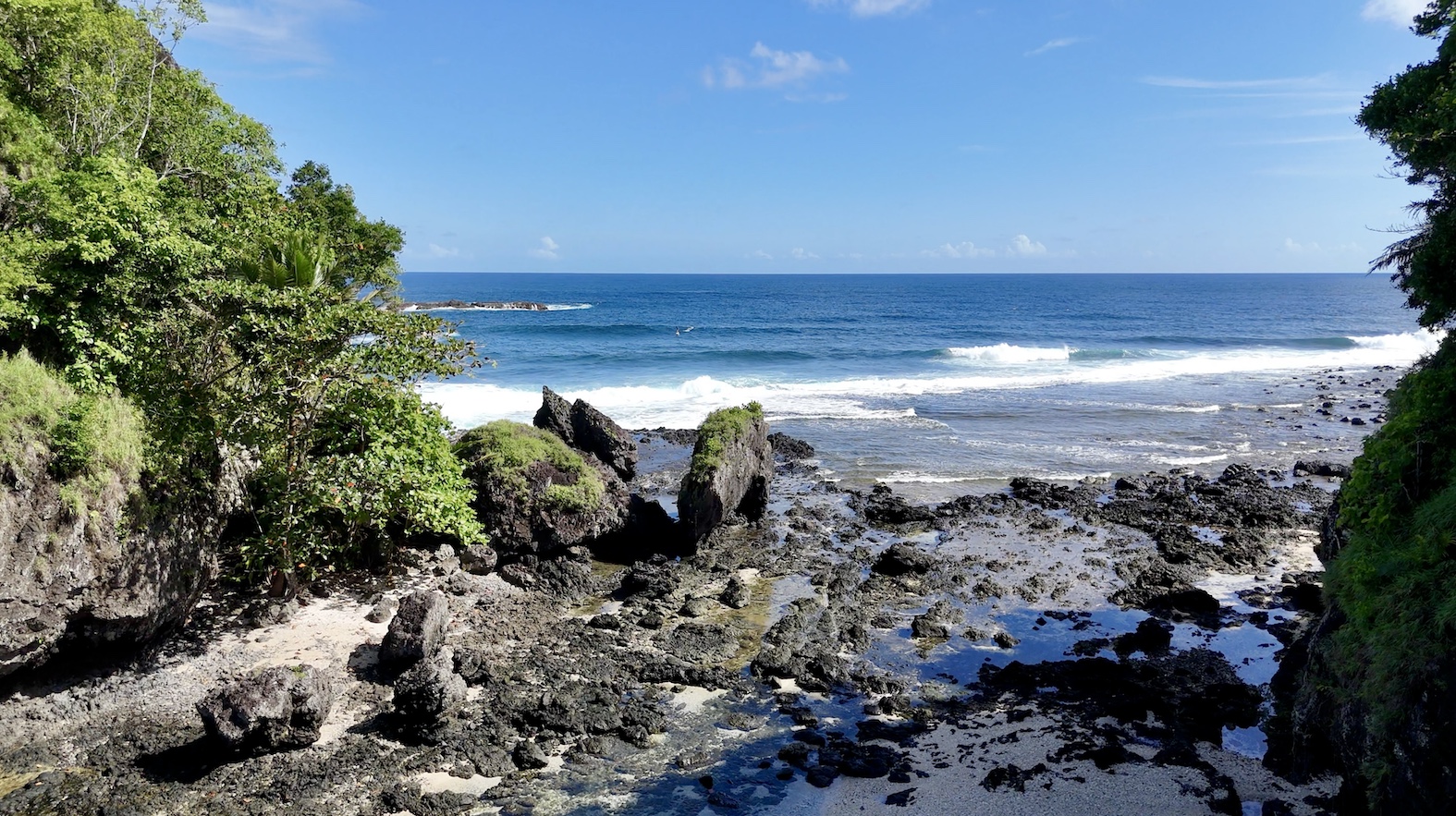
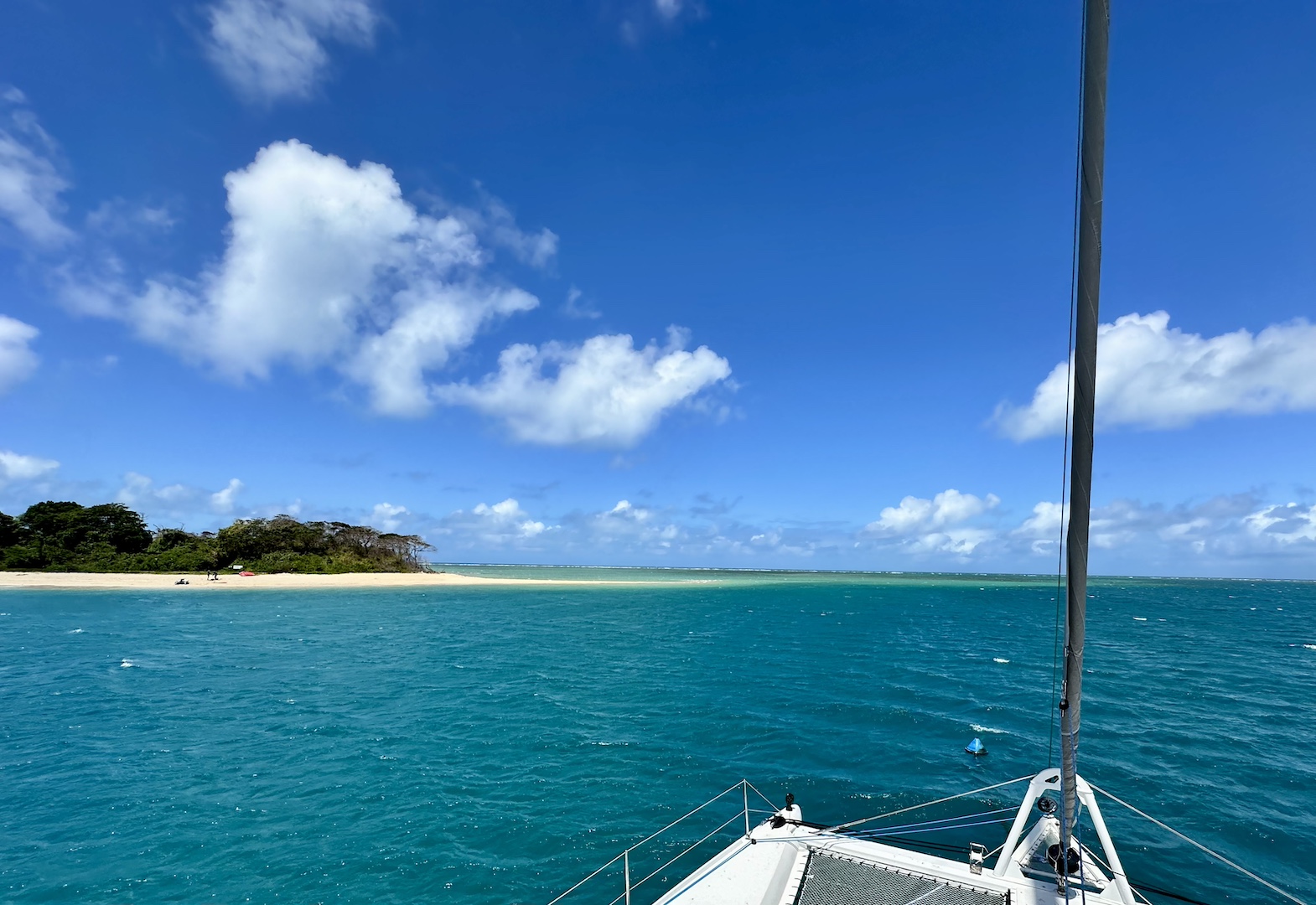
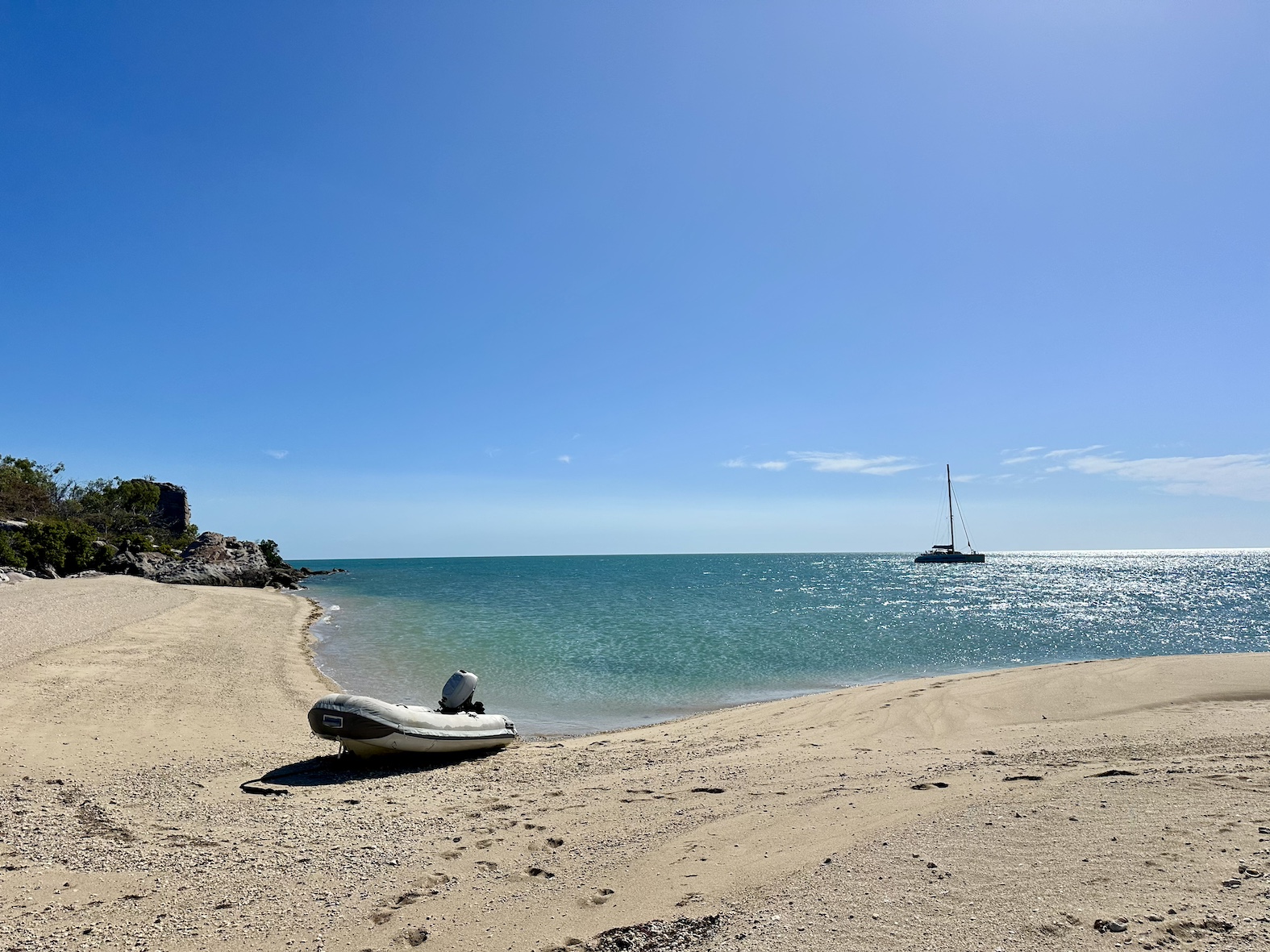
We were within sight of Rote on that last morning at sea, when we sailed past this little uninhabited island. (Photo above).  We passed close enough to notice a turquoise sandy patch for our anchor and a deserted right hand reef break.  Far too good to sail past.  Hook down.

We rested up there for a couple of nights at the end of our voyage. The lights of Rote were twinkling across the water.

I had been hearing the name Rote for years.  It was my friend Manu on Maui who first told me about a calm anchorage surrounded by beautiful waves.  I made a mental note, in case Escapade ever actually sailed as far as Indonesia.  Well here we were at last.   The next day a local boat motored by, carrying sunburnt tourists.  It was actually a shock to see white people. And bikinis!  This was the end of our tripping through the less-visited islands.  We knew Rote is on the map these days and we would not be the only Bules in town. 

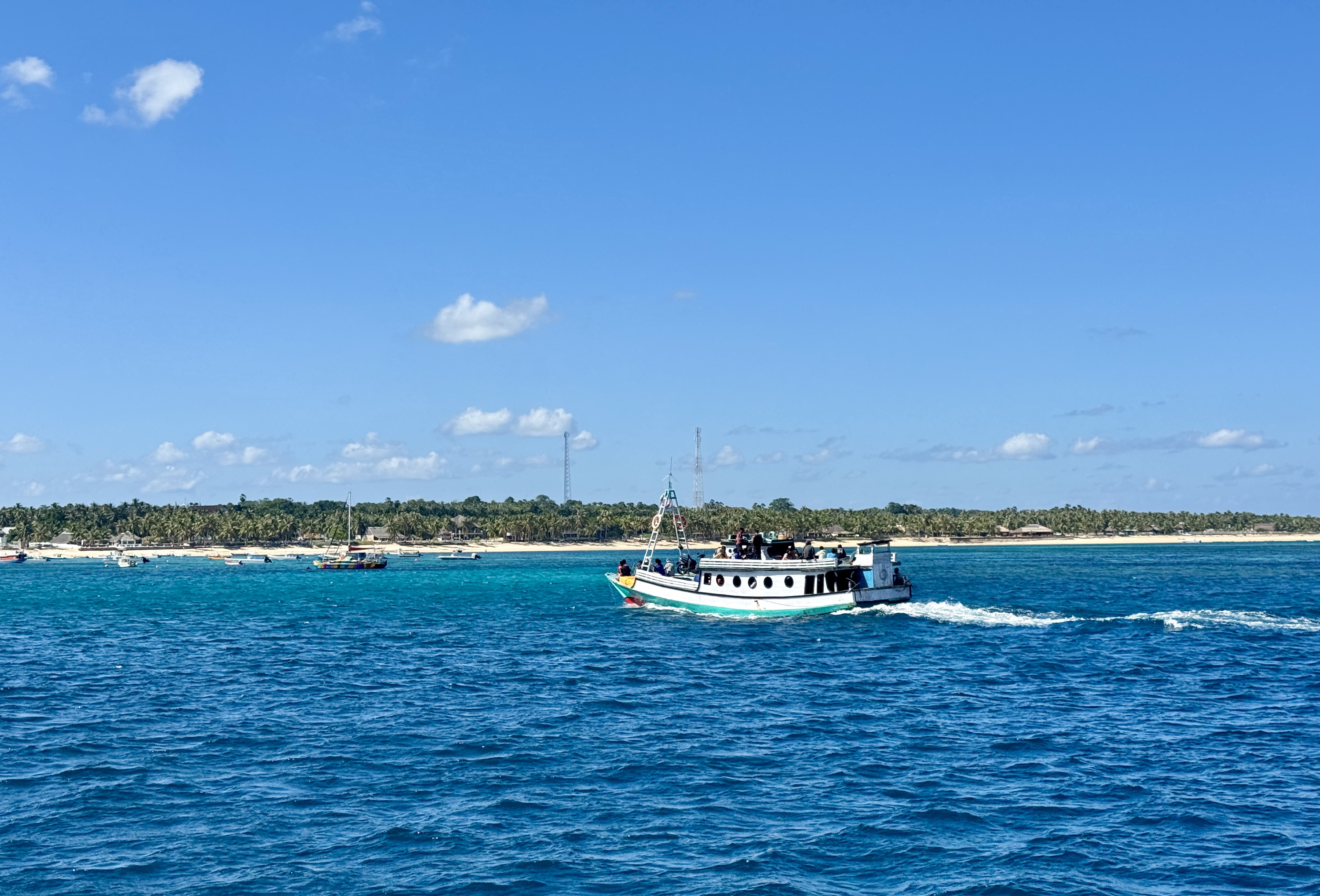
The charming village of Nembrala now welcomes wave hunters from everywhere.  For us it seemed we had arrived in a completely different country.  The local population is mainly Christian, so this was our first populated anchorage in Indonesia without the call to prayer reaching us over the water.  And there were plenty of Bules: Australians, Europeans, all here for the start of the surf season.

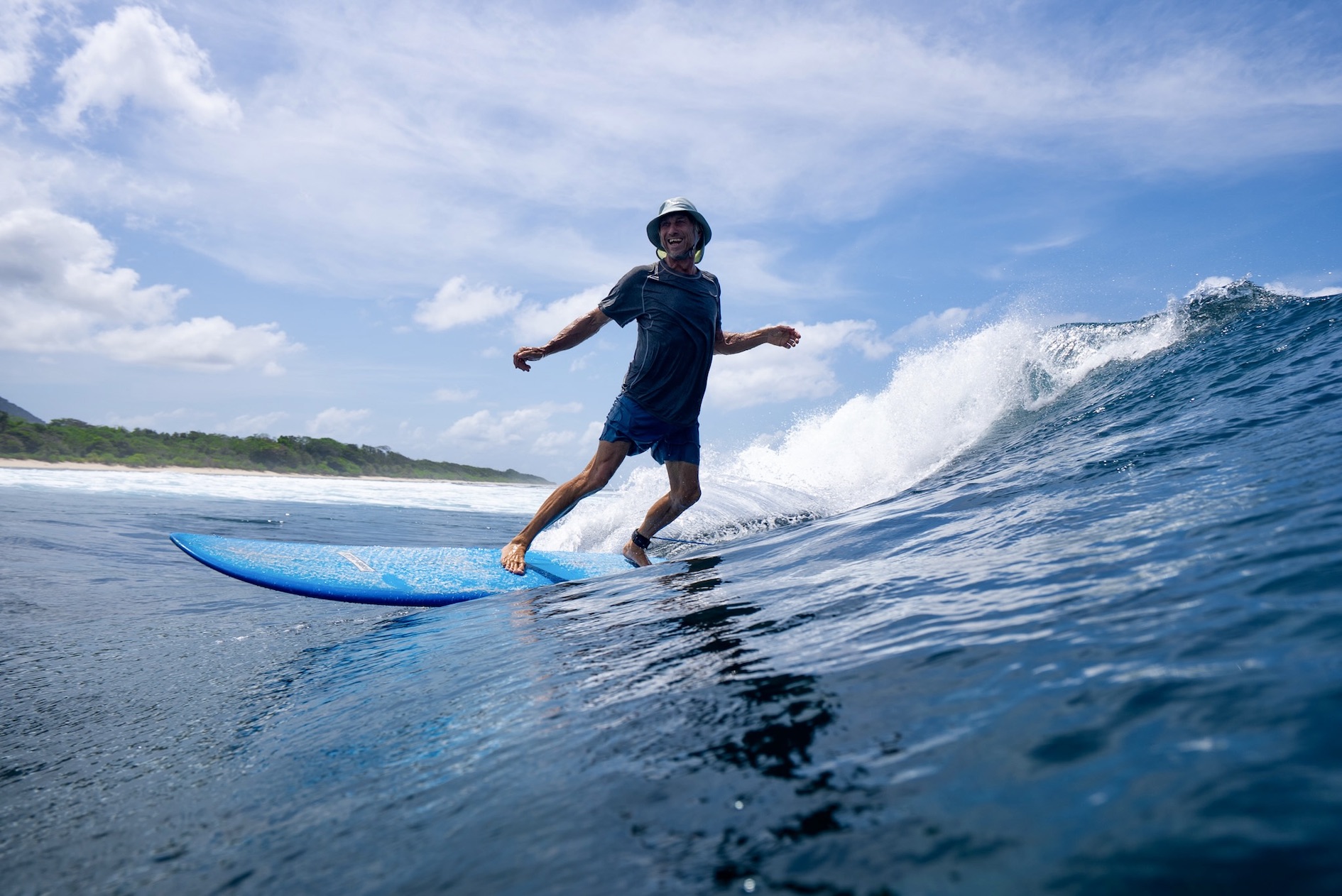
The left-hand wave is a gem.  Long rides down a wall that just keeps standing up for more.

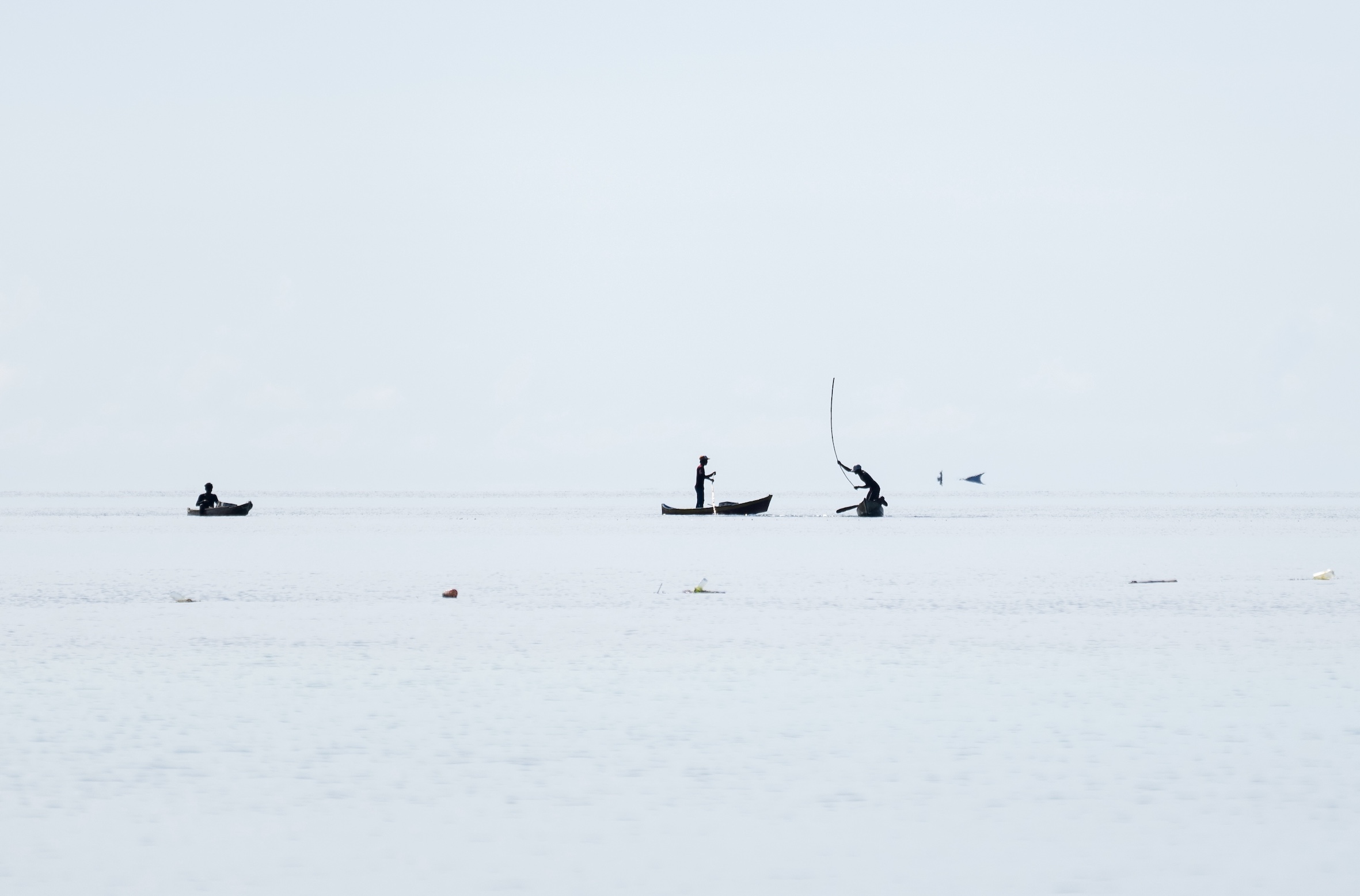
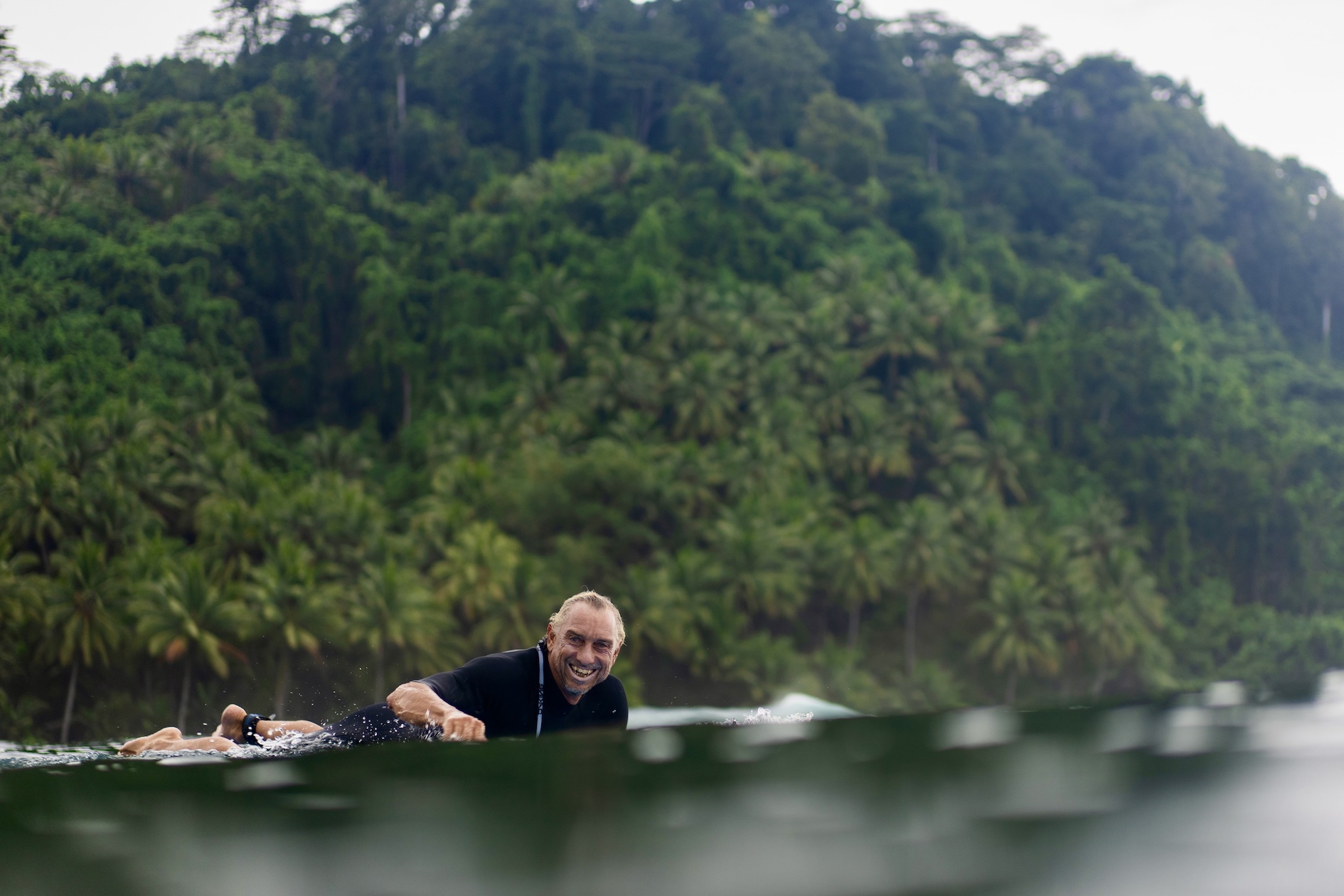
We adjusted to having other surfers in the water.  The taxi boats come and go bringing people out to the wave, but every so often we found ourselves alone, once with a few frolicking manta rays for company.  

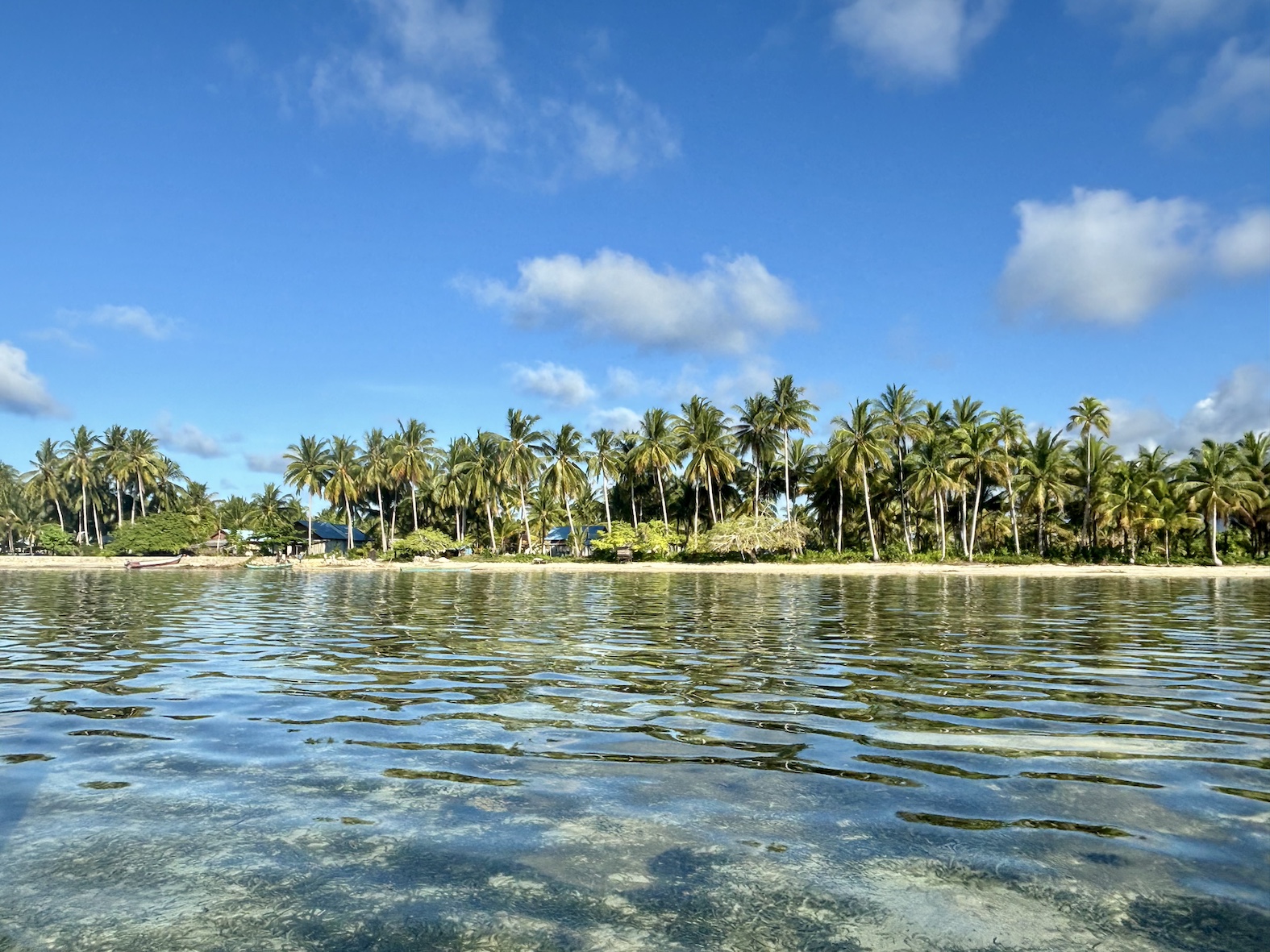
Then we ventured ashore, dragged the dinghy up the beach and wandered through a coconut grove to the village.  Goats and pigs foraging among the palms, cows sitting on the road.   An occasional scooter passing by.  Children doing wheelies on their bicycles, and a few expats drinking coconuts, or beers.

(Nembrala was the first place we could buy a beer since Sorong, and that was about 1500nm back!) 

The first pioneering surfers slung their hammocks here decades ago, some are still here.  But now there is everything the travelling surf crew need, comfortable accommodation, good coffee, little beach front bars, and pizza.

But the place is still low key and very charming.  

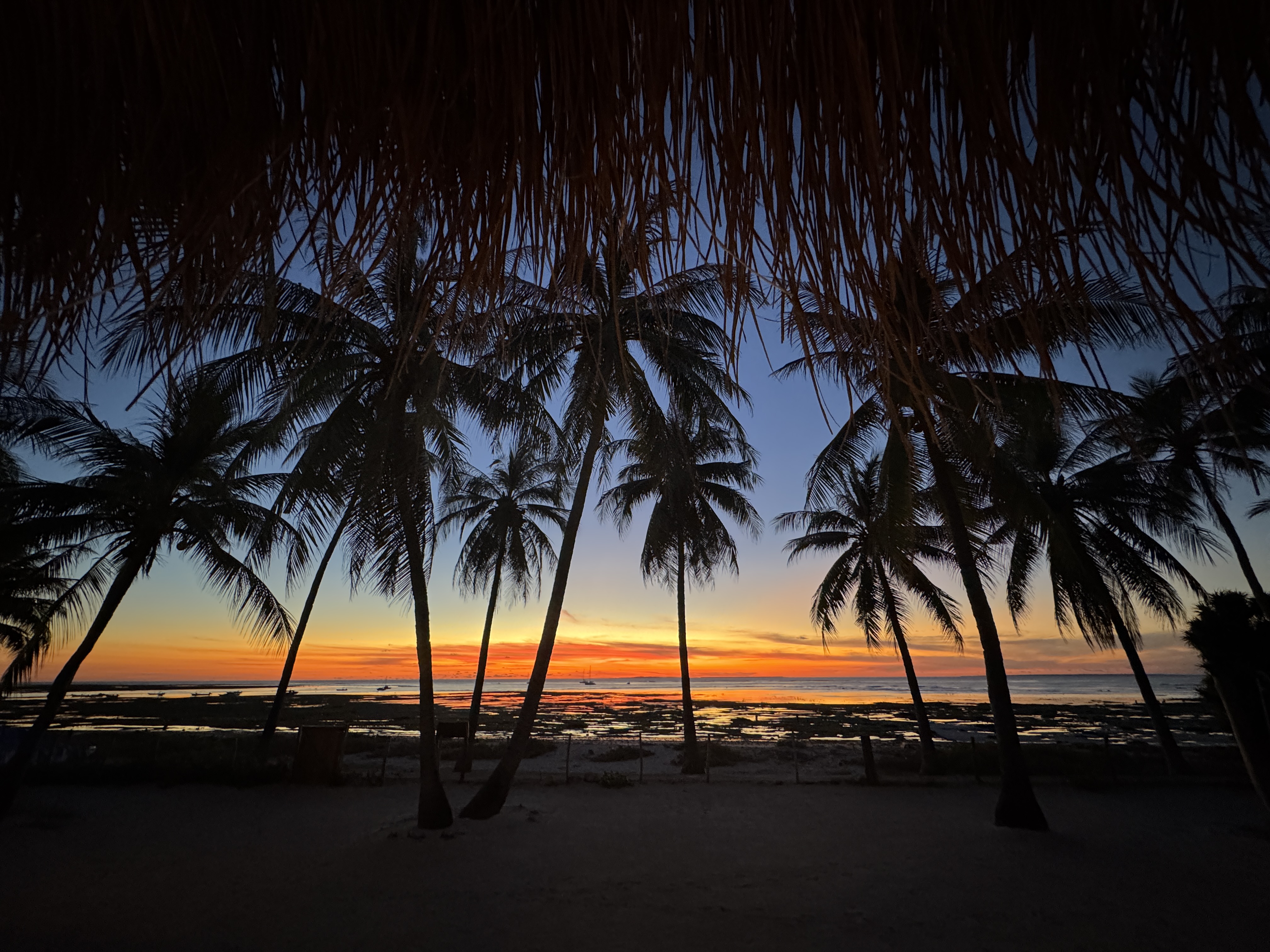
Walking back to the beached dinghy one evening, through the quiet coconut plantation, I had the feeling I could be very happy here.  The Rote magic was working on me as I made my way through the many free-range children and livestock, clouds of dragonflies, all lit by another staggering Nembrala sunset. 

Bryan and I explored some of the local waves.

But it was not all perfect waves and sunsets.  We were still trying to diagnose a problem with the starboard engine cooling system.

And this was still the end of the cyclone season.  We were watching one system very closely for a week, before it spun away, well south of us.

That storm risk sent us in to the protected bay of Oeseli, where we met our new friend Julius and first started to consider leaving Escapade there, instead of continuing on to Lombok.  Julius is running a new ‘marine services’ operation in Oeseli, really the only one for hundreds of miles in any direction. 

Our wives came to visit!

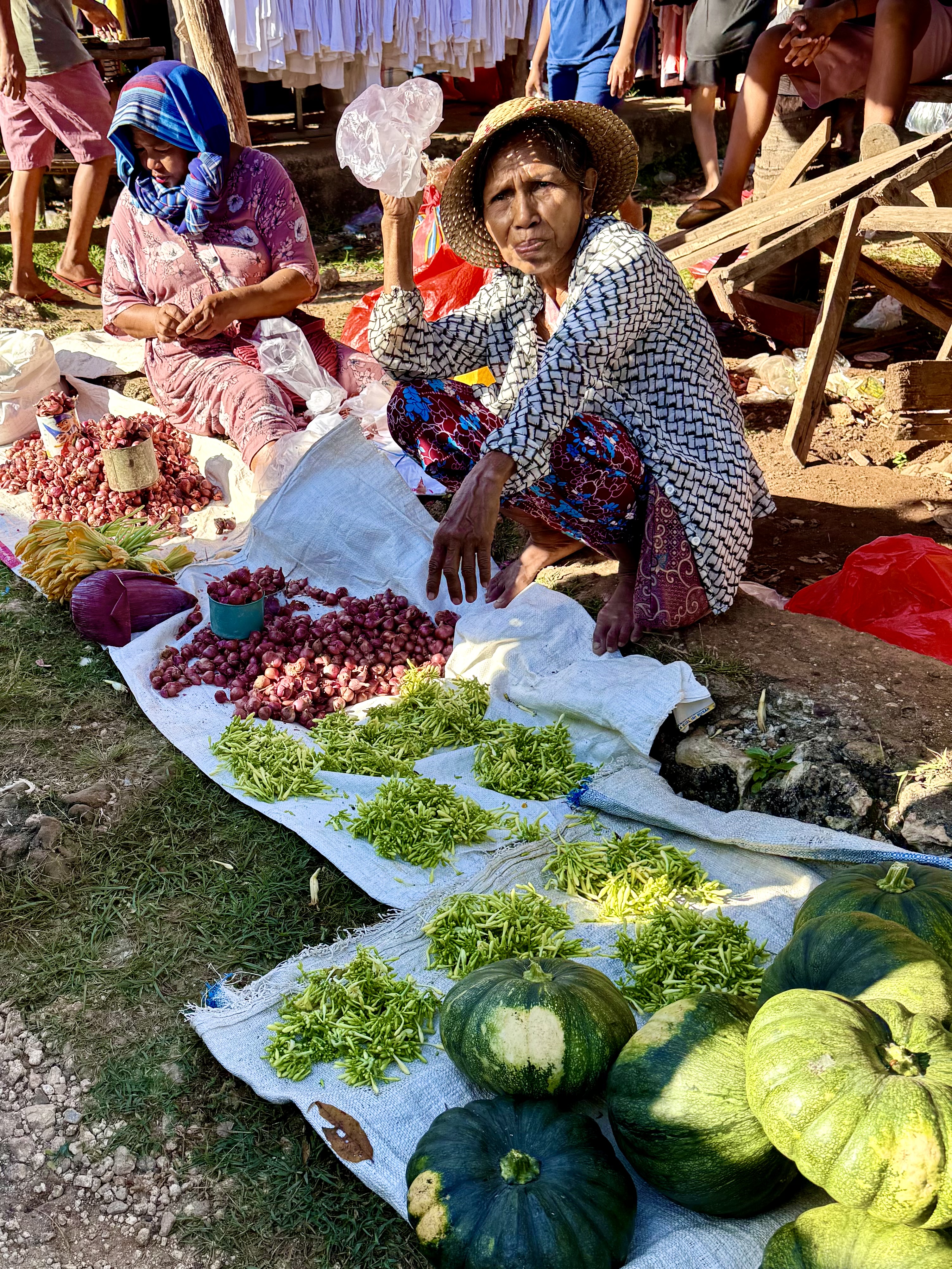
We provisioned at the weekly market, full fridges for a bit of local island hopping.  Then we had a wonderful few weeks holidaying with Dawn and Auriane.

By this time we had some boat projects underway, with engine parts to be sourced, imported and fitted.  Dawn arrived from Guernsey with a new hot water tank, not a small item of luggage!  A heat exchanger was transported from Brisbane to Escapade involving a huge cast of helpful friends but seemed to be jinxed to never arrive.  Julius and his team helped us with everything, and in Indonesia we realised we need help!  Some detailed local knowledge, language, easing of the wheels of bureaucracy and a bit of lateral thinking, make the impossible achievable.  Eventually.

The unlikely saga of the heat exchanger continued, but by now we had fallen for the charms of Rote and by mid May, Escapade was tied to a 100kg anchor under the care of Julius and our friends in Oeseli, so we could fly away for some northern summer.

We would just have to come back to Rote in September.  Lombok could wait.

(We’re back on board now, next update soon!)

DUE SOUTH

Volcanoes

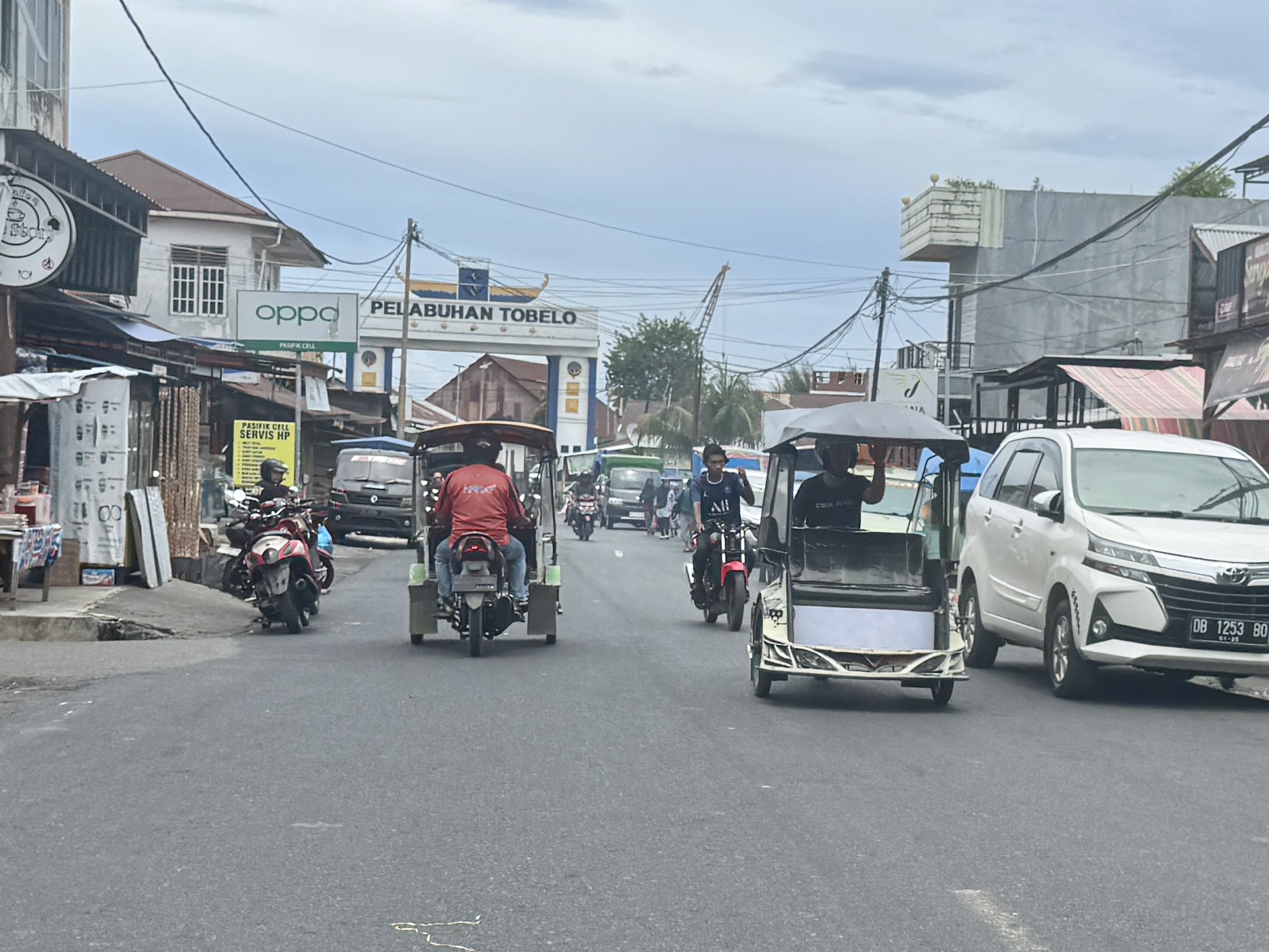
Mount Ducono is an active volcano reaching high above the town of Tobelo, belching an impressive plume of smoke and ash which blows downwind, away from our chosen anchorage.  Until the wind changes in the night.  On the first morning we woke in Tobelo, the boat was covered in a hefty layer of grey ash, like a dusting of powdery snow, only much more dirty.  It’s everywhere, everything is covered.  My deck looks like ancient Pompeii.

Matt had slept under his open hatch as the ash gently fell.

Well there’s no point trying to clean up all that until we leave, there could be another eruption.  So I endure the dirt, comforted by the knowledge that we have had long, drenching rain showers every day, for weeks, so that will soon wash it all off.  But after the ash storm, there was not a drop of rain.

Matt had left for the US, Bryan and I had re-provisioned.  We were hoping to sail south, but struggling to find some usable wind in the forecast.

We had a plan.  We would motor all night, hoping to intercept a band of wind in the morning and ride it south.  If we missed it, there was no more wind for days.  I screwed earplugs in and tried to sleep through the engine noise in the small hours.  

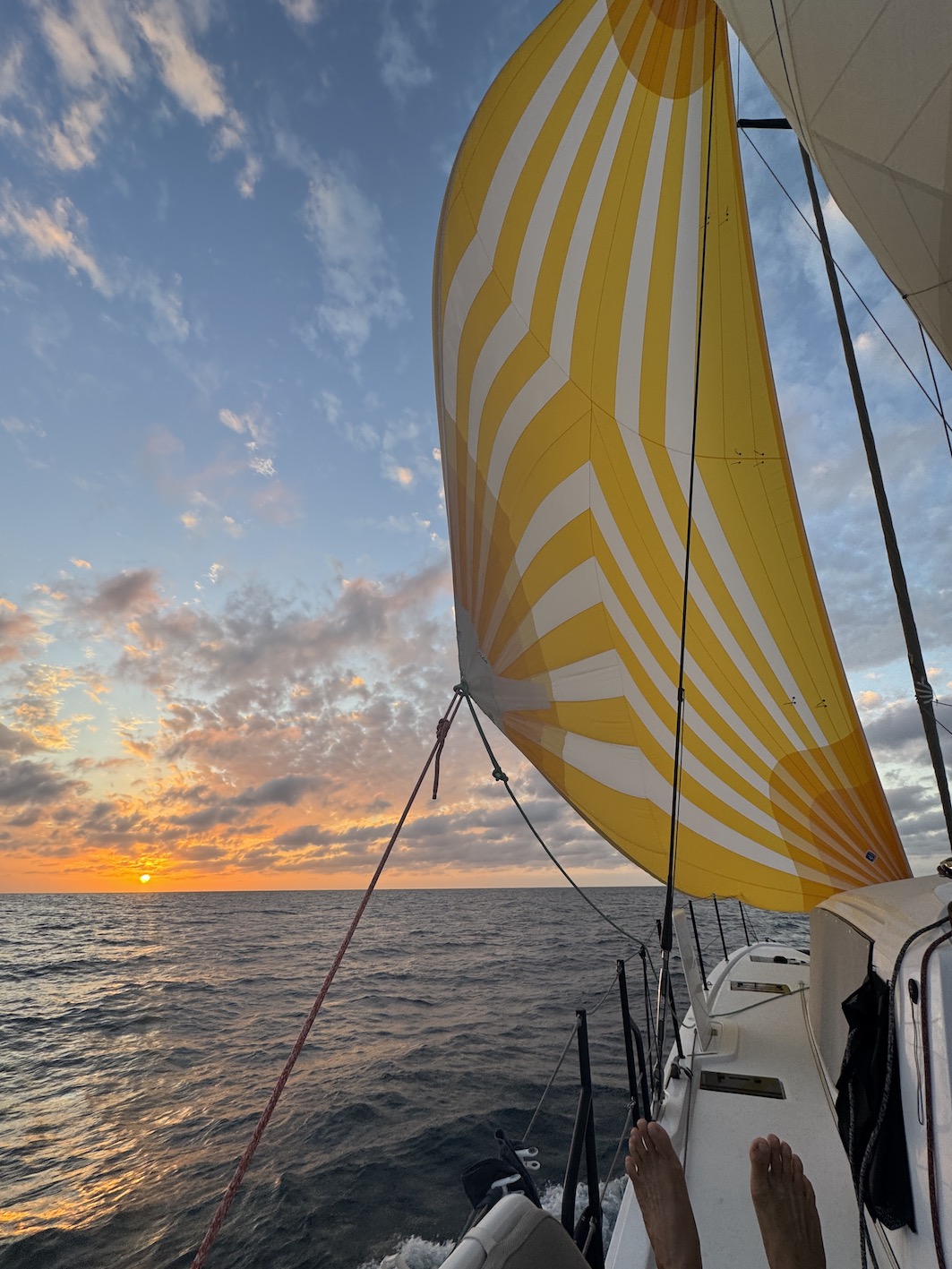
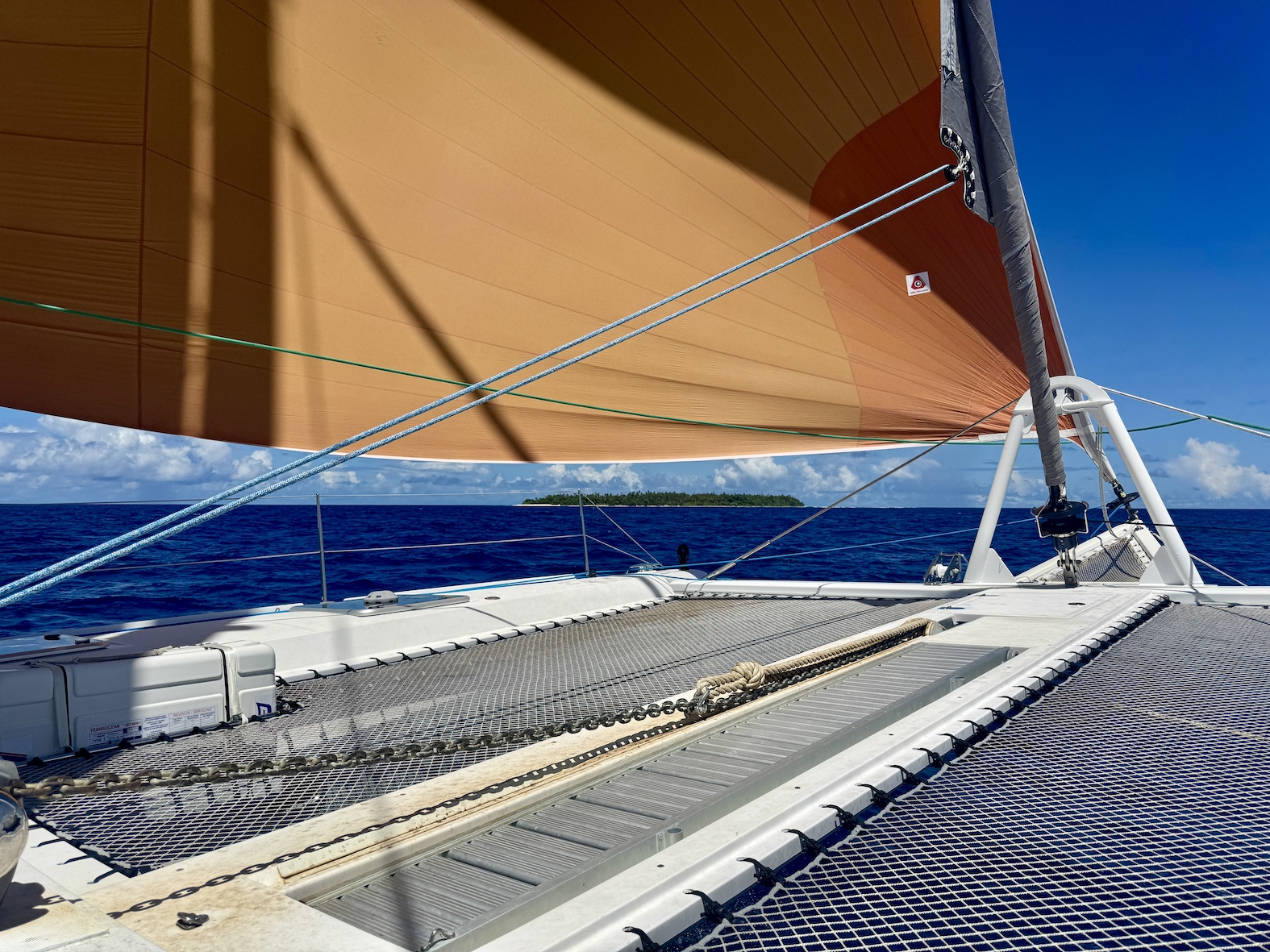
Well that all worked out and I woke up to silent engines.  Bryan had set the main and jib perfectly, we were sailing at 8 knots, sun shining and fishing lines out.  We hoisted the big red gennaker to make the most of the light reaching breeze.

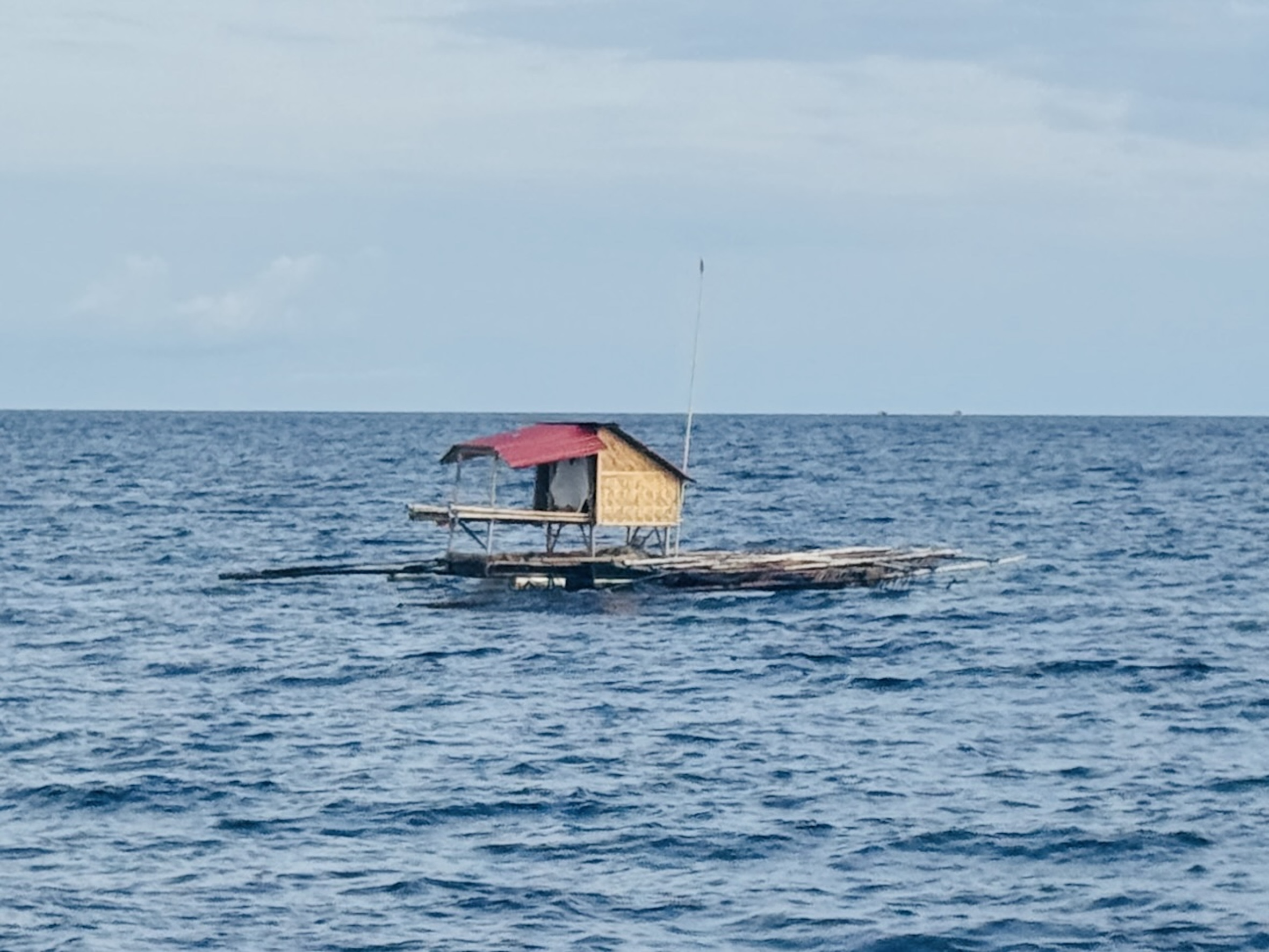
These things are everywhere, fishing platforms moored in deep water, way offshore and unlit at night.

10 knots

Something changes for me when Escapade reaches 10 knots.  All the subtle sounds and sensations of the boat sailing through the water come together in a new pitch as the speed hits double figures.  It seems to smooth out the ride, everything hums in unison.  The gurgle of passing water sounds more purposeful and it still gets my attention every time.  I look up from whatever I’m doing and glance at the nearest instrument.  Ah, 10 knots!

It still feels great,  the gentle push in the back from the padded helm seat as a gust hits the rig and the boat accelerates smoothly into a higher gear.  I still love it.  After 11 years and 40,000 miles riding this boat through all weathers, the simple pleasure of sailing efficiency.
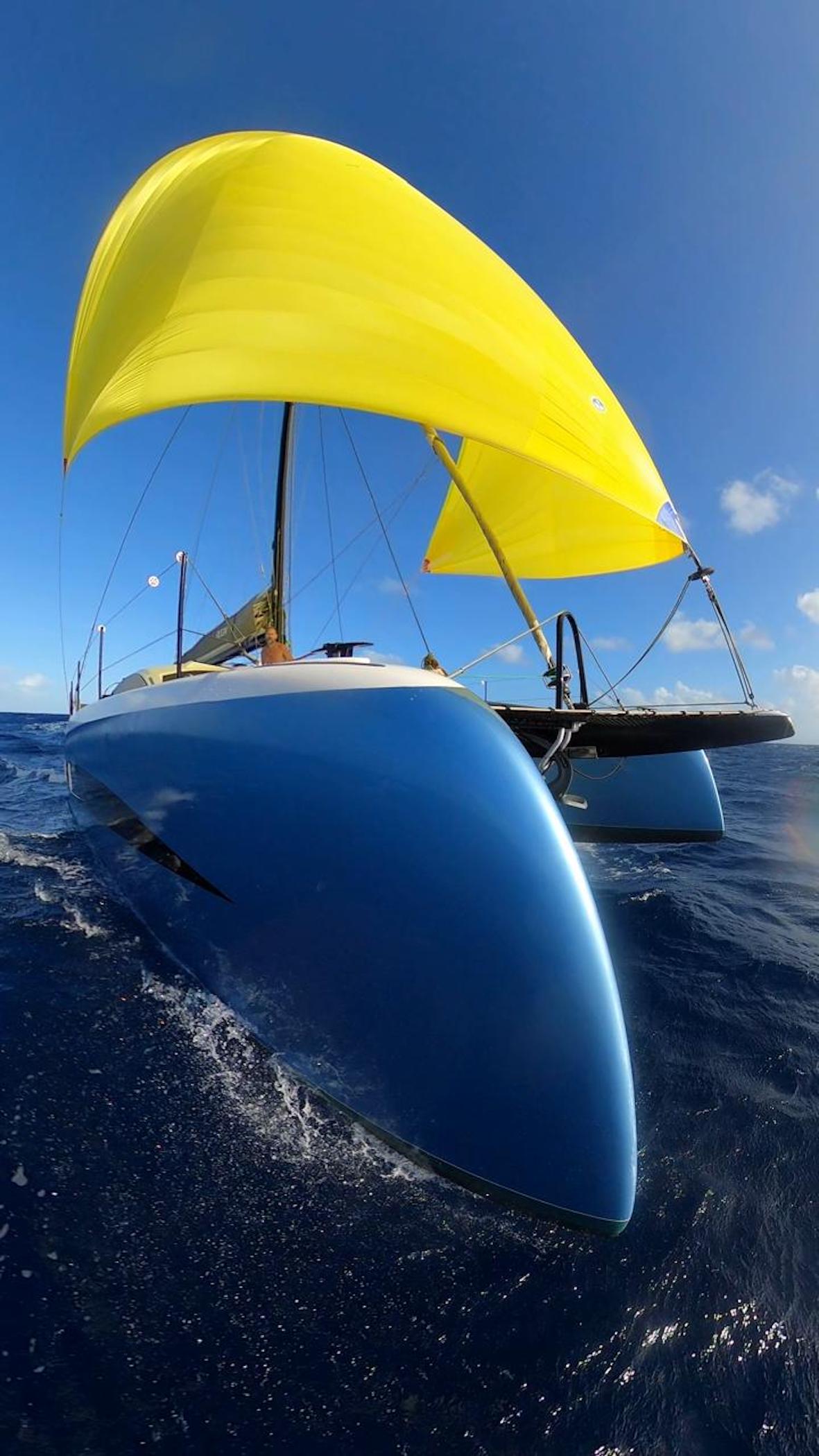
A light boat, a powerful rig and a smooth sea.  What a way to travel.

15 Knots

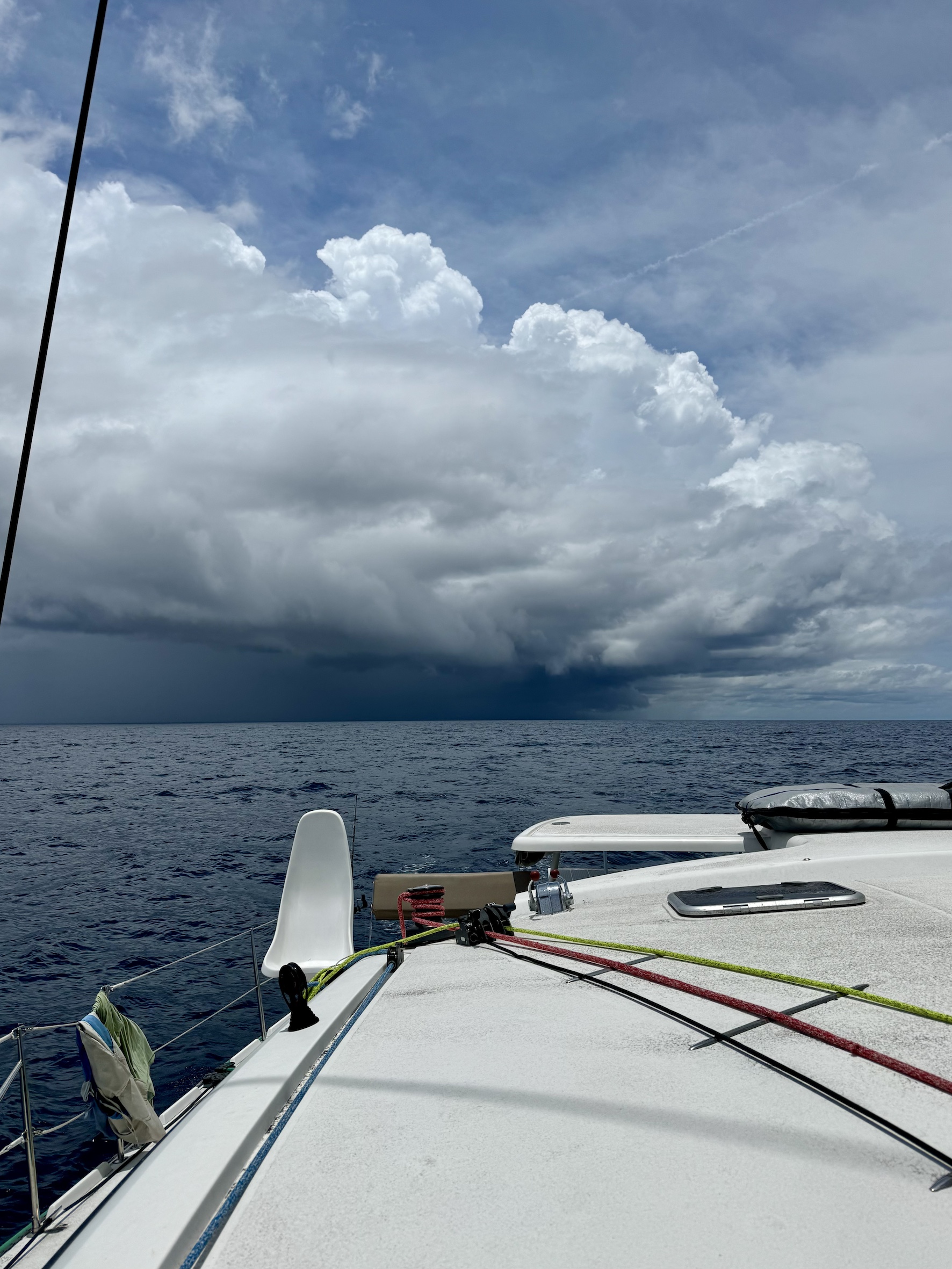
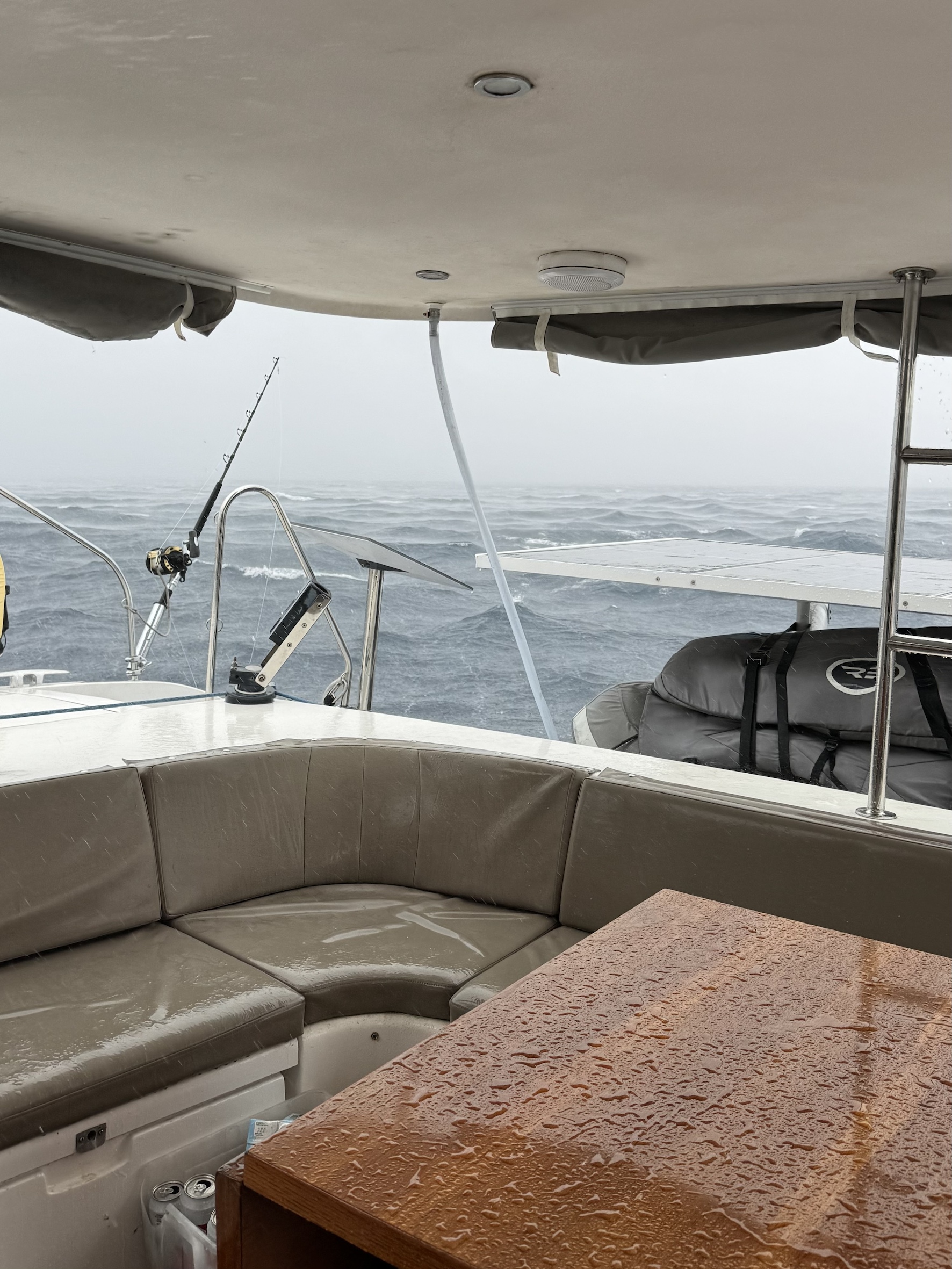
I had been enjoying those 10 knot surges all morning.  Escapade stretching her legs on a 500 mile romp south.  We were just finishing lunch when the line of black squalls started to threaten.  The gennaker was furled, dropped and stowed, then we pulled down the first reef in the main and waited for the rainstorm.  I had been hoping for this, a torrential downpour to power-wash all that volcanic ash away.  Well I certainly got my rain.  The first front arrived with a chilly breeze followed by 40 knots, we turned downwind and ran before it, as we have done many times.  The boat surging downhill at 15 knots doing a great job of reducing the apparent wind and the load on the rig.  Normally the excitement is all over in a few minutes, the rain passes, wind dies away and we get back on course.  But this afternoon was different, the wind and rain sent us scudding downwind at full power for a full hour or more.

I was hand steering, wet and very cold while the un-forecasted equatorial storm lashed us with outrageous amounts of wind and rain.  We actually crossed the line back to the Southern Hemisphere in the thick of the chaos.

At times sailing can be a bit uncomfortable, or stressful, but wow, it’s so elemental.  It’s us, Escapade, and a massive Indonesian storm system.  That’s it.  And I still love that too.  Sure, ten knots over the smooth Molucca Sea is dreamy, but a stormy afternoon like that adds the spice of adrenaline and some satisfaction having dealt with all the challenges.  Boat and crew are safe.  Bryan and I quickly remembered our reefing routines after those windless weeks up north.  We have all the skills and experience to deal with this, and sometimes it’s good to get tested.  A bit of hardship, keeps us on our toes.  Anyway all that ash got rinsed away at last.
Azan

We had a couple of pit-stops to catch up on sleep, but the forecast kept sending us back to sea, to get south before this weather window closes.

One stop-over was in Wangi Wangi, capital of the Wakatobi archipelago.  We arrived in the last days of Ramadan, after two nights at sea.  We are getting used to the Azan, the call to prayer which is broadcast five times a day from each mosque, via loudspeaker systems which will not be ignored.  The calls are part of the rhythm of daily life here, like the rising and setting of the sun.  In some harbours we have found the Azan is not the best soundtrack for short-handed sailors needing to pay off their sleep debt.   As we entered the port of Wangi Wangi, we sighted the two shining domes at either end of town and strategically dropped anchor between them, to minimise the volume at 5am.  We swung to our chain and looked across at the bustling town.  Then the extraordinarily loud afternoon call began.  We hadn’t noticed the third mosque with it’s tower of powerful speakers, right in front of the boat.  To add to the din, this speed-crazed petrol-head was roaring around the harbour in his very loud, souped up pirogue.  

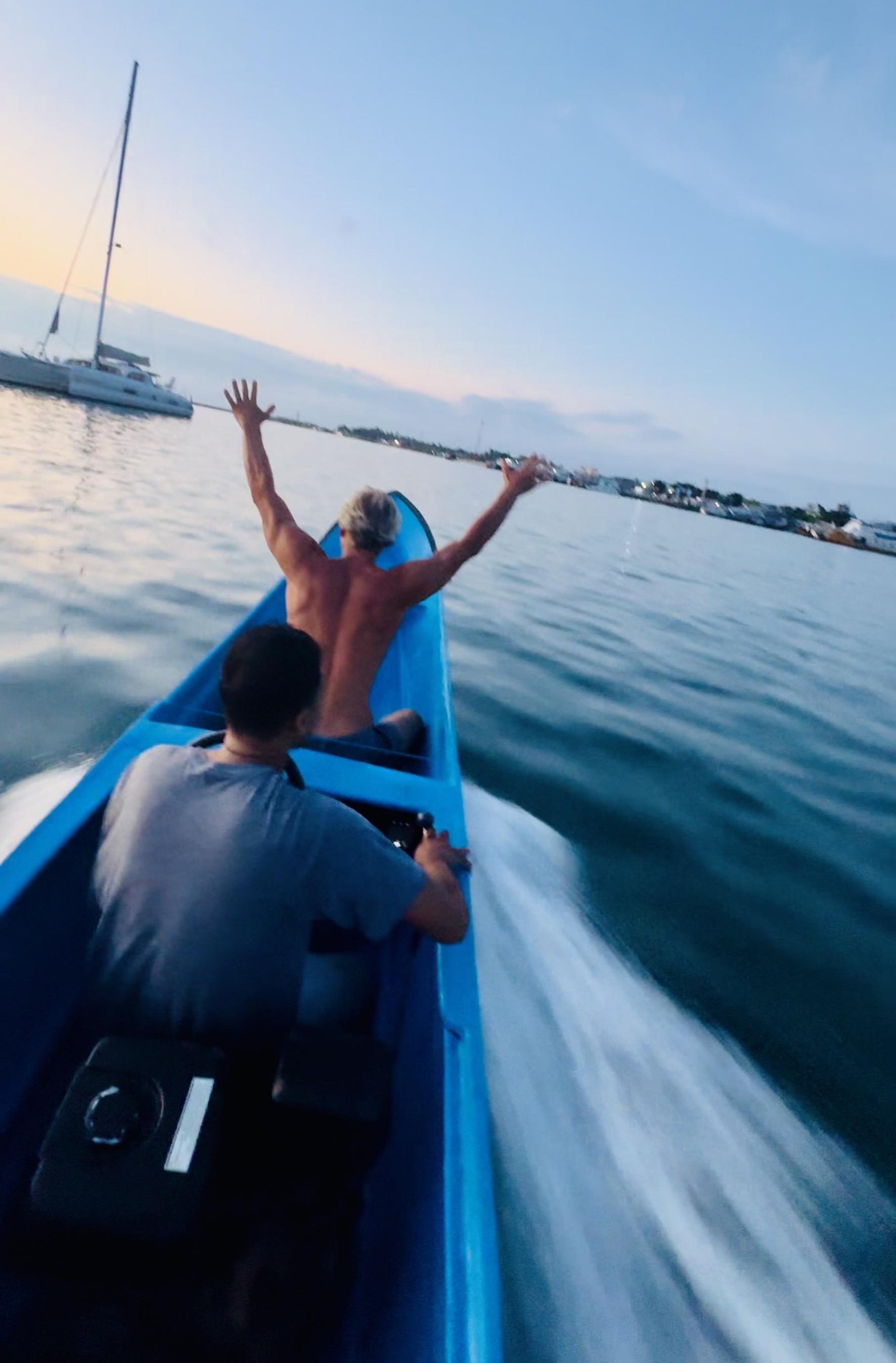
Bryan flagged him down and we hitched a ride.  He moved a couple of fresh squid to make room for us and off we all went at 40 knots with no exhaust.  Deafening.

Bakso

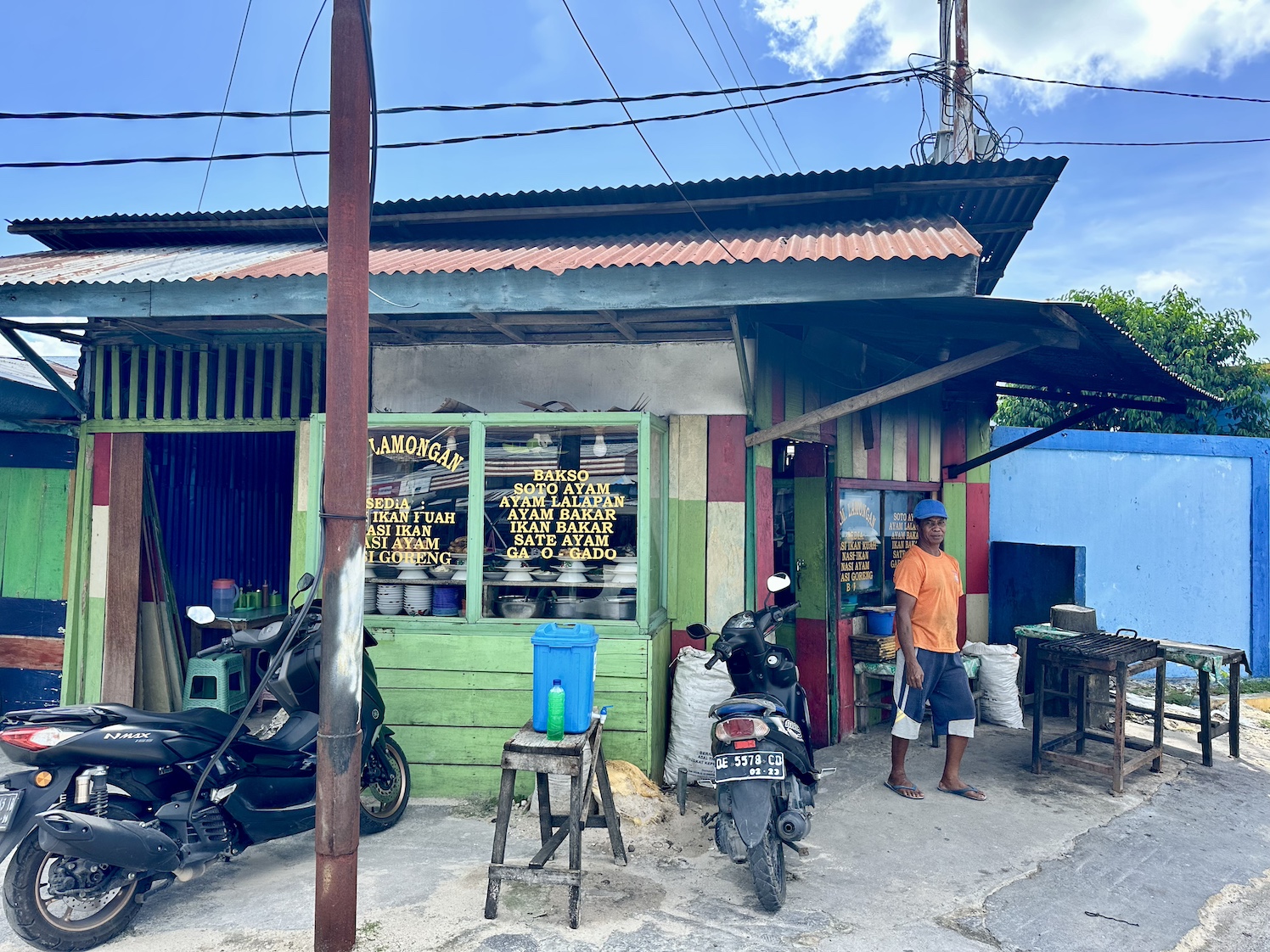
It was a fun time in Wangi Wangi, the end of Ramadan, a sighting of the new moon, and the fireworks and music to celebrate the start of Eid.  We enjoyed the local street food and topped up our fresh fruit supplies.  

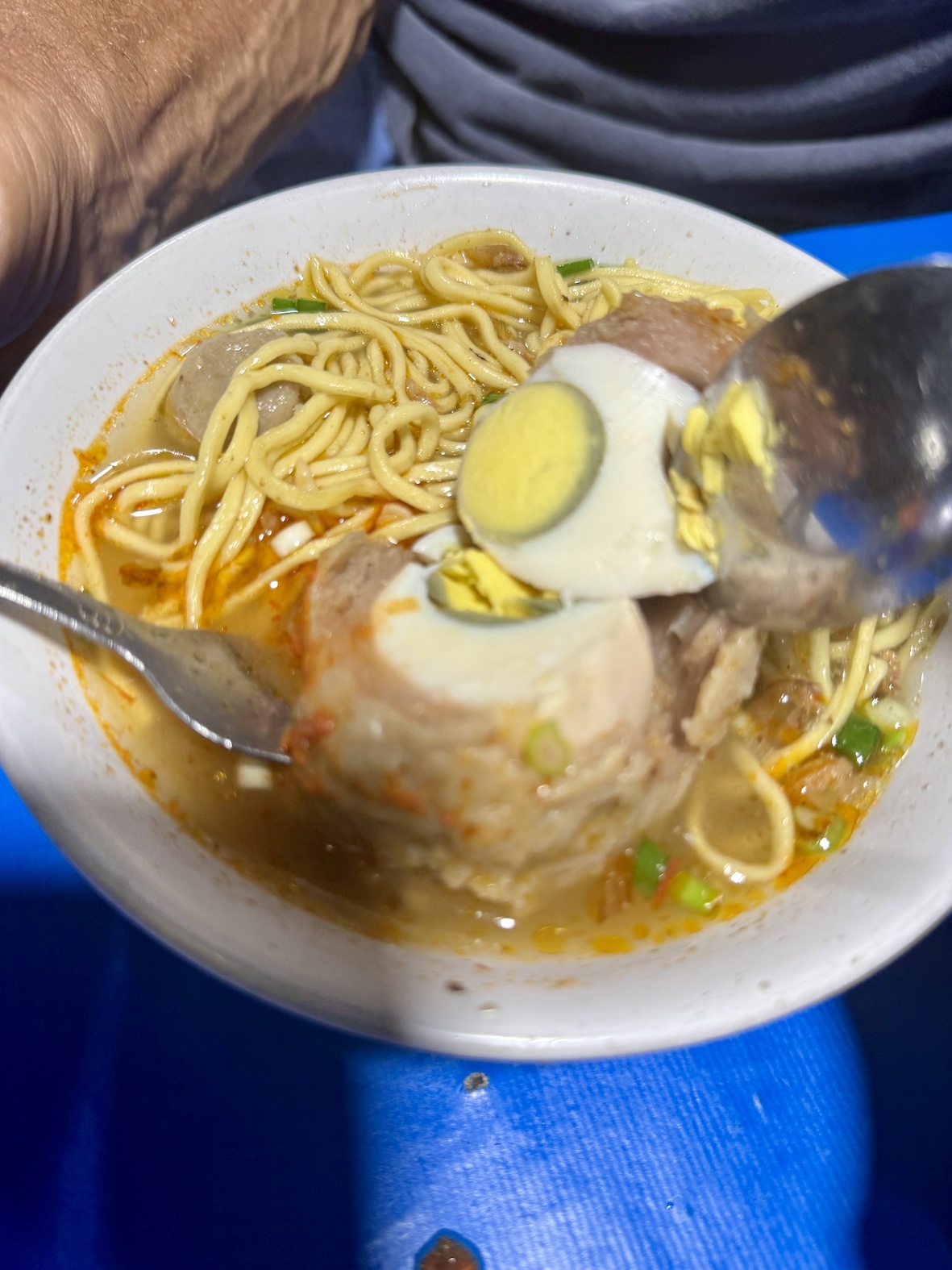
Bryan’s favourite new discovery was ‘Bakso Tenis’.  A bowl of noodles in hearty broth, topped with two small grey meatballs and one enormous one, actually the size of a tennis ball, which this dish is named for.  A daunting sight, that massive, grey, slimy meatball.  Bryan added plenty of sambal and was even happier when he discovered the meatball’s hidden core was a boiled egg.

We actually took take-away street food with us on the next overnight passage.  Southbound again over the Banda sea.  The next stop was a pretty sandbar with reefs for snorkelling.

The locals seemed to be attracting fish by whacking the surface.

Bryan’s promising bite turned out to be a giant stingray, carefully released.

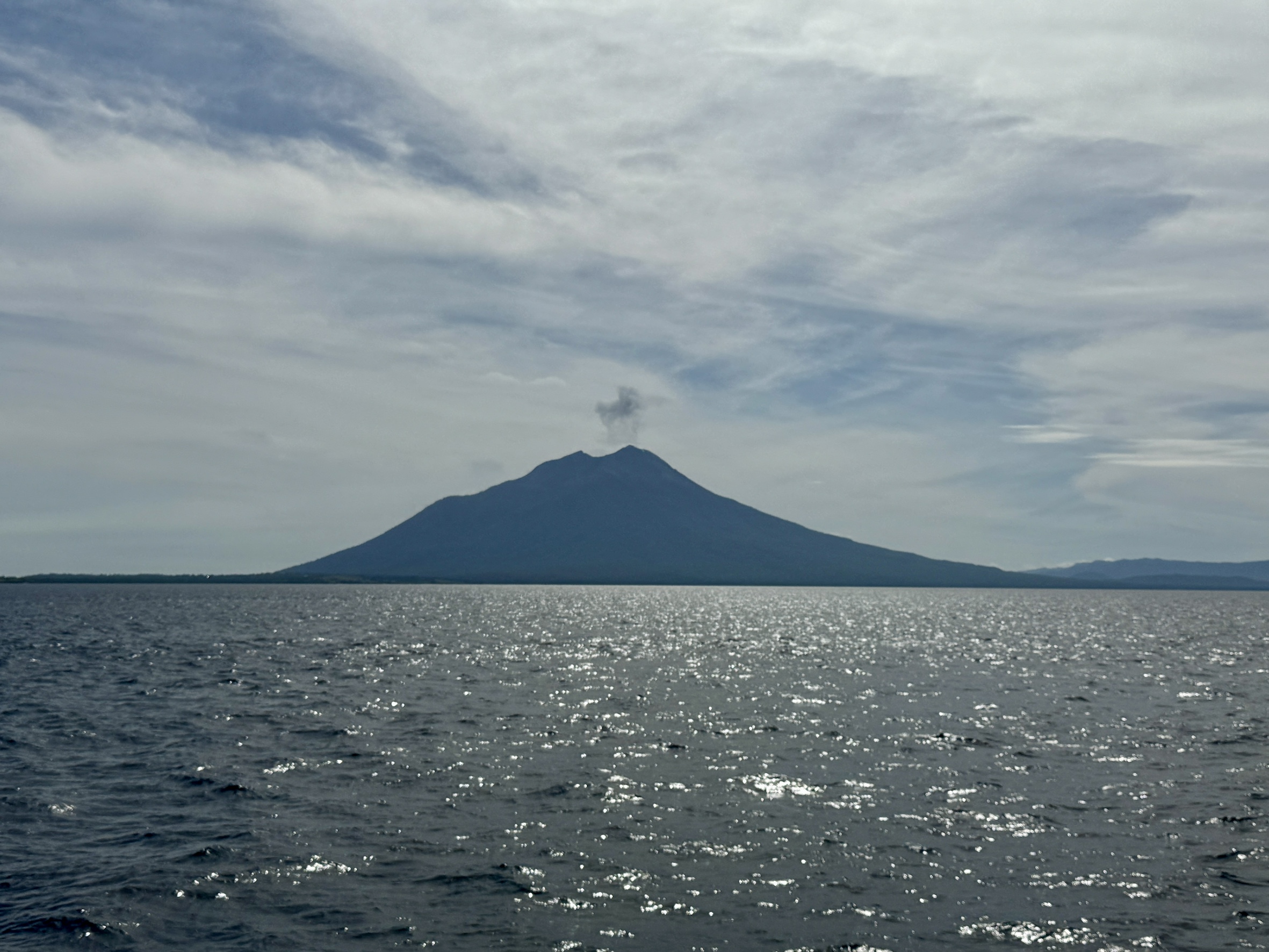
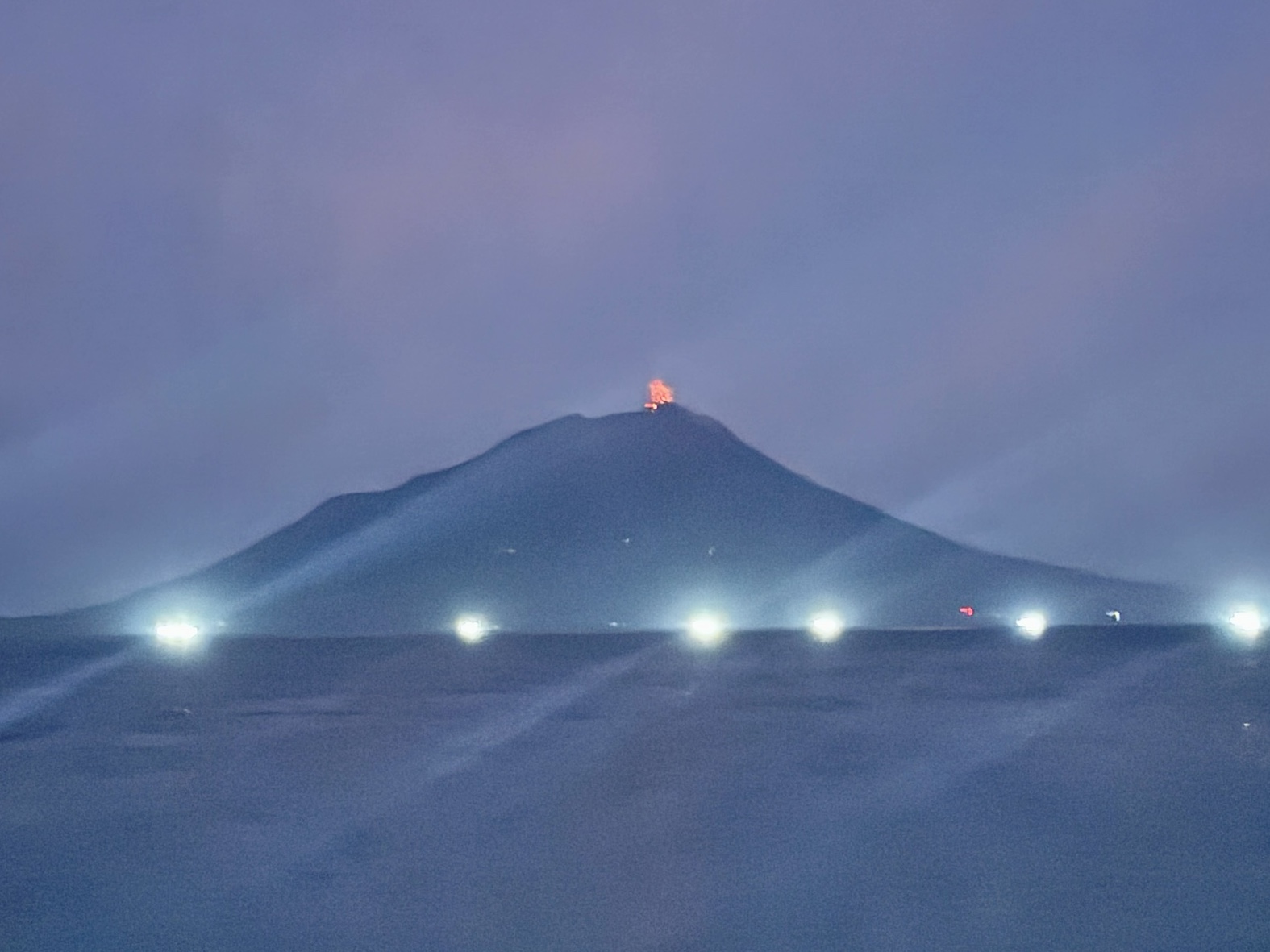
There were friendly locals trading for coconuts, and two more enormous volcanoes, one erupting every few minutes.  

Here’s a phone pic of it at night, above a fleet of well-lit squid boats.

Kelapas

We are trying to keep supplies to trade with our visitors.  Mainly we are given young green coconuts, ‘kelapas’.  In return, I have been asked for all kinds of things.  So far I have parted with my reading glasses, swimming goggles, hats, chocolate bars for the children, pens and paper, t-shirts, fishing hooks and line, cold beers, dried noodles, and cash.  But the most common request is for “Coca Cola!”  We’ll stock up at the next town.

Actually the fisherman who wanted my goggles didn’t even have coconuts.  He just saw my goggles and clearly needed them more than I did.  He was so happy and I’m sure those goggles will be put to good use every day.

Diesel.

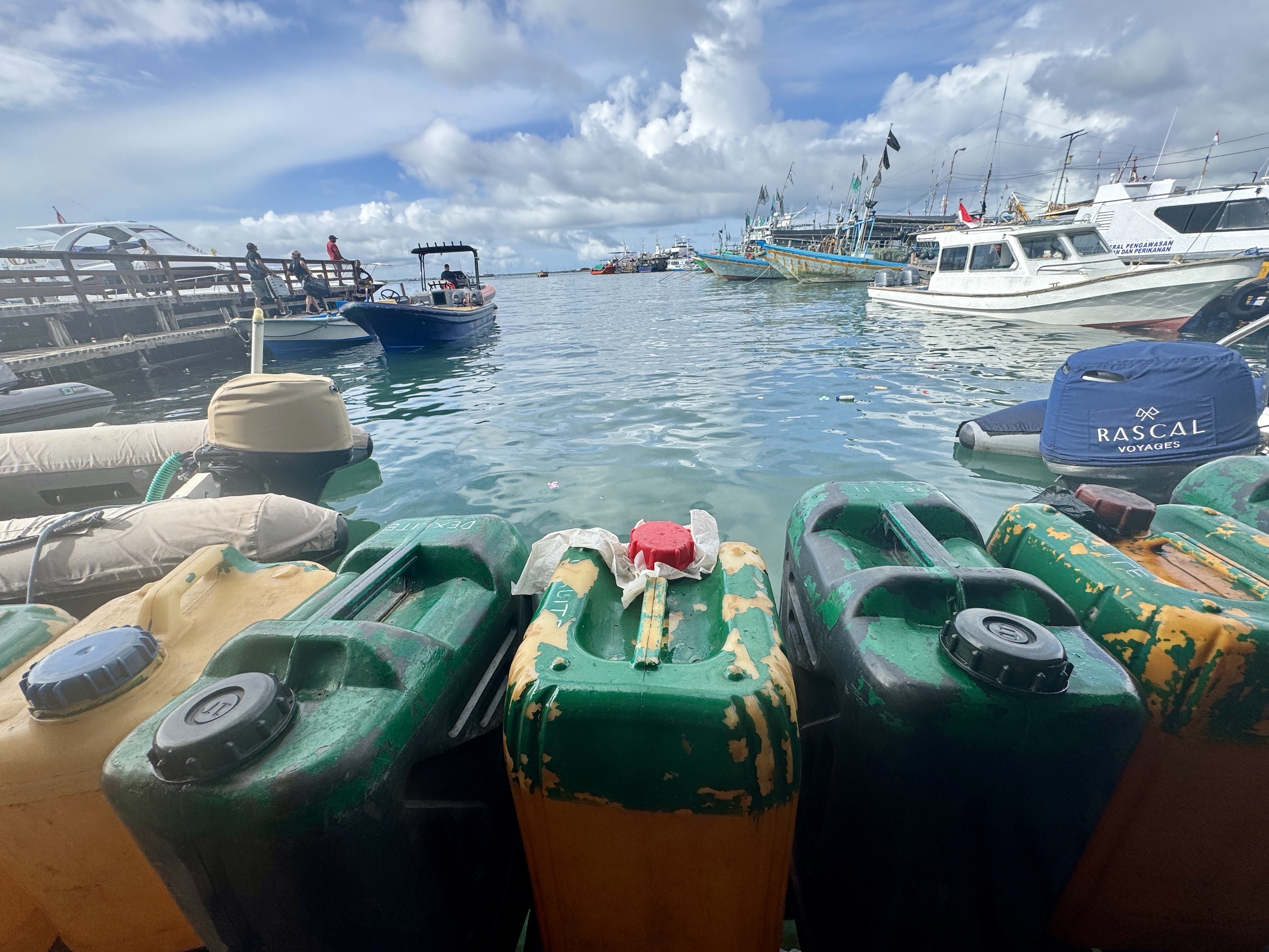
Everywhere else in the world I have sailed, filling up with diesel is an occasional hassle.  You get the lines and fenders out, tie up to a fuel dock, pump several hundred litres in to the tanks and forget about it for a few months.  Well not in Indonesia.  Not only is there no wind most of the time, but there are no fuel docks anywhere.  So we need more diesel than ever before and it’s never been harder to get.

I have already described the whole sweaty process of getting our 5 x 20 litre jerrycans from boat to dinghy to dock to taxi to gas station and all the way back to siphon our 100 hard-won litres into our fuel tanks.  That buys us about 120 miles of motoring.  Then we decide whether we have the energy to go back to town for another 100 litres.  It’s so lovely when we get a sailing breeze.

Hello Mister!

In all the towns and villages we have called at, from Morotai down to Timor, each trip ashore has been a real cultural adventure.  We are ‘Bules’, foreigners, white men.  A real novelty here.  These islands are off the western tourist trail and rarely visited.  We are greeted everywhere with smiles, waves, and what seems to be the standard salutation whenever a Bule is sighted:  “HALLO MEESTAH!”  This is shouted at us by children in canoes, passing adult fishermen, and when ashore, almost everybody.   Old ladies selling vegetables, policemen, shopkeepers, whole families passing on scooters, people leaning out of speeding trucks to shriek at us. “HALLO MISTAHH!”

The language barrier is a big one.  Apart from those two words, almost no English is spoken,  and despite my months of daily study on Duolingo, we are still dependant on Google Translate for any detailed conversation in Basaha Indonesian.  The people are charming and friendly and always trying to help.  We feel welcomed almost everywhere, but we are also an unusual sight.  Children point at me and giggle.  One very small, naked child just stopped and stared at me, open mouthed, like he had just seen an alien appear outside his house. I suppose he had.  I’m pretty sure I was the first Bule he’d ever seen. 

Ikan Lemadang

Since that monster sailfish we have trolled lures for hundreds of miles without success.

Until sunset the other evening when we finally filled the fridge with protein again.

One of our favourite fish to eat, called Dorado in the Atlantic, Mahi Mahi in the Pacific, and Ikan Lemadang in Indonesia.

My daughter Jemima told me that Mahi Mahi mate for life.  They stay close, swimming across whole oceans, chasing flying fish and squid and growing old together.

So if you catch one, it’s a tragedy for its mate, who will be left alone and heartbroken.  It’s so sad, almost makes me want to stop fishing.

So to counteract this problem, we troll two lures.  On our last night at sea, at sunset, both reels screeched a few seconds apart.  Bryan and I brought in a fine matched pair and no lonesome Mahi Mahi was left behind.

Due South

We were steering 180, back under the southern skies.  The Southern Cross rises on our left, soon after dark, by midnight it hangs straight above our bows, and in the morning rolls over to fade in the west as Venus rises before dawn.  

Our destination is the island of Rote, off the southern tip of Timor.  As far south as you can go in Indonesia.  Bryan and I have covered about a thousand miles in the last couple of weeks.  Joining the dots between islands, sailing, resting up and moving on again.  Last night we passed the bright loom of the city of Kupang just over the eastern horizon.  This morning was our landfall, there’s Rote at daybreak.  

Escapade is about to push her bows into the Indian Ocean for the first time.  And there’s a new, early season, long period south swell to greet her.

The Halmahera Sea

We thought that last bay would be hard to beat.  Paddling to empty waves straight from our anchored boat.  Nobody wanted to leave, so we didn’t.  For days.  

There’s an old saying in surfing: Never leave waves to find waves.  Makes sense, ‘a bird in the hand’.  Enjoy what you have and don’t waste the swell searching for something better.  But on this trip, we kept on doing just that.

Around the next corner we found an even better spot, a powerful lefthand wave breaking along a reef miles from land.  Once again the anchor went down, the toys came out of the lockers and we had the place to ourselves for a week.  By the end of that, our surfed-out shoulders were in pain, we had sunk a drone, snapped a surfboard and lost Bryan’s favourite hat.  It was hot and windless, but the swell kept coming, so we stayed.

One afternoon there was just enough breeze for me to get a wing foil going.  A passing fishing boat called in to the bay as I was winging around.  From the hoots and cheers as I whizzed past I would guess it was the first time this crew had seen wing foiling.  So much excitement.

Finally the forecast offered a chance to sail to our next destination, 200 miles NW to the island of Morotai.  Across the empty Halmahera Sea.
We motored out through the reefs at first light, the breeze appeared by 8am.  Light, but enough to hoist the main and gennaker and soon enough sail across the smooth sea at a satisfying 10 knots.  Before we’d had breakfast we were back in the Northern Hemisphere.  Springtime!  This was Matt’s first passage on Escapade and it was a fun one.  Fast sunny sailing, an Equator crossing, trolling a lure past some beautiful desert islands, weathering a big black rain squall and landing a huge billfish.

Actually that squall had just passed in the late afternoon.  The gennaker was furled and stowed, the black cloud cleared and the wind died completely, so the engine ran for a while until the breeze re-established.  At that moment the fish hit the lure and took off at high speed, our reel screaming.  Bryan was about to get spooled, but at that moment it was so calm, I was able to drive full astern towards the fish as Bryan won back some line.  Now the fish started to jump, marlin style. It looked enormous.
Finally Bryan brought it to the back step where we gaffed it and hauled it aboard.
It was dispatched instantly with a shot of good tequila to the gills.  We all took a breath.  Wow.  A new record for Escapade I think.  A sailfish well over 2m from bill to that massive tail, probably 50kg, we struggled to lift it for a photo.

Bryan stripped the meat from the carcass and we filled the fridges and freezer.

Fish supper, then night watches.  We sailed on under the stars until another rain squall finally turned off the wind in the early hours, then motored the final miles to Morotai.

Morotai is another mountainous island covered in steep, dense rainforest.  It was a major battleground in the Second World War.  The last Japanese soldier was finally captured in the jungle here, in 1974.  Twenty nine years after the war ended.

Satellite images led us to another bay, a quiet backwater, good holding on a shallow sandy patch, a friendly village, and a fun lefthand reef set up, right in front of us.
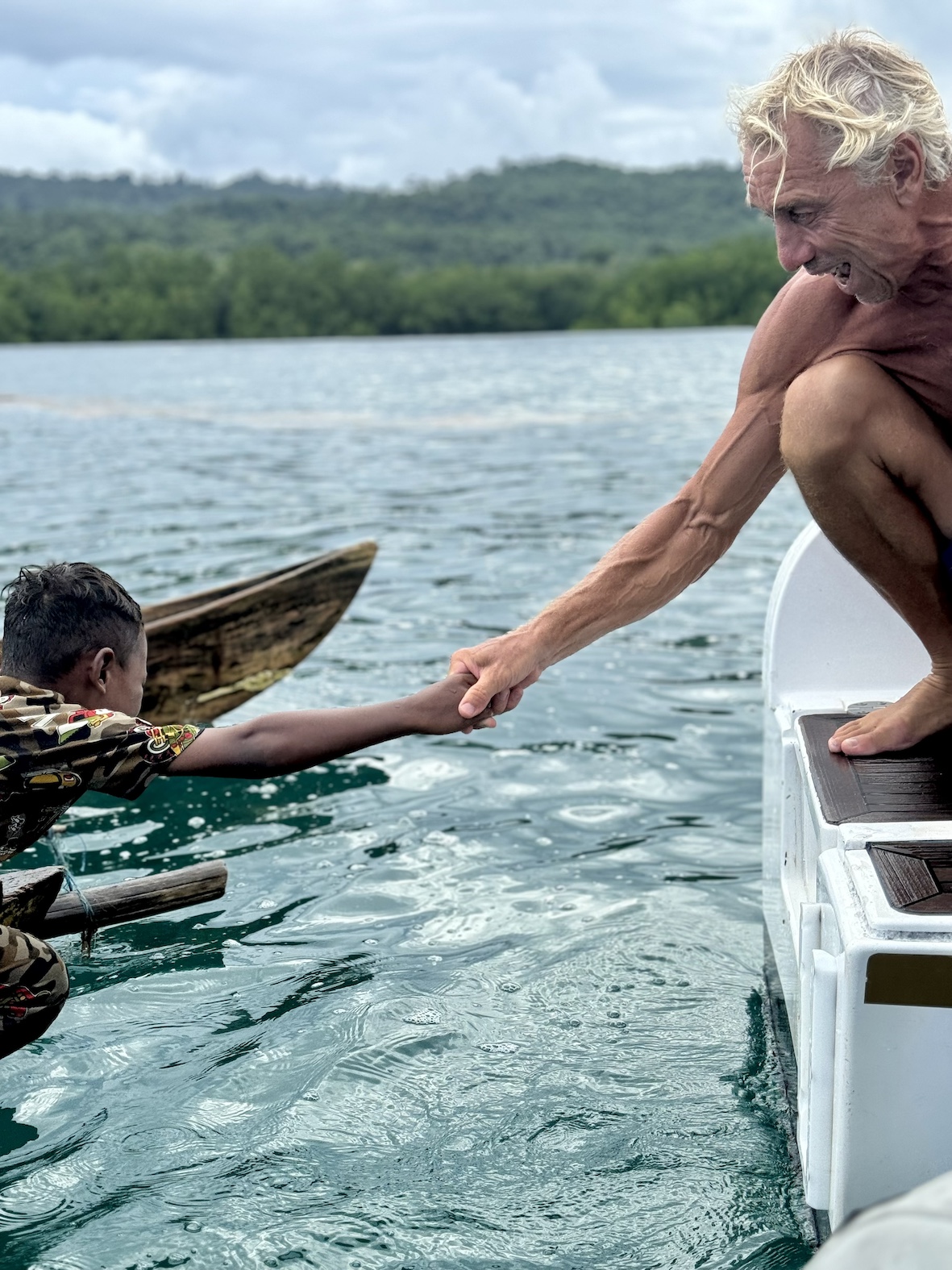
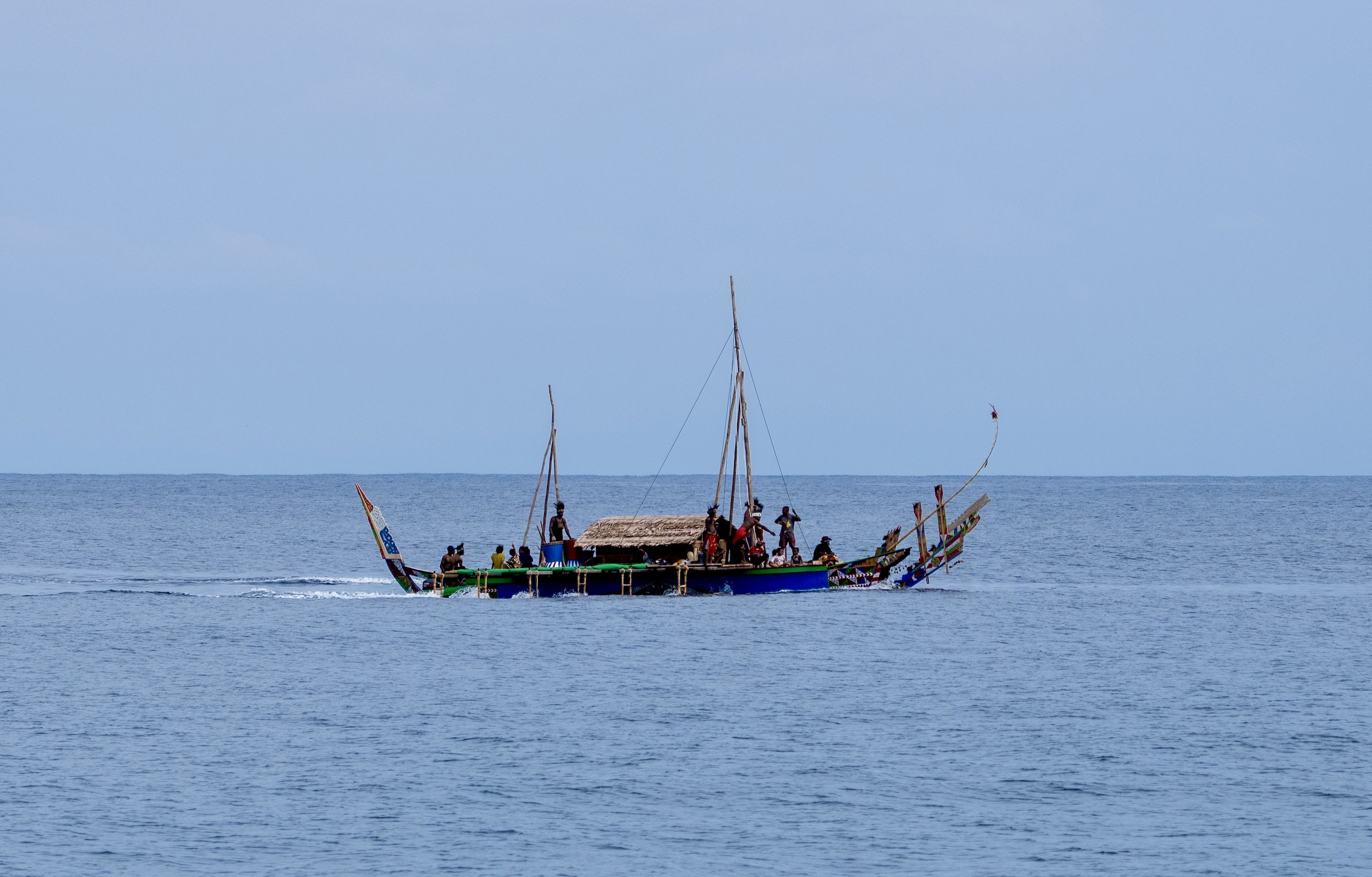
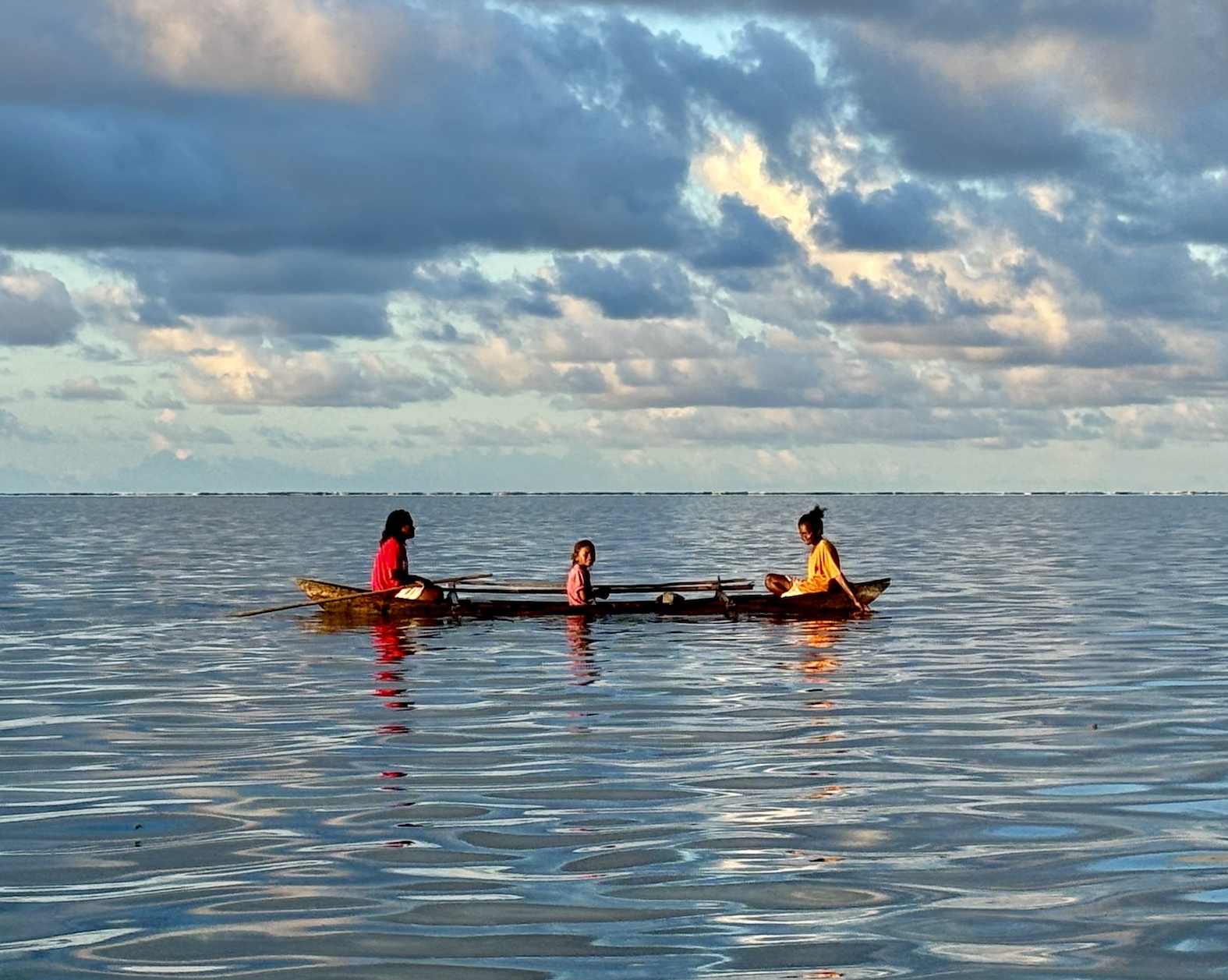
The village children paddled out to see us in dugout canoes, outriggers lashed with fishing line, paddled with a plank of wood and bailed out by the youngest boy with a half coconut shell.  We had a surprise for them.

Our huge catch the day before had yielded about 20kg of prime protein.  We donated half of that to the village.  I explained it to the boys, showed them a photo of the fish, then swung a big bag of frozen meat into their little canoe.  They were very excited, shouting “Terima kasih Mister!” as they paddled back to shore.  I hope their mother approved.

Later they returned with some fresh, hydrating coconuts, just in time for our cocktail hour.
The next day we had every child in the village hanging off the back of the boat in canoes.  We chatted about school, surfing and fishing, with the help of Google Translate.  The small boys were touching my hair to check it was real and were laughing at my pale skin.  In need of gifts, we raided Bryan’s Beer Pong locker and gave them each a ping pong ball.  Happy children.


Once again, the waves kept us content for days. 
Then one morning we were all ready to move on.  Leaving waves to find waves.  Around the next headland, to the next empty Shangri-La.

The waves we found up here were a step-up in quality from everything we had seen so far.   And there was some long period swell on it’s way.

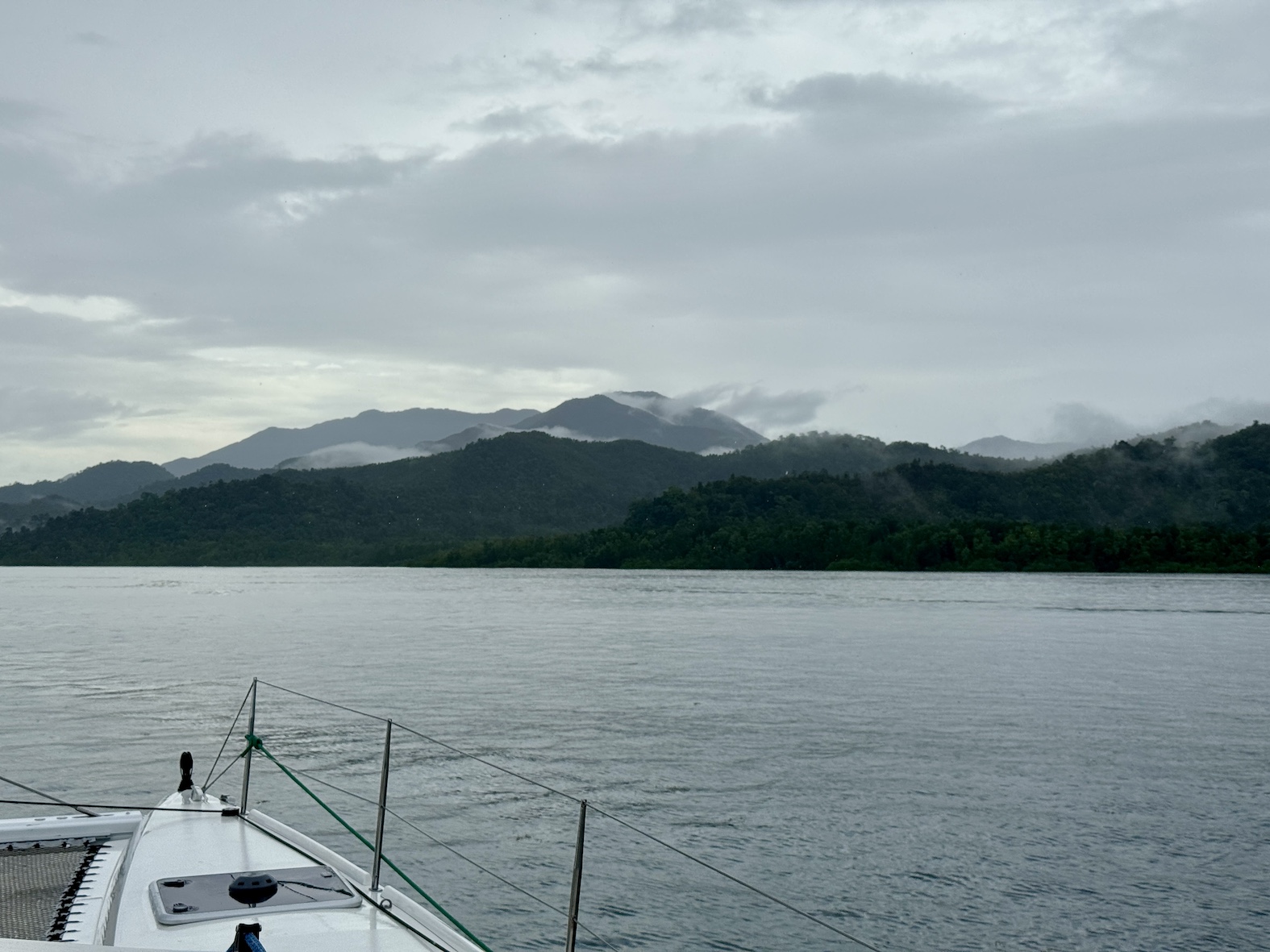
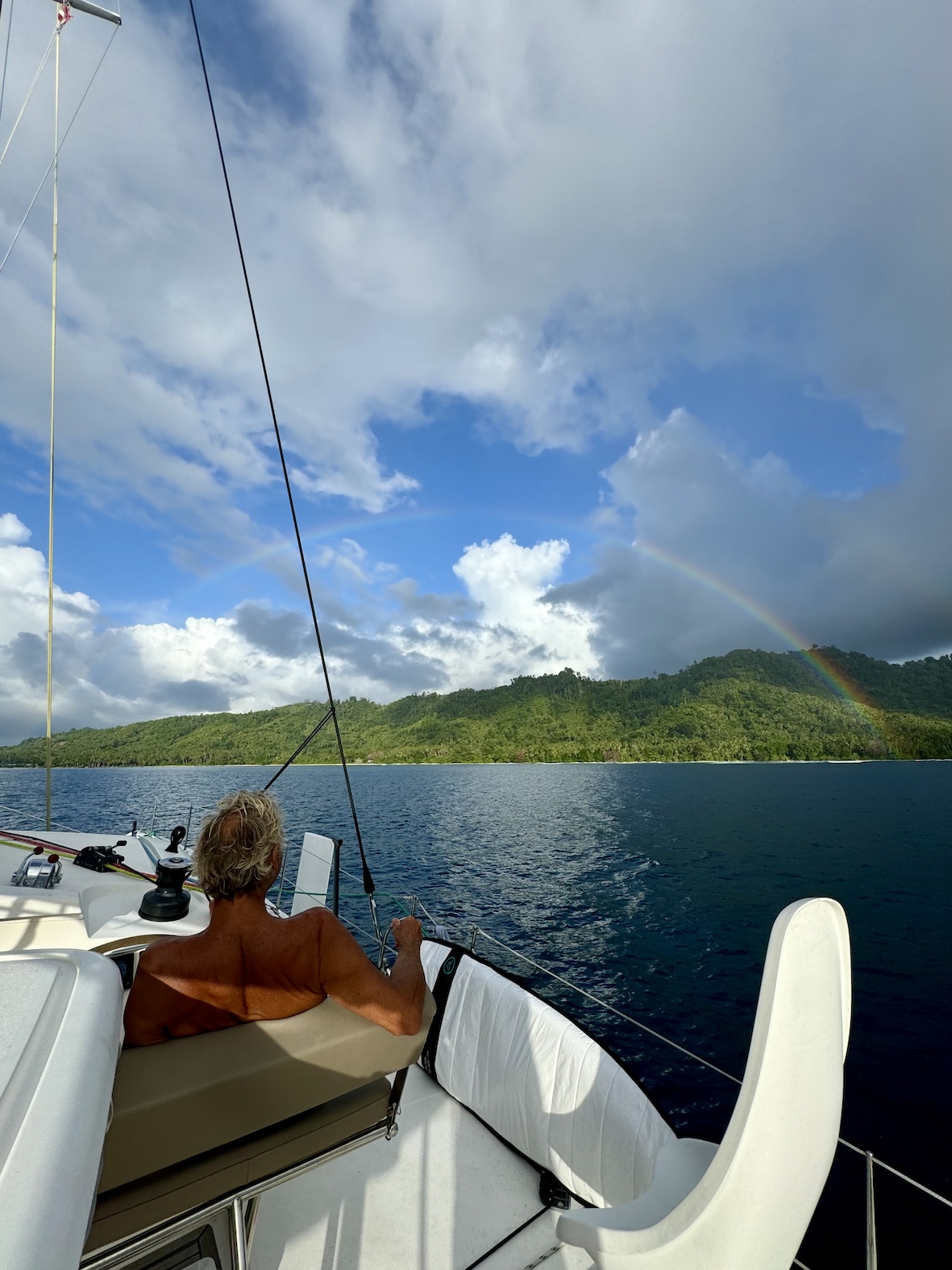
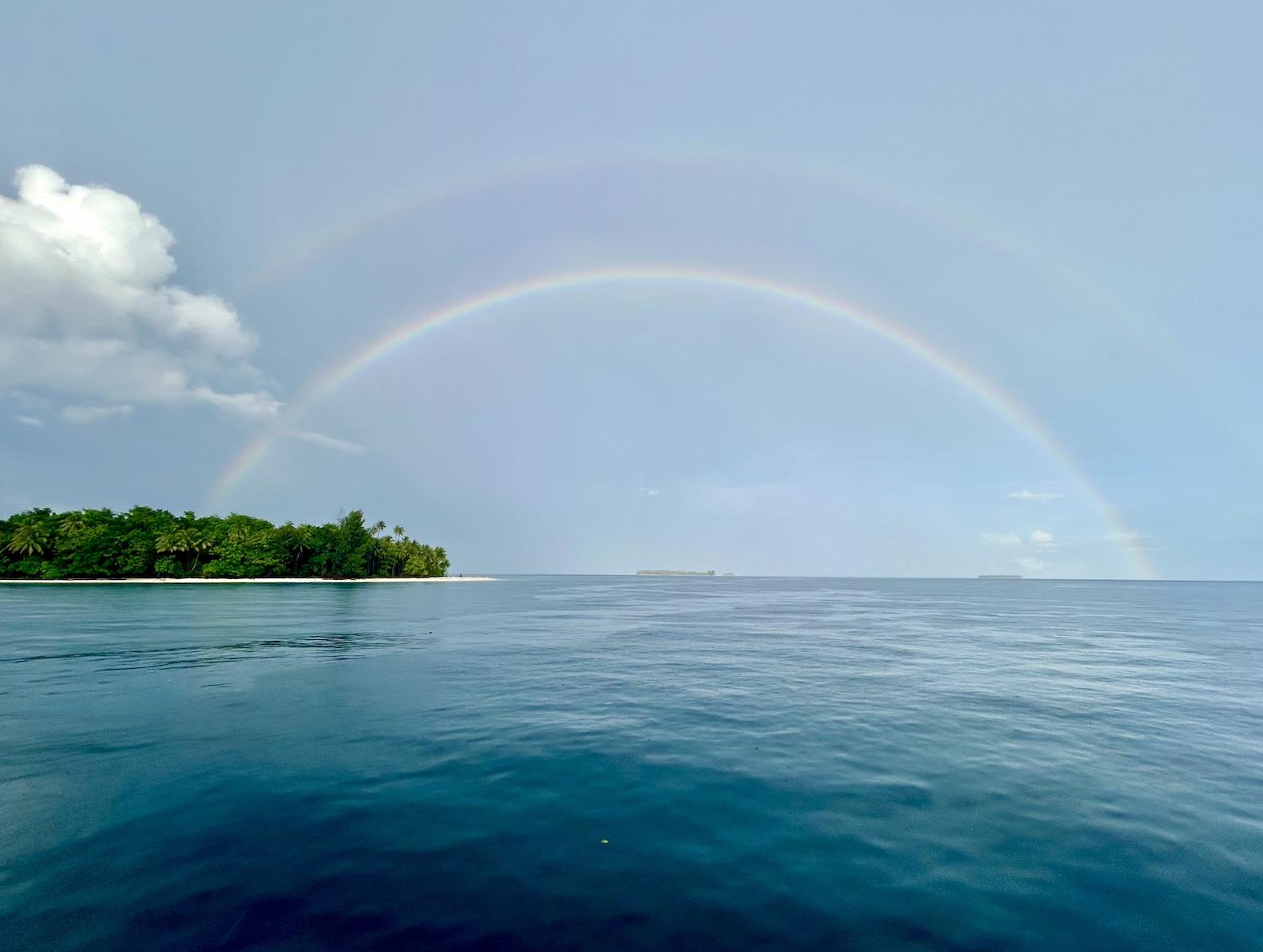
We surfed empty, glassy, turquoise waves with a Jurassic Park backdrop, wild mountains covered in more thick jungle.  Steam rising from the green valleys.  The most extravagant scenery, then add a pod of dolphins swimming past our surfboards and generally a rainbow or two before another golden sunset.  You get the picture.

Here we were joined by three other sailing boats, all here for the surf.
At one point six of us surfed together, that’s a big crowd up here.
Here’s our new friend Loki finding some shade.

That long period swell peaked with a very special few days at our favourite spot.  That wave had something for everyone.  If you could handle the fast, steep drop at the top, you had a good chance of a barrelling section, followed by a long walling ride along the reef. 

Bryan was all-in:


Matt tuned up his backhand moves:


I just tried to keep out of trouble.


As the tide dropped, the wave changed gear and started to suck water up from in front of the reef, the surface seeming to dip below sea level.  Very intimidating.

It was a special few weeks.  The first anchorage was a perfect playground with a scenic backdrop, why leave?  But since then we have found so many more, all with a rideable reef break nearby, and each more spectacular than the last.  The swell up here has been mainly short period, and nothing huge, but amazingly consistent.  We’ve covered about 500 miles and 10 anchorages, in about four weeks.   Apart from the 30hrs on passage, we have ridden fun waves every day, and almost always just the three of us!  Where does that happen?

We were about as far north as you can go in Indonesia.  Only a few more specs of land between us and the Philippines.  Our seemingly endless run of north swells seems to have finally ended.  We’re in the transition period now between the end of the NW Monsoon, and the start of the SE Monsoon.  Every day when the sun is high, it’s really too warm to do anything and there is rarely any breeze, not even enough to motivate me to pump up the biggest wing.  Every day it rains, quite a lot.  None of that seemed to matter when the surf was so good, but maybe it’s time to head south now, away from this Equatorial zone.  At least the wind seems to be blowing down there.  

We’re calling at the port of Tobelo to re-supply.  We’re down to our last few coconuts and we’ve eaten all the sailfish.  Matt is leaving us on a long journey by land, sea and air to catch his flight home from Jakarta.  Bryan and I have started to scan the forecasts for an opportunity to sail back to the Southern Hemisphere.

Taking the rough with the smooth.

The Rough:

We’re in Sorong.  It’s hot.  After those deserted anchorages, Sorong comes on strong. The dirty, bustling city.  Capital of this part of West Papua.

There’s a regional airport here with daily flights to Denpasar and Jakarta, so I’m here for crew changes.  Dawn is flying home for some Guernsey time,  Bryan and Matt are inbound from the US for some surfing time.  

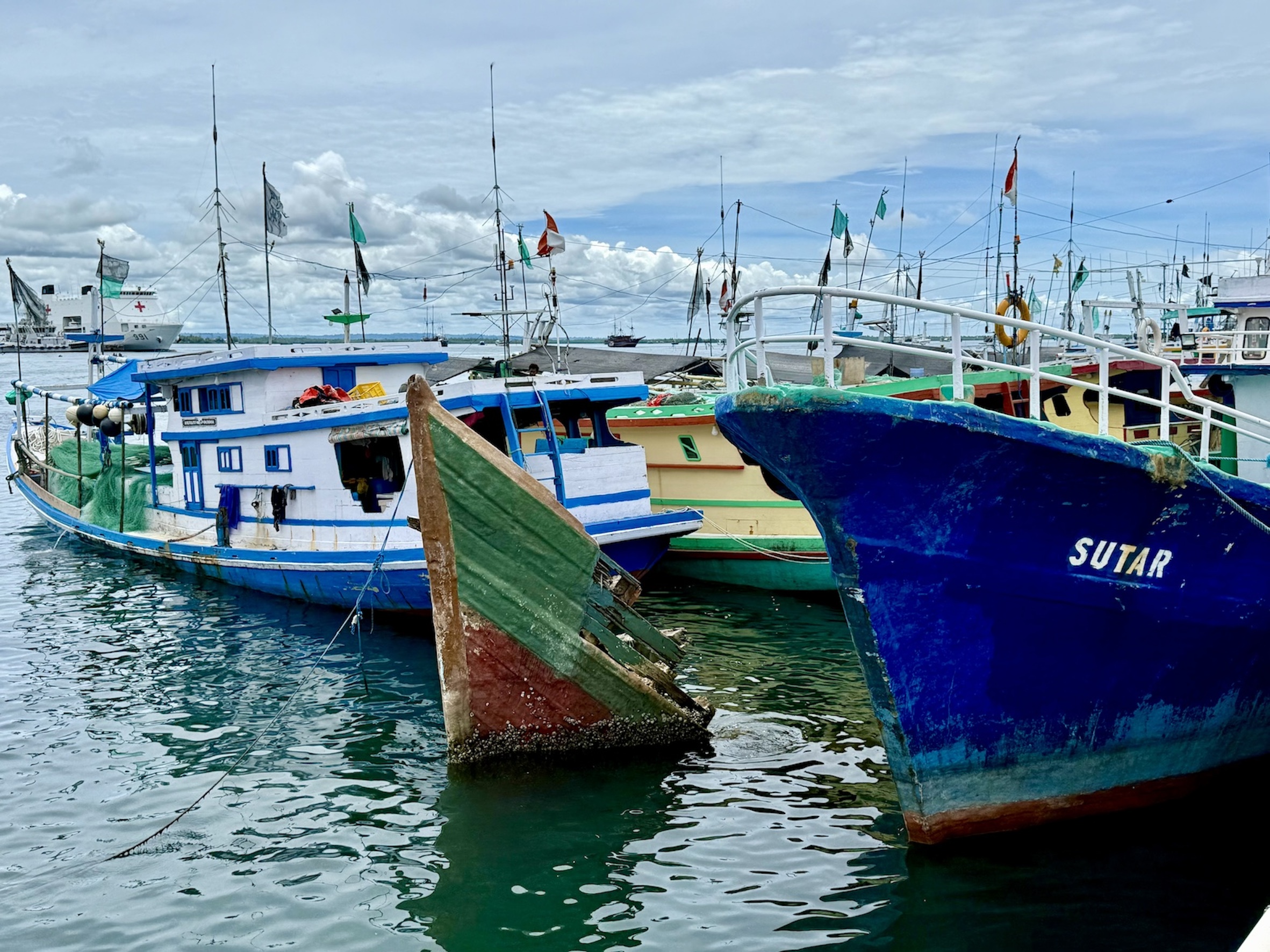
The anchorage is busy, all kinds of local wooden boats going in all directions, many appear to be sinking.  We are rocked by wakes day and night.  Apparently local kids will steal from an unattended yacht at night if hatches are left open.  Plastic trash washes by, you would not want to swim here.

I’m ashore running errands.  Smiling faces everywhere, “Hello Mister!” from all directions, children staring at me like they’ve never seen an elderly blond Englishman dragging his beach trolley down the street before.  I pulled 60 kgs at a time in that thing, down the hot dusty road, loaded with beer and groceries, past churches, mosques, a hundred street-food stands and a thousand scooters.

I ride in a bemo mini van whose dashboard is so well decorated I can’t see the road.  At the laundry I’m using Google Translate on my phone to sort out the details of our transaction.  I also manage to fill a cooking gas bottle, get petrol for the dinghy and procure 200 litres of good diesel, which has to be paid for in cash on the other side of town, pumped into jerrycans, driven to the dock, delivered to the boat by dinghy and syphoned in to the tanks through a filtered funnel.  That’s hot work.  Sorong is exhausting. 

We filled our shopping bags with fresh fruit and vegetables from the local market, overcoming language barriers and dehydration.  Every time I returned to the boat I needed a cold shower and an hour or so to recover from the latest foray ashore.  I try to never complain about things on this blog, if this lifestyle is sometimes uncomfortable it’s obviously self inflicted and I certainly don’t expect sympathy.  I’m still new here, urban Raja Ampat is fascinating, frustrating and sometimes just indecipherable. 

Finally we’re all loaded and ready to go. Tanks are full, we have a range of about 1300 miles now, even with zero wind. (Which is pretty much the long range forecast.)  But it still feels good, the freedom, the potential for exploration and adventure.  The larder is well stocked and the fridges are full.  We are cleared for take off.  Except that we can’t get the anchor up!  We managed to foul it on a heavy cable which was laying in the harbour mud 20 metres below us.  It had to be hoisted up from the seabed and wrangled off the hook, with the sun getting higher. Did I mention that it’s hot?

The Smooth:

We slip away from Sorong, the boat movement creates a welcome breath of air, out through the anchored ships and bagans, north into clear blue water.  Just 35 miles away is a quiet bay on the southeastern tip of Waigeo. 

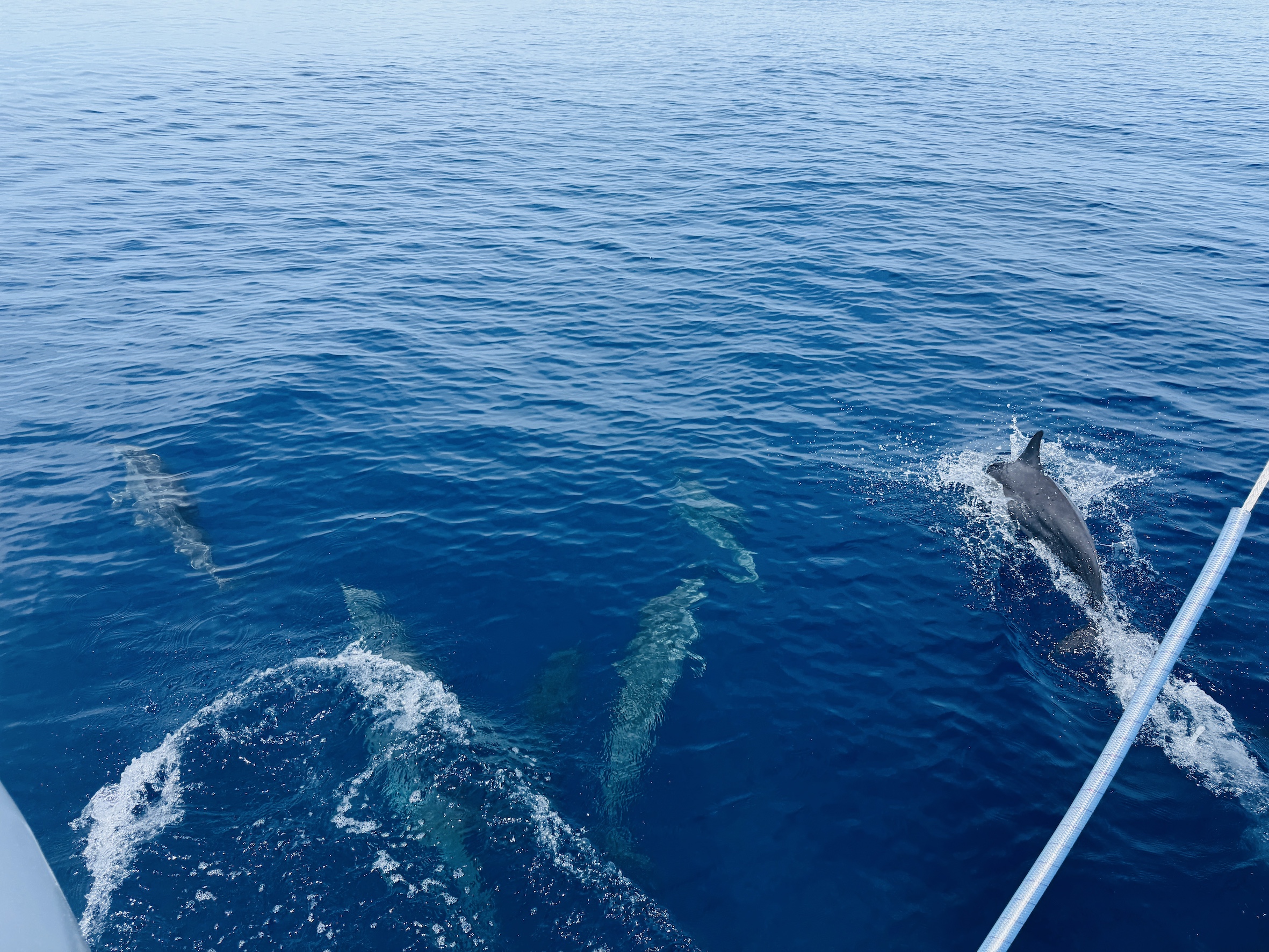
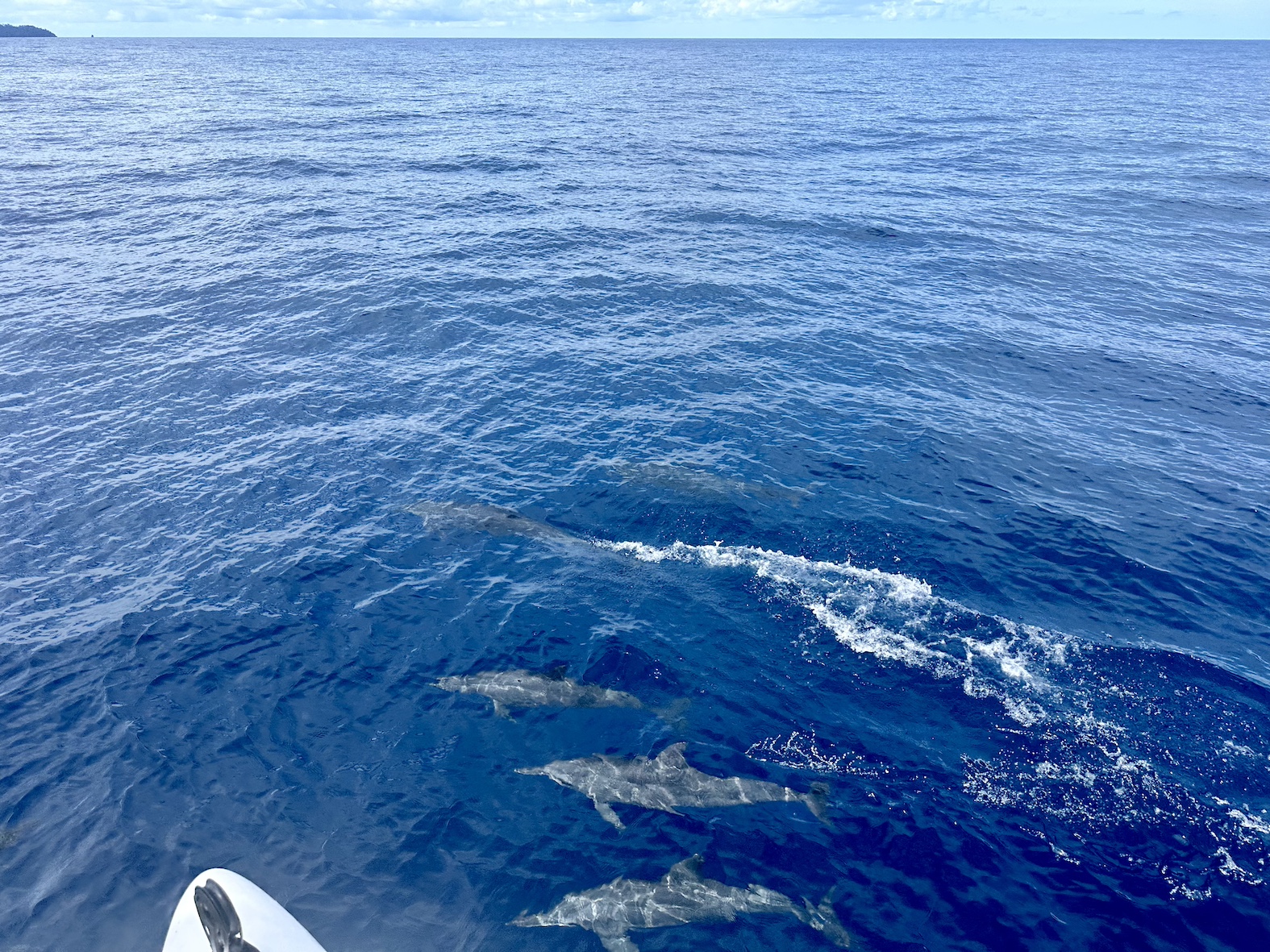
We’re welcomed by dolphins.  Our hook bites into the sand below, engine noise turns to silence.  We’re in a whole other world.

As I dive in to the clear water, I’m washed clean of the dirty old town and it’s all suddenly so worthwhile.  We have everything we need and we’re in a magic spot.

Anchored off a deserted jungly headland, surrounded by reef which grooms the north swell in to rideable waves.  The bay is a sandy beach backed by wilderness, a spectacular rainforest backdrop.  

No other humans in sight, until our new friend appears in a canoe to trade coconuts for dried noodles.  And a Bintang.

We are are alone for days, empty waves peeling down the reef almost to the boat.  

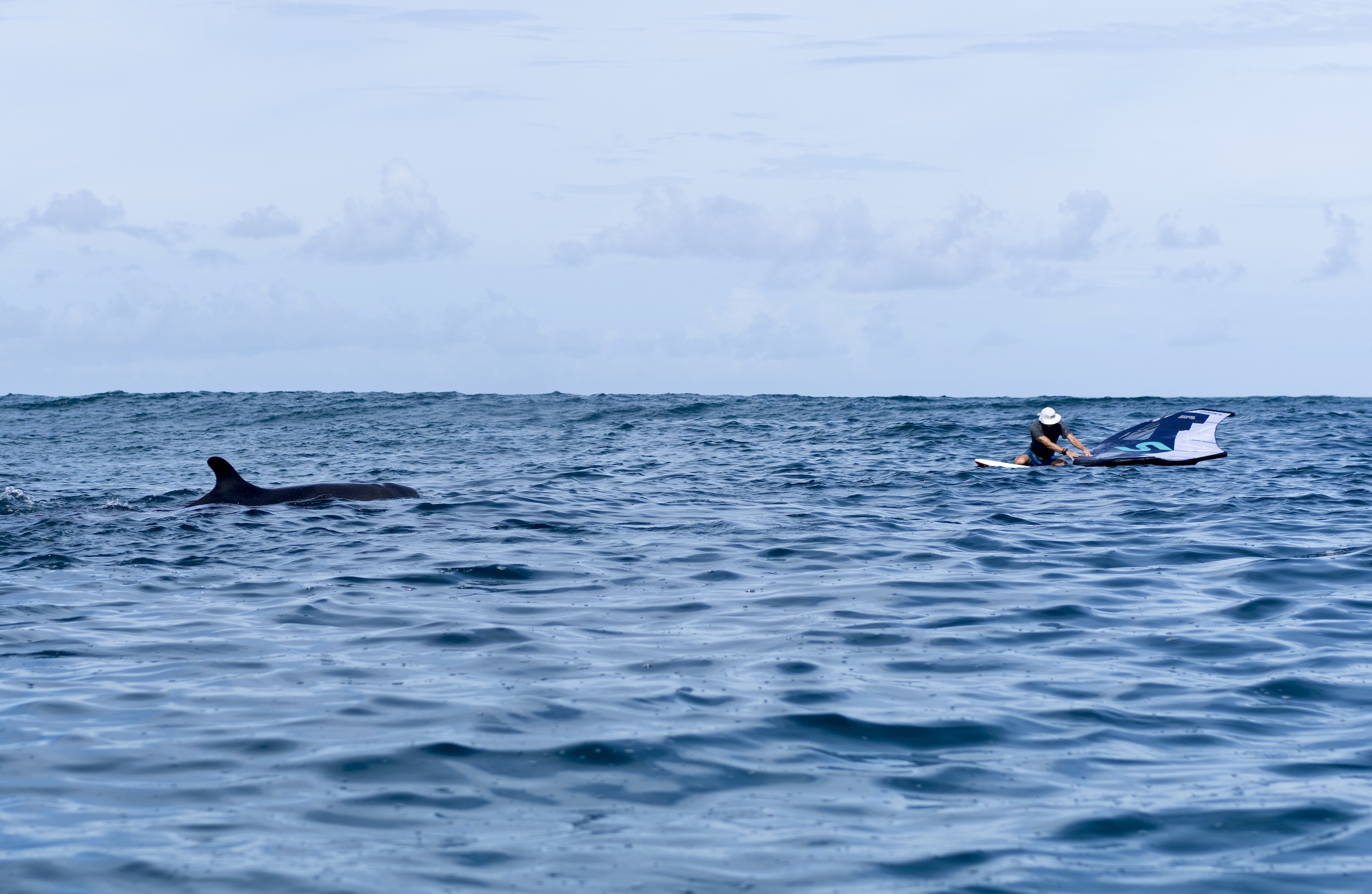
I was trying to wing in very light wind when a pod of pilot whales swam past to see what was going on.

This is Matt’s first trip on Escapade, and his first anchorage is now one of my all-time favourites. 

We towed him into this one:

We surf, wing, tow foilboards and ride Foildrives. 

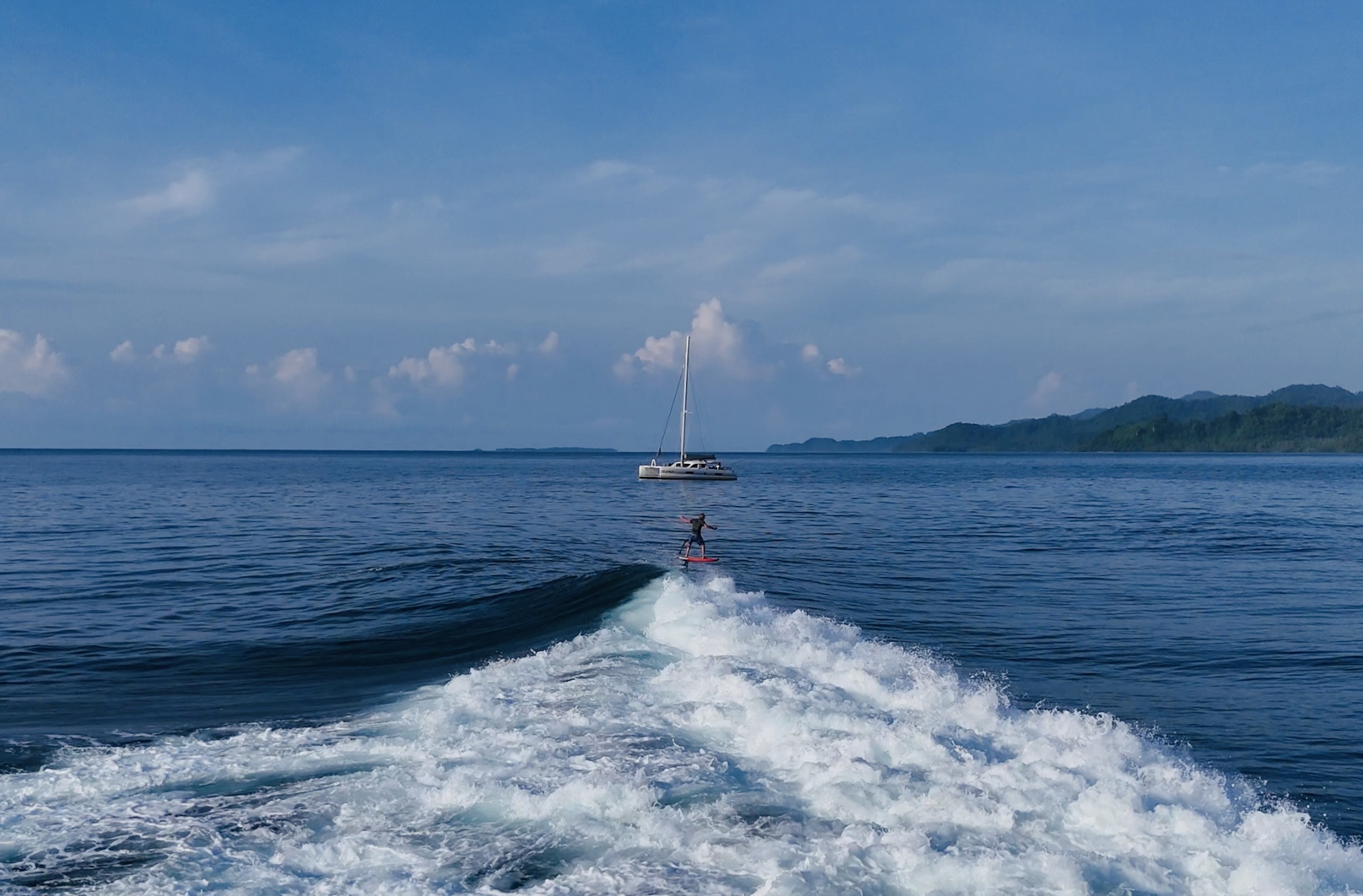
Foildrive is an Australian innovation, an electric motor which bolts on to any foil and board.  The little prop is controlled with a handheld trigger.  It powers you on to the wave, then the foil takes over, allowing you to fly above the wave face, in this case from the outside reef all the way back to the boat.  That’s a one-minute wave ride.

This is a new toy for Escapade.  I started playing with Foildrive in Maui and realised it would be perfect to have one on the boat.  Bryan thought so too, so now we have multiple batteries and foil options to play with.  

The onboard inverter can charge two Foildrive batteries in 90 minutes while the sun is high, on pure solar power.  While that happens we paddle normal surfboards, to get some exercise.  Mellow longboard lines out the back for me, shallow barrelling inside sections for the boys.

On my first Foildrive mission at this spot, I was joined by a pod of dolphins,  surfing and jumping right out of the glassy morning waves.

A few days later Bryan had a similar experience, dolphins swimming inside the wave he was riding and leaping clear of the face in front of him.

Magic moments.  Well worth those sweaty days preparing in Sorong.  

We’re taking the rough with the smooth.

Raja Ampat

Back in October 2024, we sailed Escapade from Australia to Indonesia.  We cleared customs at Tual and spent a few weeks exploring up to Waigeo before my crew flew home.

We left the boat tied to a dock at a diving resort in Waisai.  Since then the local birds have enjoyed perching in her rigging and pooping all over the decks.  

The NW monsoon has been rinsing her with regular rain squalls, but she’s safe.  There are no cyclones up here, too close to the equator.

Meanwhile Dawn and I were enjoying some Hawaii time.  We moved back in to our favourite pad on the North Shore of Maui and I lived a windsurfer’s dream for three months, sailing the Kuau waves in front of the house. 

Dawn was busy running the Aloha Classic windsurf contest and organising wonderful birthday parties. 

The conditions were consistently good and I windsurfed most days, with a bit of surfing, winging, foil-driving and even some sailboat adventuring round the islands.

Then in January the swells were often too big to play at our place.  Pe’ahi was breaking a couple of miles away, Ho’okipa was closing out, giant swells shook the boulders below our lawn.  Party season was in full swing though!  Dawn surprised me with mystery guests flying in from around the world.  The surf relented enough for me to windsurf Ho’okipa on the morning of my 60th birthday.  Celebrations also included Auriane’s 30th, Sam’s 40th and Dawn’s 50th!  I think I’ve never enjoyed Maui so much as this trip.

But by the end of January it was time to get back to Waisai, wake up Escapade from her hibernation and start scrubbing off the bird poop.

It’s always a magic moment when the boat is all ready to go again, the fridges are loaded with fresh local goodies, and we have a whole new archipelago to explore.

Indonesia is big.  2,800 nautical miles east to west, 18,000 islands, 700 languages.  That should keep us busy for a while.  

This trip starts in Raja Ampat, the islands off of West Papua, a remote province of this huge country, a thousand miles from the bright lights of Bali.  

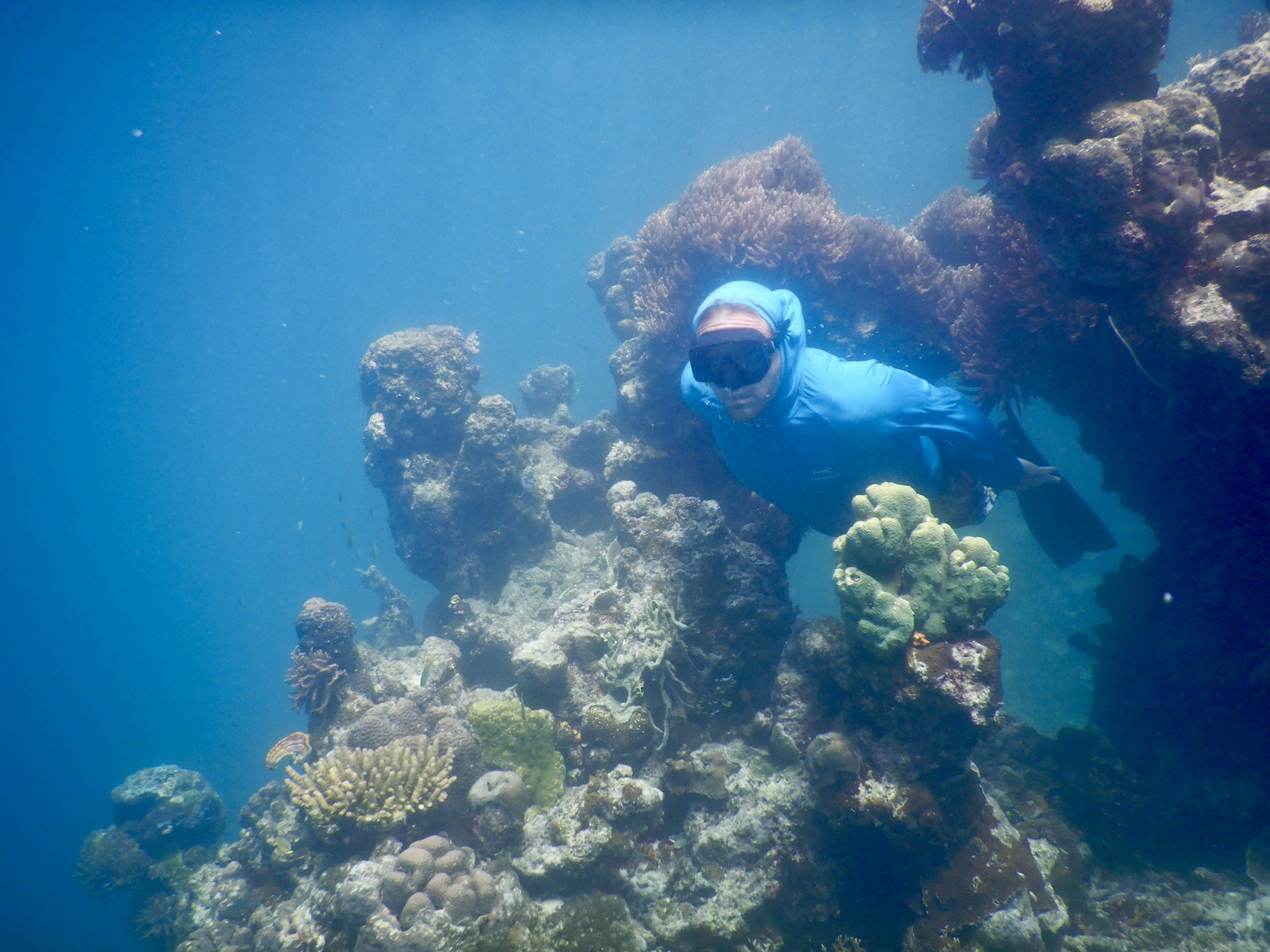
This area is not really on the tourist trail, but it is a well known destination for diving.  The ‘Indonesian Through Flow’ is an ocean current that washes clear Pacific waters past these islands and may be helping to maintain healthy reef systems.  By today’s standards there is still plenty of coral up here, which supports a wild diversity of marine life to keep this place on the scuba bucket-list.

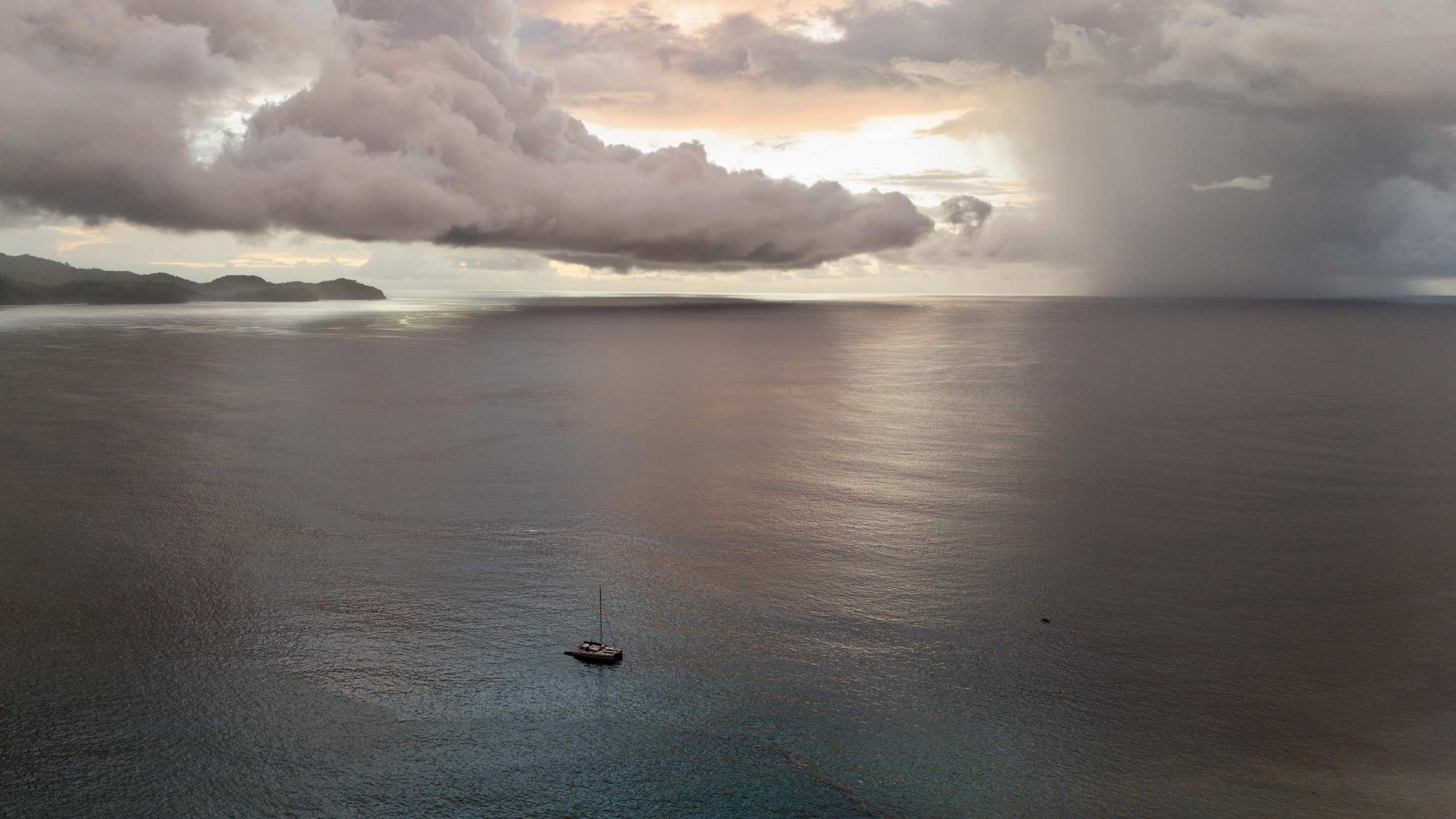
The only missing ingredient for this sailing trip so far has been wind.  We island-hopped up to and over the Equator and the weather was as you would expect in these latitudes: hot, sultry, very light breezes, lots of rain showers.  The Doldrums.  Some days the steamy heat builds giant cumulus clouds and we set the anchor well in case of a squall in the night. 

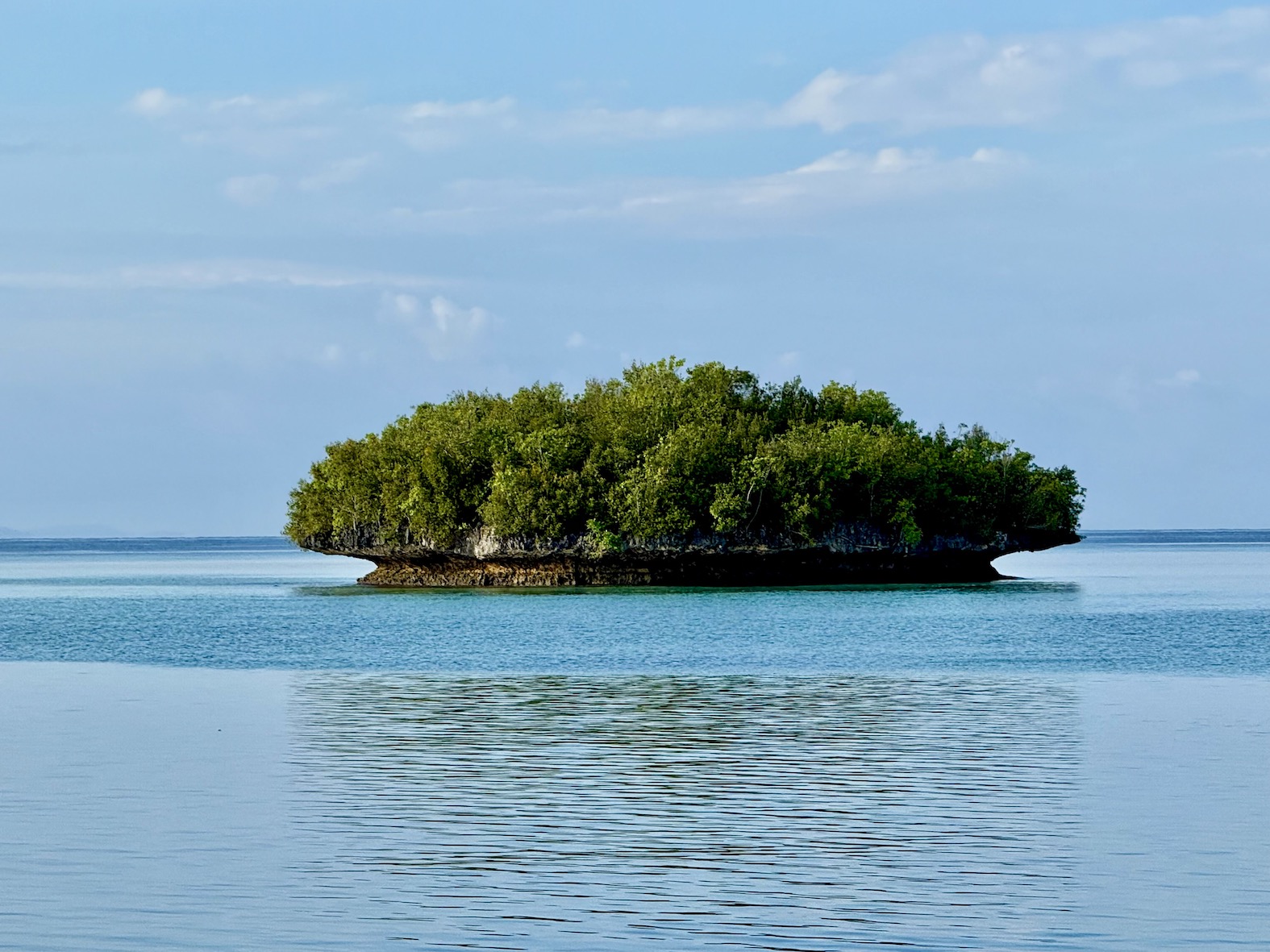
Anchoring is a different game here.  The islands are mainly steep sided limestone ‘Karst’ formations, often with those distinctive mushroomy undercuts where the waves have eroded the base.  

The water between them tends to be too deep for anchoring, or too shallow, with beautiful fringing reefs. 

Twenty five metres seems to be a normal depth for a Raja Ampat anchorage in my pilot book, which often suggests adding stern lines to trees or rocks, or even skipping the anchor altogether and just tie all four corners of the boat to something attached to an island.  I much prefer a shallow sandy spot, and we have found some of those too.

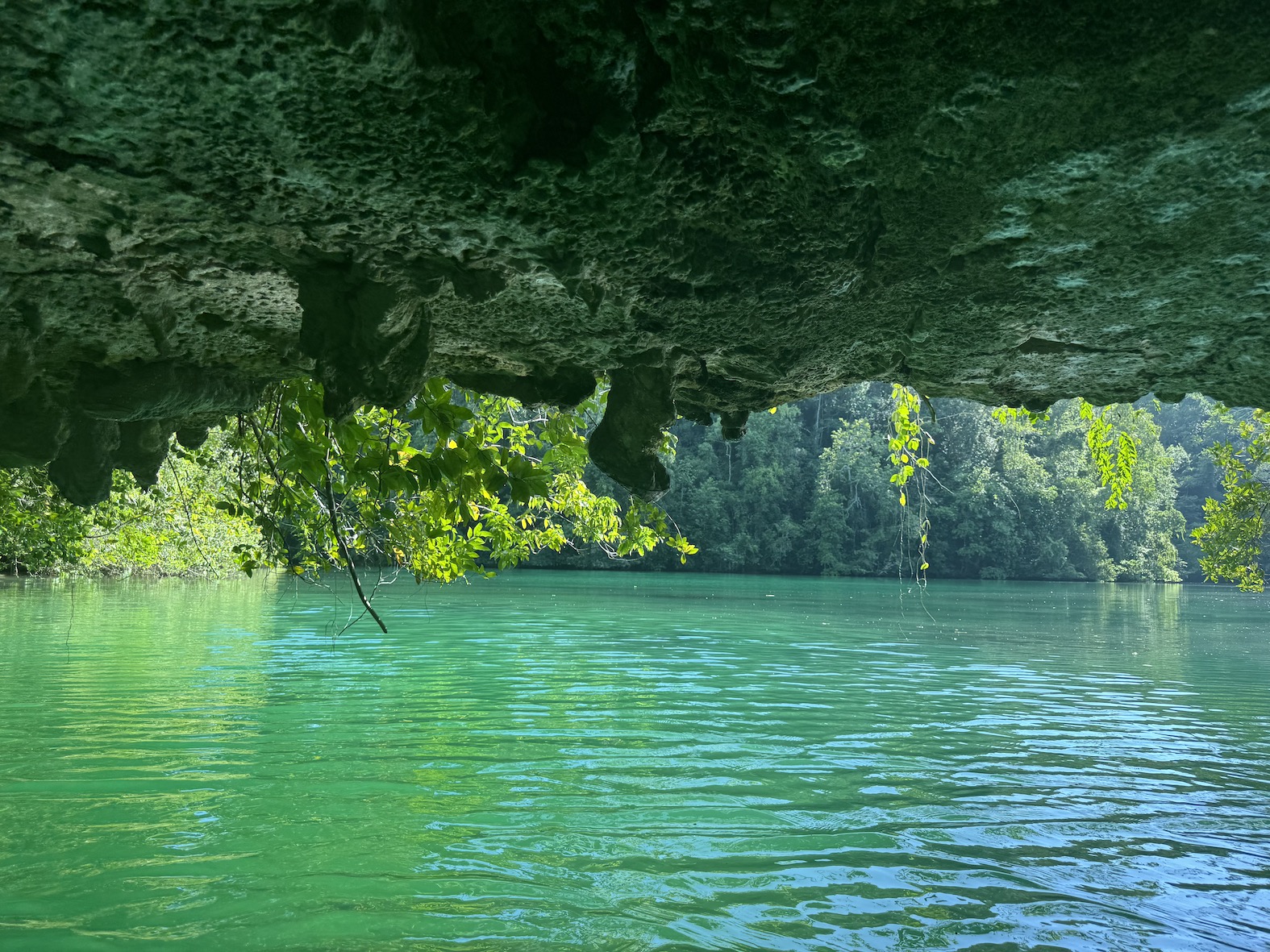
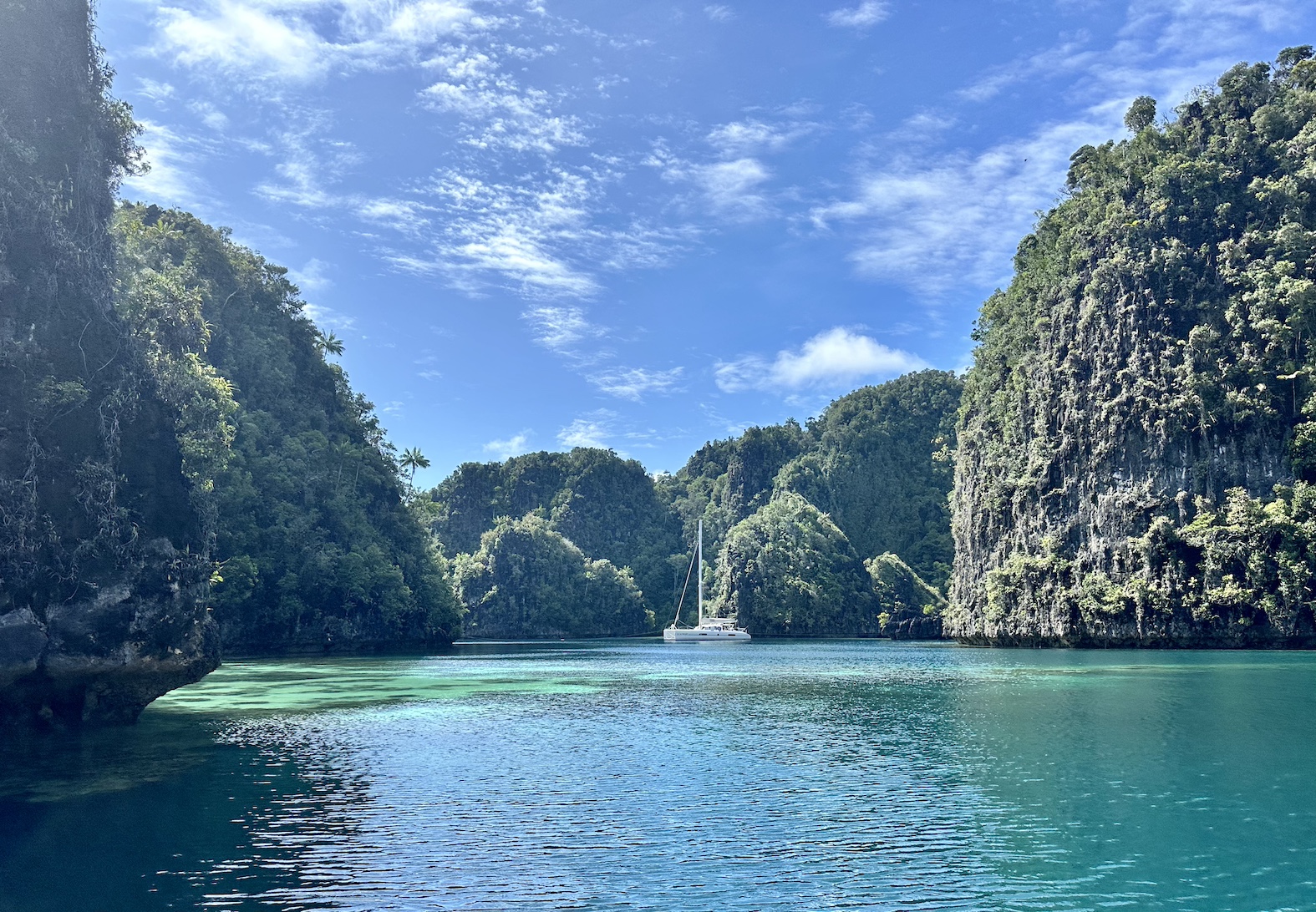
In one labyrinth of limestone formations we just squeezed our dinghy through this tunnel to a completely enclosed, hidden lake beyond. 

Then peered through a hole in a cliff to see these bats sleeping in their cave.

We have spent two weeks now alone in the islands, apart from the occasional encounter with an islander wanting some drinking water, or to trade their kelapas (coconuts) for some of our fishing hooks or collect a small ‘mooring fee’ in cash.  Other cruisers say they never pay these, but I find it hard to negotiate when I’m on a big yacht and the smiling islander is paddling a dugout canoe.

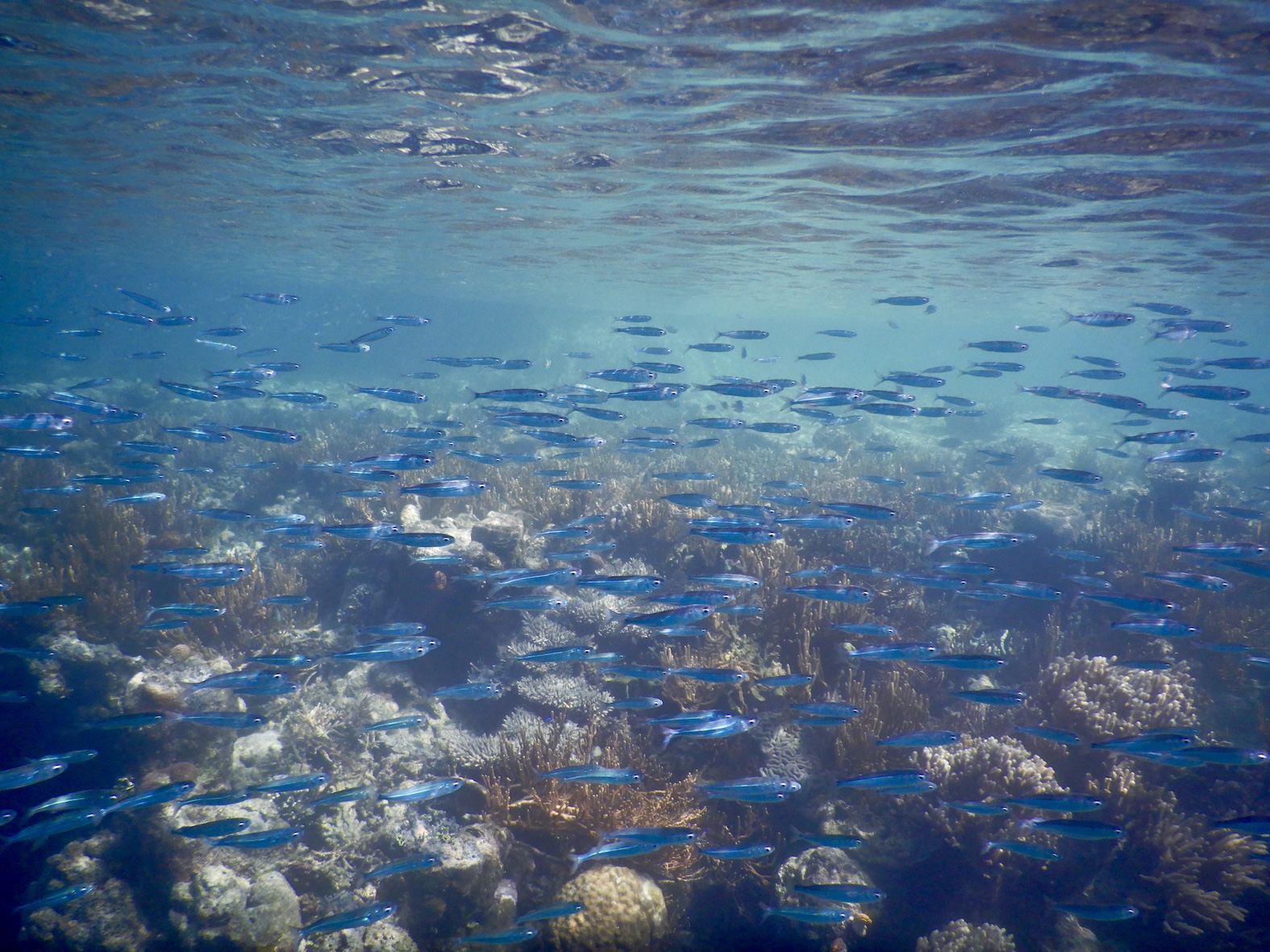
The seas are full of life.  Whole shoals of fish jumping around the lagoons in formation.  We have been joined by turtles, dolphins and dugongs.  A couple of encounters with big whales, one of which swam right past the cockpit to have a look at us before blowing and sounding. (We think a Bridies Whale.)  The trolling line has even produced a couple of fish for the galley.

But the seas are also full of trash.  We have never seen so much plastic waste floating on the surface.  It seems so out of place here, much of Raja Ampat is a protected marine reserve.  There are also lots of timber hazards to avoid, large floating trees and logs, easy enough to see in daylight, but definitely big enough to do some damage.

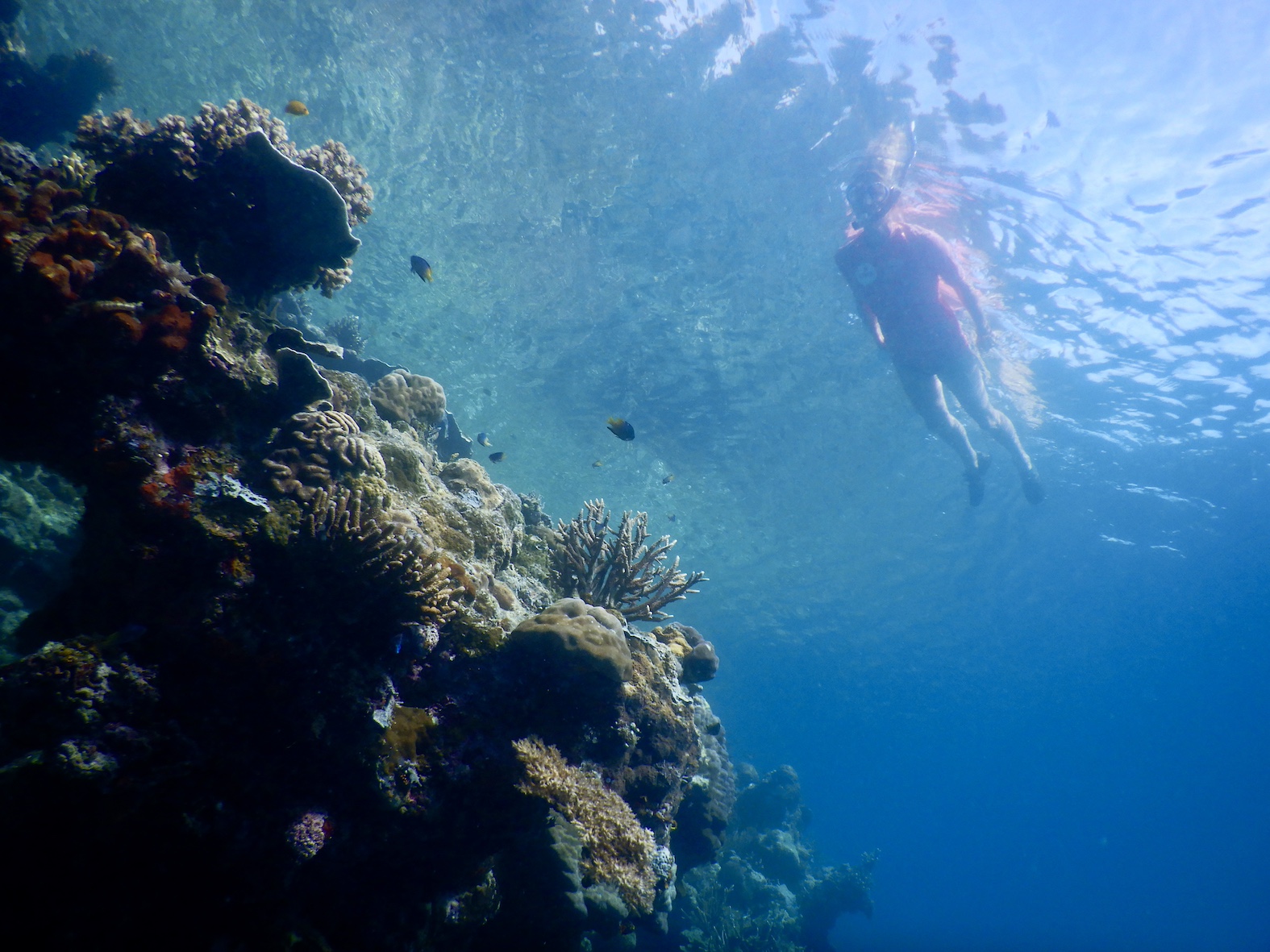
We have anchored alone in silent bays surrounded by towering rainforests and woken to an exotic dawn chorus. We passed countess beautiful islands, beaches, reefs and sandbars.  Snorkelled through the aquarium reefscapes.  This place is a cruising yachtie’s paradise.  Except that there is no wind!  We don’t need much wind to get Escapade going with her big sails, but there has been none.  Apart from in rainstorms.

I haven’t hoisted the main or pumped up a wing in two weeks!  

I’m sure that has to change soon, but for now we’re on our way to find some more diesel.

Uncharted Waters

I’ve been sailing west for so long that I’ve woken up in the Far East. 

I’m awake early on my first morning in Indonesia, looking forward to exploring the town of Tual and trying some local food.

But first I have to clear boat and crew through Quarantine, Immigration, Customs and Port Control.  In that order.  

The best advice I was given for this mission was “Be patient, keep smiling”.

I was also told to wear long trousers, closed shoes and a long sleeved shirt, respecting those working in uniform.  By 8am it’s very hot.

The national language here is Bahasa Indonesia. While there are many regional languages across this huge country, ‘Bahasa’ is spoken everywhere.

It is said to be an easy language to learn, even for a non-gifted linguist like me.  The structure of Bahasa is nice and simple, with none of those verb endings and genders that have always plagued my Franglais.

So I have been doing a daily lesson on the language-learning app Duolingo. I’m enjoying it, but the first two weeks were centred around the eating of apples, drinking water, and a black cat that likes to drink milk.

All quite rewarding, the old grey matter can still absorb strange new things, but a bit limiting in terms of conversation. To these skills I added ‘thank you’ (Terima Kasih) which seemed to be very well received by the port officials.  A little Bahasa goes a long way, they say.  In my case it will need to.

The first hurdle was a quarantine inspection.  Having established that none of the crew had died since our last port, the friendly officer instructed us to lower the Q flag and hoist our courtesy flag.  “Welcome to Indonesia”.  

“Terima Kasih!”

At one point in that long, hot day I found myself in the back of a car with a customs officer driving back to the boat for our second inspection.  I thanked him in Bahasa. “Oh you speak Indonesian!”  This seemed to be going well, so I hit him with the news that the black cat likes to drink milk while I prefer to drink water. 

I’m not really sure if that helped but he quickly inspected my medicine chest and cocktail cabinet, took photos of the engines and produced clearance documents to be signed and stamped.  Years ago Dawn had a rubber stamp made with the boat name and a few official numbers on it: SSR, Call Sign, MMSI, looks pretty official.  This is definitely worth having when being processed through Indonesian bureaucracy.  Everyone loved it when I pulled out that self-inking rubber stamp and left my mark. They wanted it on every single document.  

For me the first real thrill of arrival was now that we were allowed out through the port gates into the town of Tual.

We had tied the dinghy to a coastguard ship and found our way to the crumbling concrete dock via a huge fender.

Then in to the bustling streets for a lunch of fish curry, rice, tempeh, egg, greens and weapons-grade sambal.  All for the price of a cup of tea in London.

We topped up our fruit and veg supplies, then one more hot hour of signing and rubber-stamping before we were street-legal, fully cleared in.  Escapade is free to roam these waters for three years!

And I’m back in shorts.

After all that we needed a day off.  We headed for the nearest turquoise anchorage and swam ashore to a white sandy beach.  There was a very low-key strip of shacks but we were able to find coffee, lunch, dinner and a karaoke hut.

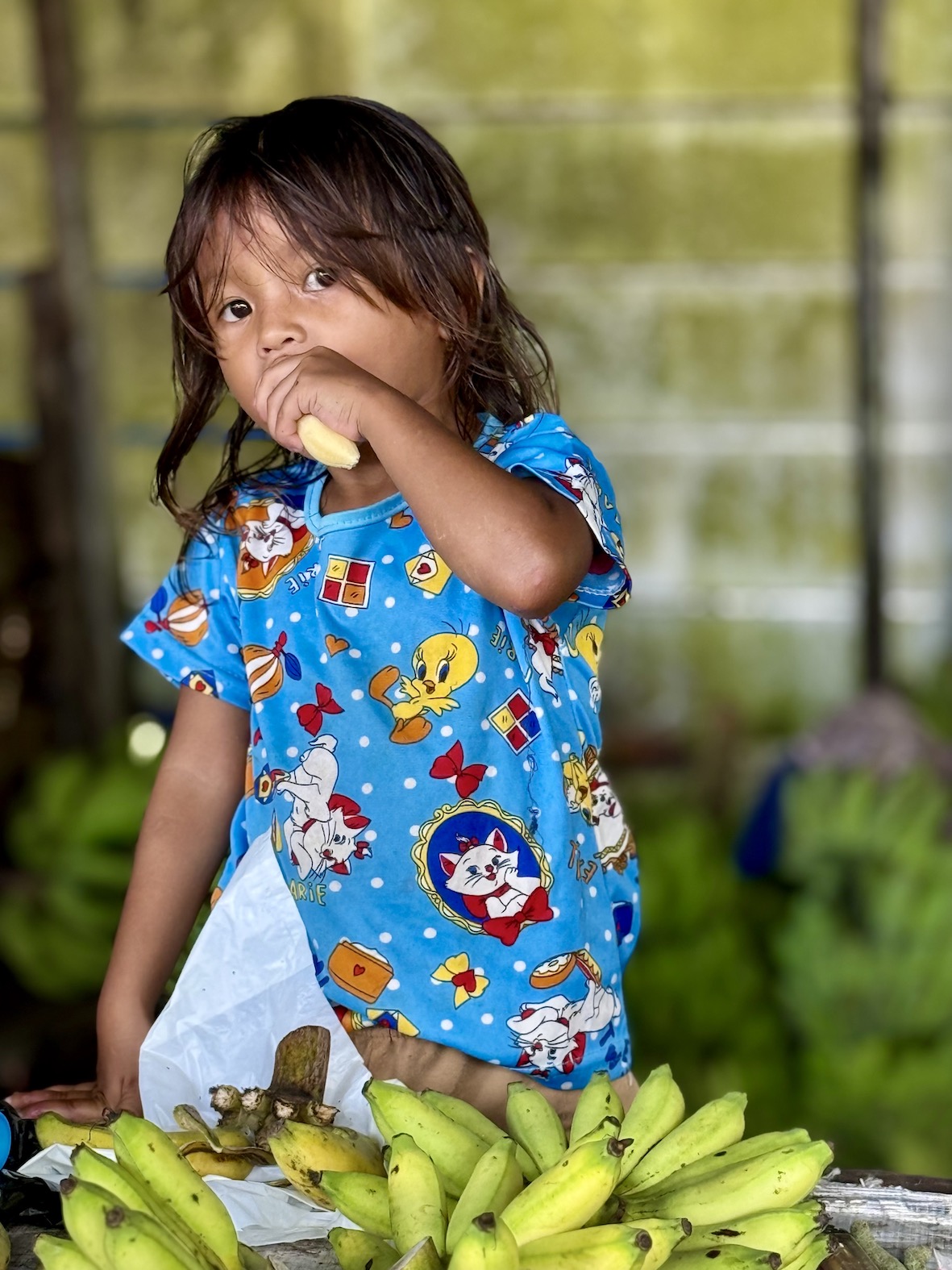
This little girl seemed much more interested in the news about the cat and the milk.

After weeks of ukulele training, Alex’s conquest of ‘Let it be’ climaxed that night with a triumphant public performance through 1000W speakers with a bit of feedback.

Perhaps that inspired Arabella’s delivery of ‘Killing Me Softly (with his song)’.  

(Well it may only have killed her softly, but he totally murdered ‘Let it Be’)

Next stop was a remote lagoon that reminded me of the Tuamotus.  We had to sail round a pearl farm and through a narrow pass to find our spot.  A riot of blue water colours with dolphins frolicking.

The breeze arrived and foils were deployed for the afternoon.  

James traded coconuts for cold beers with a local fisherman.

Onwards. We decided to leapfrog a few islands due to lack of useful anchorages, so we set off on an overnight passage, aiming for the archipelago SE of Misool.

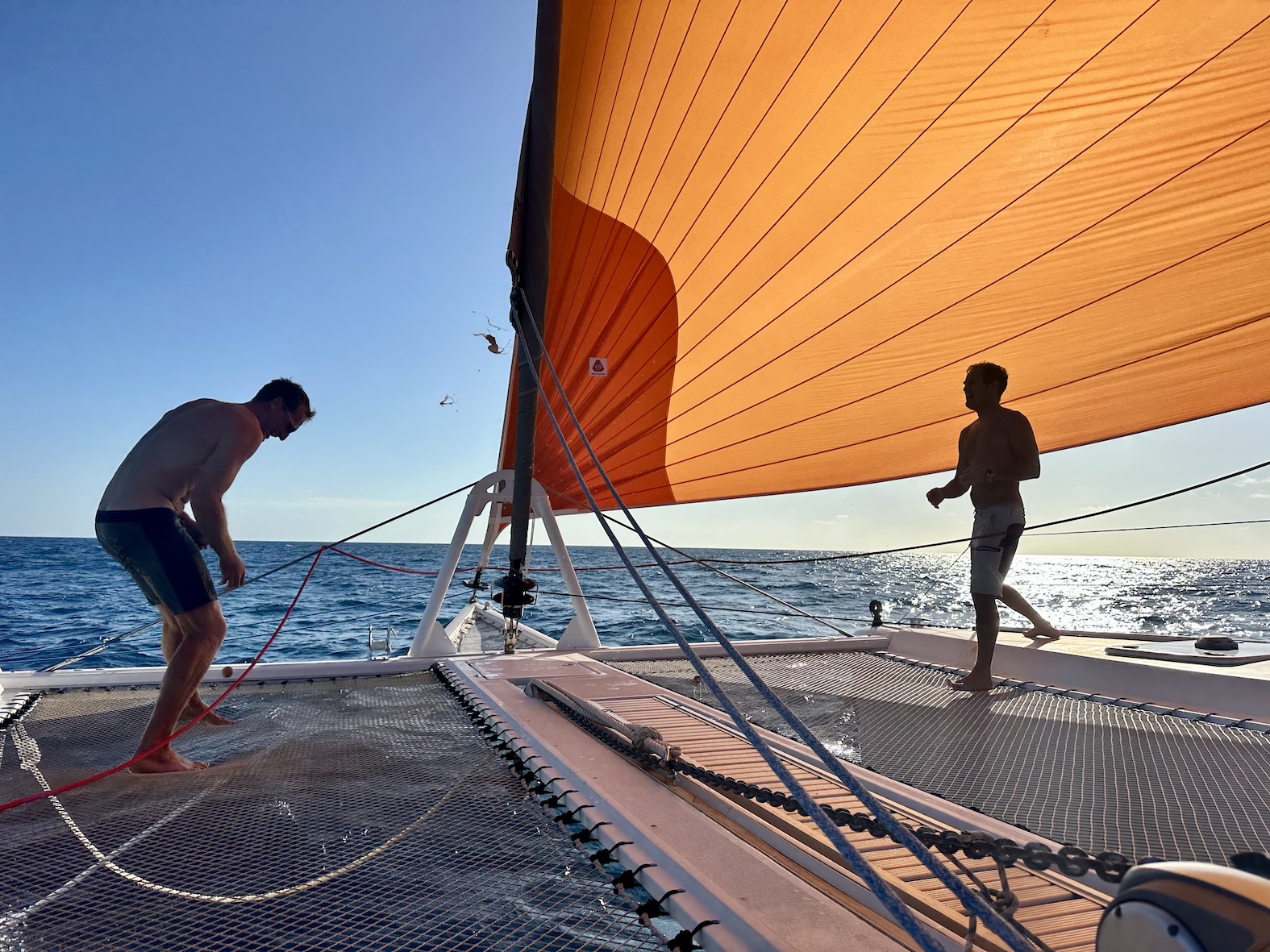
Our new standard Indonesian rig is full main and Big Red.  Day and night.  On this trip we barely touched a sheet for 30hrs as Escapade ate up 240 miles in a 10 knot breeze.

We caught a perfect size tuna, dinner for four.  The four of us are well adjusted to all this now.  The rhythm of the sailing and night watches seems easy.  The creaking mainsheet and the strumming of the uke.  Mile after mile.

My night watch was a starry sky and trails of phosphorescence streaming from the hulls as the boat sailed herself across the dark sea.

The next afternoon we were approaching our target island of Daram.  A pod of dolphins came to welcome us.

The next few days were a string of anchorages so scenic and so unlike anything I had ever seen, my memory of those places is all a bit dreamlike.  I think I’ll let the photos do the talking.

The water in this terrain seems to be too deep for anchoring or too shallow, so I had bought a 250m spool of 8mm nylon rope from a fisherman’s supplier in Cairns, we cut it into four lengths and strung ourselves between the islands.

We swam, snorkelled and towed foils around the glassy lagoons. It was very hot and calm.

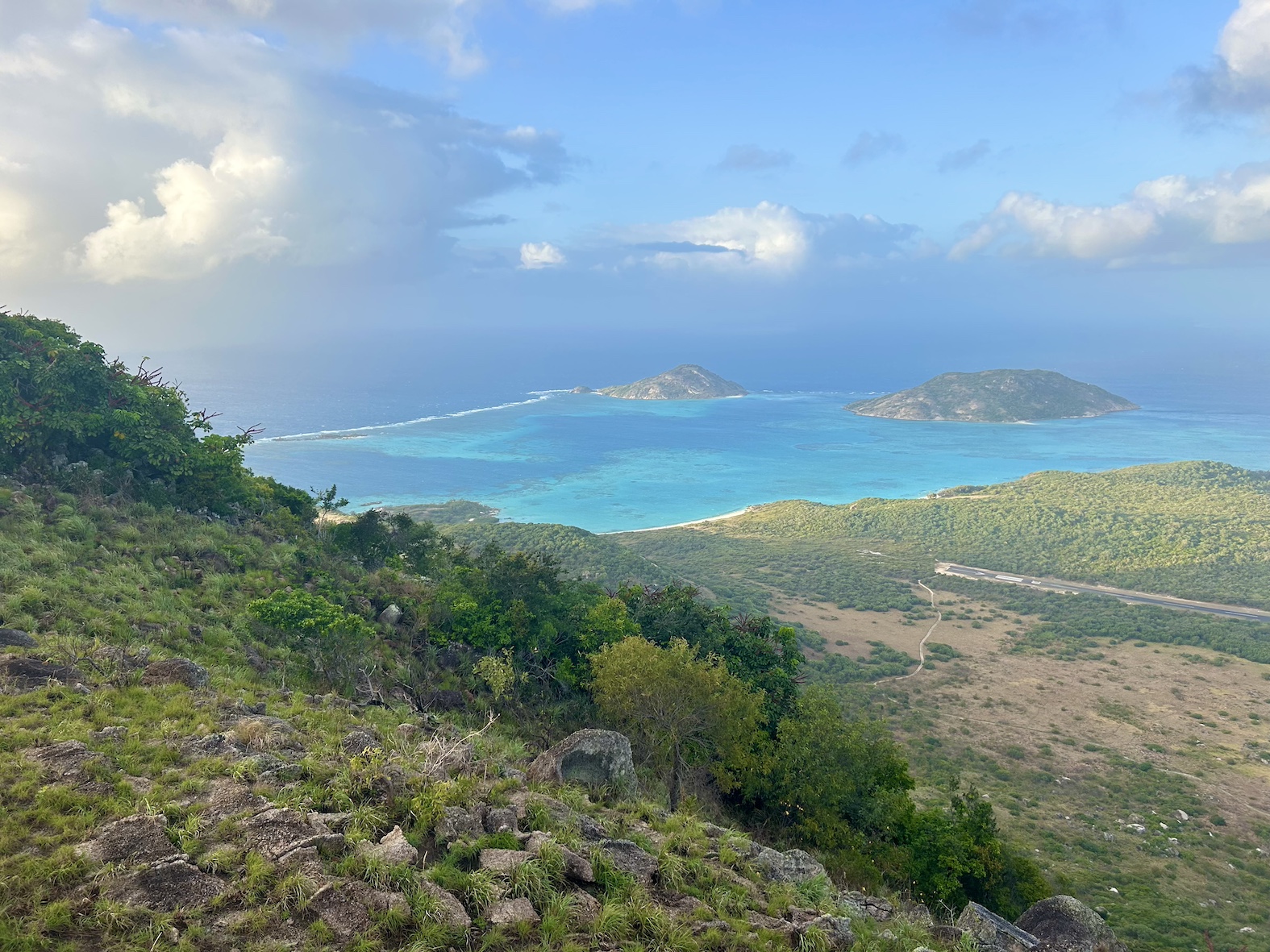
Early one morning I was persuaded to climb this hill.

For this view.

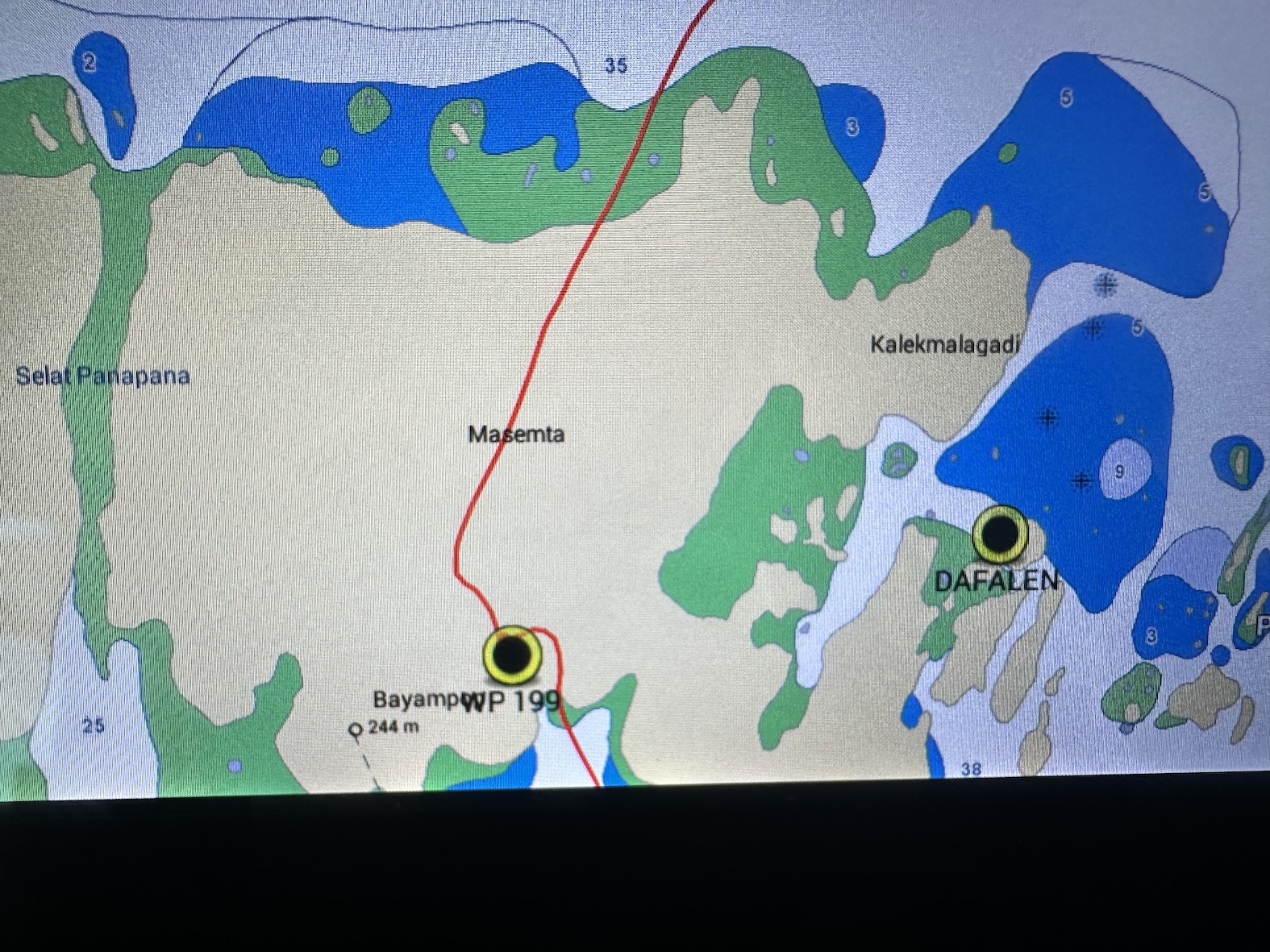
These are whole archipelagos of limestone ’Karst’ islands fringed by coral reefs and emerging from deep dark lagoons.  The island systems are a labyrinth of channels, some of which are navigable, most of which don’t even appear on my plotter. Here’s my Mac pretending to be a chart plotter with one of Dawn’s glorious satellite images.  

This is the same course on our C-Map chart, which shows we sailed right across the dry island.

You could get lost in those waters for a whole season if you wanted to, and probably not see another yacht. 

But for us it’s northwards again, beyond Misool and the tradewinds, heading for the equator.

So the wind has finally deserted us.  Best part of 2000nm from Cairns and we’ve had sweet sailing almost all the way.

But now we’ve arrived in the doldrums and we have to be content with the 7 knots of apparent wind courtesy of a diesel engine.

One morning I was about to put a fishing line out but the wake looked so glassy and tempting I had to try foiling it.

No wind but we did find some little waves, a couple of promising spots we saw on Google Earth with reefs exposed to the North Pacific.

It was small but we had a week of chasing it on foils and longboards.

Some fun waves breaking on pristine reefs in bath-warm water.

Since it’s so calm, we have started to anchor within a short paddle of the surf.

The landscape is mainly uninhabited jungly hills.  Occasional islands and villages to visit.

The Equator.

It’s traditional to perform a line-crossing ceremony where first time Equator-crossers are ritually humiliated, heads shaved and covered in fish guts, for example.

As the only ’Shellback’ on board, it fell to me to perform this rite of passage. (As my daughter Jemima did for Dawn and I when we first crossed the line in Galapagos)

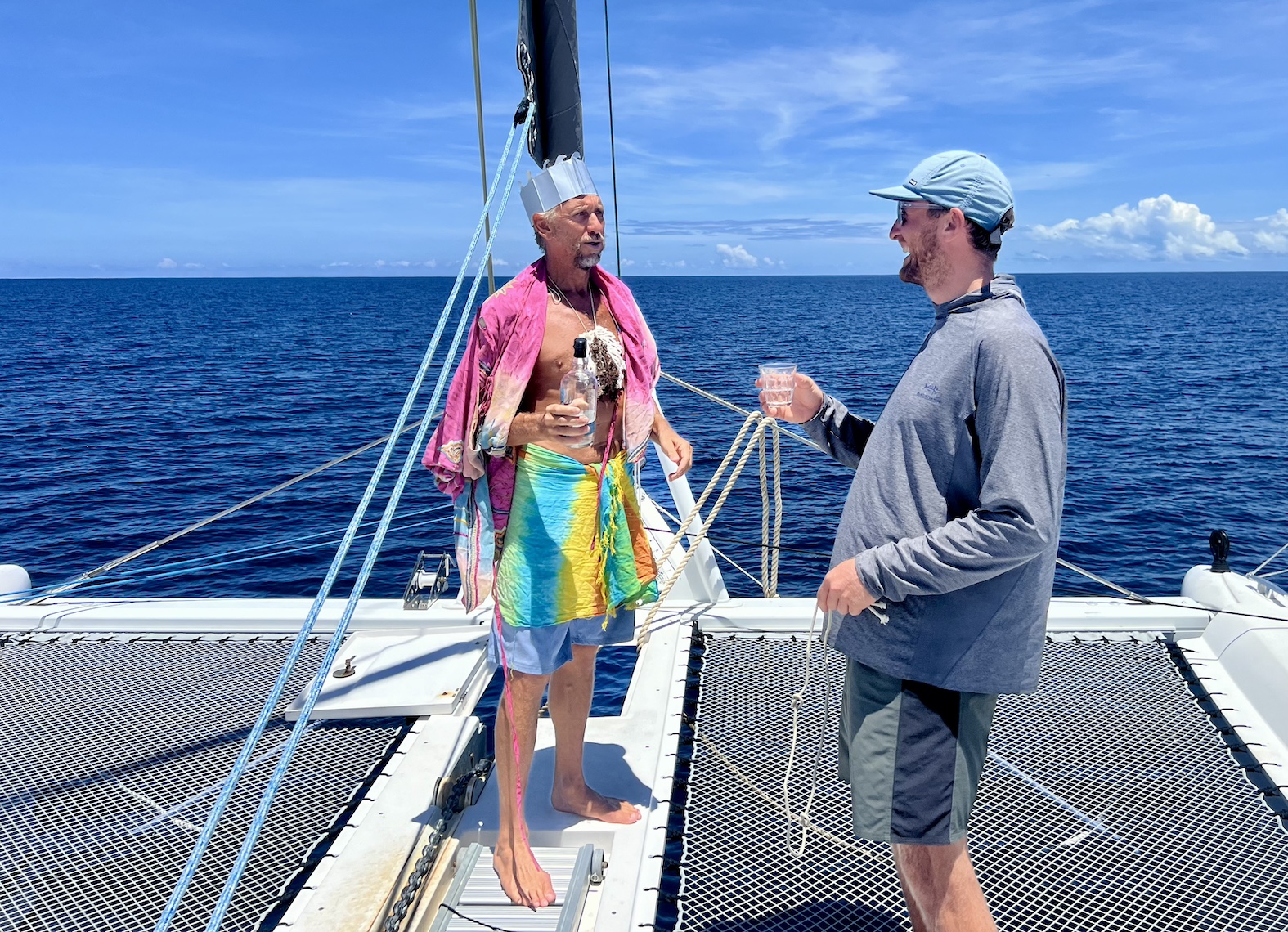
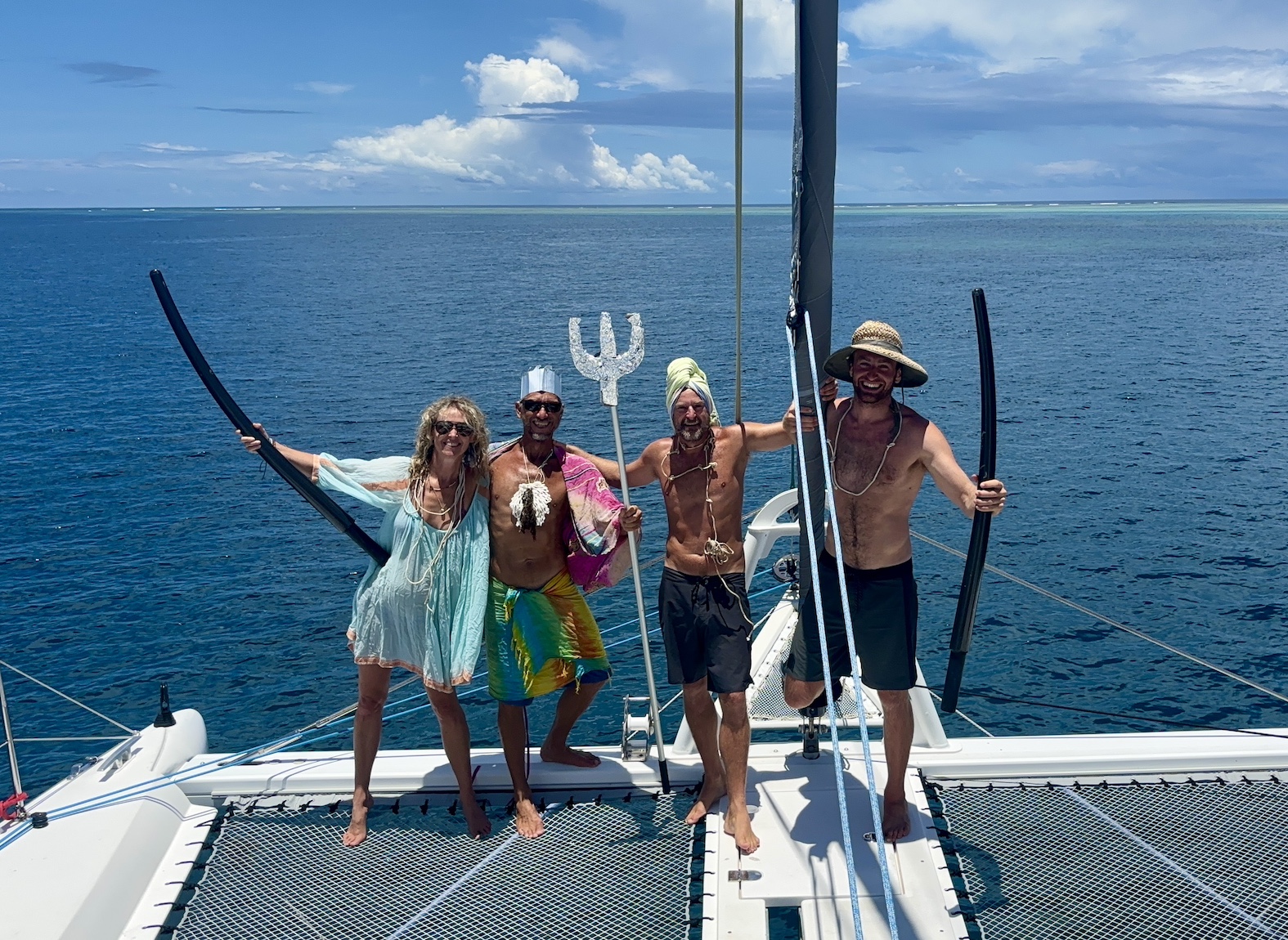
King Neptune made a surprise appearance to oversee the proceedings.

I toned down the traditional trial a bit.  Our version included cleansing with ‘the waters of the south’ and drinking ‘of the fruits of the land’.  Which meant a  bucket of seawater over the head and a shot of tequila to smooth our path between hemispheres.

We counted down the seconds of latitude and swam across the line.

Then it was time for my wonderful crew to fly away.  It feels like they have helped me deliver Escapade from one world to another.  Cairns seems an awfully long way back in our wake now. 

Thanks for everything team, I look forward to reciprocating on Alex and Arabella’s Outremer one day!

The Arafura Sea

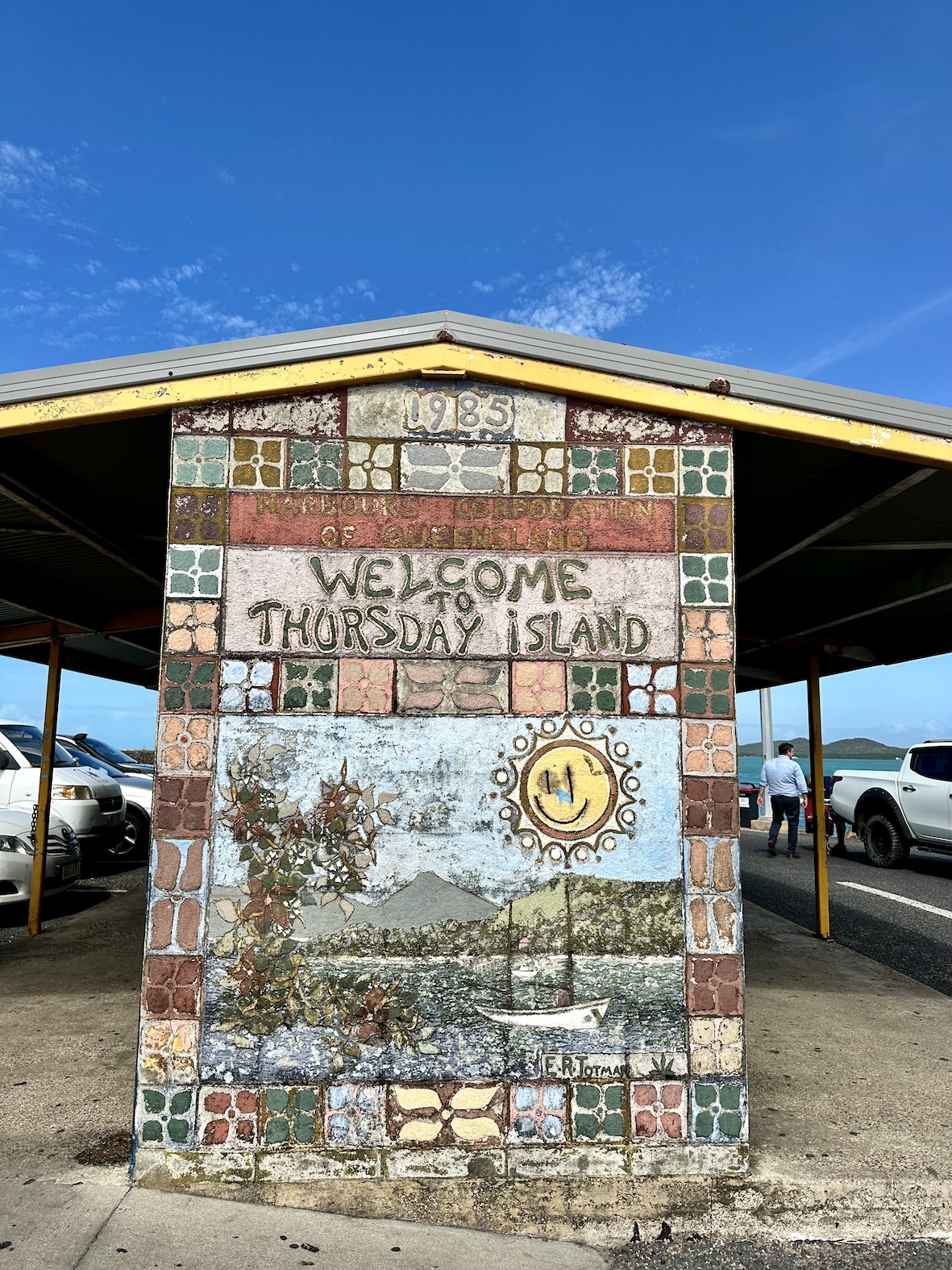
Thursday Island has long been an important Australian port, pearling station and customs post, the main border with Papua New Guinea across the straits to the north.

Many round-the-world yachts have cleared through here, including the very first.

This is The Federal Hotel.  An early entry in their visitor’s book reads:  “Joshua Slocum. Boston to Boston 1877.”

Escapade will clear customs here too, and officially depart Australia.

Next stop Indonesia.

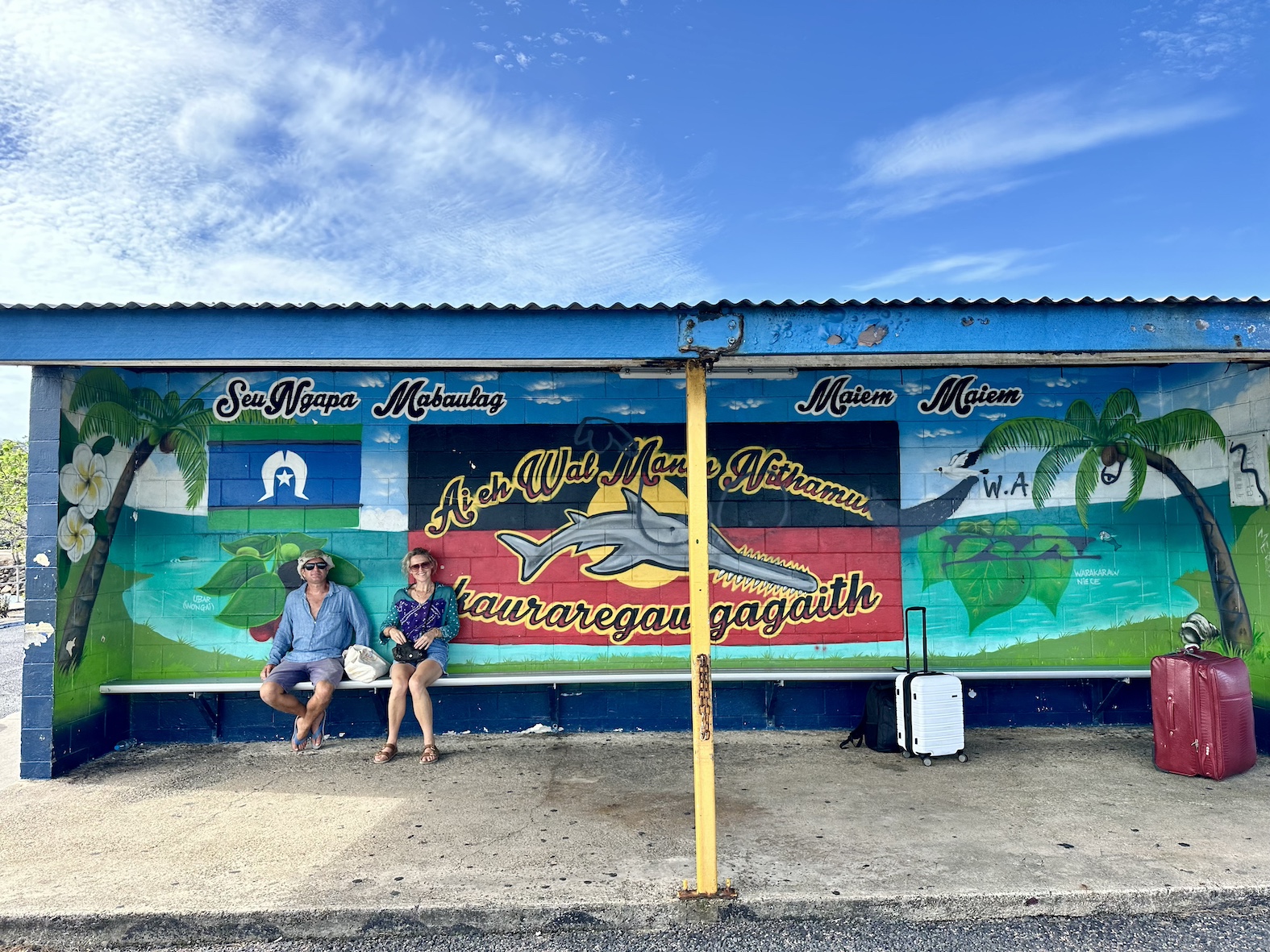
Arabella shrugged off the jet-lag and we all went for a stroll around Thursday Island.  

We filled the dinghy with fresh food for the next trip, got our clearance papers and had time to celebrate Alex and Arabella’s wedding anniversary in Australia’s northernmost pub.

The weather has been completely different since we arrived here.  The Queensland coast was wild and windy, but up here in the straits, winds are light and the air is hot and humid.

21st September

We wait for the tide to turn and let it flush us down the channels between the islands to open water.  The biggest sails are hoisted and Arabella was at the helm as we waved goodbye to Australia with the boat travelling at 13 knots down wind and tide.  Out on to the Arafura Sea. 

The Torres Straits separating Australia from Papua New Guinea are often shown as blue sea on maps, but if you zoom in on Google Earth, the straits are a mass of reefs and islands with just a few shipping channels passing through.  For our first hundred miles the water was flat as a lake in the lee of all that, and shallow: 20m or less.  The primary hazard for sailors out here is the fishing fleet from PNG and Indonesia.  They fish right to the limit of Australian waters and have a reputation for being numerous, often with extensive nets, hard to spot in daylight and unlit at night. 

So our route takes us due west and then gradually bends north to our destination: the Indonesian port of Tual in the Kei Islands.  The big curve is a detour, intended to keep us clear of the fishing boats. The rhumb line distance is about 680 miles, we will sail quite a bit further. 

We are also tending to gybe both ways across the E and SE breeze, maximising boat speed.  James has brought a new level of science to our VMG calculations (which were previously science-free, occurring mainly in the seat of my pants).  He has installed graphs on the plotters to illustrate our Velocity Made Good which is a measure of how fast you are getting to your destination.

Should we sail slower, straight downwind, or take a faster broad-reaching course, sail a bit further, put in a couple of gybes and arrive quicker?  I have always known that Escapade prefers the faster line, she sails so much better with a bit of power in the rig. More speed and a smoother ride.  James’s graphs agree and it’s fun to see how far you can sail off-course and still be winning.  Also very encouraging for those still practising the ancient art of sailing by the seat of one’s pants.

James landed another fine fish and fed the crew for a couple of dinners.

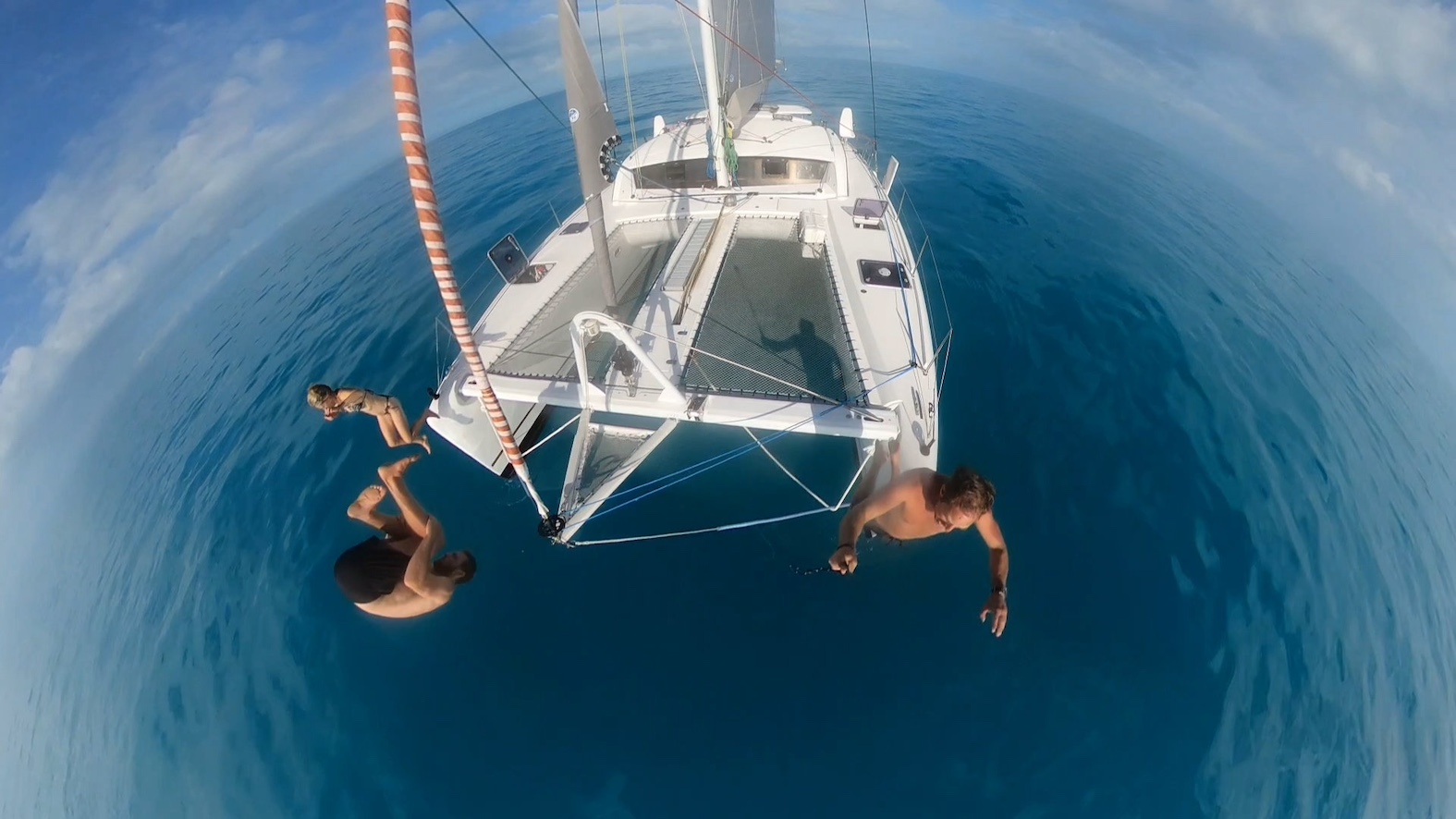
We were briefly becalmed, and very hot, so we all jumped in for a dip.  

James has been offering ukulele lessons to Alex, tuneful daily strumming practice.  Alex is mastering the four chords required for ‘Let it Be’.

When we had sailed about 380nm from Australia we decided to throw our Halfway Party with sundowners and Spag Bol.

We have been hearing about Starlink on sailing boats for a couple of years now.  My naturally Luddite tendencies meant that I was strongly against the idea of satellite internet on tap whilst at sea.  Being on passage was one of the last remaining parts of life where you still could enjoy being offline for a few days.  We would set each other paper Wordle puzzles and keep lists of things to Google when we arrived.  Plus, I was horrified to see those early Starlink satellites invading the timeless night sky.  We carry Iridium for weather forecasts and an Inmarsat phone.

But eventually I reluctantly agreed to the idea, it’s cheap, easy to use, and you can always turn it off.  We installed the dish in Brisbane, the modern world has finally infiltrated my technophobe capsule.

Well I love it. What an extraordinary creation. Well done Elon.  On the old satphones there was a delay which made normal conversation tricky, and a robotic voice quality which never really sounded right.  Now I can chat to Dawn on WhatsApp from the middle of an ocean, with video!  The longwinded procedure of requesting and retrieving a weather grib file from space could sometimes take many attempts with me waving an Iridium aerial outside.  Now we have all weather resources at sea, whenever we want it.  Pretty amazing, but will people now expect me to reply to their email when I’m sailing?

The days were filled with sailing, strumming (‘Let it Be’ is now recognisable to a keen ear), cooking, games and compulsory afternoon HIIT workouts.  

Then sundowners on deck for the perennial Green Flash debate. 

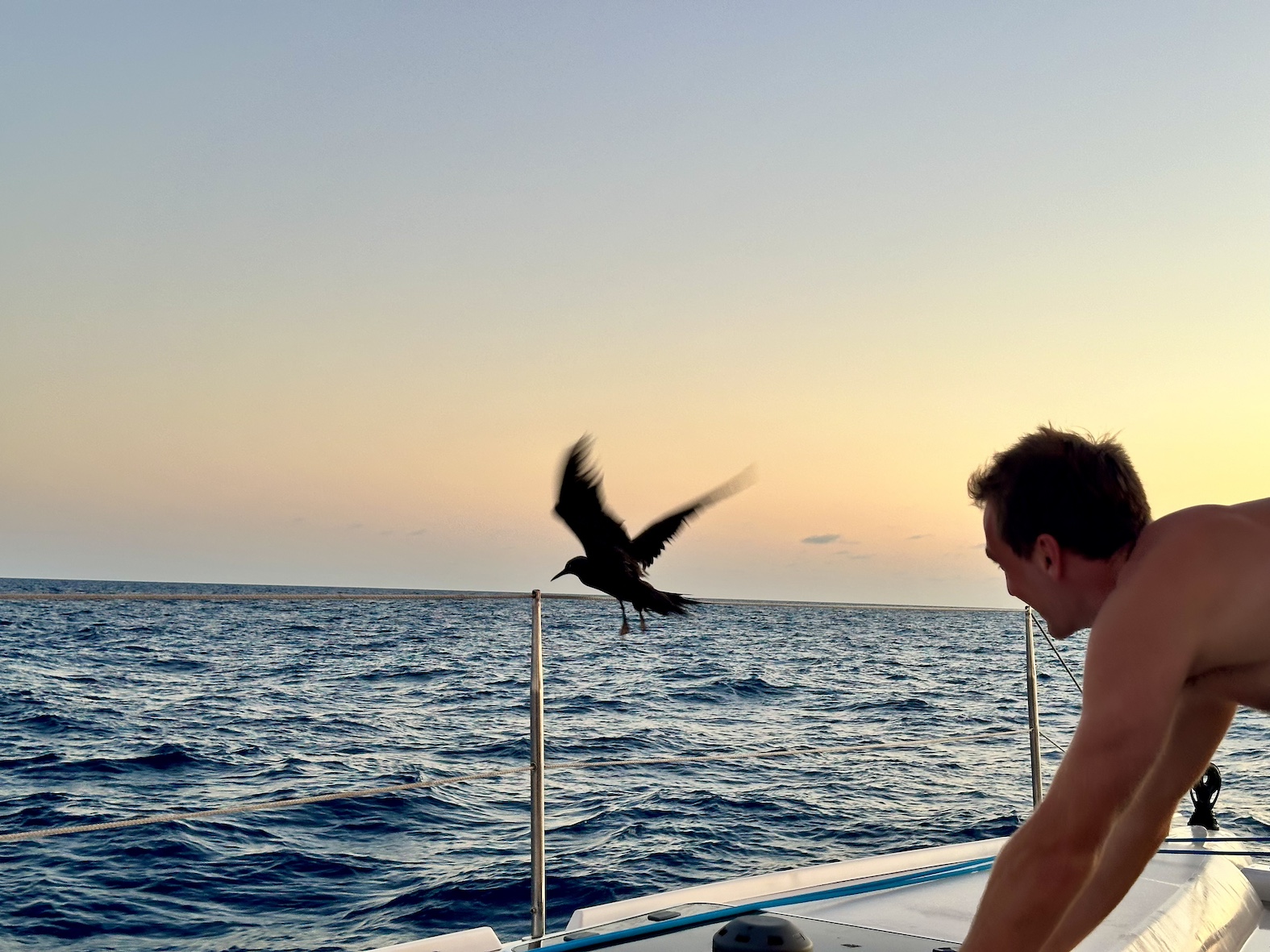
We were joined by a stowaway noddy who happily roosted on a daggerboard for 24 hours.  

We discovered our oldest eggs had gone mouldy and need to be disposed of. 

That got very messy.  

Occasionally we had to stop and jump in the sea, it’s getting hot up here, only a few degrees from the equator now.

We had some lovely night watches under a waning moon.  Dawn and I have lived for many years by our own golden rule: no big sails at night.  The new Code D Gennaker is 165 square metres of sail, and we find it can get much bigger in the dark.

But the breeze out here seems so stable, the sky so benign, the boat is sailing at 10 knots with apparent wind of about 12kts, it seems such a shame to furl the sail when we’re going so well.

And Dawn’s not here..  So the Big Red stayed up most of the way.  

We were briefly becalmed a couple of times, on the last night I made my bed on the trampoline to get away from engine noise but the wind came back at daybreak.  

On that last night we were south of the island of Trangan.  We had been specifically warned about a prodigious fleet of fishing craft there, but I was slightly cutting a corner to keep boat speed up.  As the darkness fell, the loom of a substantial city appeared on the horizon.  Bright electric lights in the distant haze.  But there is no city there, we’re 60 miles off Trangan.  As we sailed closer that loom became a giant fleet of boats hunting squid with powerful lights.  We dodged them all of that night, the fleet was about 50 miles long!  Can there be any squid left in these waters?

25th September

After 4 days at sea our first glimpse of Indonesia emerged from the horizon, the green hills of the Kei Islands.  

As the sun set we sailed between strange new craft, moored rafts for fishing, each with a tiny shack for the fishermen. Our first encounter with the ‘Bagan’ which are common throughout Indonesia. 

We had hoped to avoid arriving at night (actually that’s another of our Golden Rules but, well you know, Dawn’s not here).

These waters are poorly charted and general advice is not to trust the chart on your plotter, as reefs and islands can be in the wrong place.  So Dawn spent half of August preparing satellite images for me to use on Open CPN instead of charts. 

Our final approach to the port of Tual was very dark, long before the neapy moon would rise.  We found our way down the channel with all crew on lookout using a searchlight, radar showing us the local fishing boats and bagans to avoid as we sailed a course between reefs using Dawn’s satellite images.  Busy couple of hours!  Huge fishing structures appearing out of the blackness, moored in the middle of the shipping channel.  Voices calling out to us as we passed.  We were very happy to swing to our anchor off the lights of Tual at 21.30.  The evening call to prayer reached across the dark water from the minarets in town.  The boat is completely still.  We’re in Asia.

Cairns to the Cape

Escapade has been resting on a swinging mooring on the Trinity Inlet, just upstream from Cairns.

After our annual slice of Guernsey summer I was back on the boat preparing for the next voyage.

There’s about 500 miles of sailing between Cairns and Cape York, Australia’s northern tip.

I’m planning to day-sail all the way up, inside the Great Barrier Reef, calling at islands and mainland anchorages, joining the dots on the remote northern coast.

Dawn is enjoying some extra Guernsey time, so for this trip I’m joined by Alex and James.

Alex was on board this time last year for the trip from Fiji to Vanuatu so he knows the boat well.  Having survived the passage, volcano, kava and cyclone, he’s back for more. 

James is a capable and experienced yachtsman, so I’m in good hands.  The winds seem to be unrelenting SE trades all the way up the coast, a perfect direction for us.

Here we go.

6th September

After a busy couple of days putting the boat back together, we motor out of Cairns fully laden.  Fuel tanks and food lockers are very full.  Cairns is the last big town we will see for a while, so we are well stocked up.

Dawn had arranged a huge delivery of local organic produce from the hippy farmers collective, so we should be safe from scurvy.

Despite being heavier than ever, Escapade soon got into her groove, powering down the wind swells with two reefs in the main and doing 10 knots or better all the way.

Our first stop is at the Low Isles.  Dawn and I were here in June as guests on Gary’s cool HH catamaran, a great little sheltered anchorage.  We got the hook down and the toys came out of the lockers.  James launched his kite, Alex and I went for a wing-foil on the wind swell.  Fun waves wrapping around the reef, propelled by 30 knot trade winds.  The waters are alive, fish jumping, turtles everywhere, and a pair of huge mantas, all a bit surprised by the speeding foils.

7th September

Next stop is 40ish miles north, the Hope Islands.

Another speedy broad reach and another windy playground when we arrive.

We were having so much fun here we decided to stay another day.  James is a surfer and kiter who is just starting on his wing-foil journey and this is a perfect spot to practice.  He’s already started on the freestyle..

Alex has some moves too:

There’s another yacht anchored nearby called Maya.  Her crew are also enjoying the kiting and foiling conditions.  I recognise the boat from years ago, so I go to say “Hi”.  We sailed with the previous owners in the Caribbean, in about 2015. They sold the boat in New Zealand to these young kiting Kiwis who are loving the boat, and here we are, Escapade and Maya anchored together again on the other side of the world. 

It was hard to leave the Hope Islands, but we have a schedule, so it’s time to sail north again.

9th September

We call in to Cooktown. Named for Lieutenant James Cook who limped in here in 1770 to repair the HMS Endeavour after she struck a reef.  It’s hard to get away from Cook over here, every rock, reef and cape seems to be named by him or for him.

This really is about the last town on the coast, north of here is lots of wild country with few roads or settlements.  We anchored in the river and dinghied in. Cooktown has that outpost feel. All the essential features of a small Queensland town: a post office, a bowls club, several pubs and a fishing shop.  

We find a promising looking restaurant: Closed Mondays.  So, hoping to eat ashore on this Monday night, I called in to the ’Cook’s Landing Kiosk’ down by the dock where three authentic looking Queenslanders are spending their afternoon drinking beer and swearing at a large dog.  I enquire whether the kiosk will be open this evening and I think one of them agreed to cook fish and chips for us.  “Come back at 5.45 and bring me some beer”.  My crew were concerned by this arrangement, but I persuaded them that beneath this gruff exterior there was a gem of true Cooktown hospitality.

Well we arrived with beers and enjoyed sunset on the deck while our host staggered in and out of the kitchen swearing at us occasionally.  We made friends with Stinky the large dog.

The food arrived, and it was delicious. Battered squid, fillets of mackerel and plenty of chips.  Unusually, the entire supper for three was served in one large stainless bowl (possibly Stinky’s?) with no unnecessary frills. 

We asked if there were any plates or cutlery, “Do you want to do the f***ing washing up?”  

So we gathered round the bowl and feasted with greasy fingers.  It was already a memorable meal, but then the music started.  Our host was a big fan of 10cc and the spin-off band Godley and Creme “You could say 5cc”.  So we sang through the back catalogue of tunes I hadn’t heard for years.  Pretty sure that I will never hear 10cc again without thinking of Cooktown.

10th September

Next morning we slipped away early and set a course round Cape Bedford and Cape Flattery for Lizard Island about 50 miles north.

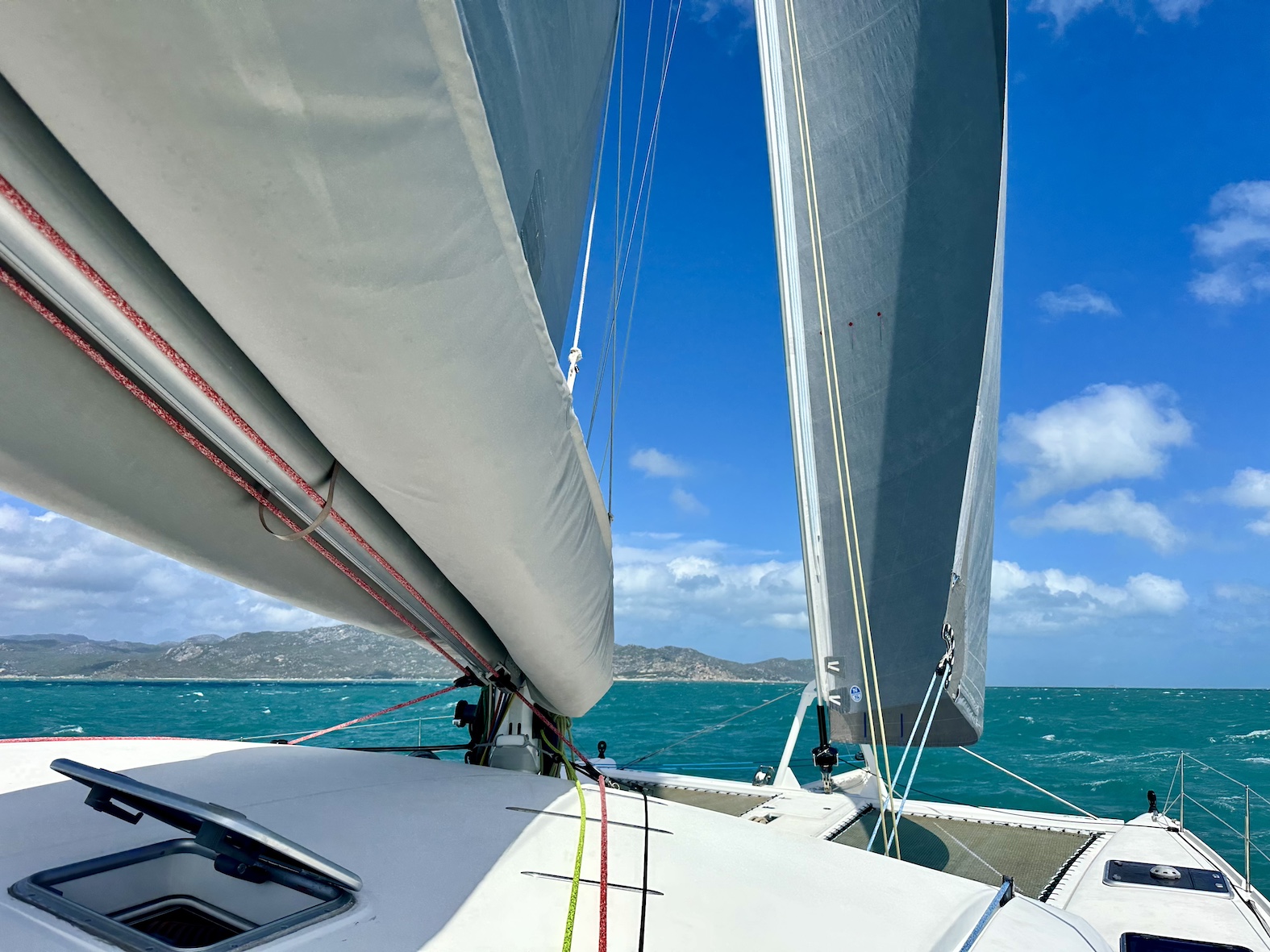
Lizard is a high, mountainous island.  We made our usual entrance, reaching up to the anchorage at 15kts before dropping the main and motoring in to the beach, grateful for a calm respite in turquoise water after a brisk morning’s sail.

We snorkelled over to a nearby patch of reef and were amazed to see plenty of healthy coral and giant clams a metre long.

We like it here and all agree to stay another day.

But the real treasure of Lizard island is the reef-enclosed lagoon on its south shore.

Next morning we loaded the dinghy with our toys and threaded a course through the reefs to get there.

We pumped up wings and a kite and went exploring around this huge, pristine waterworld.  Colourful reefs, white sandbars, pink granite mountains, and sea life everywhere. More surprised turtles. 

Not a boat or a building to be seen.  We tacked upwind to Bird Islet, a waft of pelican guano carrying downwind.

Out through the narrow reef pass into the trade wind swell beyond.  A wild oceanic place, and a very special foiling session across the transparent, sunlit waters.

12th September

James and Alex left very early the next morning to climb the mountain above us, as Cook had to do in 1770, trying to find a way out of the maze of reefs.  From up there (“Cook’s Lookout”) he spotted a navigable pass through the Great Barrier (“Cook’s Passage”) and escaped to open sea.  

James and Alex couldn’t see that far this morning, but they did locate and sign the hidden visitor’s book at the top. 

These are their views back down to the anchorage and out over that beautiful blue lagoon.

We need to keep heading north, so after two nights in lovely Lizard Island, it’s back out into those incessant tradewinds.  

Back at the anchorage there were lots of salty Aussie cruisers who sail full time up and down this coast. So I had dinghied around a bit to chat with a few boats, gleaning intelligence on possible stops further north. Islands I hadn’t heard of, we decided to explore some.

Three reefs in the main and 12 knots all the way to Ingram Island, which promises an ideal wing foiling stop, but sadly it is a bit too exposed in this weather, so we push on for Bewick island in search of a quiet night.  In vain.

We fry kangaroo steaks while the wind howls.

Friday 13th

Next stop was Blackwood Island in the Flinders group. A bit close to the mainland for my liking, and according to Navionics users, crocs have been sighted here, but Alex was undeterred and went wing-foiling across the murky waters.  

14th September

Morris Island looks much more promising. A tiny sandy cay on the end of a huge reef offering us protection from the wind swell.  We set off early from the Flinders islands, James trolled a lure as we left and produced a nice tuna a few minutes later.

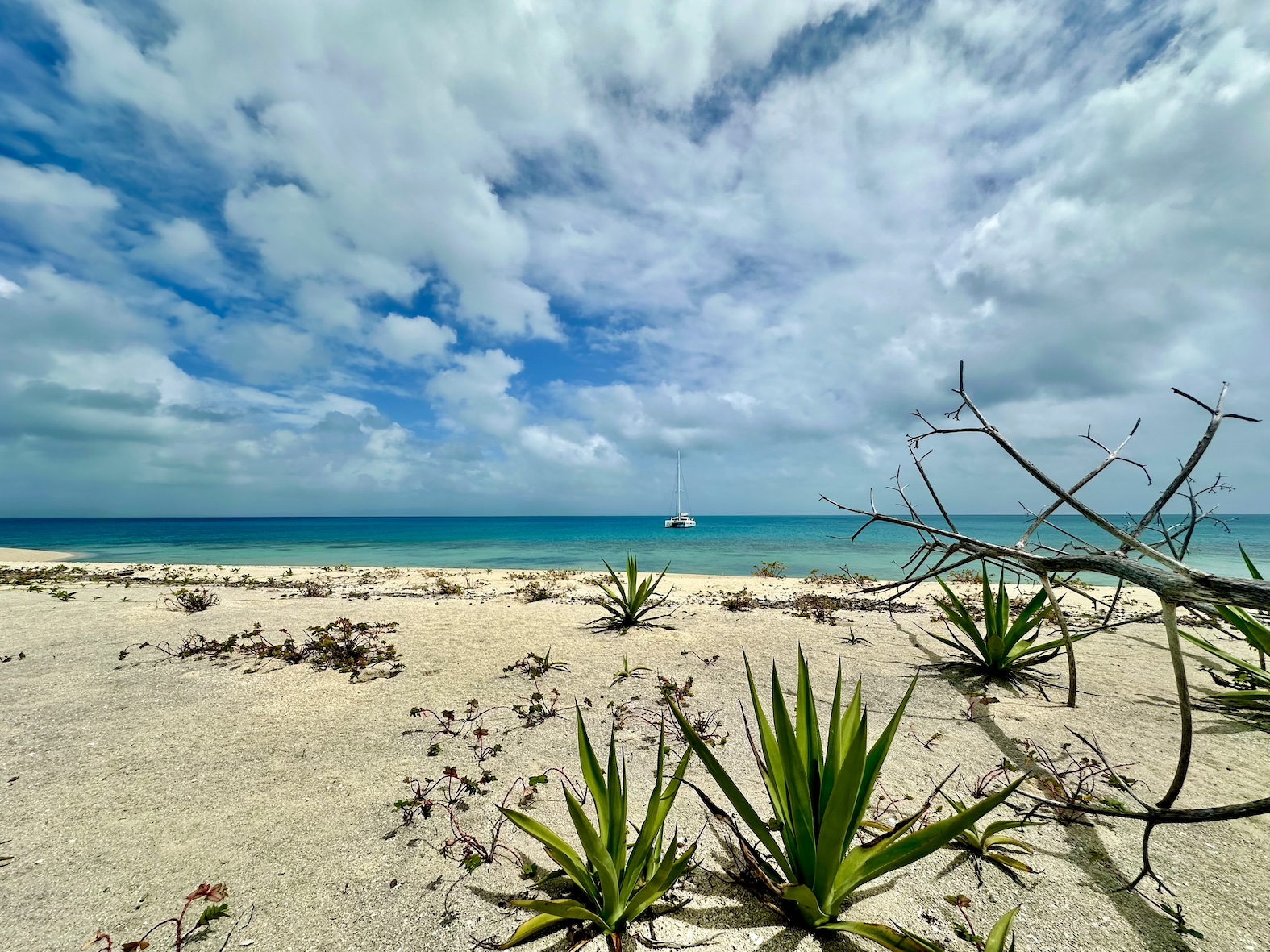
Morris Island was as good as we hoped, the hook went down into white sand and stayed there for a couple of days.

We take stock, sitting in a tiny patch of flat water surrounded by the wild Coral Sea and 30 knot wind day and night.  Not another boat in sight.

A dugong surfaces for a breath. Pairs of giant mantas glide by. The skies are alive with noddies, boobies and frigate birds, fish jumping out of the clear waters.

We winged around, ate our tuna and drank coco-locos.

James continues to be a very fast learner on the wingfoil, improving rapidly with each session.

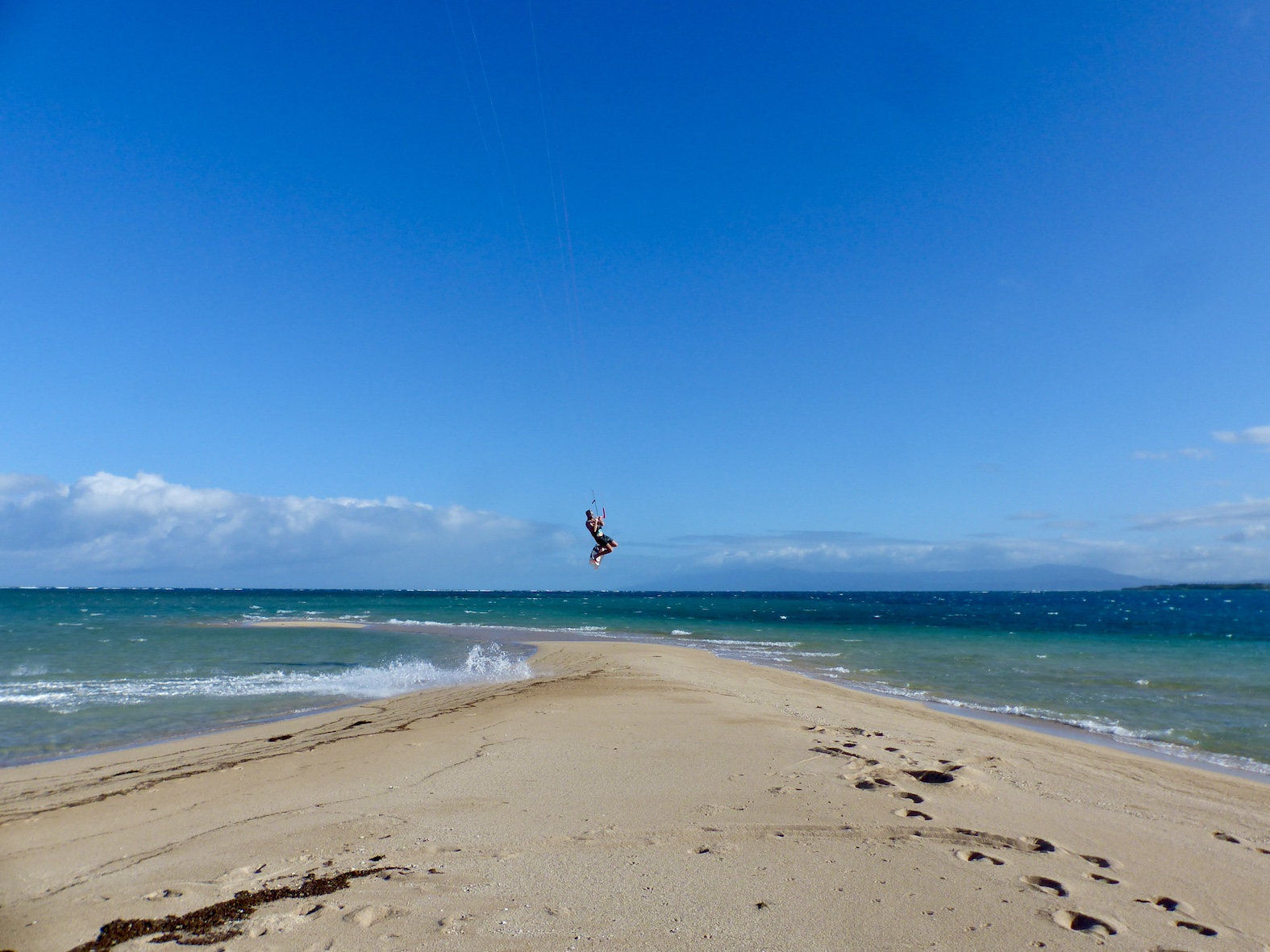
Having cracked gybes and tacks he now seems to have taken up jumping.

Sad to leave but we have to keep sailing north, the next few stops were rolly nights tucked behind wild desolate headlands, out of the 30 knot wind but no escape from the wind-swell wrapping around.  So we were looking forward to a peaceful night at anchor in the Escape River.  Yes flat calm, but to get in there involved an unforgettable high speed ride over the shallow bar at the river entrance.  Escapade loves to surf.

In the last two weeks we have day-sailed about 500 miles downwind and down swell with 2 or 3 reefs in the main all the way.  Easy passages with boat speeds in double figures, slaloming through the islands and shoals of the Great Barrier Reef. Now we’re at the top.

19th September

Thursday Island is located, as one would expect, between Wednesday Island and Friday Island, out in the Torres Straits, about 20 nautical miles off of Cape York, Australia’s northern tip.

We arrived on a Thursday.

For the first time on this trip the wind dropped below 20 knots and we hoisted the full main and the big red Code D to get there on time. We have a plane to meet.

Alex’s wife Arabella is coming back to Escapade.  Her flight lands at the tiny airstrip on Horn island at 5pm and we made it with an hour to spare!  After her long trip we take her out for a welcome supper, the finest dinner Horn Island has to offer.  Fish and chips.  On plates.

Shore Leave

We’ve been sailing past those green hills for hundreds of miles, now we’re keen to see a bit of the hinterland.  Escapade is on a quiet river mooring upstream from Cairns and we have hit the open road in a whacking great land yacht.

Our circuit of the sunlit uplands took us out to waterfall country.  The air’s different up at 700m above sea level, quite cold at night but we are lucky with endless blue skies now.

Cooking on the campfire one night, we baked a couple of these in the embers.

Air Potatoes!  Never heard of these.  They are potatoes that grow on a vine, in the sky.

They look, cook and taste just like the underground version.  Every day’s a school day.

We met our first tree kangaroo early one morning.  Just off a forest path, busy eating a fruit with his dextrous front paws.  A kangaroo that can climb a tree!  He was small, with big eyes and big pink ears.  Too shy to have his photo taken.  But this is where he lives.

Next stop was a cattle ranch on the Atherton Tablelands, where the owner Dave cooked us his secret recipe ‘damper’ in the campfire, told his stories and sang his songs under the stars.

One morning we were up before the sun for our first trip in a hot air balloon.

With the sky just lightening the first balloon was untethered and floated away.  Our balloon followed, the wicker basket started to move, gently unstuck itself from the grass, and from gravity, and up we went.

A very peaceful way to travel, watching the bush pass below, kangaroos spooked by our silent approach.  It had never really occurred to me that these aircraft have no way of steering.  At all.  Bob the pilot said he could go up and down to find layers of air with slightly different wind directions, but there’s no rudder.  You are going wherever the wind sends you, while the ground crew chase around below trying to figure out where you will end up.  In this case a very narrow strip of grass between rows of trees and a railway line.  Bob skilfully brought us bouncing back to earth.

Next campsite was in a huge granite gorge full of friendly rock wallabies.

Here’s Mama with baby Joey riding in her pouch.

Then into the jungle at Mossman Gorge, the world’s oldest rainforest.  Wow.  What a magical place.  

Whitewater gushing through giant boulders, enormous trees with buttressed roots and ’strangler vines’ growing over everything.  

A guide from the Kuku Yalanji tribe took us on a bush walk, explaining how his people thrived in this jungle for 50,000 years.  That’s a very long strand of human culture.  He gave us a glimpse of some of the complex lore handed down.  Like how to make poisonous plants edible, how to dam a section of the river and use a tree bark solution to tranquillise the fish in the enclosed water, so they can be caught. When to pay attention to the first blossom of the wattle tree that heralds the start of the yabby season.  What sort of boomerang to bring down a tree kangaroo.  The complex identity patterns of body paint made using ochre from the river.  Which tree sap medicine to treat an open wound.  The termite behaviour that is an early warning system for an approaching cyclone.  It is very special out there in the boundless green cathedral of a 100 million year old forest.  A fascinating afternoon interrupted at one point by an enormous wild cassowary strolling straight towards us.  

Apparently a female, so not so dangerous as her mate, but we gave her plenty of room as she disappeared again into her green realm.

We crossed the Daintree River by ferry and the road north brought us back to the coast.  So nice to see the ocean again, shame it’s too dangerous to get in.  

Cape Tribulation is about as far north as you can go on the sealed road, and that has only just re-opened after the landslides caused by Cyclone Jasper.  (The one that chased us out of New Caledonia in December).  

It’s wonderful remote, jungly country up here, and we’re camping right on the beach.

So you may question the karmic wisdom of eating crocodile burgers for lunch.

Well we stopped at the Cape Trib general store/cafe and it’s their house speciality.  Actually very delicious, but here’s the thing, how often in life do you get the chance to walk up to the counter, order a crocodile burger and say “and make it snappy”?

An early run on the beach to the cape and back.  All to myself for miles, not another footprint.

Wildlife snap of the day.

It’s a very well camouflaged grasshopper on a tree.  

And this is a Golden Orb Weaver spider whose yellow silk web is so strong it has been used as a molecular model for synthetic fibres like kevlar. She’s as big as your hand.

Why did the cassowary cross the road?  Possibly to deliver a fatal kick to my abdomen.  We stayed in the van.

Rod and Rossie joined us in Port Douglas for the weekend and introduced us to Gary, who has a spectacular HH50 catamaran.

She’s an all-carbon build, high performance cruising cat which also identifies as a luxury loft apartment.

So even though we are now technically road-tripping, having a break from all that boating, Dawn found herself press-ganged for a day of speedy sailing to this breezy anchorage.

The boat is fully automated with hydraulics and electronics.  Push-button sailing!  Out to the Low Isles and back without the need for a winch handle all day.

Amazing boat Gary, thanks for the ride!  And for this drone shot.

Meanwhile Rod was risking life and limb to get these shots with his 360 camera as my foils flashed past.

Thanks Rod!

Then we travelled deeper in to the interior.  The lodge at Mount Mulligan is built at the bottom of the huge red limestone mountain, on the ridiculously picturesque lake shore.

No rainforest here, but scrubby gum trees, dingos, wild horses and 3000 head of brahmin cattle grazing 70,000 acres.  Big raptors soar above, plus so many other colourful and tuneful birds, all drowned out by the kookaburras guffawing high in the treetops.  Butterflies and dragonflies shimmer around the lake, this place is another wonderland.  

After a couple of weeks living in a Mercedes van, we were ready for a bath.  

I think this one comes straight in to our All-Time-Top-Ten Bathtubs.

On my run this morning I had an encounter with a kangaroo.

I came jogging round a bend on the dusty trail and there she was, ears backlit in the morning sun.  We both froze, the moment hung in the air.  I’m sure she was female, big dark eyes and long eyelashes.  She held my gaze as her curiosity was gradually overcome by her shyness. At which point she bounced off in to the endless bush, three thumps of her tail and she was gone.  A brief moment of connection, but I can still picture her so clearly.  Perhaps she still thinks of me.

Looks like they’ve started filming Mad Max 5.

I signed up for Dawn’s off-road adventure.  I know we look stupid but it’s very dusty out there and there’s no windshield.

Bush Tucker.  

Brett took us exploring and fed us some nutritious green tree ants. They construct these nests by glueing leaves together.

The ants have bright green bottoms which have a powerful citrussy taste. They will bite you, but not if you bite them first. Yum.

Mount Mulligan Lodge was our last stop.  Now we’re switching hemispheres again for some Guernsey summertime.

I’ll be back to Escapade in September.

Older Posts