
So with the threat from that tropical low we reluctantly left our favourite anchorage off the island of Pele and headed south toward Port Vila.
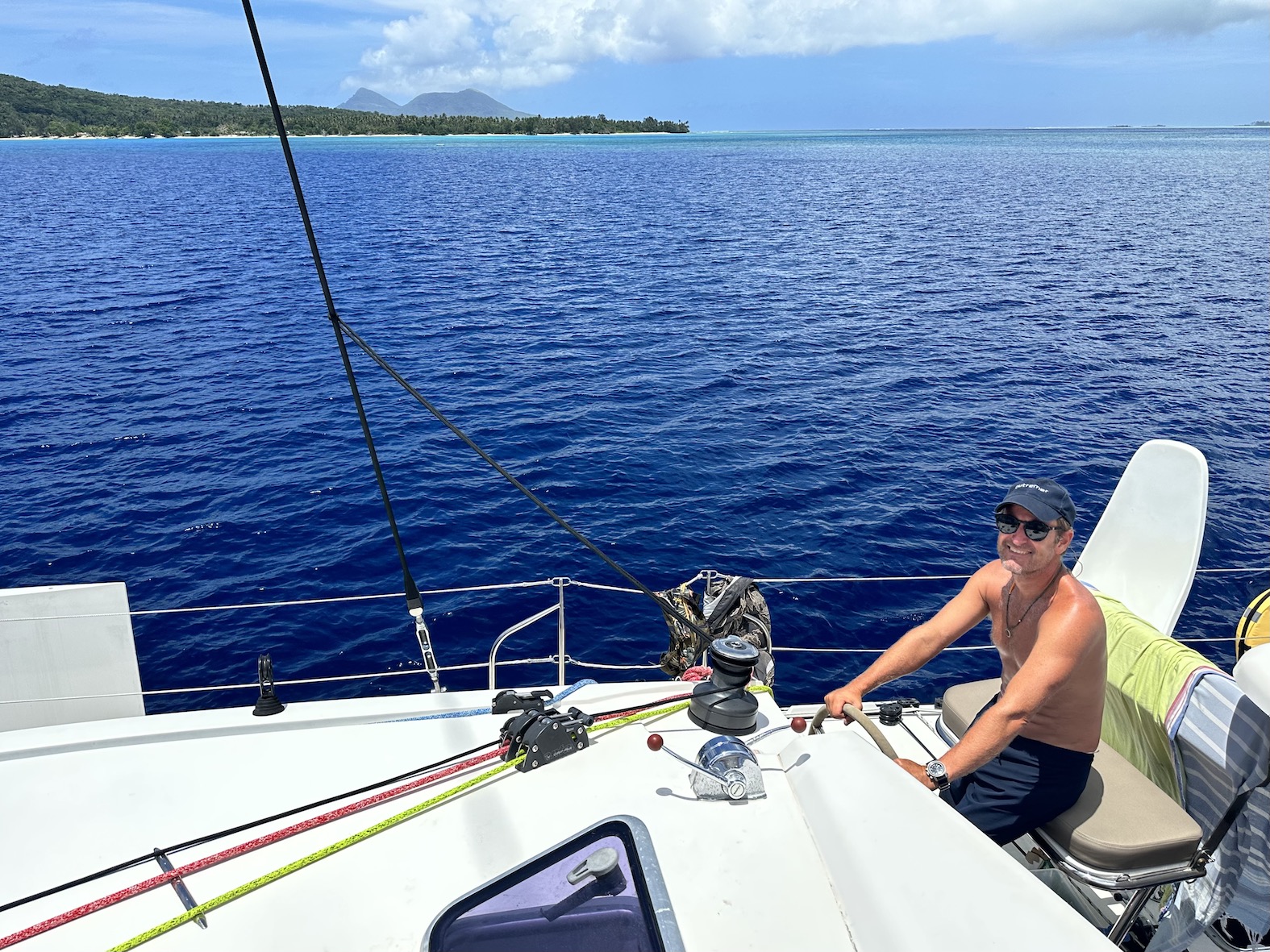
We were joined by a pod of pilot whales who played around our bows like dolphins, rolling onto their sides to look at us and talking to us with loud whistles.
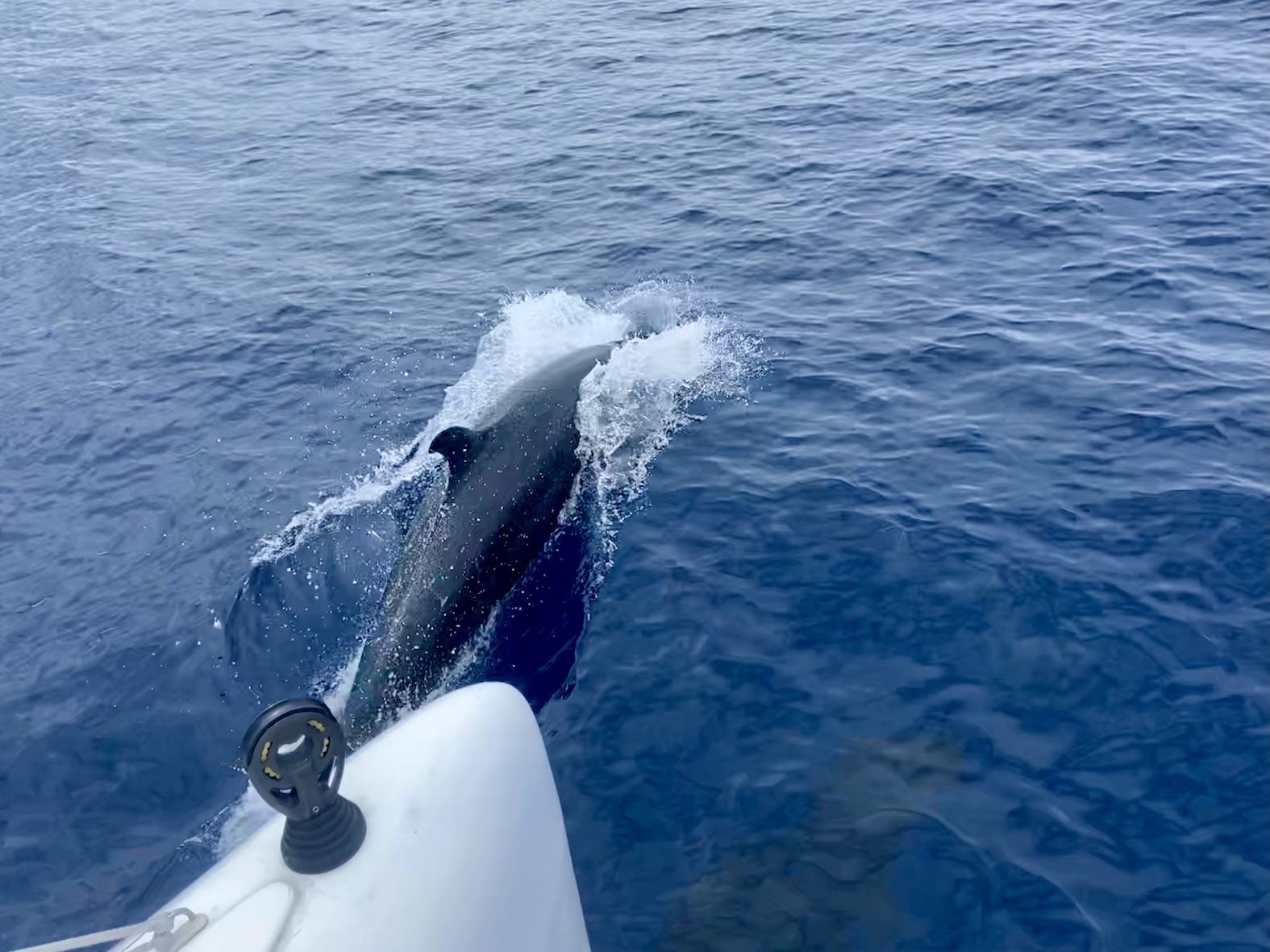
Bryan had a tussle with a big swordfish, and this time we all watched as the fish leapt vertically out of the water behind the boat and spat the lure before splash landing.
I don’t know what’s going on with the fishing on this trip. We have all the excitement of the strike, the fight, even get to see the fish up close, but can’t seem to get the damn thing on board. Later that day Bryan brought a beautiful yellowfin tuna right to the transom, before it too escaped. I put the gaff back in the locker. And the wasabi.

We pulled in to a quiet bay a few miles from Port Vila, anchored off a beach bar with smoke rising from the wood-fired pizza oven. Promising. We went ashore at sunset and by chance found ourselves with front row seats on the beach for the biggest tourist fire-dancing show in Vanuatu.

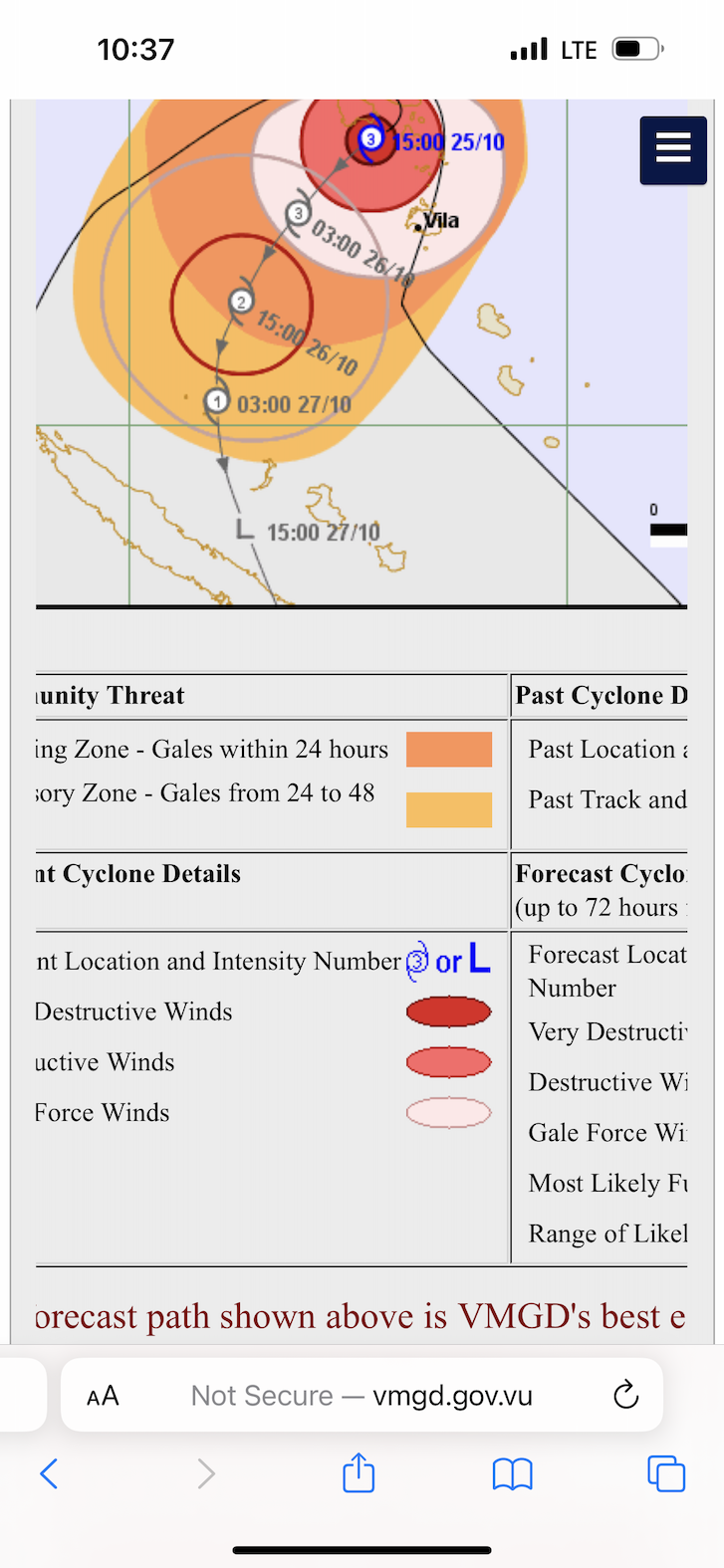
That depression was deepening and forecast to move south towards us. Cyclone season hadn’t started yet but we want to get into a nice sheltered spot just in case.
Port Vila is a low rise town built along the waterfront. The harbour is dotted with old rusting hulks and there are several wrecked yachts up on the reef.
We tied up to a mooring in 30m of water. Too deep to dive and check it, but we were assured all the tackle had been replaced since the last cyclones 6 months ago.
We had a big hill in front of us, a solid island just behind us and coral reefs protecting us from almost all other swell directions. We doubled up the mooring lines and felt pretty secure. But I was getting a bit concerned. On my worried scale, at this point I was somewhere around a 4 out of 10.
You save Tok Tok Bislama?
Mi no save.
Vanuatu is very language-dense. The century of joint colonial rule left a legacy of separate English and French speaking schools, plus there are over 100 local languages spoken in these islands. When you arrive in the capital Port Vila, the unifying language for all the islanders is Bislama. A pidgin English first used by sailors to communicate with the New Hebrideans whilst trading for sea-cucumbers or ‘Beches la mer’ (corrupted to Bislama).
Anyway, it’s a very entertaining language, written as phonetic English and spoken as Pacific sounding words. Things are often defined by what they belong to.
Here’s a few samples:
Yumi – We
Tri – Tree, also three.
Fis – Fish
Bis – Beach
Tank yu tumas – Thank you very much
Bigfella – Large
Bigwan – Large
Pikinini – Child
Pikimap trak – Pickup truck
Finga blong tri – Branch
Kaofis – Dugong
Manfis – Dolphin
Pikinini blong kanu – Outrigger (love that one)
Bigfella selbot blong mi – Escapade
We were enjoying Bislama, translating seemingly unintelligible text, until you read it out loud, then you understand and smile. We selected Bislama over English for ATM transactions, just for fun. One morning we were shopping in town. The grocery store owner was an old Vietnamese lady dealing with several Ni Vanuatu women. She spoke French to some, Bislama to others and English to me.

The town market was a colourful focal point with fresh produce on sale from all the islands. Taro roots packaged in simple green baskets, single-use carrier bags woven from palm fronds.

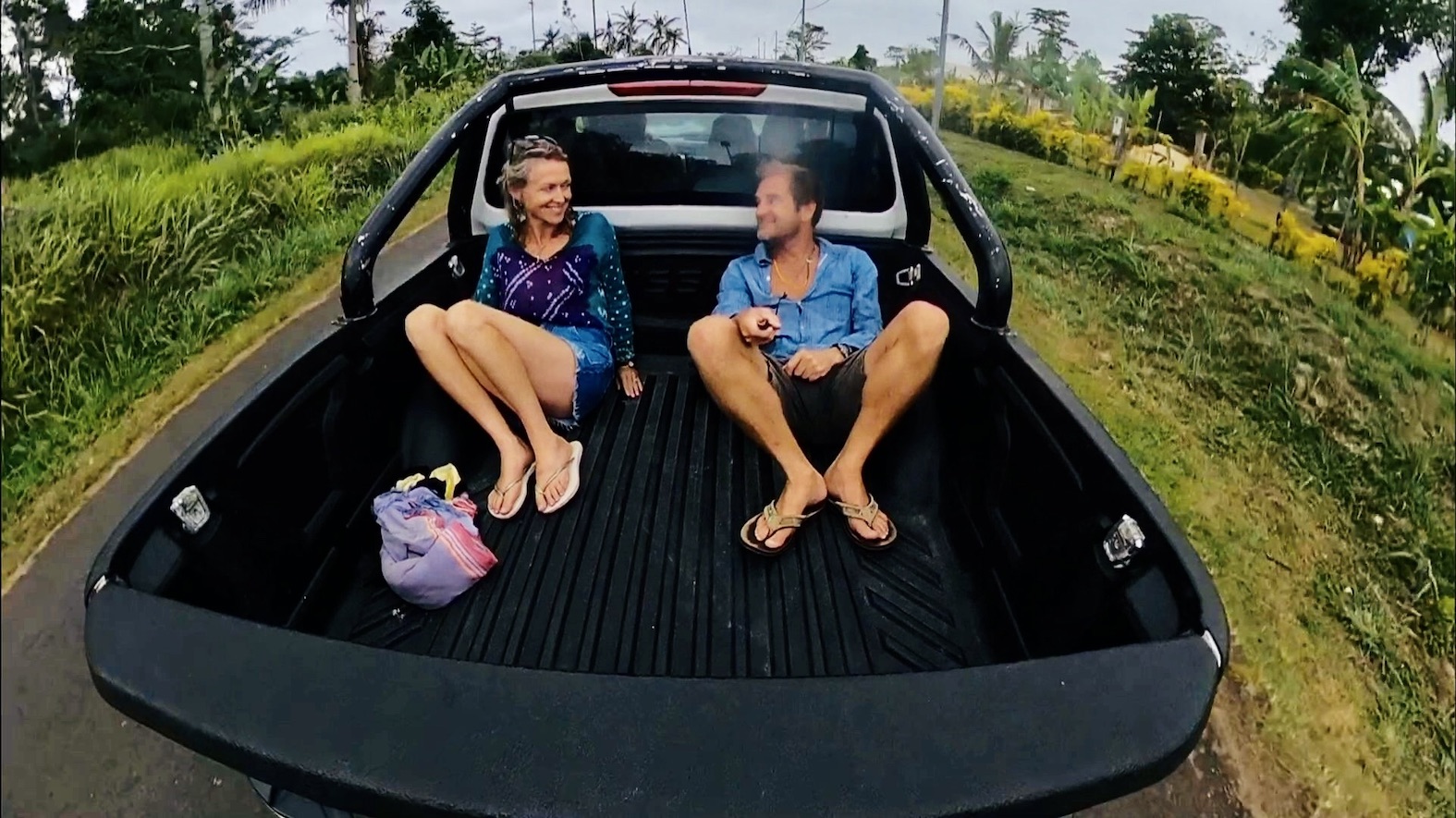
The storm was still lurking to the north, but we had a couple of days to explore the island of Efate. We rented a ‘pikimap’ and went for a road trip.
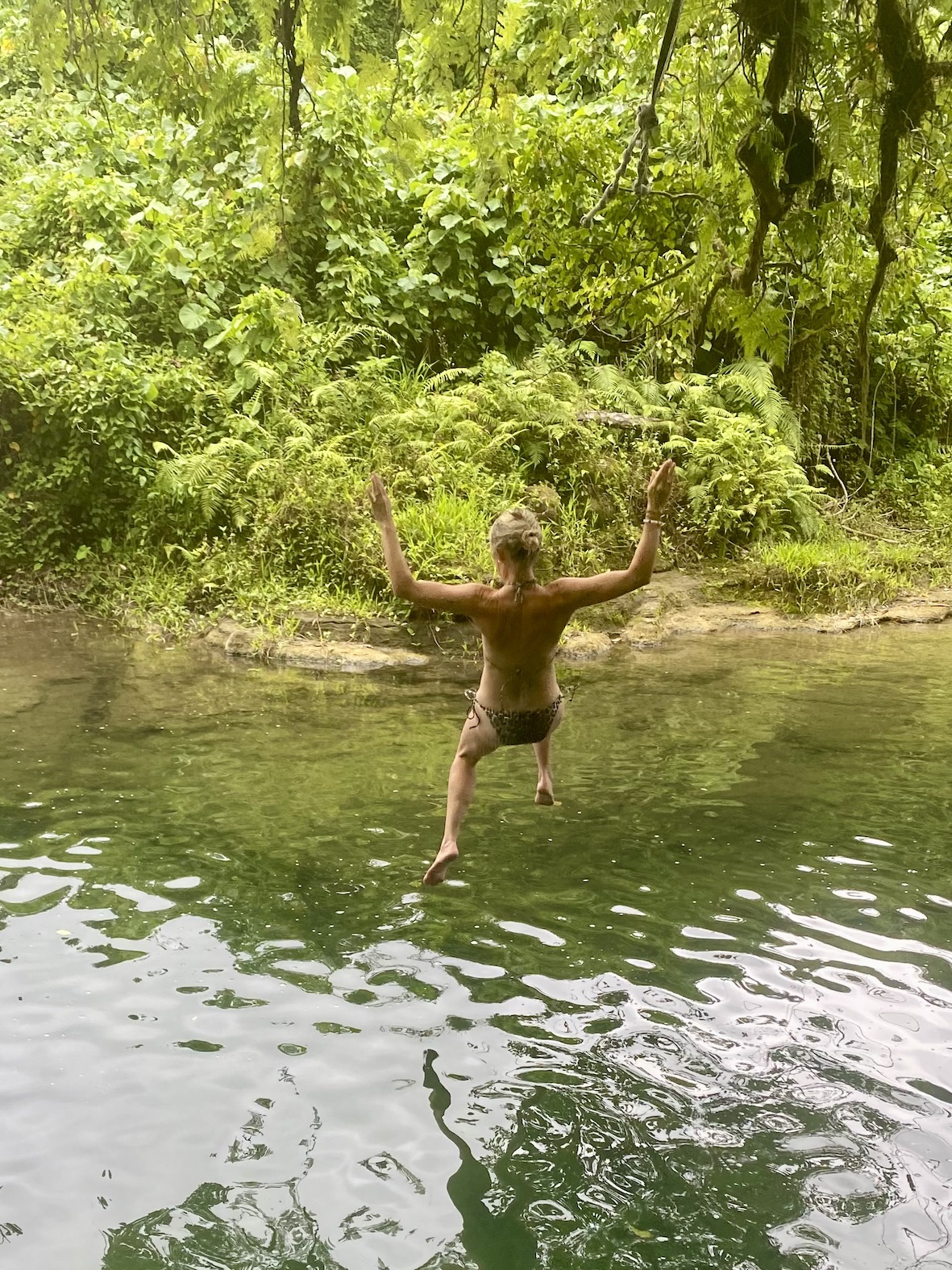
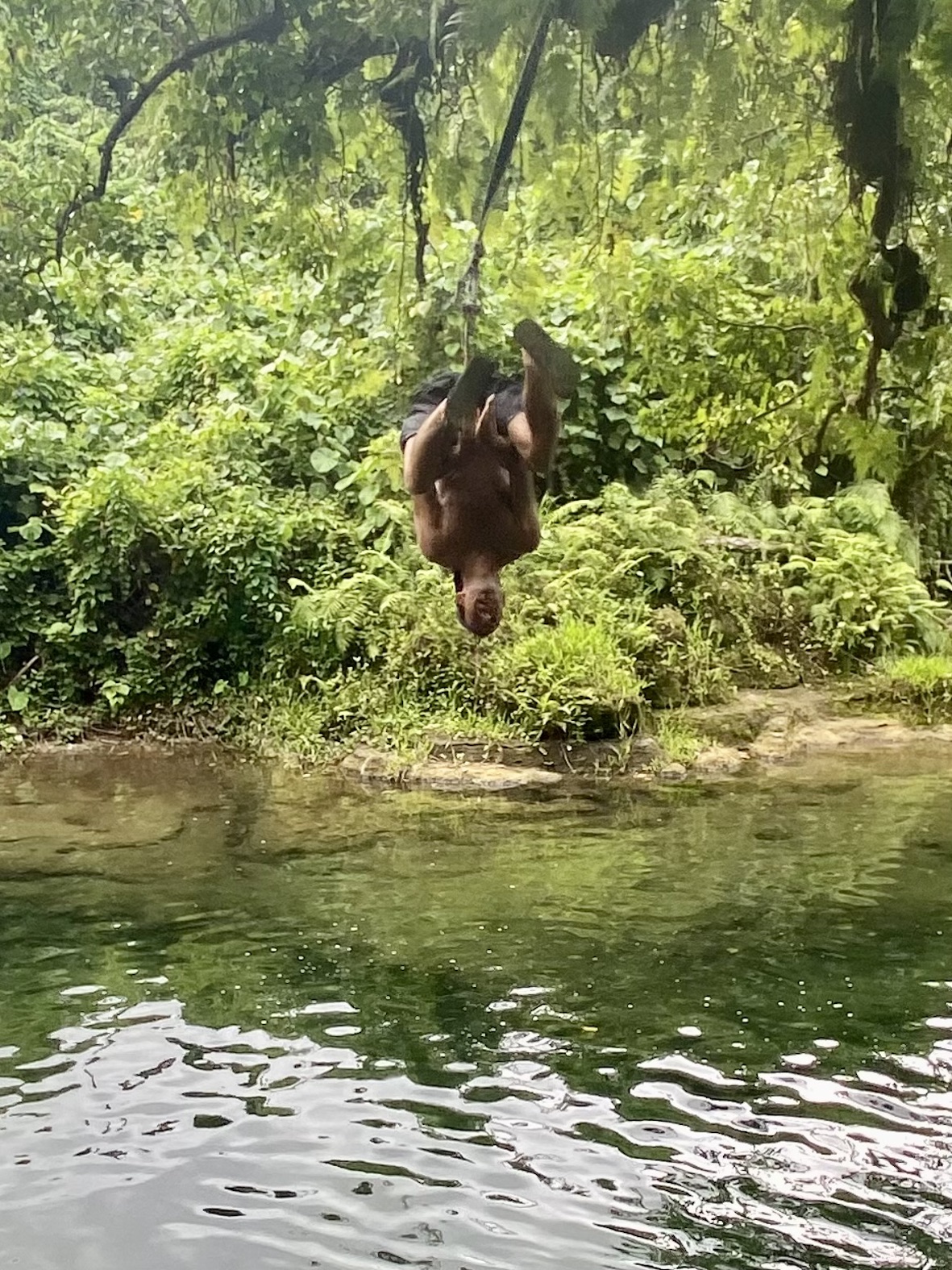
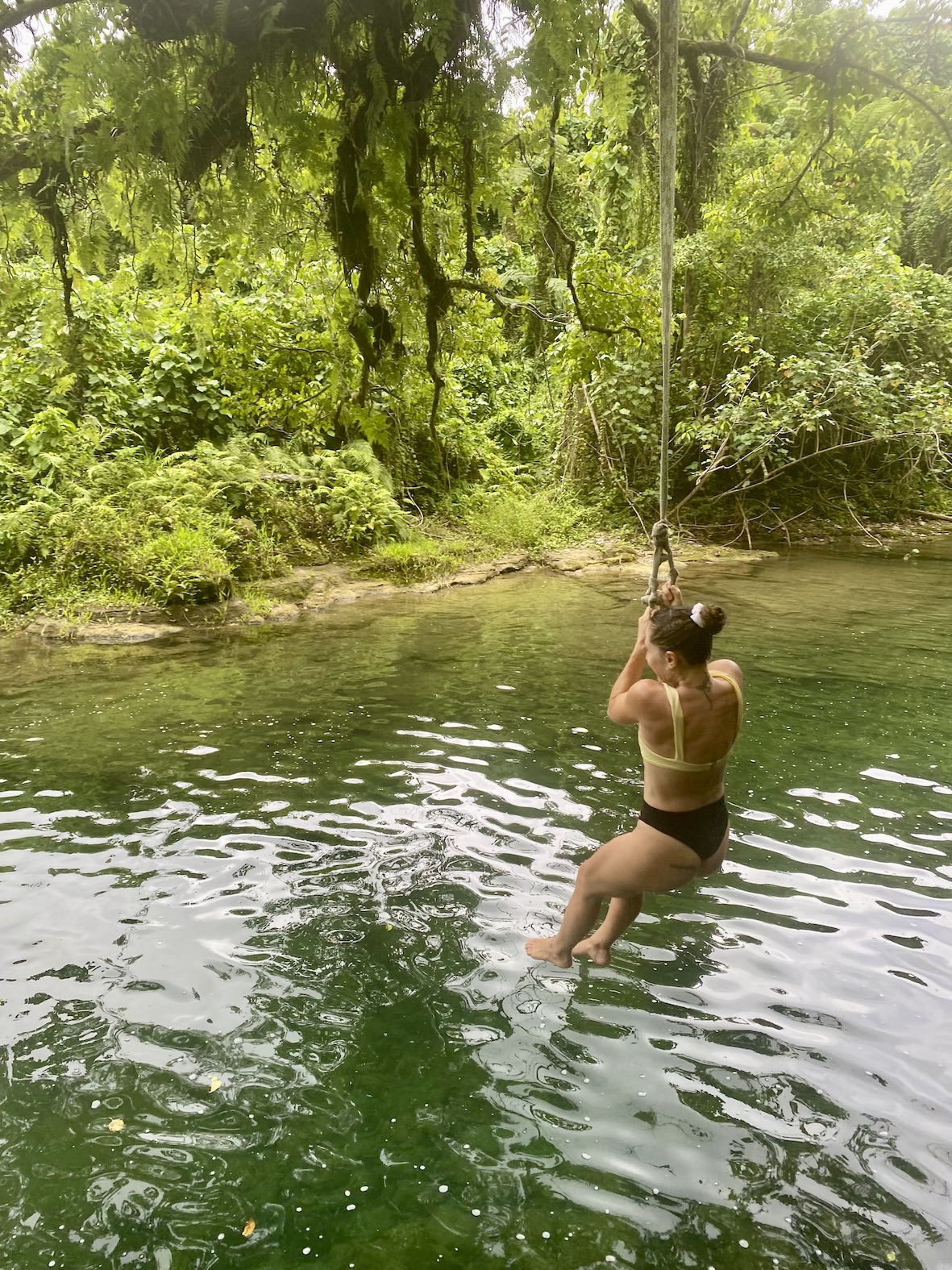
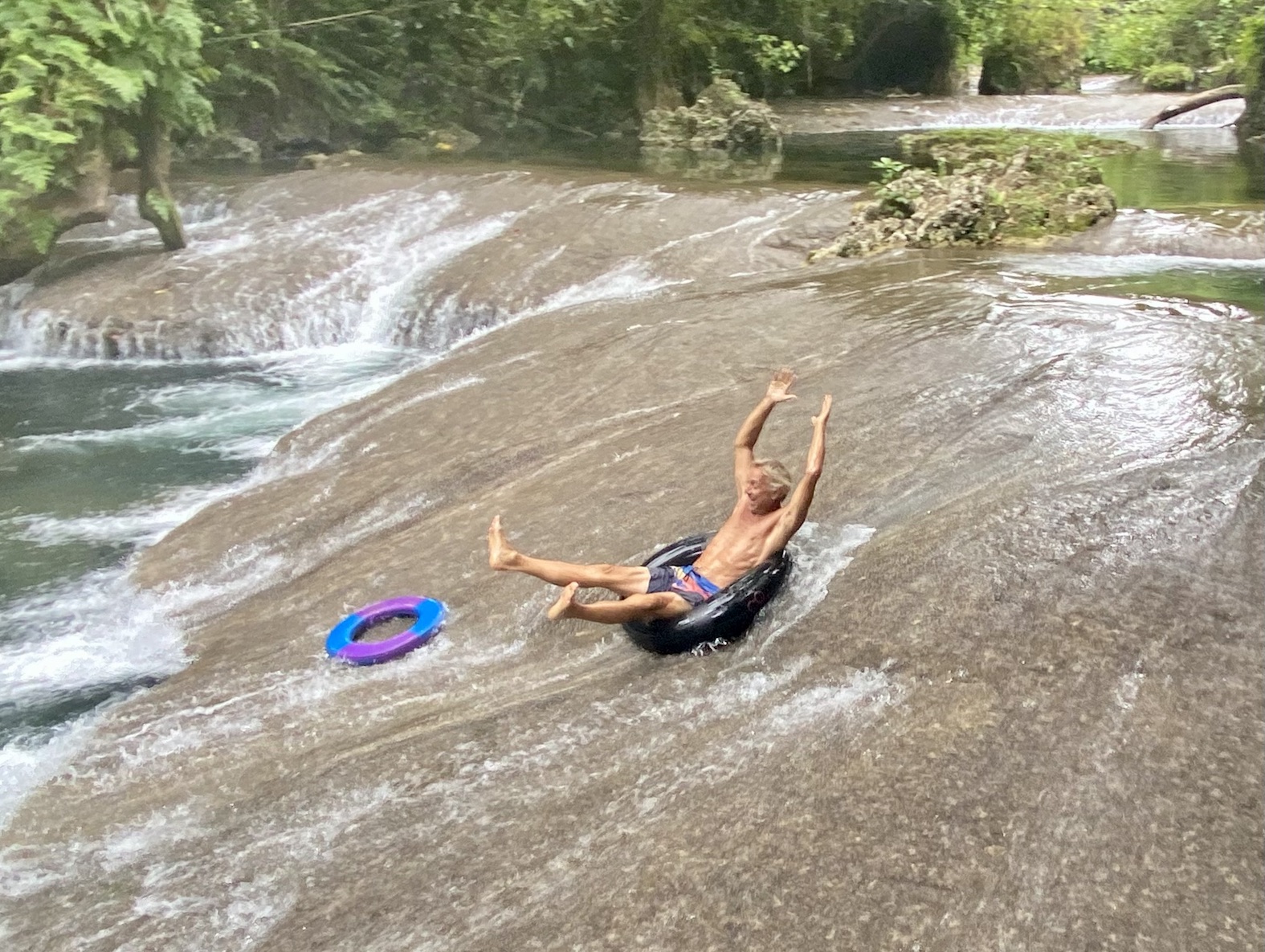
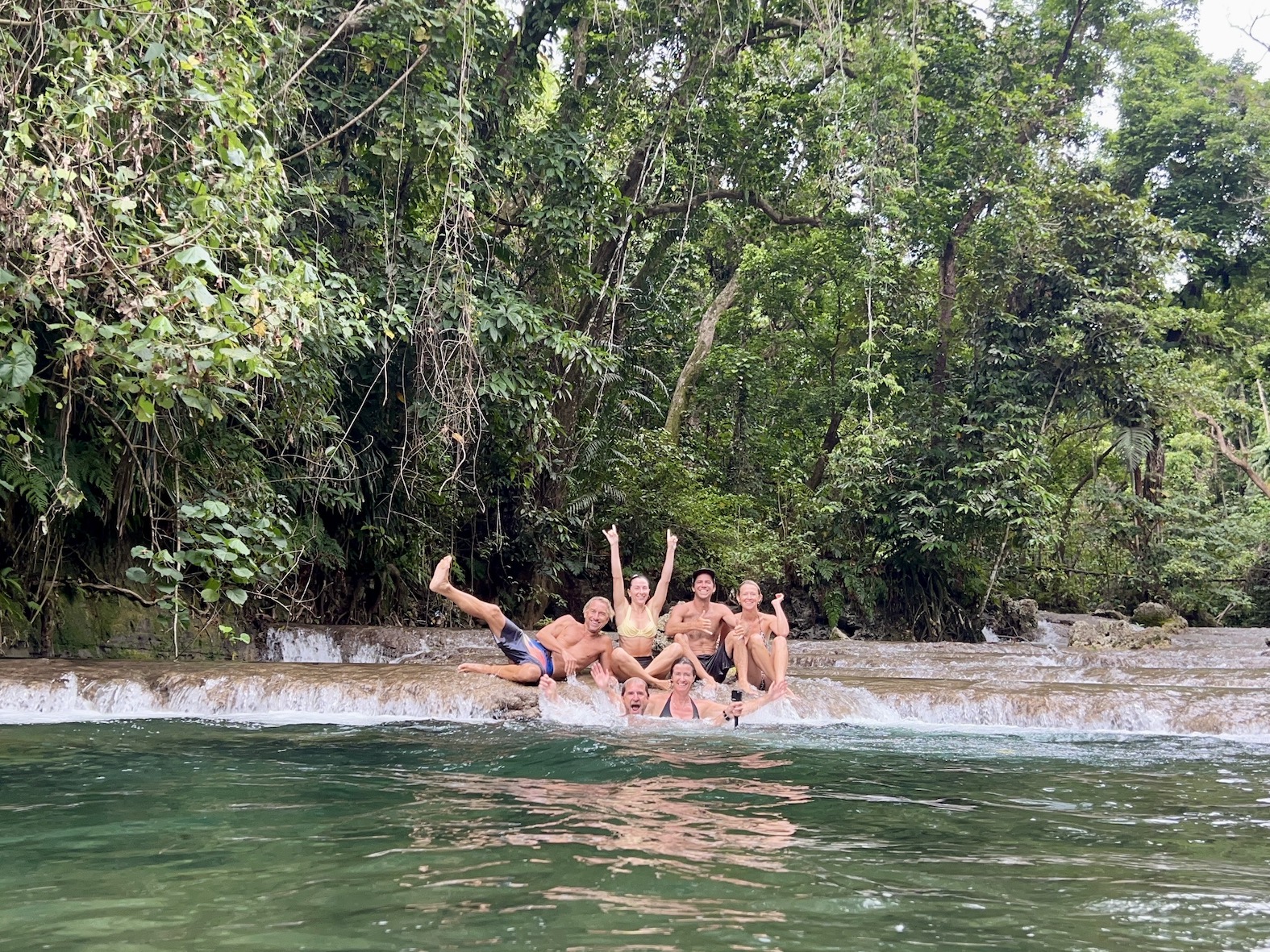
This was a lovely refreshing river with swimming holes, falls and a rope swing. Perfect for rinsing off the salty crew.

Lola
Our depression now had a name: Tropical Cyclone Lola. The forecasts were still sending it south, towards us.

I chatted to locals and the yachties in the anchorage, some of whom have lived through a few cyclones. The general view was that if it comes this far south, the water is cooler and so the storm will be less intense. Even so, we might be hit by 50 kts or more.
This was all happening in the last few days of Alex and Arabella’s stay on board. We had such a great time together but it looked like the next few days would be very wet and increasingly windy. The airport here will be closed, so they wisely changed their flights to get to Australia before the disruption hit Vanuatu. The first time we have had visitors leave early! We are hoping they’ll come back for more one day..

Now we started to think about reducing windage. The jib came down and everything got stowed away, The mainsail bag was lashed to the boom, steering seats removed, all hanging lines and halyard tails stowed out of the wind. The harbour master told us to stay up all night with the engines running. The needle on the JP worried scale was now pushing 8/10.

Bryan and I saw pre-storm opportunity to wing foil a reef point we had discovered, so we loaded all our gear from the locker to the dinghy to the truck and set off for a session before it got too windy.


We managed an hour of fun wave riding before getting blown off the water. Swimming in over the shallow reef we congratulated each other on not breaking any gear, or ourselves. Then we noticed a flat tyre and spent another hour changing the wheel under the stormy skies.

Next morning Lola had been upgraded from category 3 to category 4 and then to category 5. Category 5! Now we are really concerned, I have never been in this situation and never intended to be. I have always accepted that the cyclone/hurricane seasons and zones are well defined, with those dates and latitudes to be avoided, but the rules may be changing now.
I’m sure we’re in the best place to ride this out, and anyway it’s too late to go anywhere else, but the track of the storm is by no means certain. It’s due to hit land first up at Pentecost island, then go back out to sea. What happens next is within an area of uncertainty. And we are inside that area.
Dawn and Auriane had to leave the Vila market which was being shut down by the police, everyone going home or to a cyclone shelter.
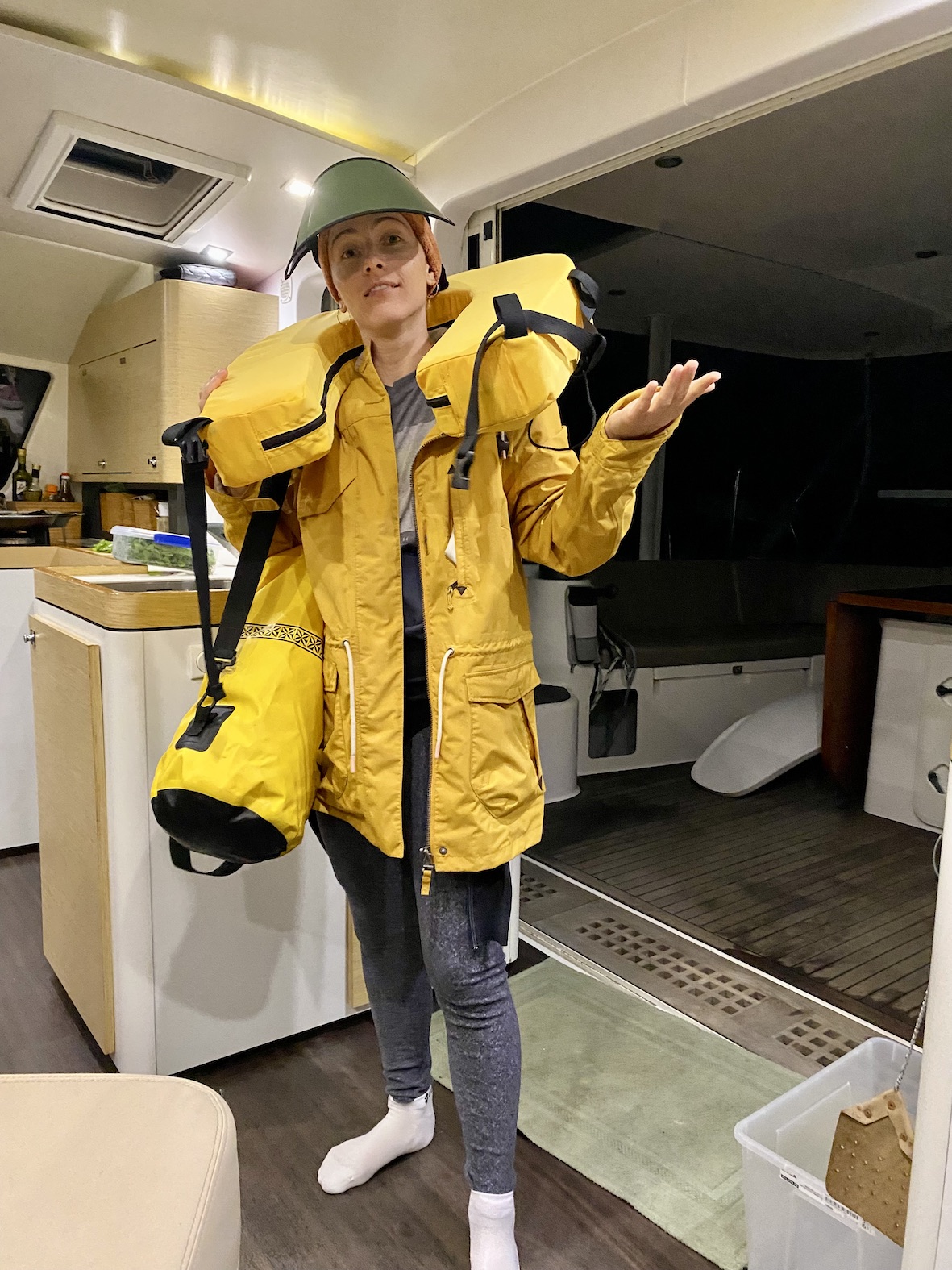
Our neighbouring yachts were now talking about grab bags and plans for abandoning ship. Auriane started to prepare..
I was driving through Port Vila enjoying a Bislama phone-in on the local radio station, which was interrupted by a serious sounding cyclone warning. I could make out ‘bigfella storm’ and ‘bigwan 10 metre swells’.
The mooring field filled up, all the commercial vessels around Port Vila were tied up in the mangroves close to us.
The storm will pass tonight. We wait. I was ready to jump up and start engines if it got really bad, to take some of the load off the mooring, but to our enormous relief the storm passed 100 miles west of us and the intensity dropped rapidly from category 5 to category 2 during that night. The islands to our north were not so lucky. Catastrophic damage to Pentecost and Malekula with crops, homes and schools destroyed. This is the third major cyclone for Vanuatu in 2023, and the new cyclone season still has not yet started.
I get the weekly weather blog from Bob McDavitt, required reading in this part of the Pacific. Here’s MetBob’s understated roundup of storm activity for that week:
“Last week LOLA was briefly Cat5 near Pentecost Island. OTIS was briefly Cat 5 near Acapulco. HARMOON caused a quarter of million people to evacuate into shelters in southern Bangladesh. NORMA is near Baja California and TAMMY is near the Caribbean. TEJI flooded pasts of Yemen.”
Hmmm, well that was one windy week on Planet Earth.
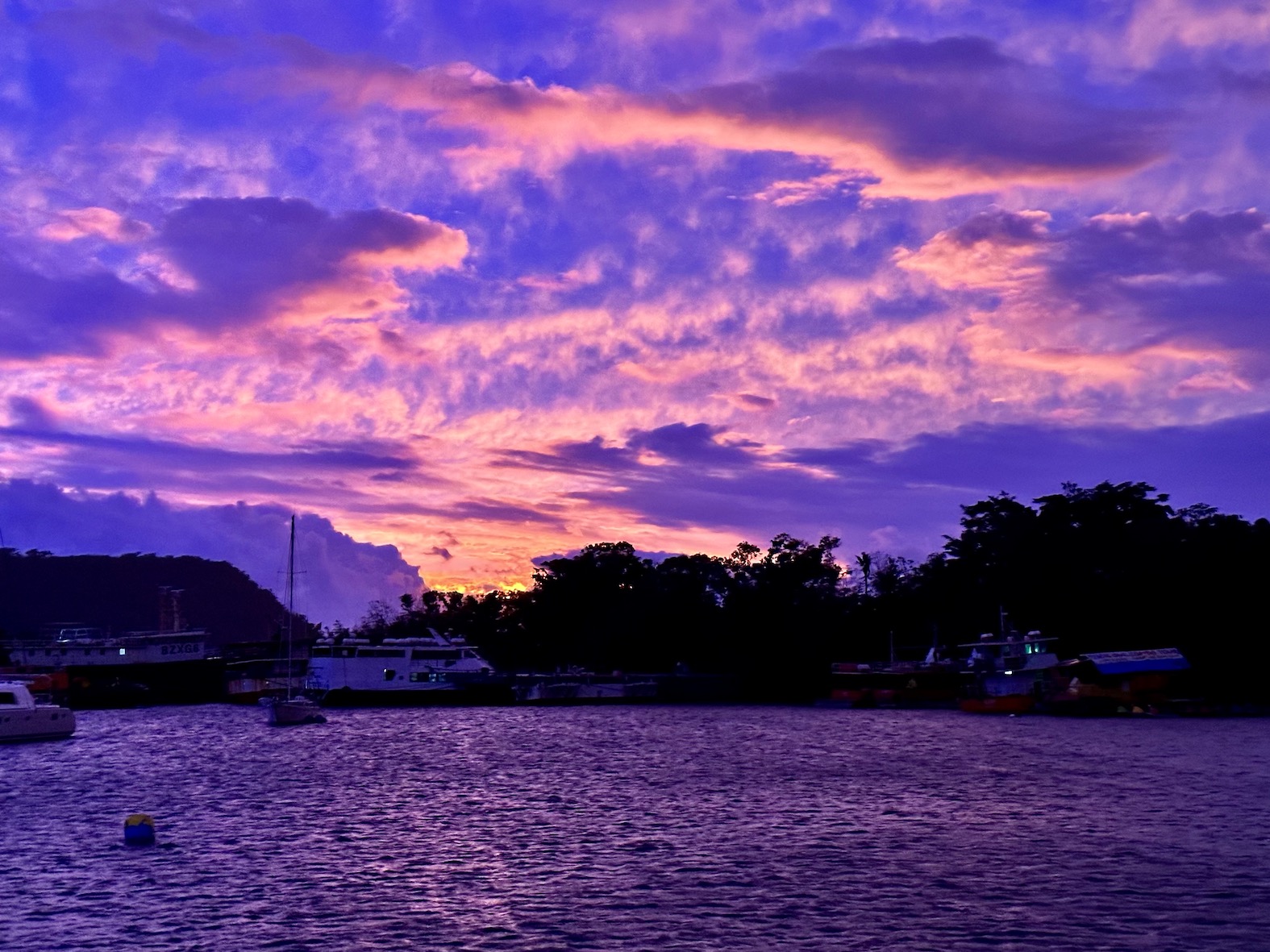
After the storm
The skies have cleared, our water tanks are full of Lola rainwater, piped from the bimini catchment. Now what? I really wanted to see more of Vanuatu, 80+ islands to visit, all the way up through the Bank Isles to the Solomon Islands. Several of our neighbouring boats were sailing up that way, we gave them all our remaining stocks of solar lanterns and supplies to be distributed in the islands worst hit by the storm. (We have been supplying Luci solar lanterns by MPOWERD to remote islanders we have met since our time in Haiti in 2016)
But Lola had focussed our attention, it’s too late in the season for us to sail North now, our next destination is New Caledonia. The wind is blowing NW for a few days, no good to sail to Noumea, but a great direction for an easy return to Tanna, which would give us a shorter trip to New Caledonia and a better angle once the trades return.
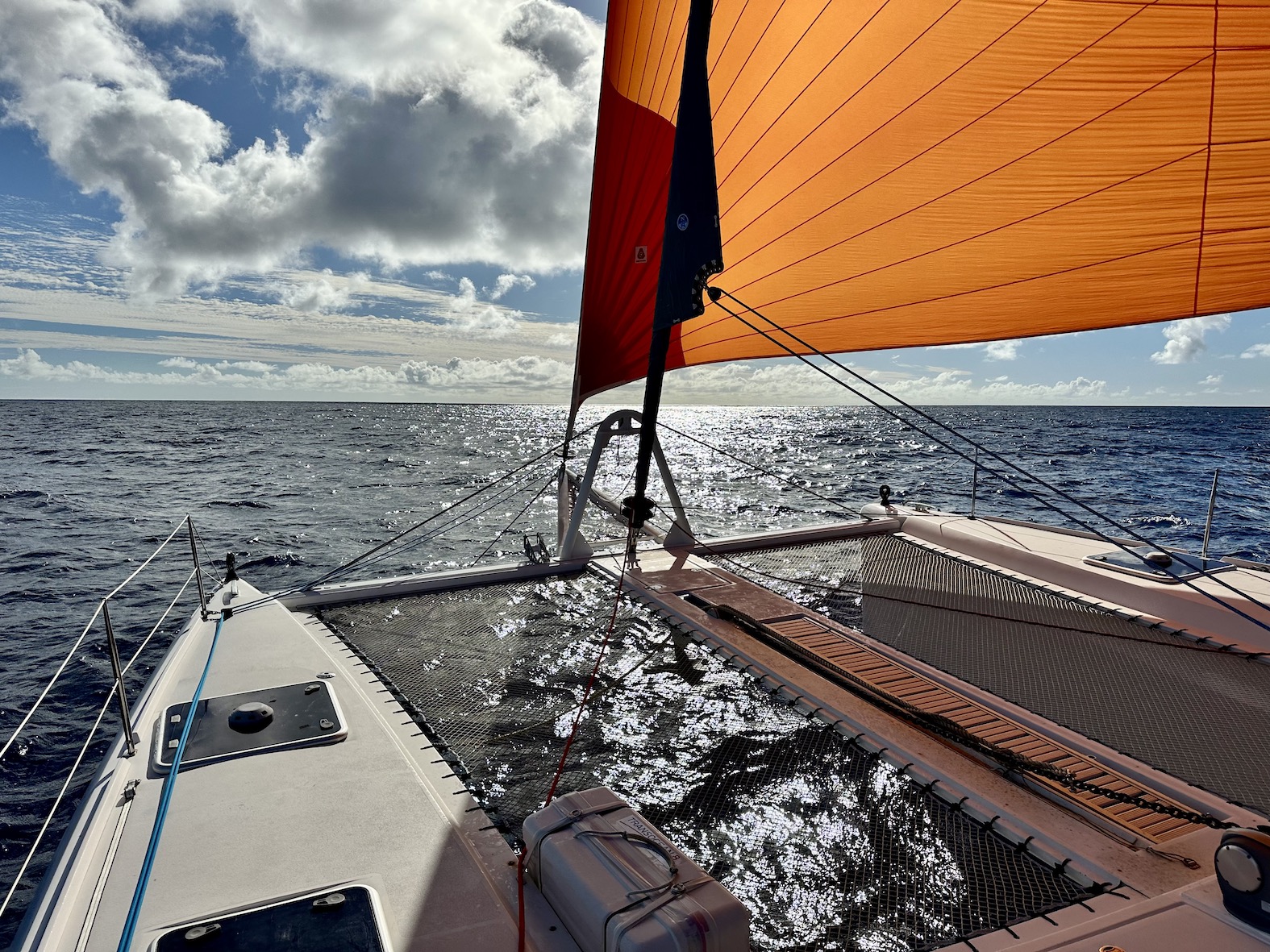
So Tanna it is. We sail away from Efate on an easy reach with our big red Code D sail hauling us along and dolphins jumping around us.

The big full moon rose and lit our way, with Jupiter shining brightly next to it. At daybreak we shook out the reefs and sailed back towards that smoking volcano, which was sending up regular explosions as we approached.

This breeze brought us easily back to our spot in Port Resolution but it’s the wrong wind direction for the anchorage, the volcanic ash is falling this way and building up like black snowdrifts all over the boat.
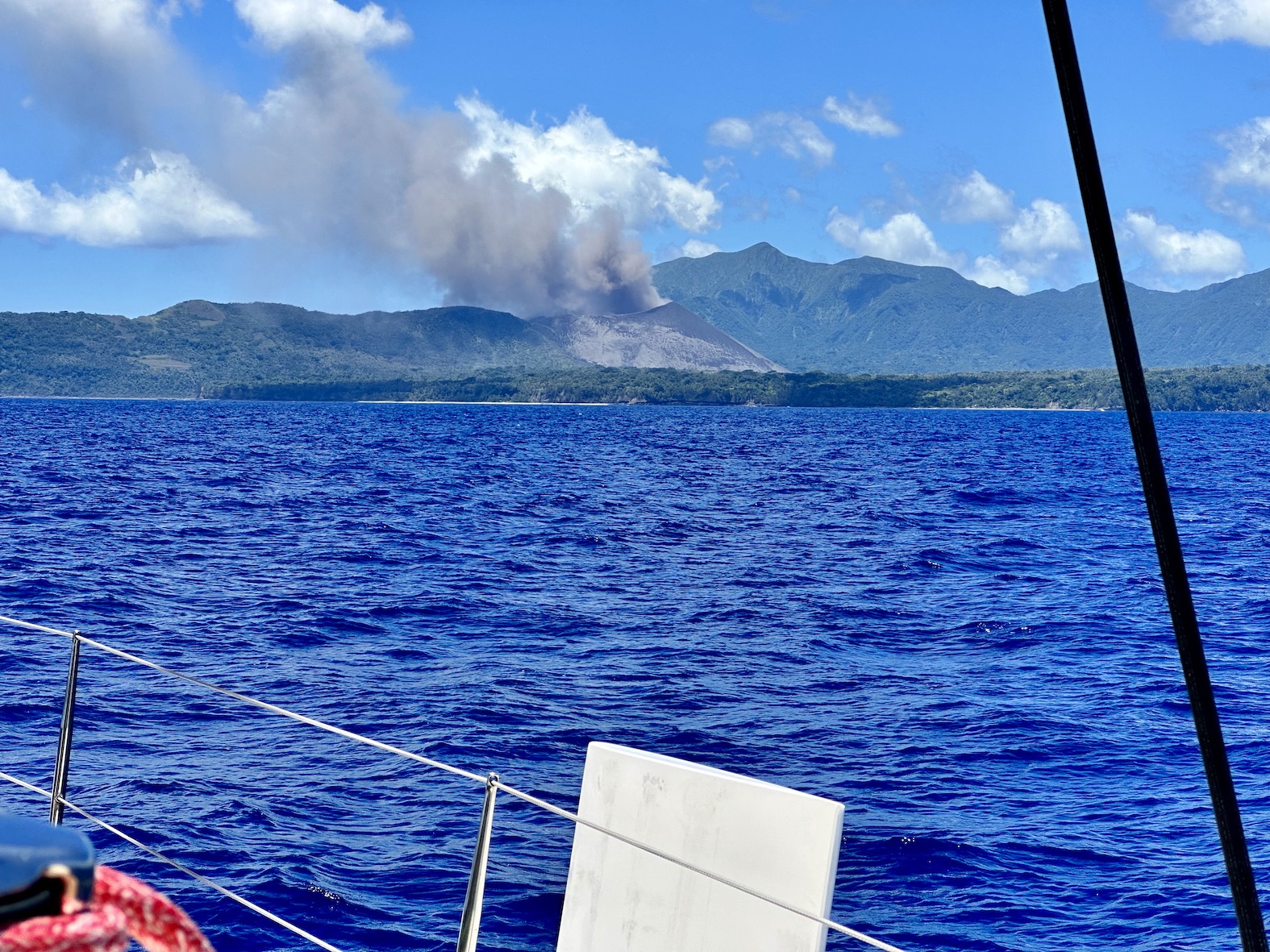
There is a promising forecast to sail on to New Caledonia in a few days. I have arranged with my friends at customs and immigration in Tanna to clear out from there. There is sometimes a strong enough phone signal to watch heats of the Aloha Classic windsurf contest being live-streamed from Maui. We surf a bit and wing a bit, get the exit formalities done, but Bryan is not ready to leave.
Halloween swell
Bryan is excited about a swell forecast. It could be really good in Lenakel, at a reef break we briefly looked at when we were there a couple of weeks ago. Which could be rideable.
It could be a good wave and wind direction. Could be. It is also on the other side of the island and would involve a 6am start and 4 hrs of bumpy on and off-road driving to get us and our gear to the spot and back. Well we won’t know unless we go.
So of course we had to go.


The early start and long bumpy road brought us to the concrete wharf in front of the market at Lenakel. This is the only ‘harbour’ for the island of Tanna. Really the only break in the continuous reef all around the east of the island. Certainly not a useable harbour today, pounded by a heaving SW swell.
The waves were shaping up into clean walls and peeling left towards the channel, but there was one more slab of reef at the end, which caused the last part of that wall to stand up, pitch into a thick lipped barrel and detonate on the shallow coral.
I watched a couple of sets, oh well, it’s not rideable.
Wasted journey.

I don’t think there’s even a safe way to get in and out of the water here today. A group of women are doing laundry in a pool by the beach, beyond them the shallows are murky brown and not inviting, and anyway, this wave looks like a dangerous beast.
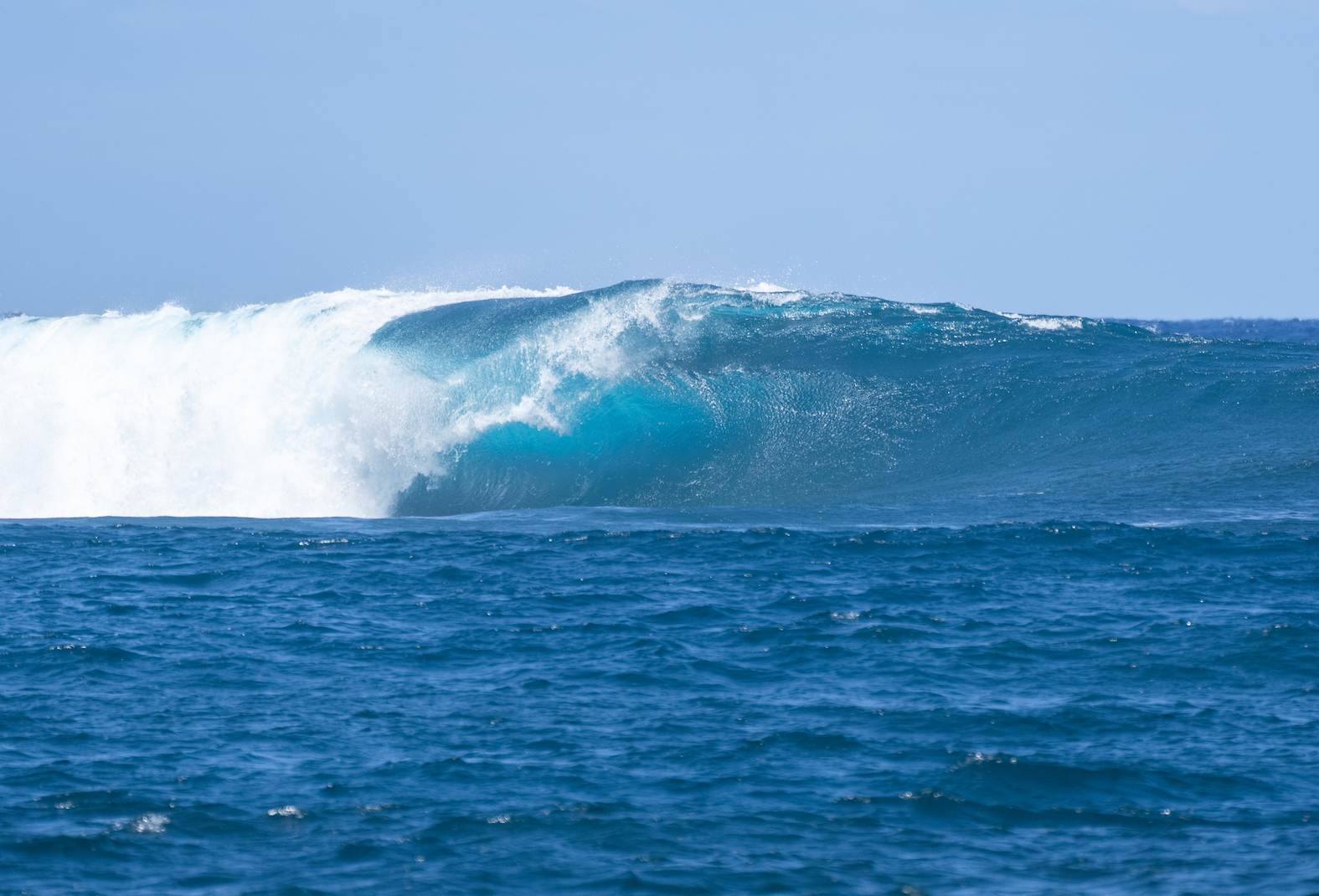
Bryan’s assessment of this scene is rather different. He is keen to go foiling, and just deciding what size wing to use. He will rig on the wharf, I will throw his foil board off the end of the dock and he will leap in after it with the wing, avoid the hissing reefs all around, then go sail in to some bombs. “No problem!”

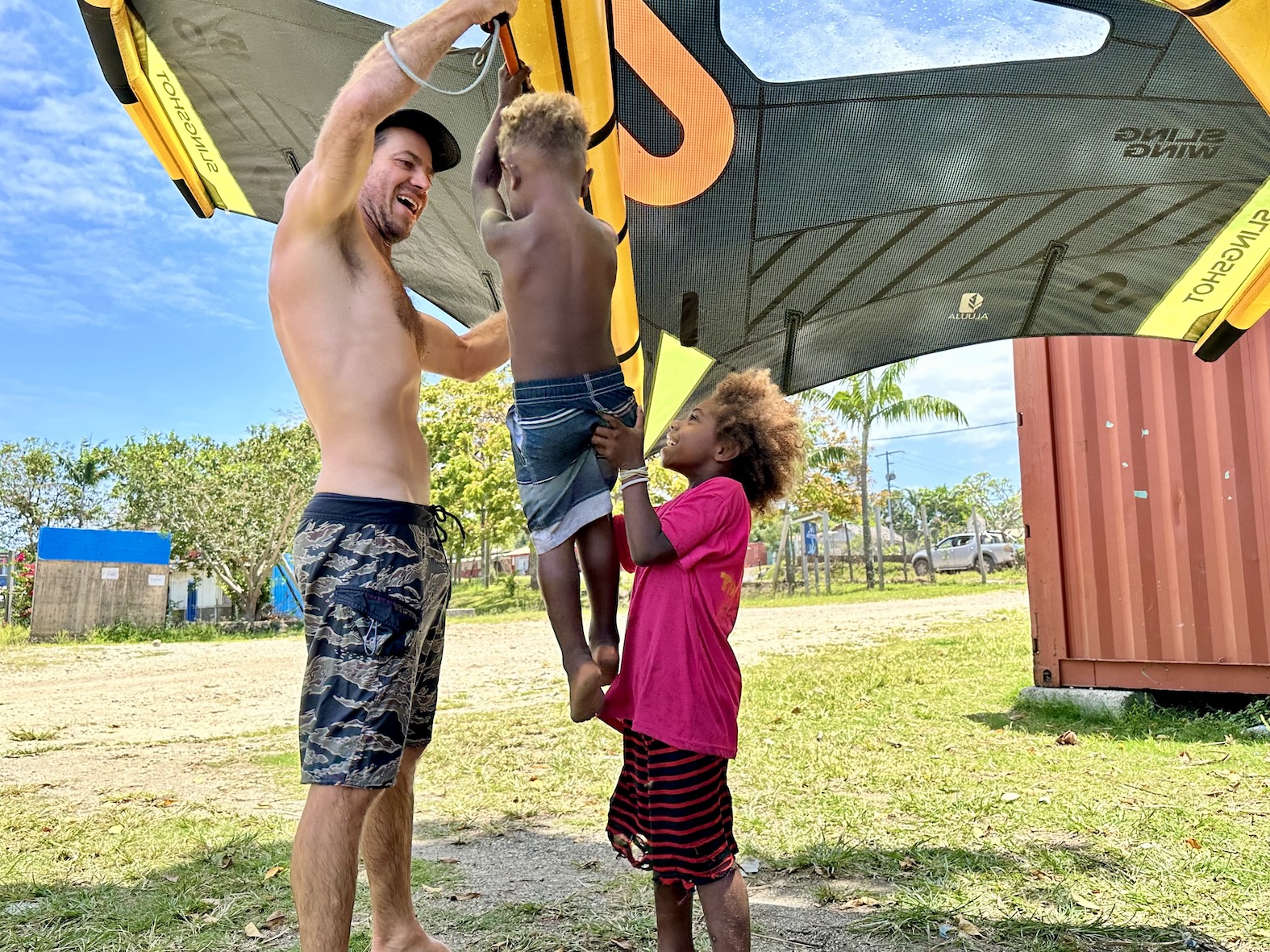
Our driver Cho (possibly Joe, but definitely pronounced Cho) and his cousins who had come with us from Port Resolution all watched quietly as Bryan unpacked and assembled his gear. They have never seen a foil before. After Bryan’s bird-man launch from the wharf, Cho stood with me and watched as he swam to the board, dodged the coral and started pumping out to the wind line. Then it happened, Bryan caught his first gust, the board lifted out of the water and zoomed off upwind at high speed on foil. Cho was suddenly shouting with excitement, he had never seen anything like this. He and David were whooping and laughing as Bryan sailed laps around the reef and rotated in the air over the waves. Cho told me that for them this was like watching magic.
All these children were also very excited about the Birdman and his magical gear arriving on their island.

Back at Escapade our Halloween party gets really spooky as we have decided to set sail at midnight.
We’re trying to time our arrival with a tidal window at a reef pass in New Caledonia 230 miles away.
We pull up the hook and slip out between the anchored boats, to the dark ocean beyond.
On the other side of the world I have another named storm to worry about, this one’s called Ciaran and heading for Guernsey!


 escapade sailing
Wow… the adventure just continues and continues! Thanks for sharing.
LikeLike
Wonderful blog, Vanuatu is such a special place. Sending big love.
LikeLike