
Good Queensland Casual
We are enjoying an old copy of ‘100 Magic Miles’, the classic sailor’s guide to the Whitsundays, first published 1985. Ours is the fifth edition from 1997, found in a Mackay Op Shop by our new friends Michael and Shylie. It’s full of great pilotage information, but some of the advice seems a bit dated. This on dress codes:
‘At night, if out in company, one is expected to conform to a standard of dress known as ‘Good Queensland Casual’. For men, this means sports shirt, slacks or shorts (with long socks and shoes). Women are expected to wear slacks or dresses, not shorts. Two items not considered Good Casual, particularly for evening wear, are t-shirts and thongs.‘
Well that rules out my entire wardrobe. Should have brought some long socks.
There’s also great photos of 1980s windsurfers in bikinis and some sound windsurfing advice: ‘Don’t exceed your capabilities. Alcohol and sailboarding don’t mix.‘
Wildlife
Then there’s lots of info on all the things in the water that are going to kill you. Now I know this is one of the great Australian clichés but it’s a such a long list! These are my edited highlights:
Sharks. I’m used to sharks. Apparently the only ones to worry about here are tiger sharks, bull sharks, grey whaler sharks and white sharks.
Stingrays. ‘The wound they inflict with a venomous barb in their tails is painful and will require the attention of a doctor, but unless you get stung on the torso, is seldom serious.’
Stonefish. ‘If you tread on one it can give you an agonisingly painful wound.’
Box jellyfish. I understand we’re in the safe season for these. But they are highly venomous and, like so many things on this list, potentially lethal. ‘Be prepared to give resuscitation’.
Irukandi jellyfish. Practically invisible. Gnarly. Deadly. No known anti-venom.
Cone shells. Never heard of these.. ‘Potentially lethal. Don’t pick up with your bare hands, the animal is capable of harpooning you from anywhere along the cleft entrance to the shell’
Toadfish. Another new one for me. Apparently it will actually bite your toes off if you go paddling barefoot in the shallows. Referred to locally as a ’Toado’.
Butterfly Cod. What?! ‘Curious creatures, they will sometimes approach divers in the water, pointing their dorsal spines front of them as they get near. These spines have glands which produce venom akin to that of one species of stonefish. It produces a severely distressing sting.’ See also: Lion Fish, Zebra fish, Fire Cod.
Blue Ringed Octopus. ‘Potentially lethal bite’. I’ll spare you the details.
Sea Snakes. ‘Virtually unknown in the Atlantic, there are some thirty-two species of sea snakes recorded in northern Australian waters.’ Marvellous. We once had one writhing around our feet on a relaxing dinghy ride in Fiji. Voices were raised. ‘When first aid measures are not taken, symptoms of bites occur within half an hour and include visual disturbance, muscular weakness, pain, progressing to paralysis and respiratory failure.’ Yes but I seem to remember they have tiny mouths, so they can’t really bite you?
But wait, I’ve just read this in Greg Luck’s ‘Cruising the Queensland Coast’: ‘Full grown adults range in size from 1m to 3m. They have fixed front fangs and can open their mouths very wide, wide enough to bite a person’s thigh. It is a myth that their mouths are too small to bite people.’
Great.
So at risk of labouring the point, I have to add this passage from ‘100 Magic Miles’: ‘The kind of serious envenomations that visitors to the Queensland coast are at all likely to have to deal with are stonefish stings, box jellyfish stings, snake bites, stingray wounds, cone shell stings, blue ringed octopus bites, anal sea snake bites.’ I had to read that last bit a couple of times, is that a typo?
Then of course there is the truly terrifying monster of this part of the world:
Estuarine Crocodile. The ’Salty’.
These prehistoric apex predators are the world’s largest reptile, up to 7 metres long. They are ocean-going and can swim far off shore. They actively hunt humans for food. If you get bitten by a shark it’s bad luck, you were probably bitten by mistake and there’s a reasonable chance of survival. But the croc sees you as a main course, he will lie in wait and observe your activity. He will notice repeated behaviour and plan an ambush accordingly. So if you are in the habit of having a pee off the back step of your catamaran at the same time every evening, this may have been noted as the ideal time to strike. They can move extremely fast. When those jaws close there is very little chance of escape before the croc will drown you and eat you.
I no longer use the back step.
All of the above has discouraged me slightly from being in the water as much as usual. Perhaps we’ll go for a nice walk ashore instead. So I flick through ‘Cruising the Coral Coast’ to that section.

Things to watch out for if you go for a stroll:
Spiders:
Funnel-Web. ‘One of the world’s deadliest spiders. Stories of funnel-web and trapdoor spiders leaping at you are untrue, however, they do adopt an aggressive stance when approached, so never try to kill or capture one’.
Noted
Red Back. This is the one that famously lurks under toilet seats. It goes on: ‘Too numerous to mention are the dangerous spiders whose bites are non fatal but may leave a necrotic lesion that can take months to heal.’
About that walk…
Snakes. OK here we go, ready?
Taipan. ‘One of the world’s deadliest snakes, the Eastern Taipan may be encountered along the entire Queensland coast and is known for its potentially aggressive behaviour when disturbed. It grows to over 2.5m long and has the longest fangs and most efficient biting action of all Australian snakes. It sometimes lunges at a victim to deliver multiple strikes. If a Taipan is sighted on the track ahead, turn around and walk away.’
No shit.
See also:
King Brown.
Copperhead.
Common Death Adder. Really?
Turn the page..
Dingoes.
Sand Flies.
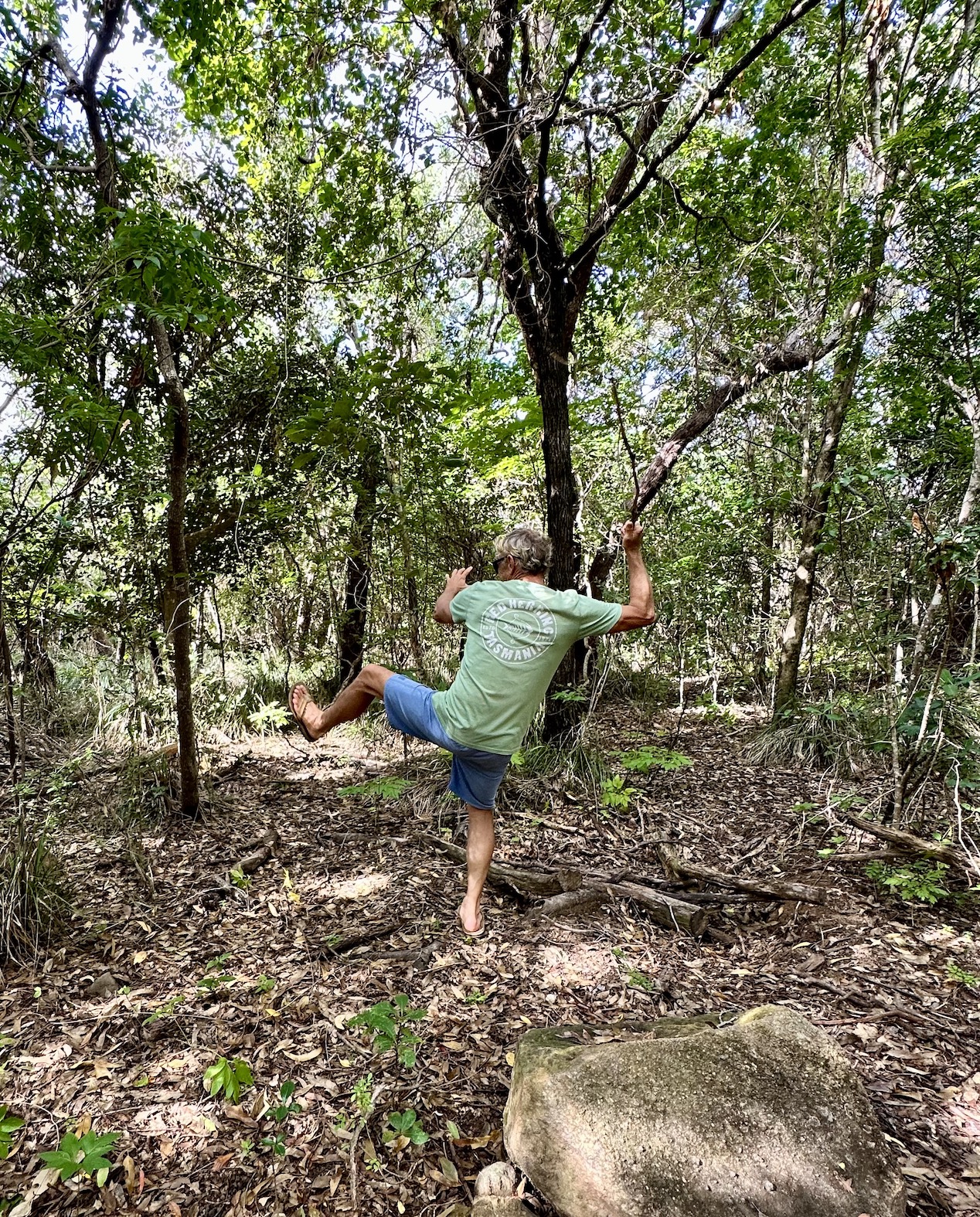
Wild Pigs. Which have been known to eat people. The cruising guide’s advice if you encounter pigs: climb a tree.
Gympie-Gympie stinging trees. Wait! Don’t climb that one! Yes, the trees are trying to get you too.
Shore Leave
The Whitsunday Islands are very beautiful. We have been amazed at how wild and undeveloped the landscapes are. Forested craggy islands with white sand beaches under huge Australian skies. Hardly a building in sight. Most of these views will be exactly as James Cook saw them when he sailed through here in 1770. We happened to be there on the same day as him, Whitsunday. After our wet and windy month of sailing it was time for a treat, to get off the boat for a couple of days and have a hot bath.
The main centre for civilisation and tourism is Hamilton Island, known locally as ‘Hammo’, so we went straight there. We tied up the boat and checked in at the nearest 5* resort, rocking our best attempt at Good Queensland Casual.


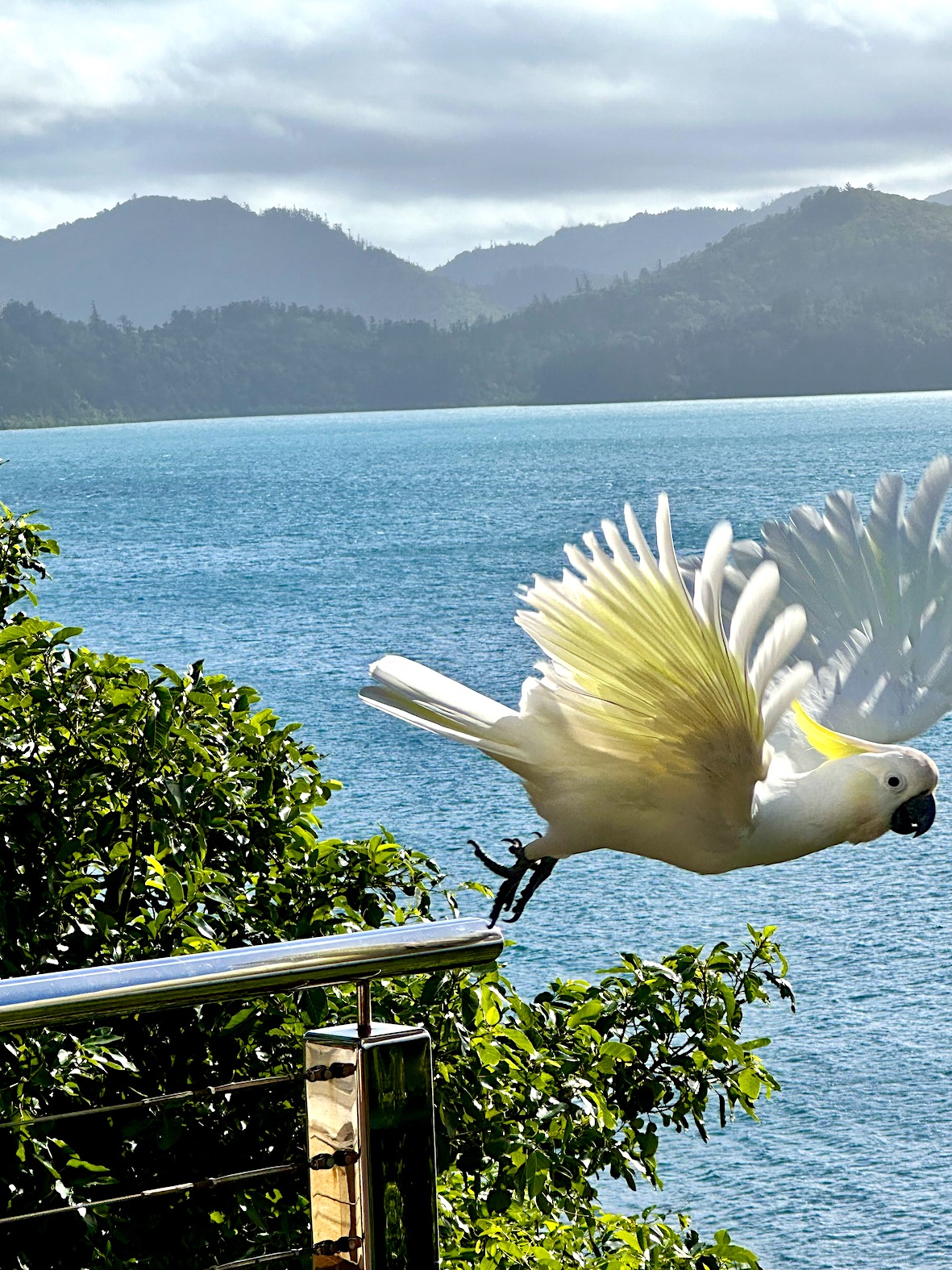
At the cafe on Hammo there are Koalas munching eucalyptus leaves next to your table. Wallabies on the beach, cheeky cockatoos everywhere.

Great hill-running trails with rewarding views from the top.

We spent a couple of nights ashore and celebrated getting this far.

Then it was back on board and off to the glorious Whitehaven Bay. The wind comes down the hill in ‘bullets’ which may be similar to ‘williwaws’, challenging for the wingfoiler, but you can see them coming and swoop from gust to gust. I spent happy hours zooming round, surprising the local turtles.


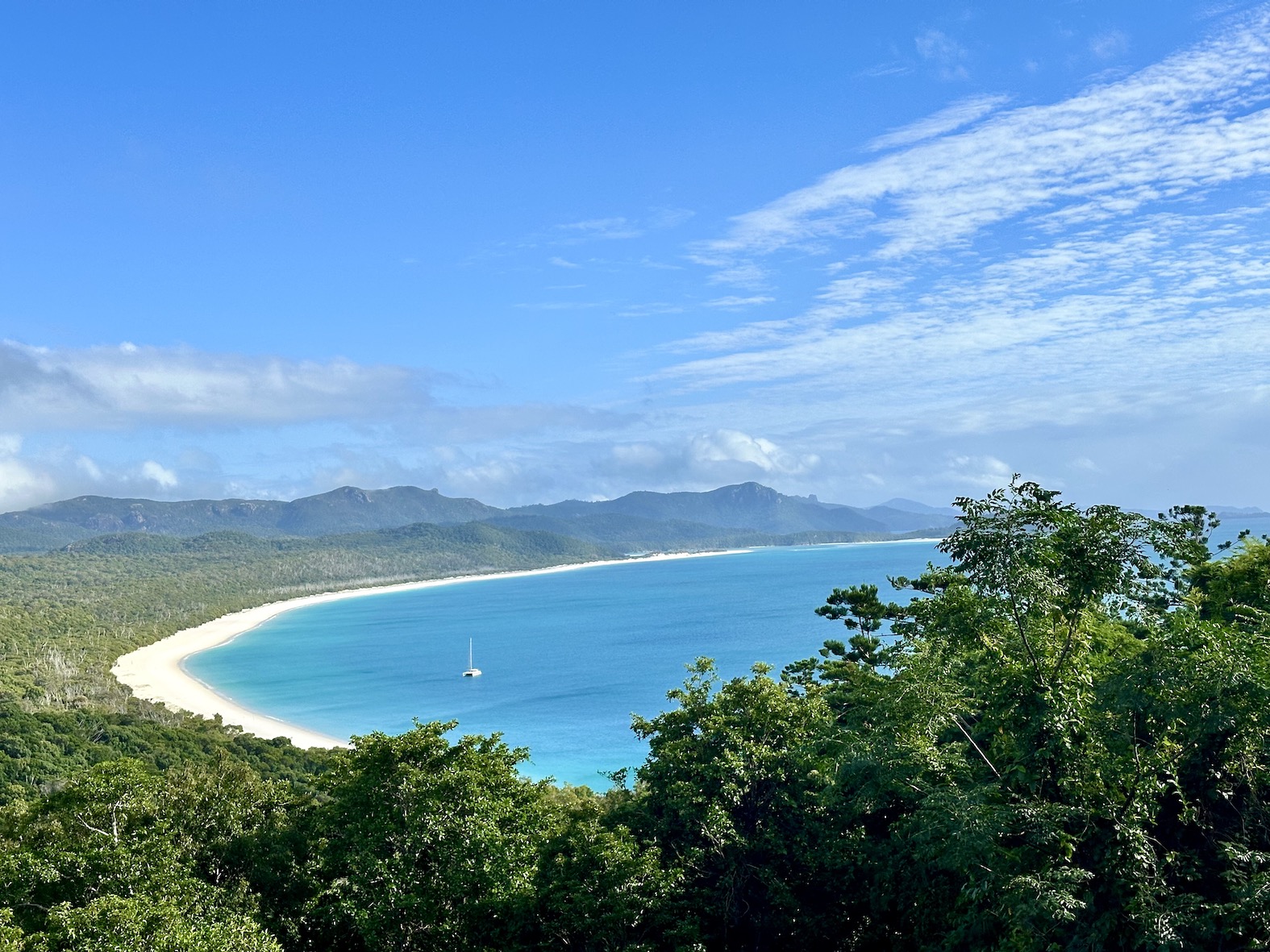
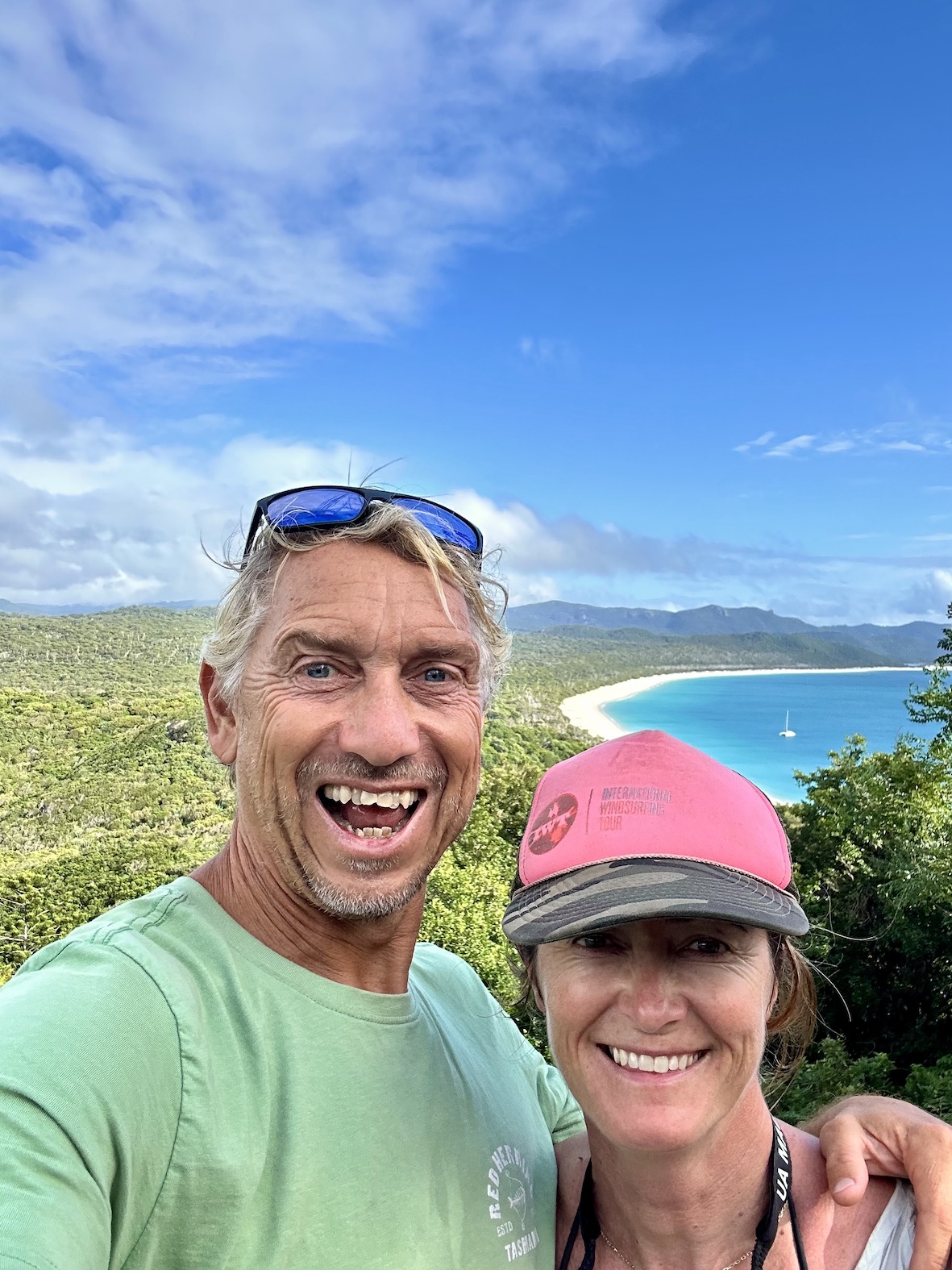
We hiked the hills to see the magic views, and sailed up a fjord on Hook Island to find this cave which is a special site for the Ngarra people who lived here.

The exact age of the paintings is not known, but humans have been here for 9,000 years!

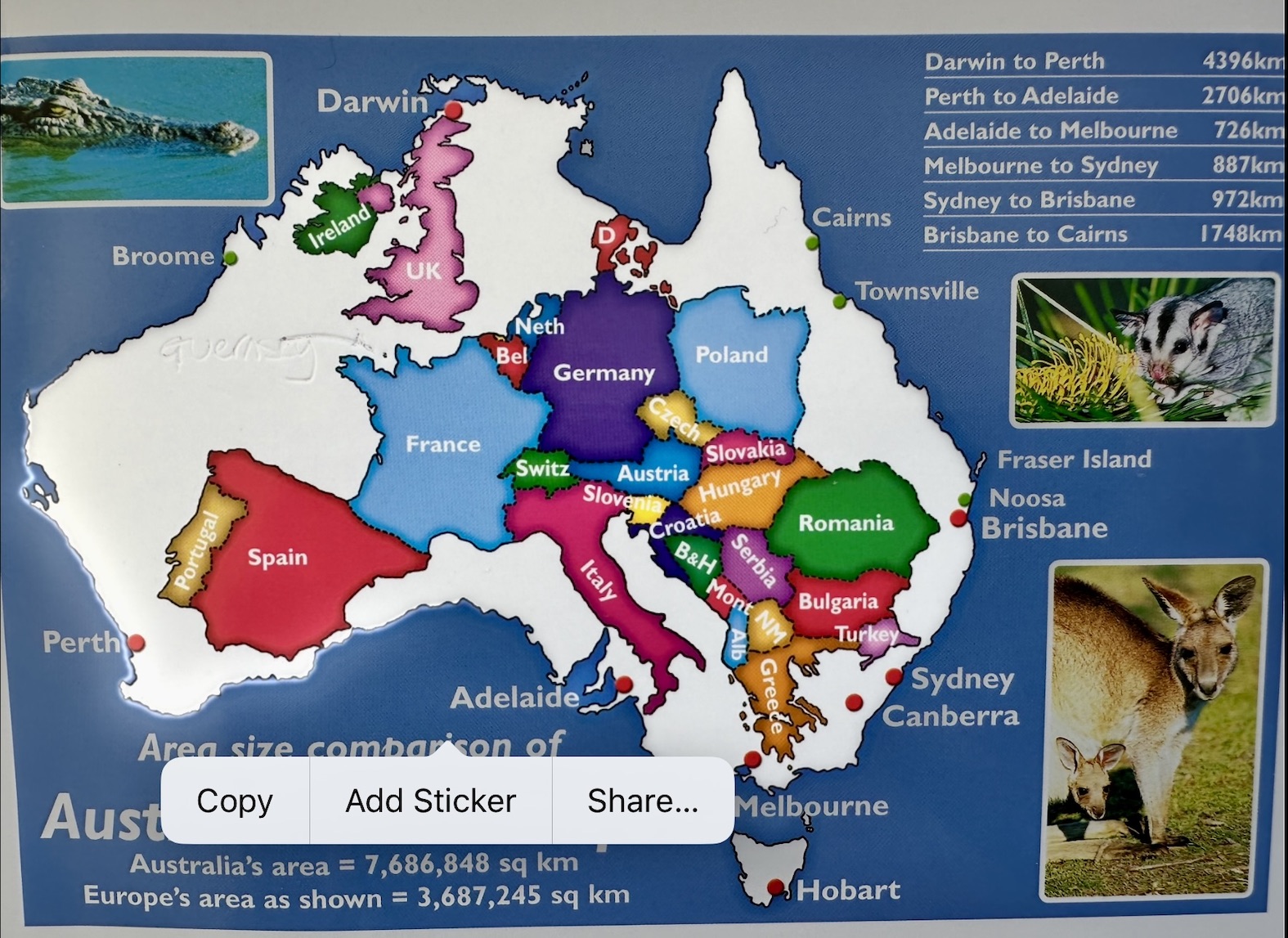
Australia is big
Since we set off from Hope Island last month we have sailed about 800 nautical miles. A very leisurely pace. If you look at a map we’ve covered a small fraction of the east coast.
Australia is vast. In European terms, if we sailed 800nm south from Guernsey, we’d be in Lisbon. The distances here are daunting.
Here’s a postcard which explains that well:
Or if you prefer a North American perspective:

It’s simply massive. When you sail up the coast all day, day after day, the spectacular coastline just keeps unrolling in front of you. Islands, bays, headlands, capes, reefs, for thousands of miles.
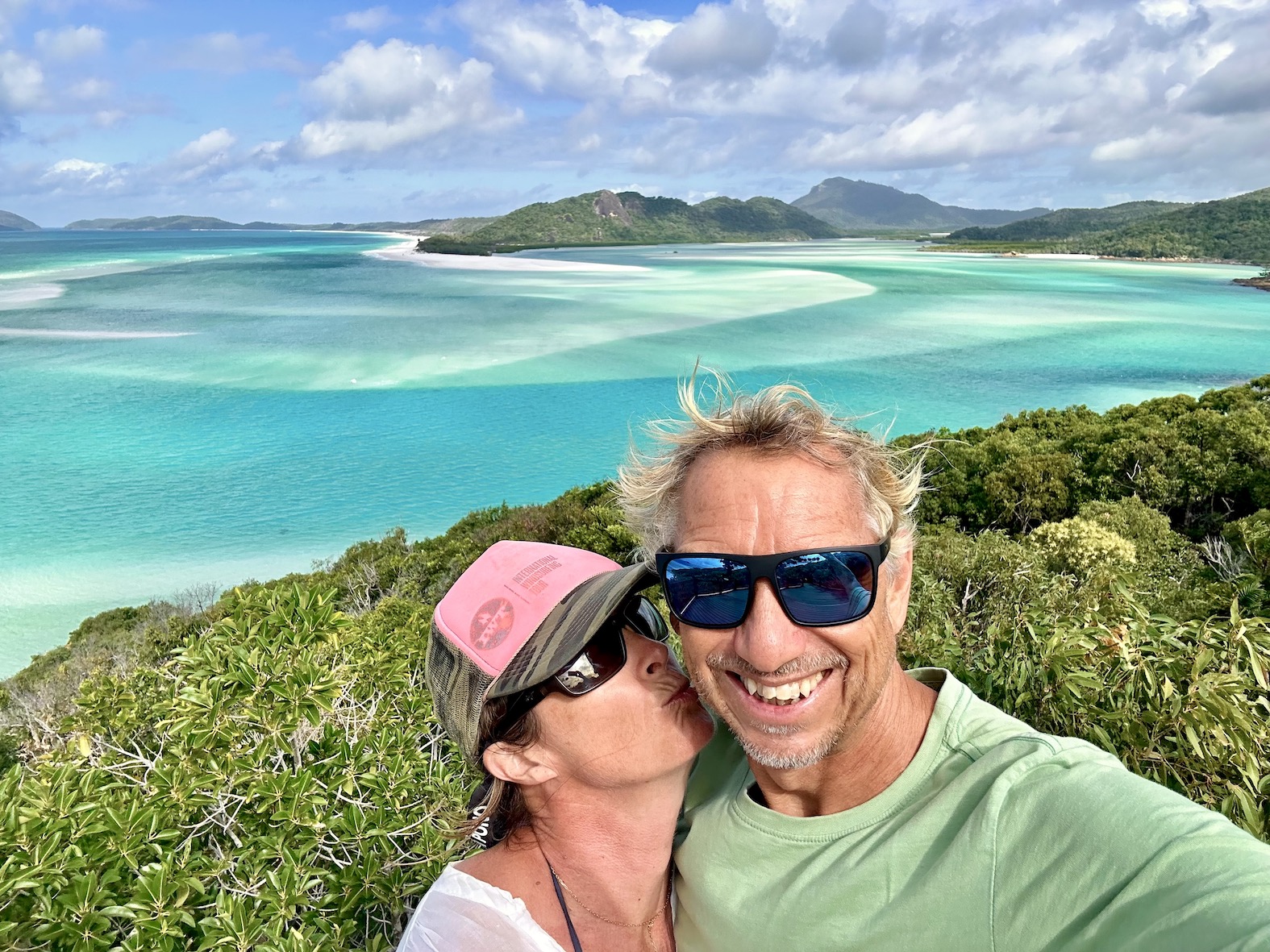
Whitehaven Bay was one of those “Best 10 beaches in the World’. Well, it’s as amazing as all the other Australian beaches, but with more day-trippers.
Have a look on Google Earth, Australia is pretty much a Top 10 Beach all the way round. If you don’t mind the wildlife hazards.
Early morning bite
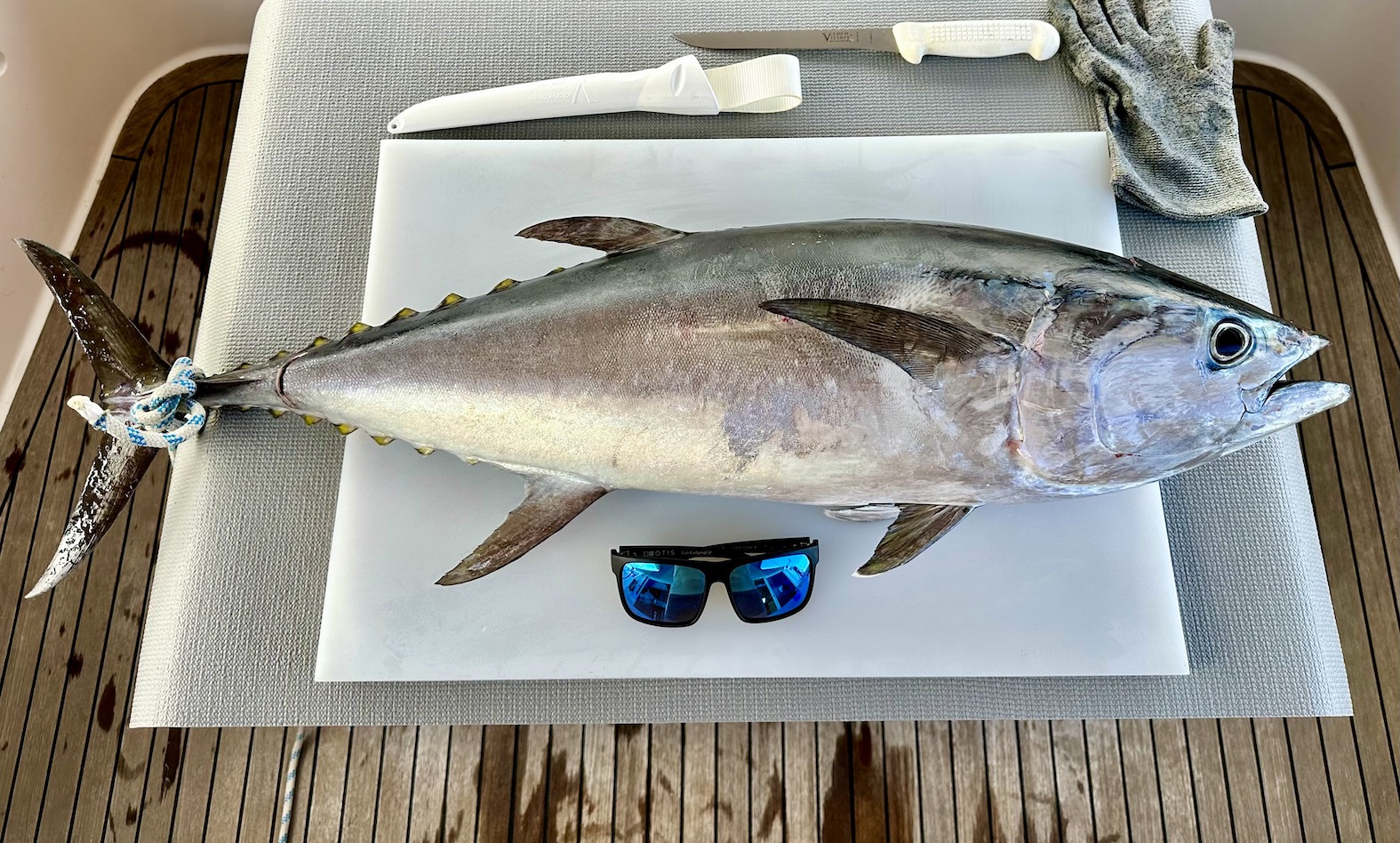
There hasn’t been much fishing because we’ve just been sailing too fast, and the seas have been too rough to be trying to land a fish. But this morning we slipped away at daybreak and I put a line out as the wind was filling in, hoping for a seafood supper. When the reel started screeching we knew it was more than one meal on the hook. Dawn rolled up the jib and slowed the boat down while I slowly won back all that line, then she whipped the fish onto the deck with a gloved hand, no gaff.
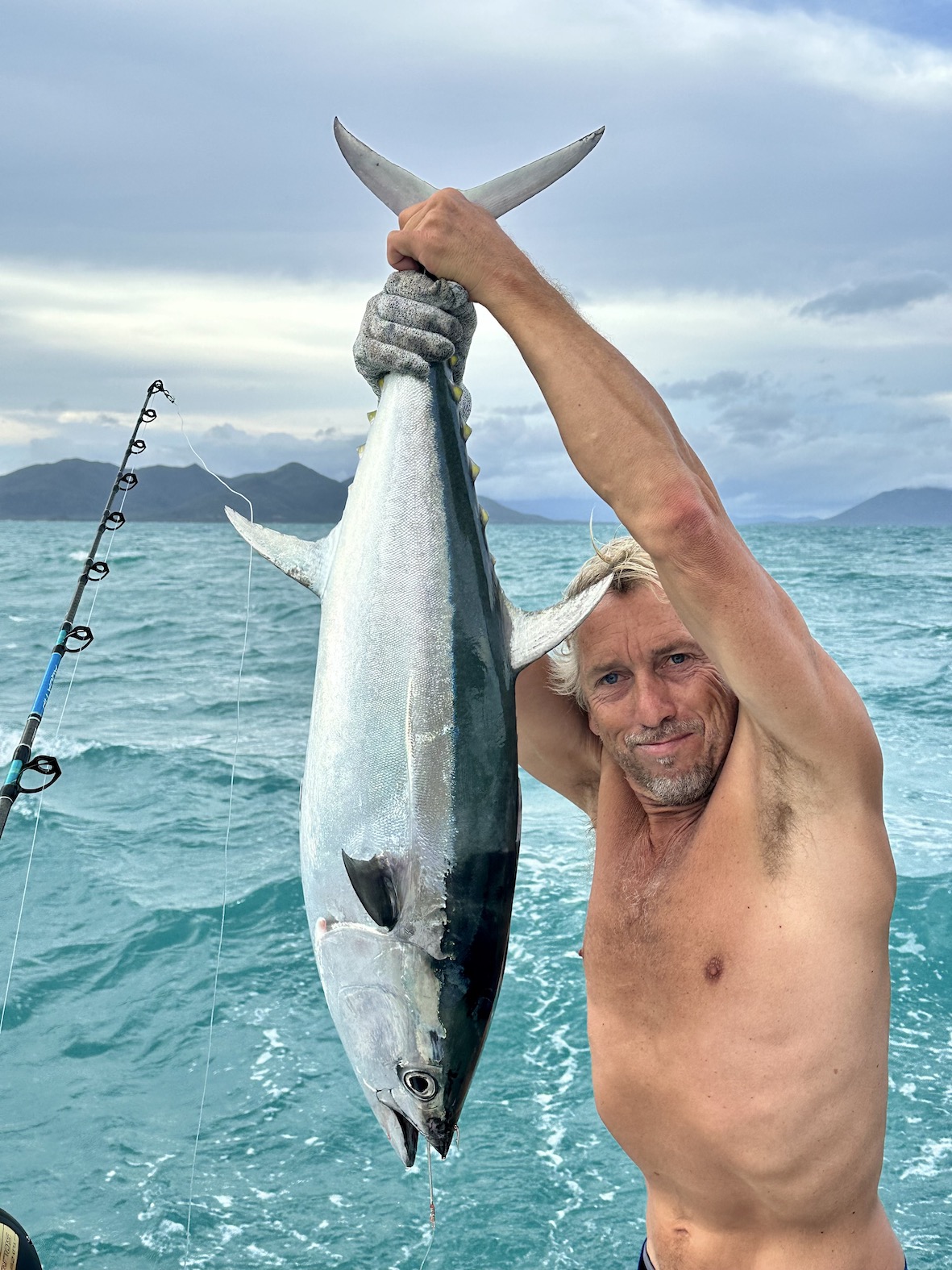
The lure had only been in about 10 minutes, Bryan will be interested to hear that it was a naked, unadorned cedar plug. I’m back to ’no frills’ trolling.
The sailing.
The weather has been well mixed, as weather should be. Enough showers to make you appreciate the blue sky, enough clouds to make superb sunsets. And enough wind to propel Escapade at a very satisfying pace. Basically 20 knots SE trade wind every day, all day, and night. Some days gusting 25 or more, usually a bit more South in the mornings and a bit more East in the arvo as the hot continent warms up and tries to bend the trades into an onshore sea-breeze. While it hasn’t been the easy, bikini cruising that Dawn was (falsely) promised, (see previous post) we have had some very fine downwind sailing.
Our new 3di main sail was re-cut and the square-top head was re-built at the North Sails loft in Brisbane in April. It was slightly out of tune with our re-rigged mast. The difference is amazing. The boat has never sailed so well. And sailing every day with these wind angles is such fun. We are surfing down the wind swells for mile after mile, two reefs in the main, speeds up in double figures for hours.
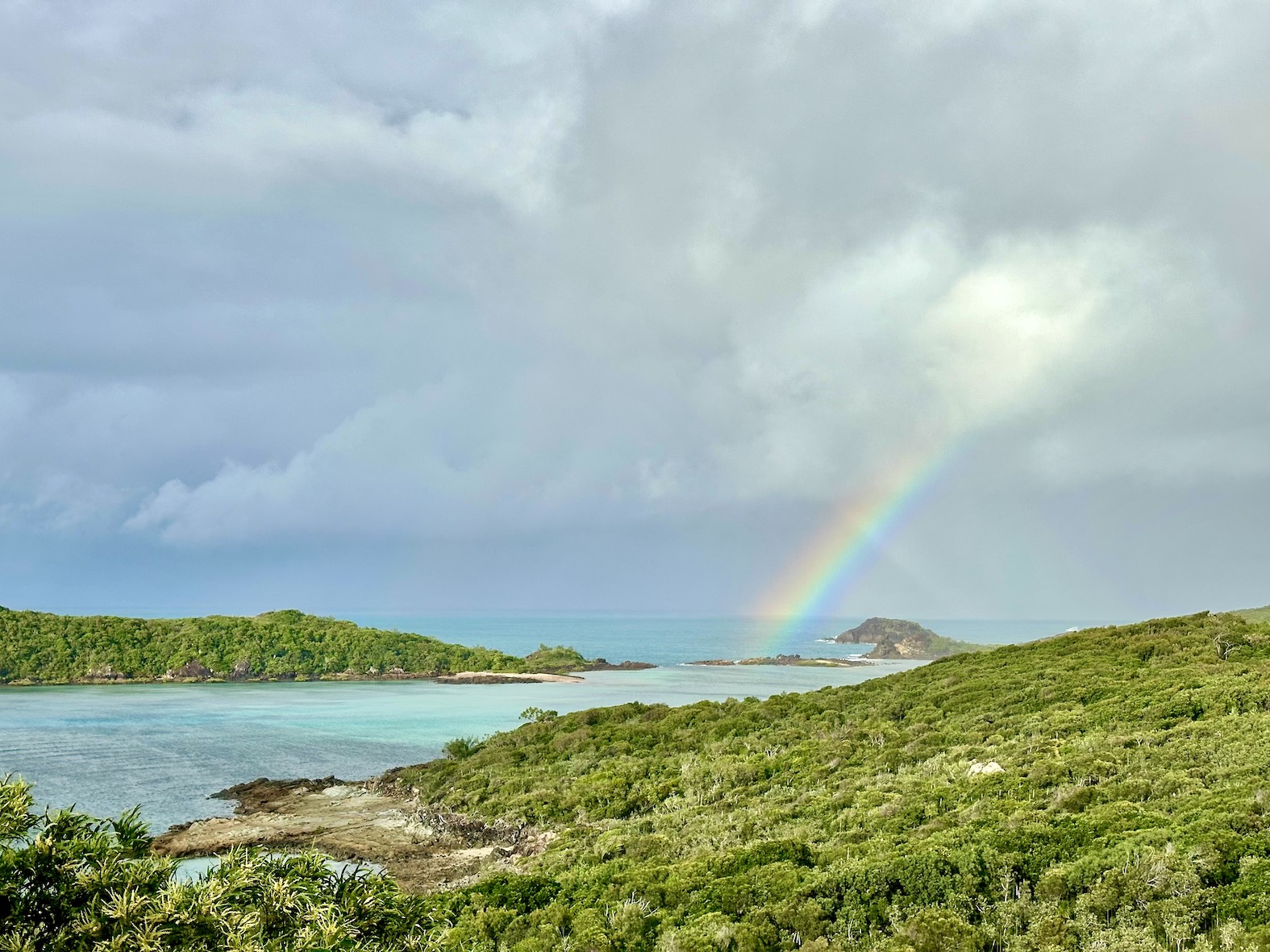

Magnetic Island.
It’s the end of May and we’ve made it to Magnetic Island, known locally as ‘Maggie’. We hiked a hill trail where we were told you might see koalas.
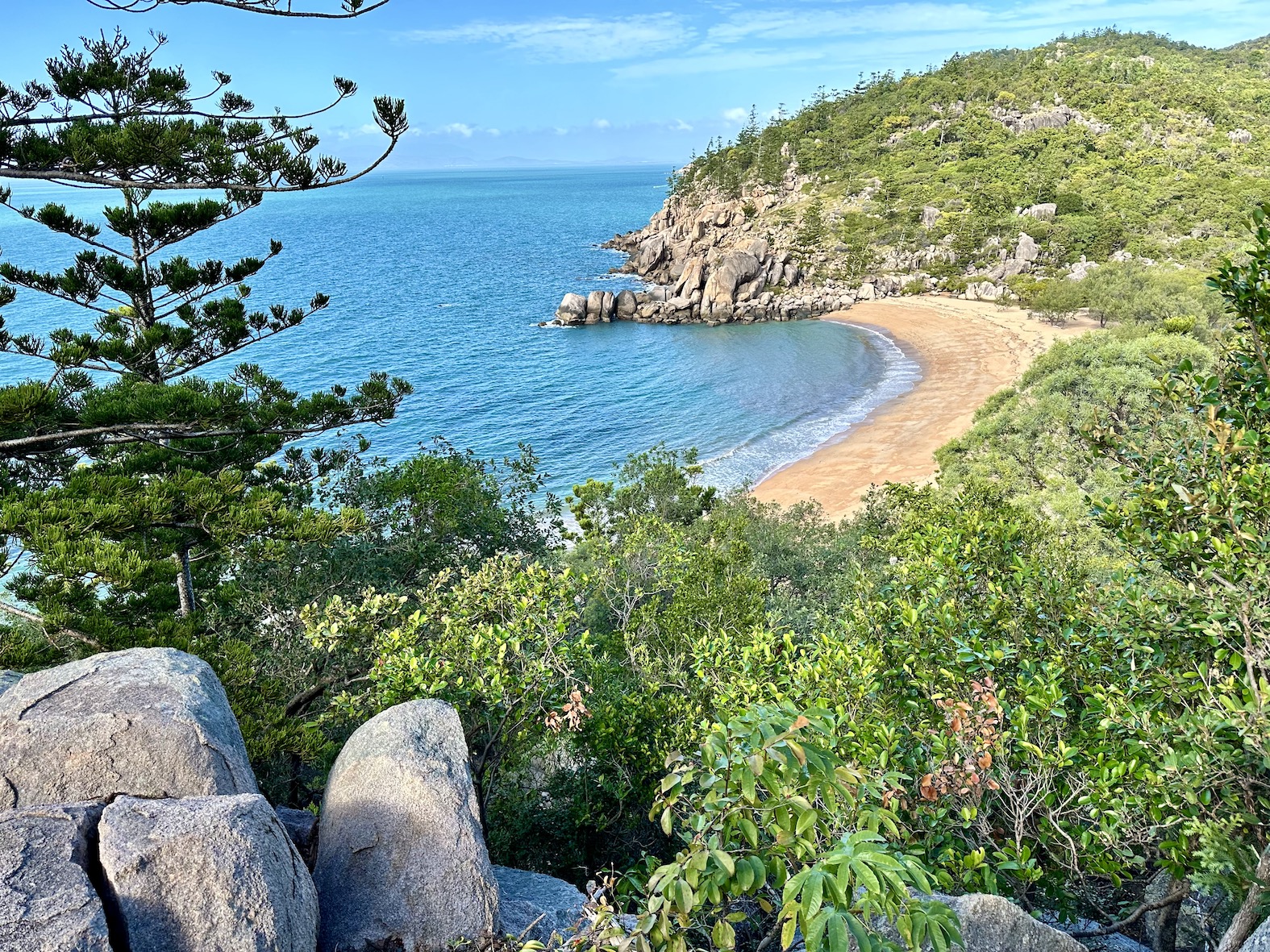
The first koala I met was in that cafe on Hammo, she was happily sitting amongst the day’s delivery of fresh eucalyptus branches, alternately munching and dozing while the adoring public sip lattes and take photos. She seemed very content but I couldn’t help thinking she would be happier in the forest than the resort.
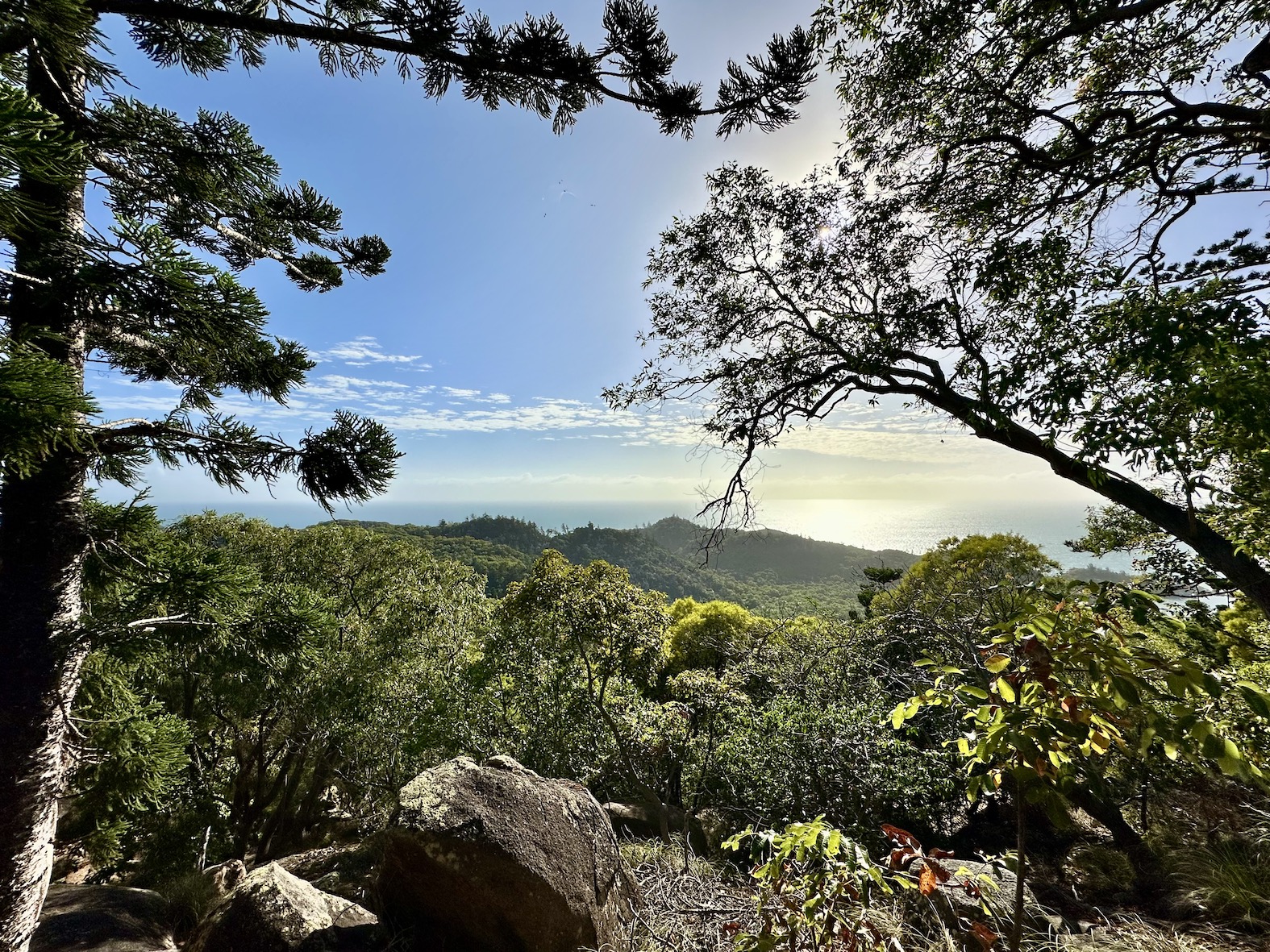
Dawn and I went ashore early, hiked up the hill and there they were, perched in the crook of a tree, working on their 20 hours of sleep per day. This one was wide awake.

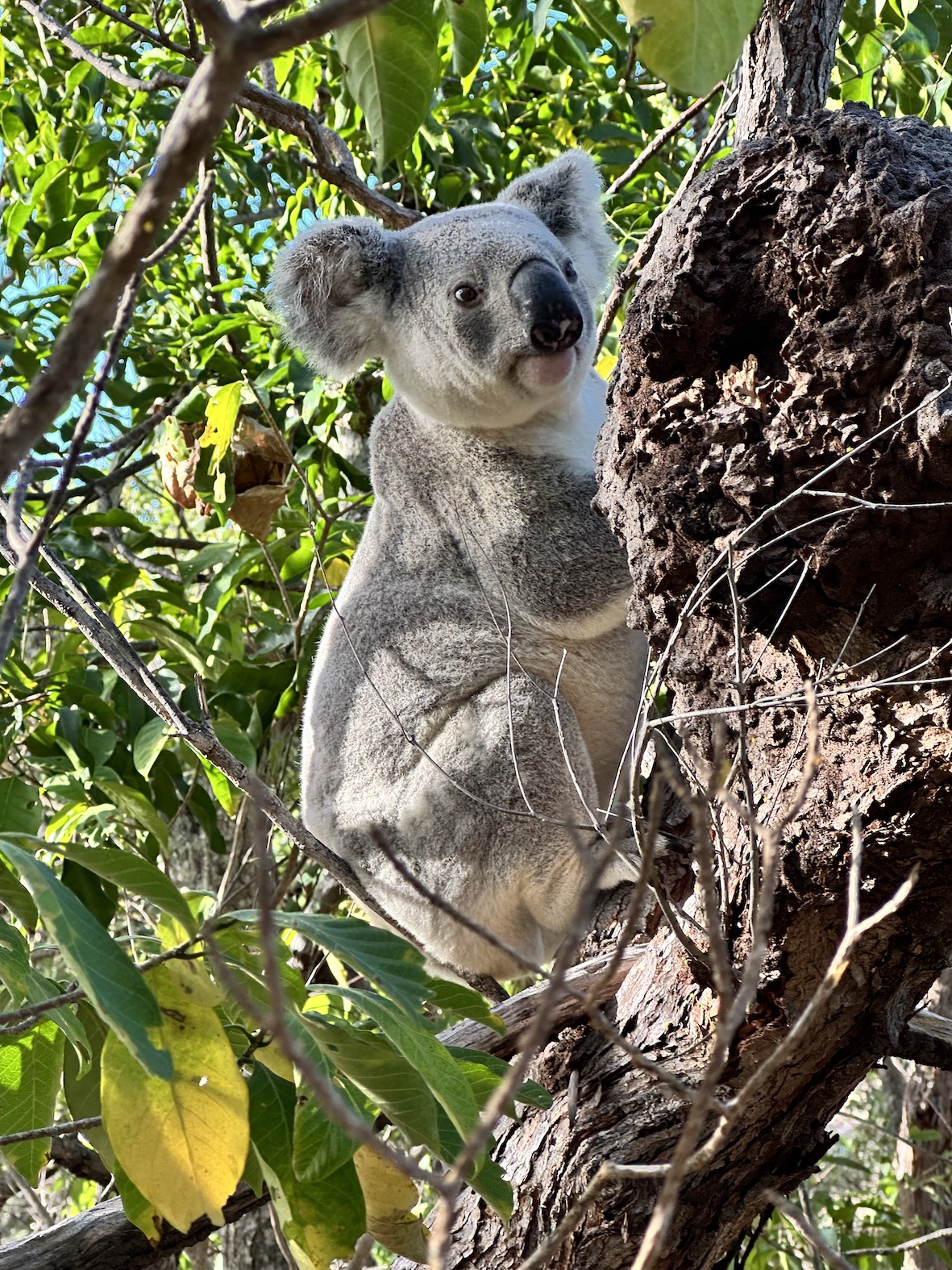
Wild animals in the bush, adorable, cuddly and non venomous.
 escapade sailing
We had Kingsley and Kath Webb round for dinner last week. I think th
LikeLike
Wow! What a small world. We met them in Fiji. I heard they were buying a bigger boat?…. We are back early July. Let’s make a plan to catch up.
LikeLike
We’re off to Denmark this week. Rosie by bicycle and me by boat..Back end August! Exciting! R
>
LikeLike
<
div dir=”ltr”>
<
blockquote type=”cite”>
LikeLike
Wow, wow, wow! Superlatives are in short supply! Such a great read. Mousex
LikeLike
love it guys. Amazing adventures. We’ve been driving around old tennis centers. Much the same really 😆
LikeLike