Thursday Island has long been an important Australian port, pearling station and customs post, the main border with Papua New Guinea across the straits to the north.
Many round-the-world yachts have cleared through here, including the very first.
This is The Federal Hotel. An early entry in their visitor’s book reads: “Joshua Slocum. Boston to Boston 1877.”

Escapade will clear customs here too, and officially depart Australia.
Next stop Indonesia.

Arabella shrugged off the jet-lag and we all went for a stroll around Thursday Island.
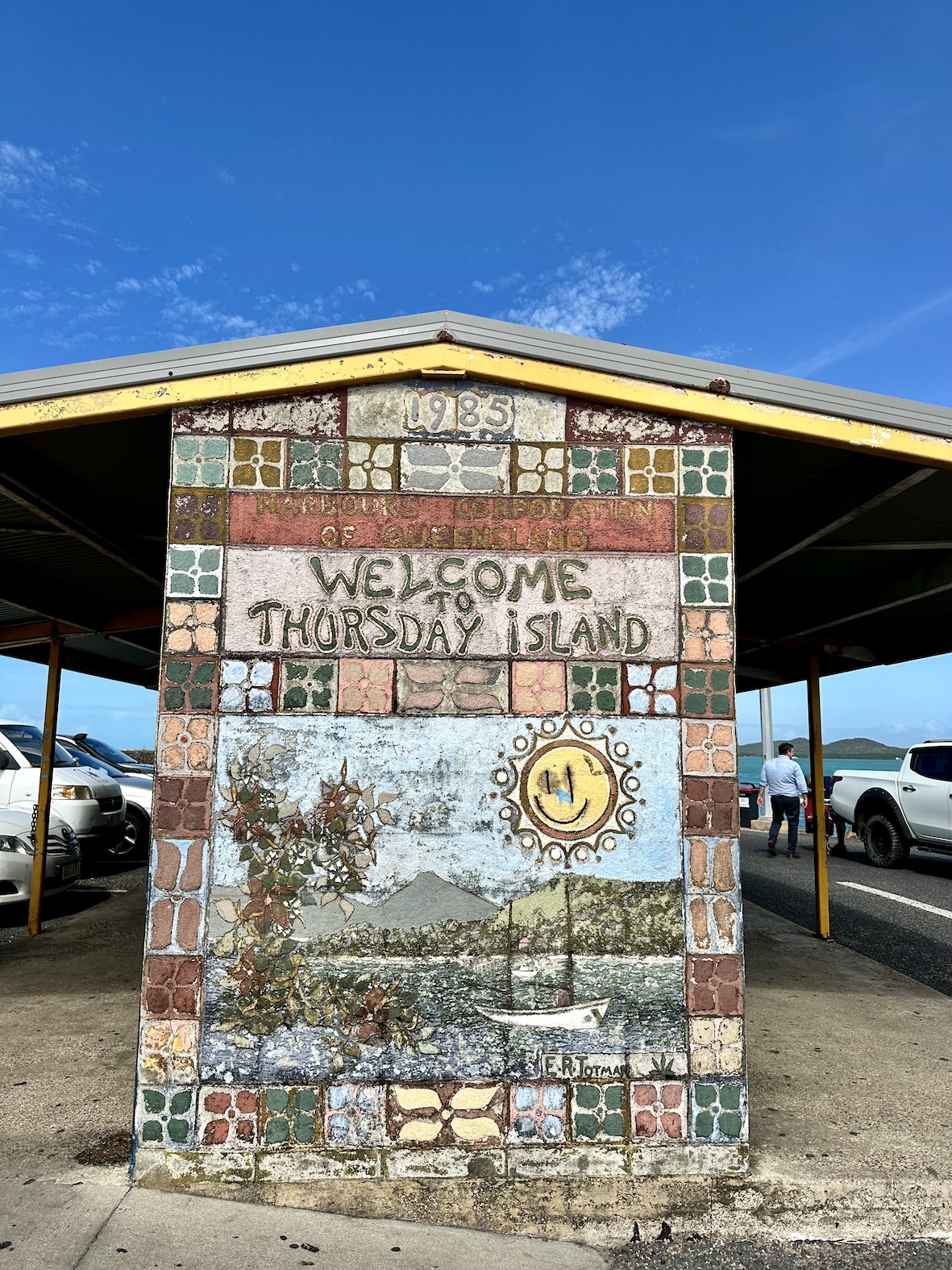
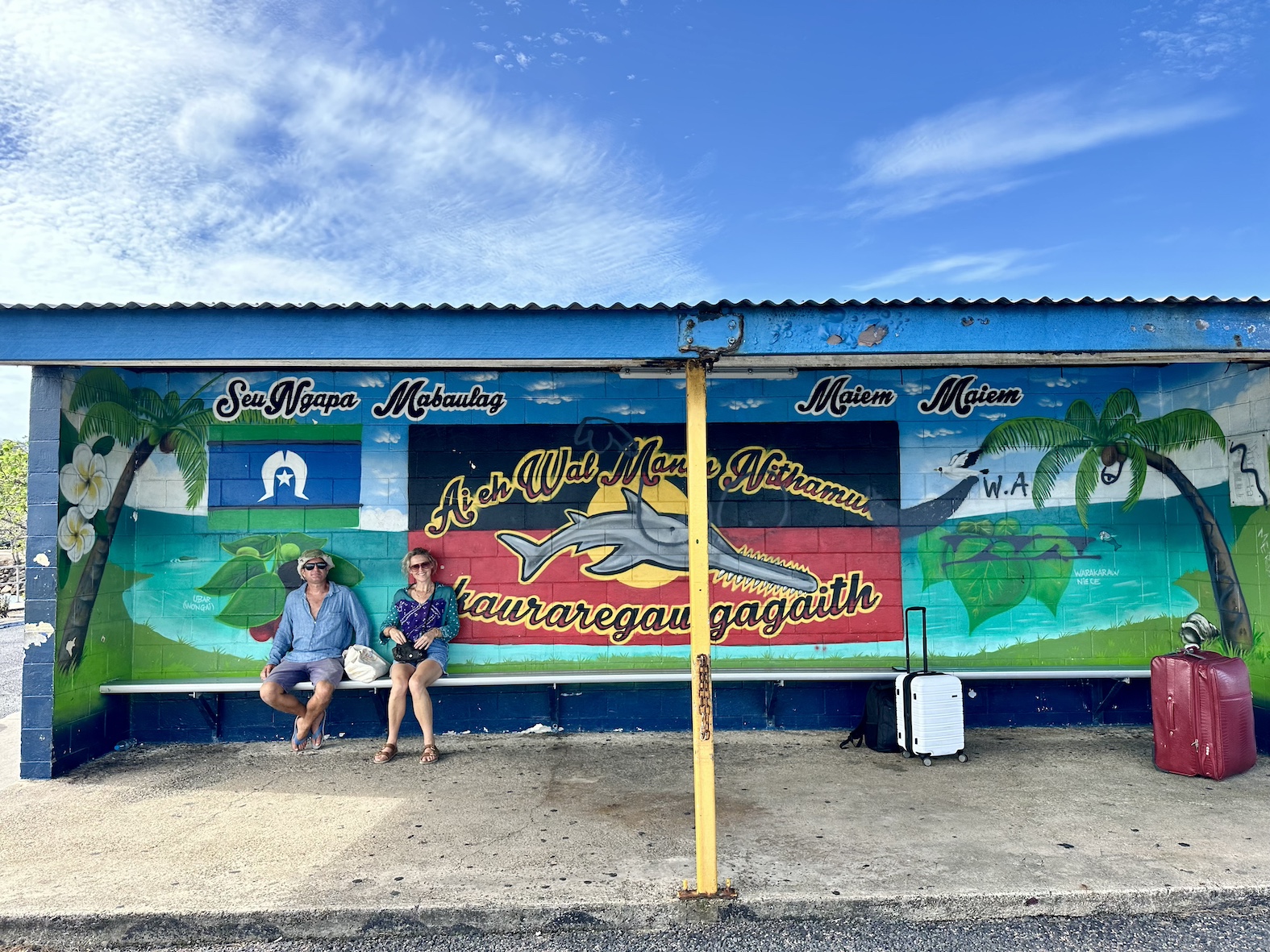
We filled the dinghy with fresh food for the next trip, got our clearance papers and had time to celebrate Alex and Arabella’s wedding anniversary in Australia’s northernmost pub.
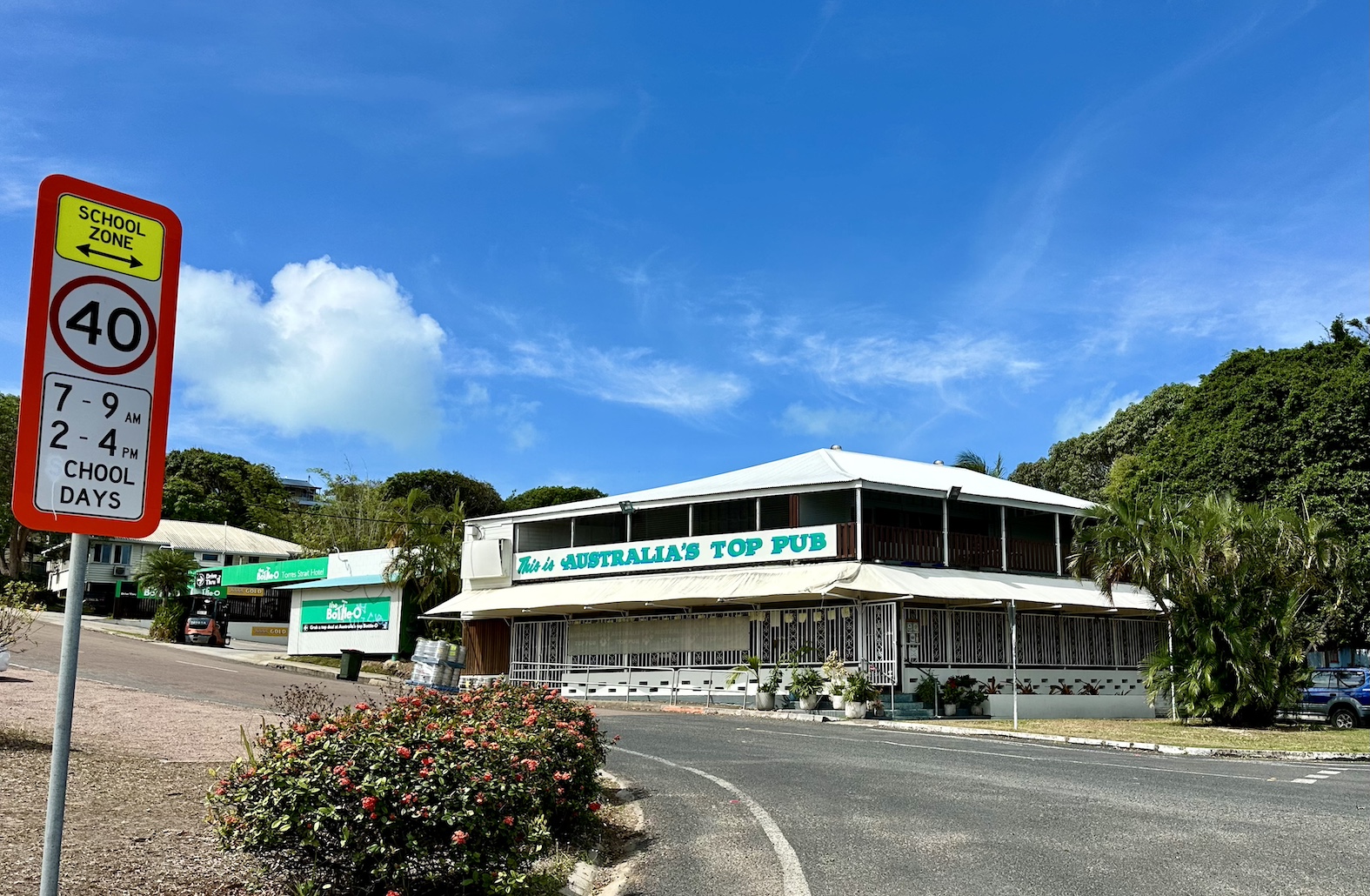
The weather has been completely different since we arrived here. The Queensland coast was wild and windy, but up here in the straits, winds are light and the air is hot and humid.
21st September
We wait for the tide to turn and let it flush us down the channels between the islands to open water. The biggest sails are hoisted and Arabella was at the helm as we waved goodbye to Australia with the boat travelling at 13 knots down wind and tide. Out on to the Arafura Sea.
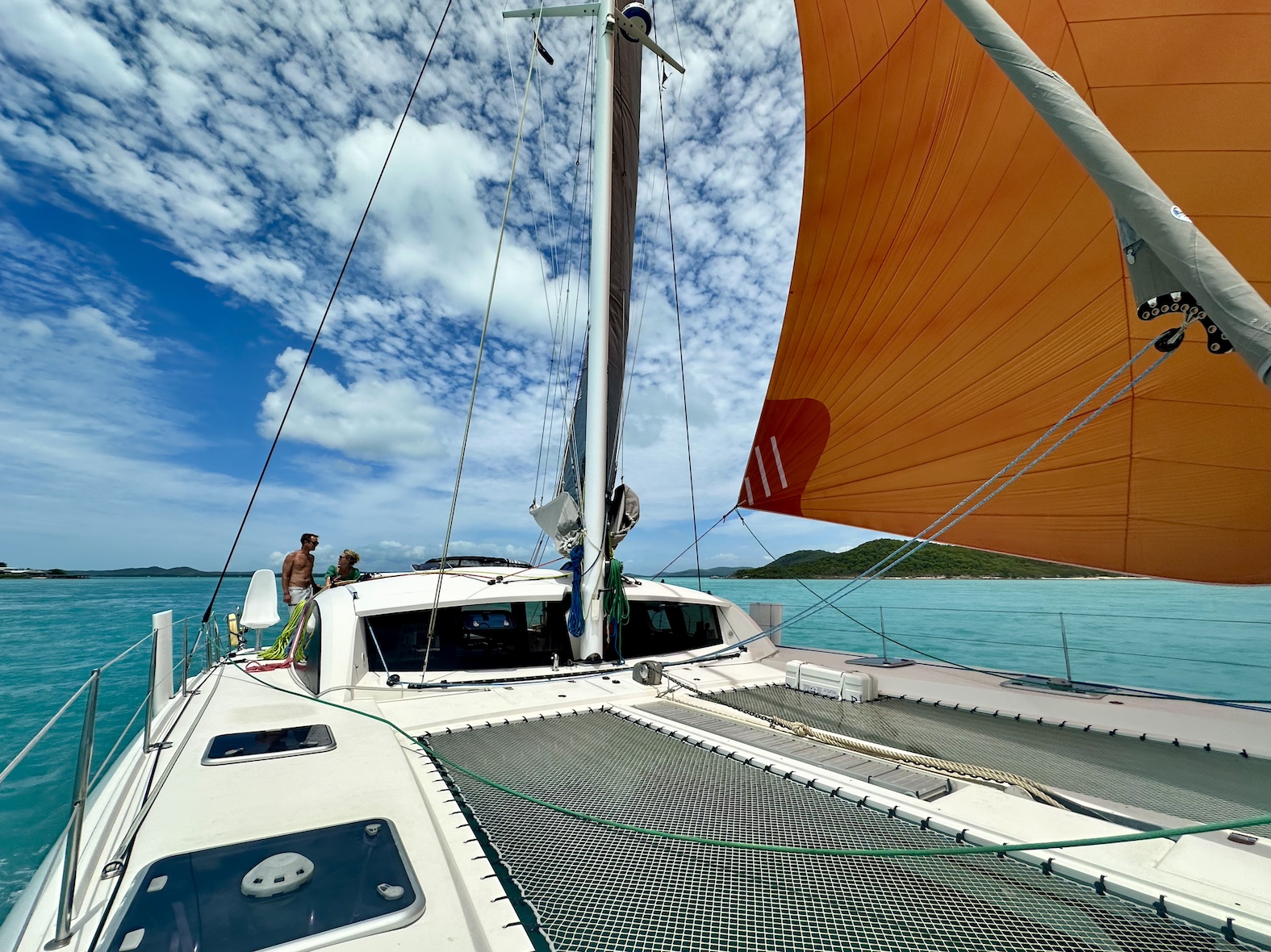
The Torres Straits separating Australia from Papua New Guinea are often shown as blue sea on maps, but if you zoom in on Google Earth, the straits are a mass of reefs and islands with just a few shipping channels passing through. For our first hundred miles the water was flat as a lake in the lee of all that, and shallow: 20m or less. The primary hazard for sailors out here is the fishing fleet from PNG and Indonesia. They fish right to the limit of Australian waters and have a reputation for being numerous, often with extensive nets, hard to spot in daylight and unlit at night.
So our route takes us due west and then gradually bends north to our destination: the Indonesian port of Tual in the Kei Islands. The big curve is a detour, intended to keep us clear of the fishing boats. The rhumb line distance is about 680 miles, we will sail quite a bit further.

We are also tending to gybe both ways across the E and SE breeze, maximising boat speed. James has brought a new level of science to our VMG calculations (which were previously science-free, occurring mainly in the seat of my pants). He has installed graphs on the plotters to illustrate our Velocity Made Good which is a measure of how fast you are getting to your destination.
Should we sail slower, straight downwind, or take a faster broad-reaching course, sail a bit further, put in a couple of gybes and arrive quicker? I have always known that Escapade prefers the faster line, she sails so much better with a bit of power in the rig. More speed and a smoother ride. James’s graphs agree and it’s fun to see how far you can sail off-course and still be winning. Also very encouraging for those still practising the ancient art of sailing by the seat of one’s pants.
James landed another fine fish and fed the crew for a couple of dinners.

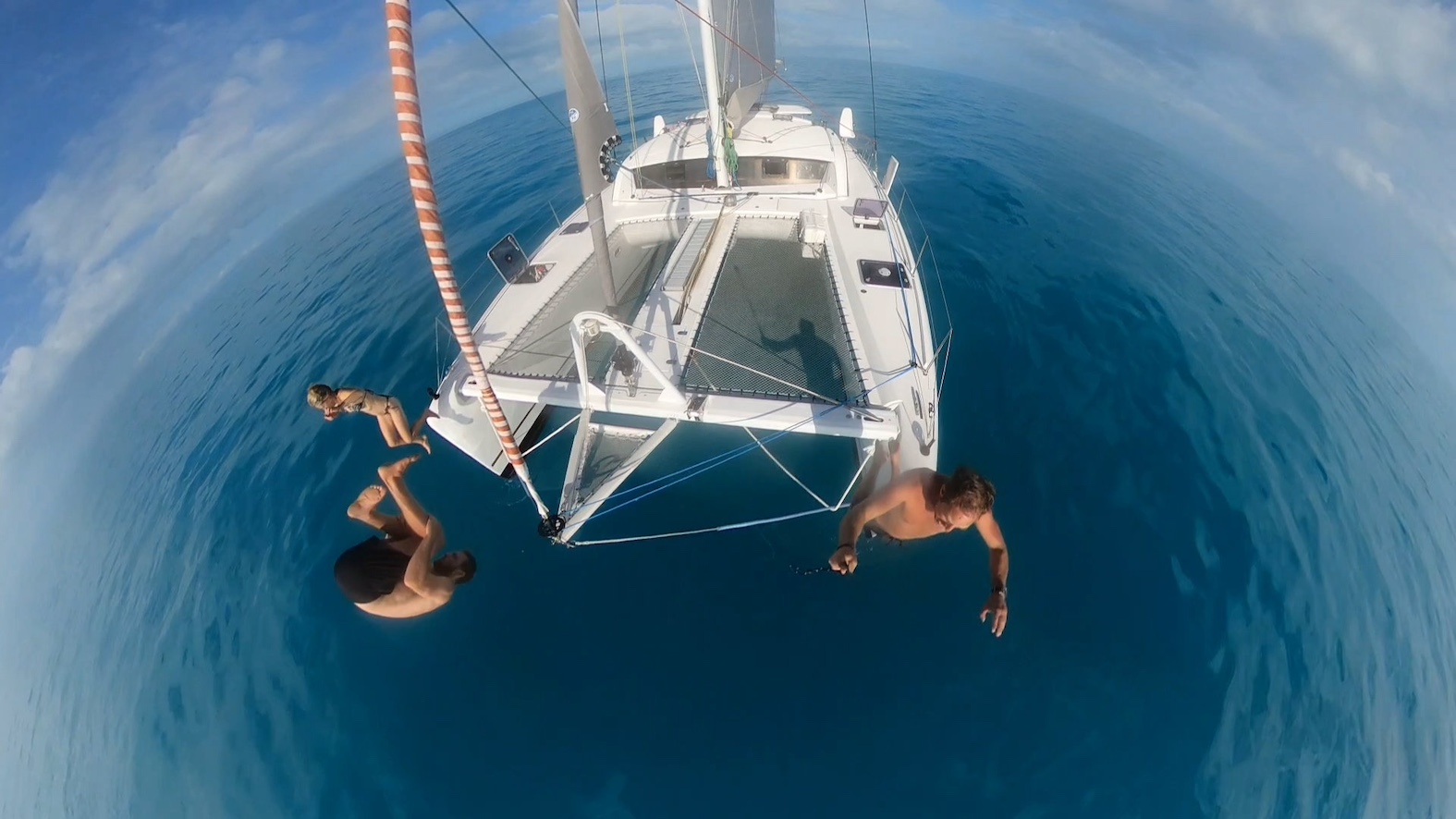
We were briefly becalmed, and very hot, so we all jumped in for a dip.

James has been offering ukulele lessons to Alex, tuneful daily strumming practice. Alex is mastering the four chords required for ‘Let it Be’.

When we had sailed about 380nm from Australia we decided to throw our Halfway Party with sundowners and Spag Bol.


We have been hearing about Starlink on sailing boats for a couple of years now. My naturally Luddite tendencies meant that I was strongly against the idea of satellite internet on tap whilst at sea. Being on passage was one of the last remaining parts of life where you still could enjoy being offline for a few days. We would set each other paper Wordle puzzles and keep lists of things to Google when we arrived. Plus, I was horrified to see those early Starlink satellites invading the timeless night sky. We carry Iridium for weather forecasts and an Inmarsat phone.
But eventually I reluctantly agreed to the idea, it’s cheap, easy to use, and you can always turn it off. We installed the dish in Brisbane, the modern world has finally infiltrated my technophobe capsule.
Well I love it. What an extraordinary creation. Well done Elon. On the old satphones there was a delay which made normal conversation tricky, and a robotic voice quality which never really sounded right. Now I can chat to Dawn on WhatsApp from the middle of an ocean, with video! The longwinded procedure of requesting and retrieving a weather grib file from space could sometimes take many attempts with me waving an Iridium aerial outside. Now we have all weather resources at sea, whenever we want it. Pretty amazing, but will people now expect me to reply to their email when I’m sailing?

The days were filled with sailing, strumming (‘Let it Be’ is now recognisable to a keen ear), cooking, games and compulsory afternoon HIIT workouts.
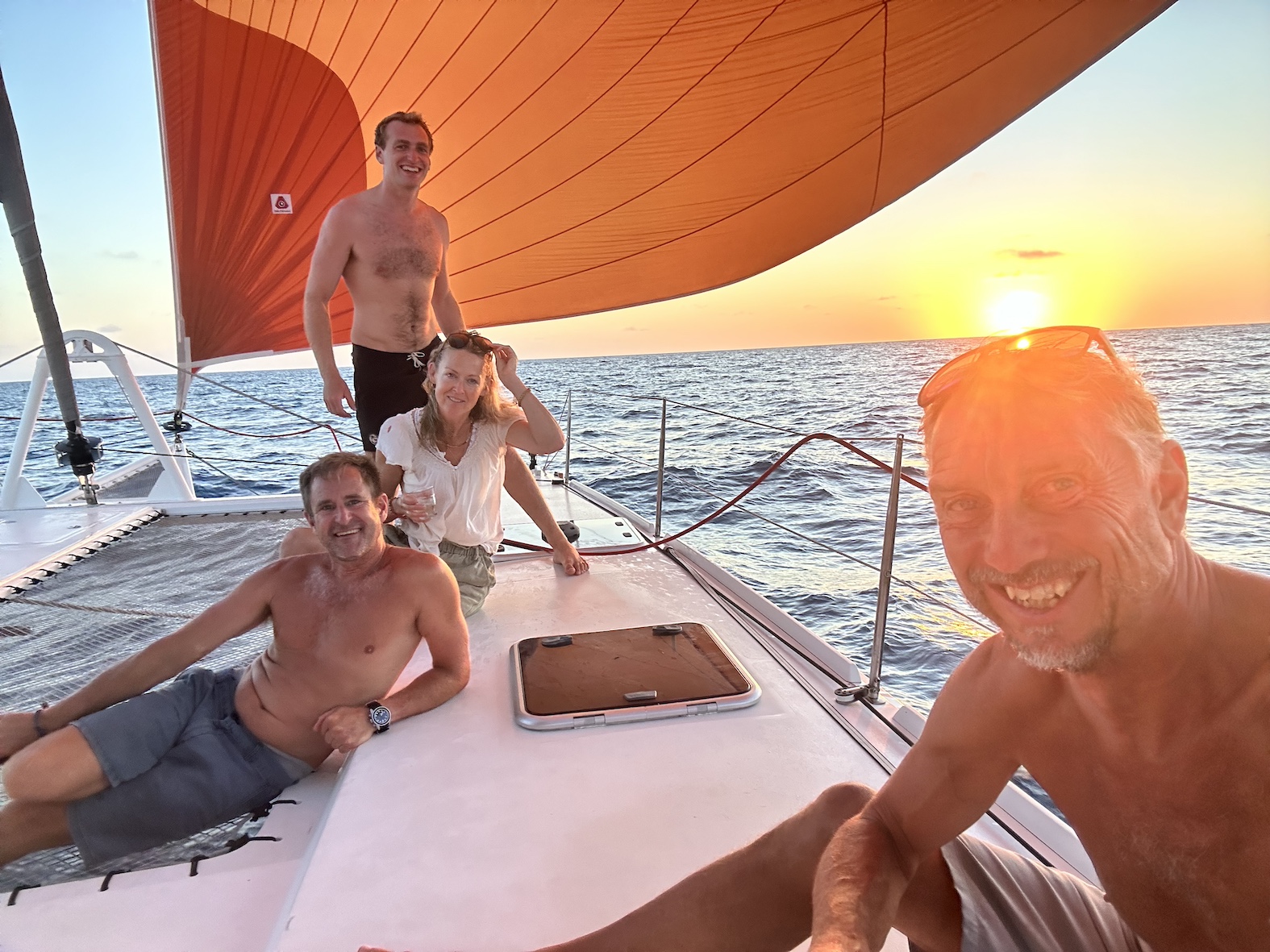
Then sundowners on deck for the perennial Green Flash debate.

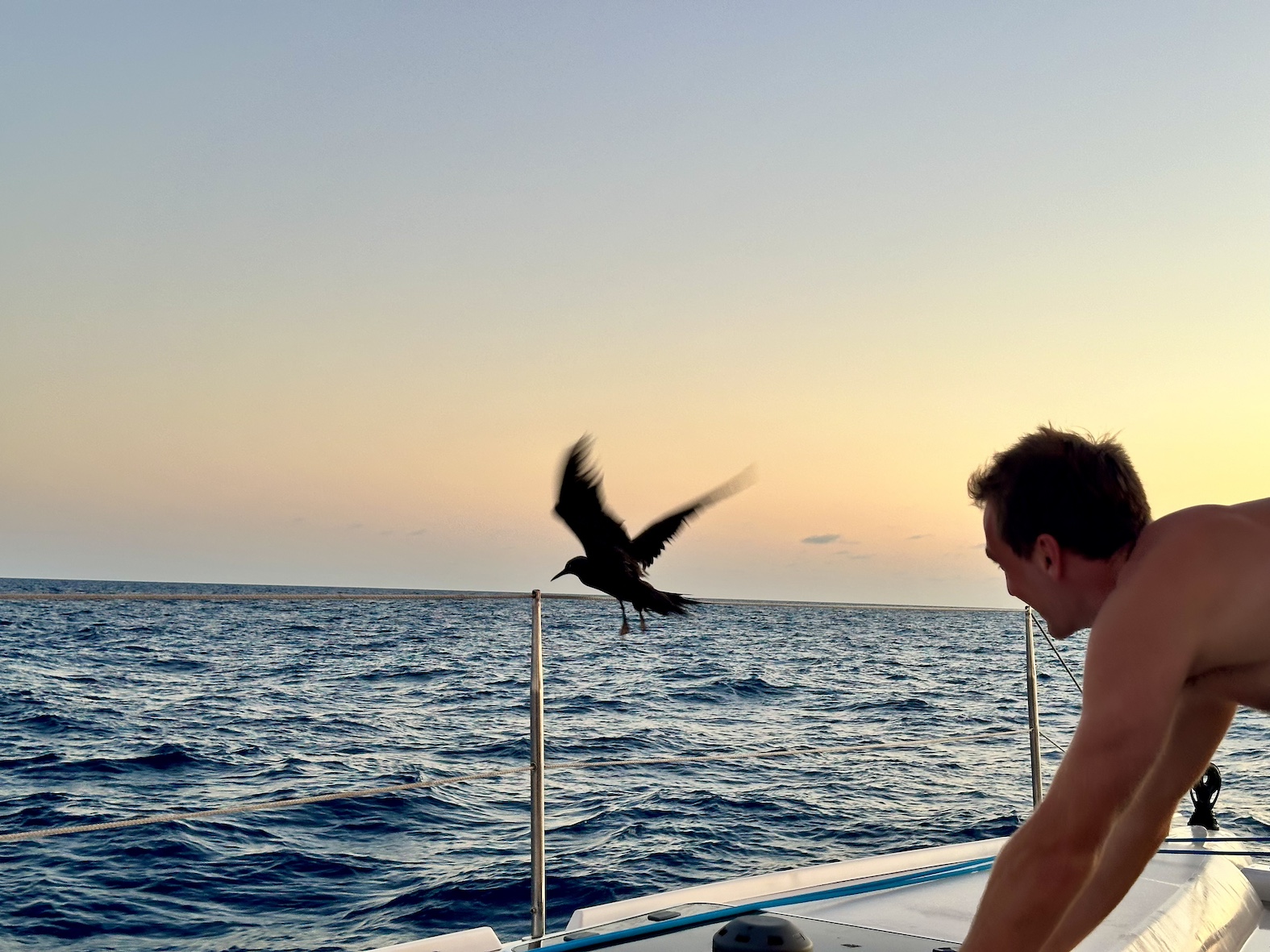
We were joined by a stowaway noddy who happily roosted on a daggerboard for 24 hours.
We discovered our oldest eggs had gone mouldy and need to be disposed of.

That got very messy.
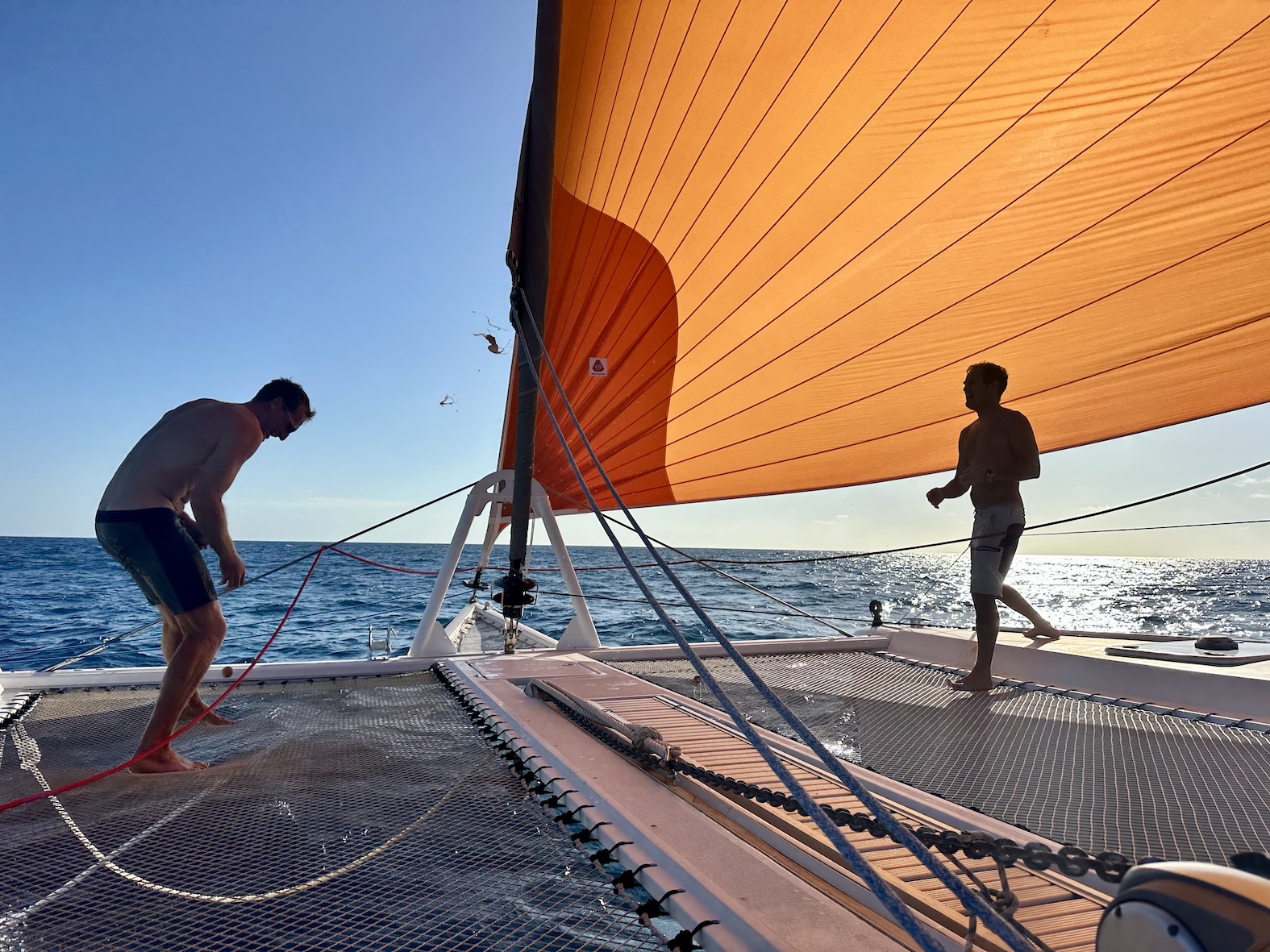
Occasionally we had to stop and jump in the sea, it’s getting hot up here, only a few degrees from the equator now.

We had some lovely night watches under a waning moon. Dawn and I have lived for many years by our own golden rule: no big sails at night. The new Code D Gennaker is 165 square metres of sail, and we find it can get much bigger in the dark.
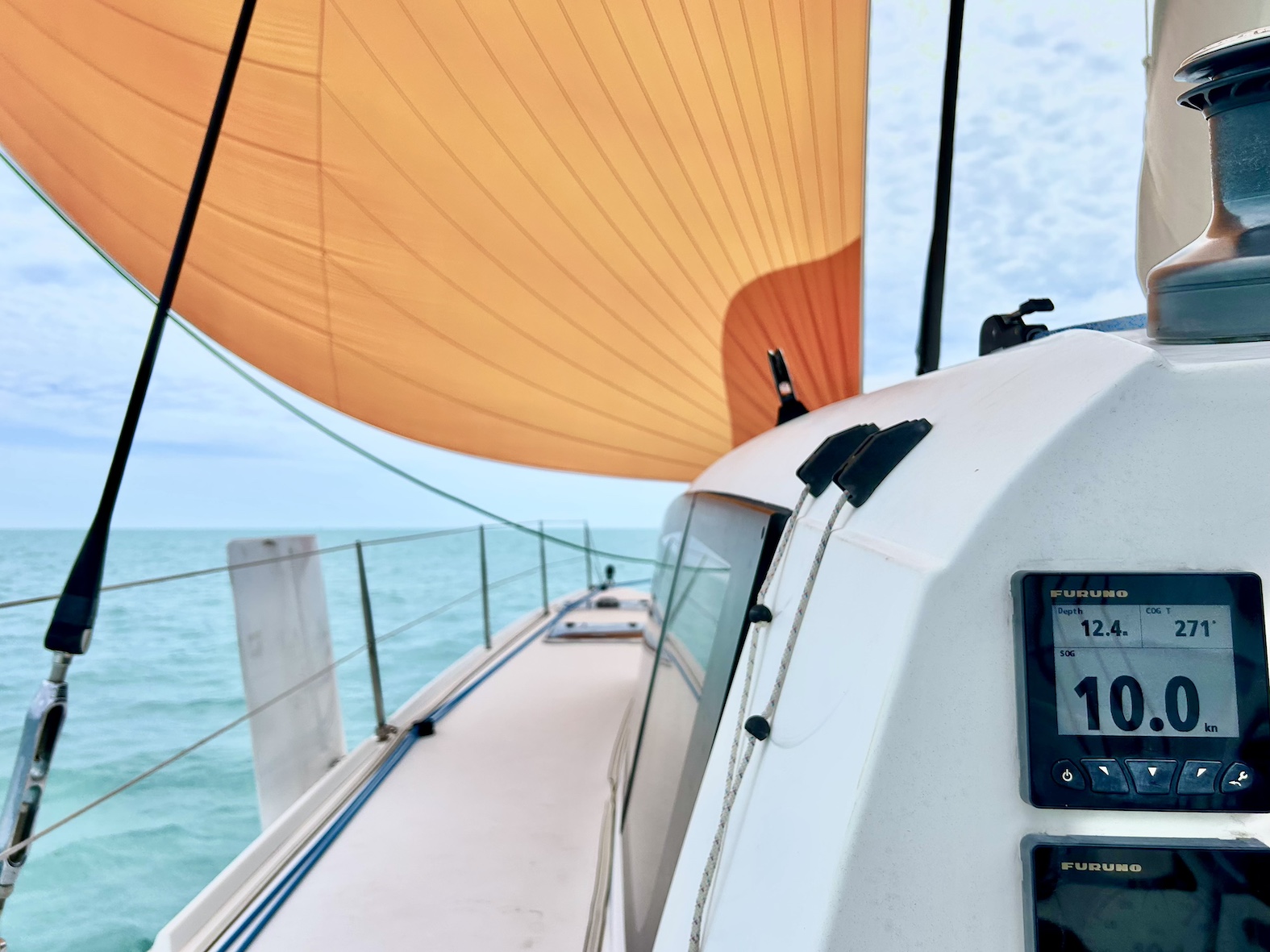
But the breeze out here seems so stable, the sky so benign, the boat is sailing at 10 knots with apparent wind of about 12kts, it seems such a shame to furl the sail when we’re going so well.
And Dawn’s not here.. So the Big Red stayed up most of the way.

We were briefly becalmed a couple of times, on the last night I made my bed on the trampoline to get away from engine noise but the wind came back at daybreak.
On that last night we were south of the island of Trangan. We had been specifically warned about a prodigious fleet of fishing craft there, but I was slightly cutting a corner to keep boat speed up. As the darkness fell, the loom of a substantial city appeared on the horizon. Bright electric lights in the distant haze. But there is no city there, we’re 60 miles off Trangan. As we sailed closer that loom became a giant fleet of boats hunting squid with powerful lights. We dodged them all of that night, the fleet was about 50 miles long! Can there be any squid left in these waters?
25th September
After 4 days at sea our first glimpse of Indonesia emerged from the horizon, the green hills of the Kei Islands.

As the sun set we sailed between strange new craft, moored rafts for fishing, each with a tiny shack for the fishermen. Our first encounter with the ‘Bagan’ which are common throughout Indonesia.
We had hoped to avoid arriving at night (actually that’s another of our Golden Rules but, well you know, Dawn’s not here).
These waters are poorly charted and general advice is not to trust the chart on your plotter, as reefs and islands can be in the wrong place. So Dawn spent half of August preparing satellite images for me to use on Open CPN instead of charts.
Our final approach to the port of Tual was very dark, long before the neapy moon would rise. We found our way down the channel with all crew on lookout using a searchlight, radar showing us the local fishing boats and bagans to avoid as we sailed a course between reefs using Dawn’s satellite images. Busy couple of hours! Huge fishing structures appearing out of the blackness, moored in the middle of the shipping channel. Voices calling out to us as we passed. We were very happy to swing to our anchor off the lights of Tual at 21.30. The evening call to prayer reached across the dark water from the minarets in town. The boat is completely still. We’re in Asia.

 escapade sailing