Volcanoes
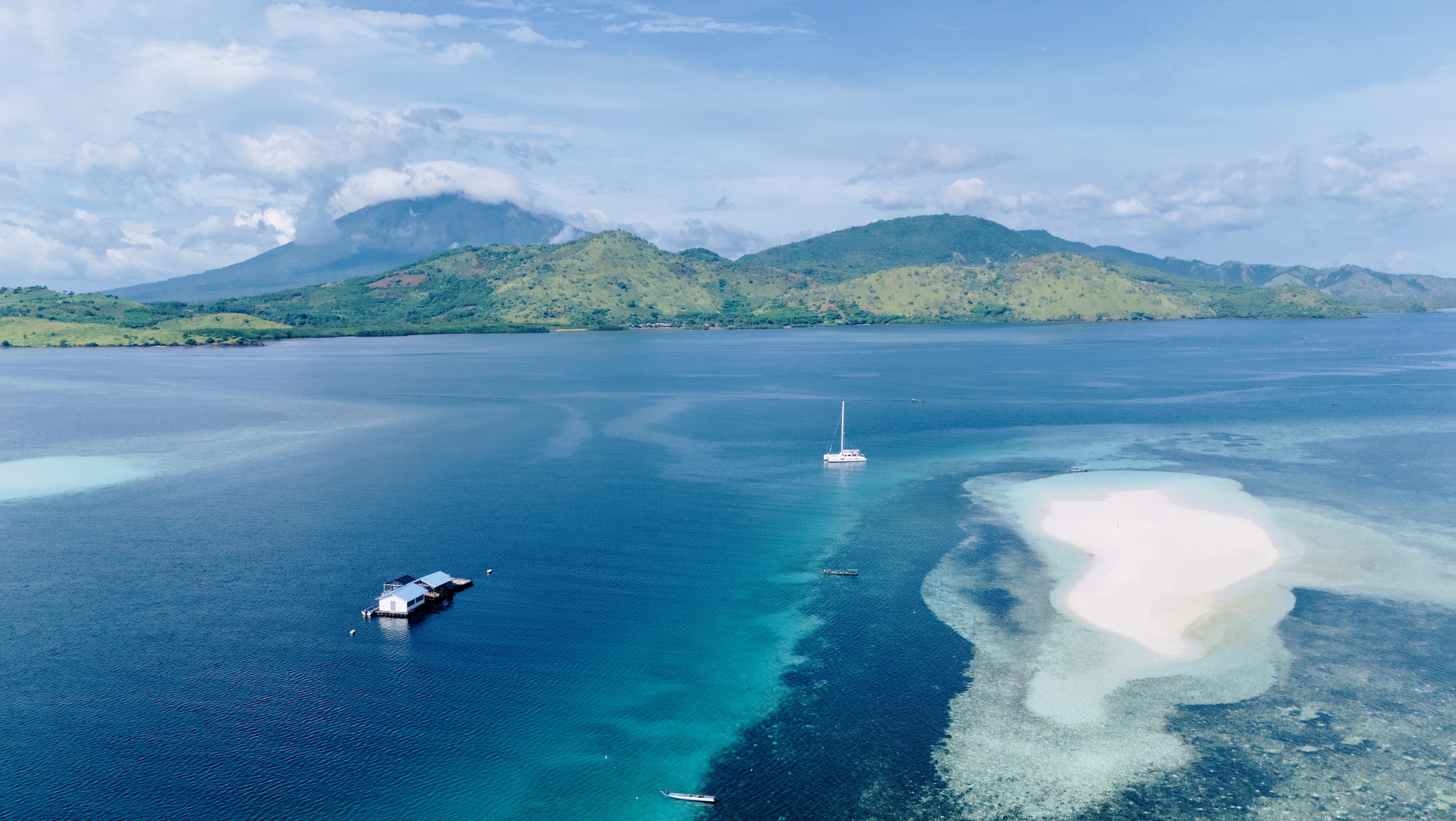
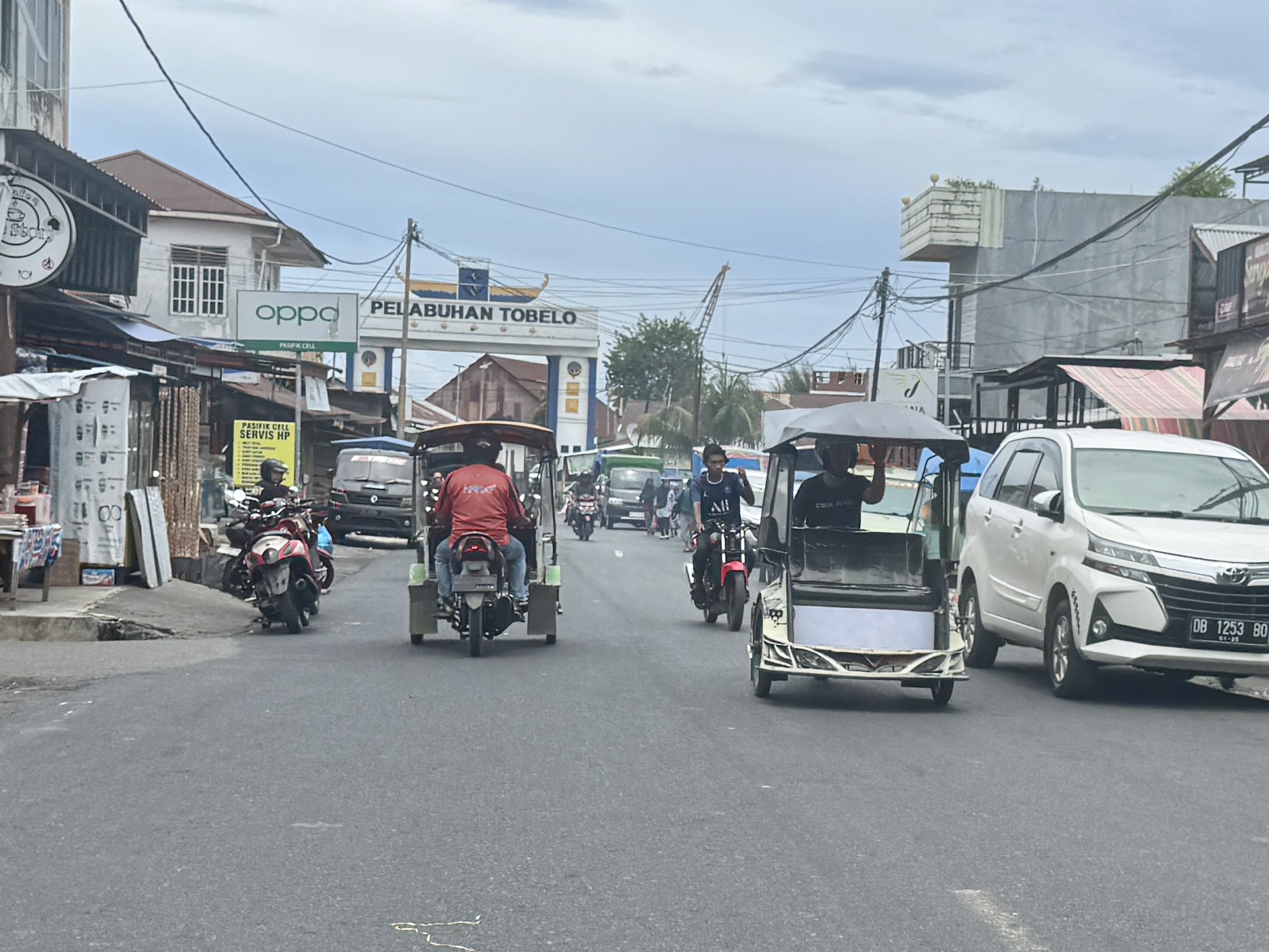
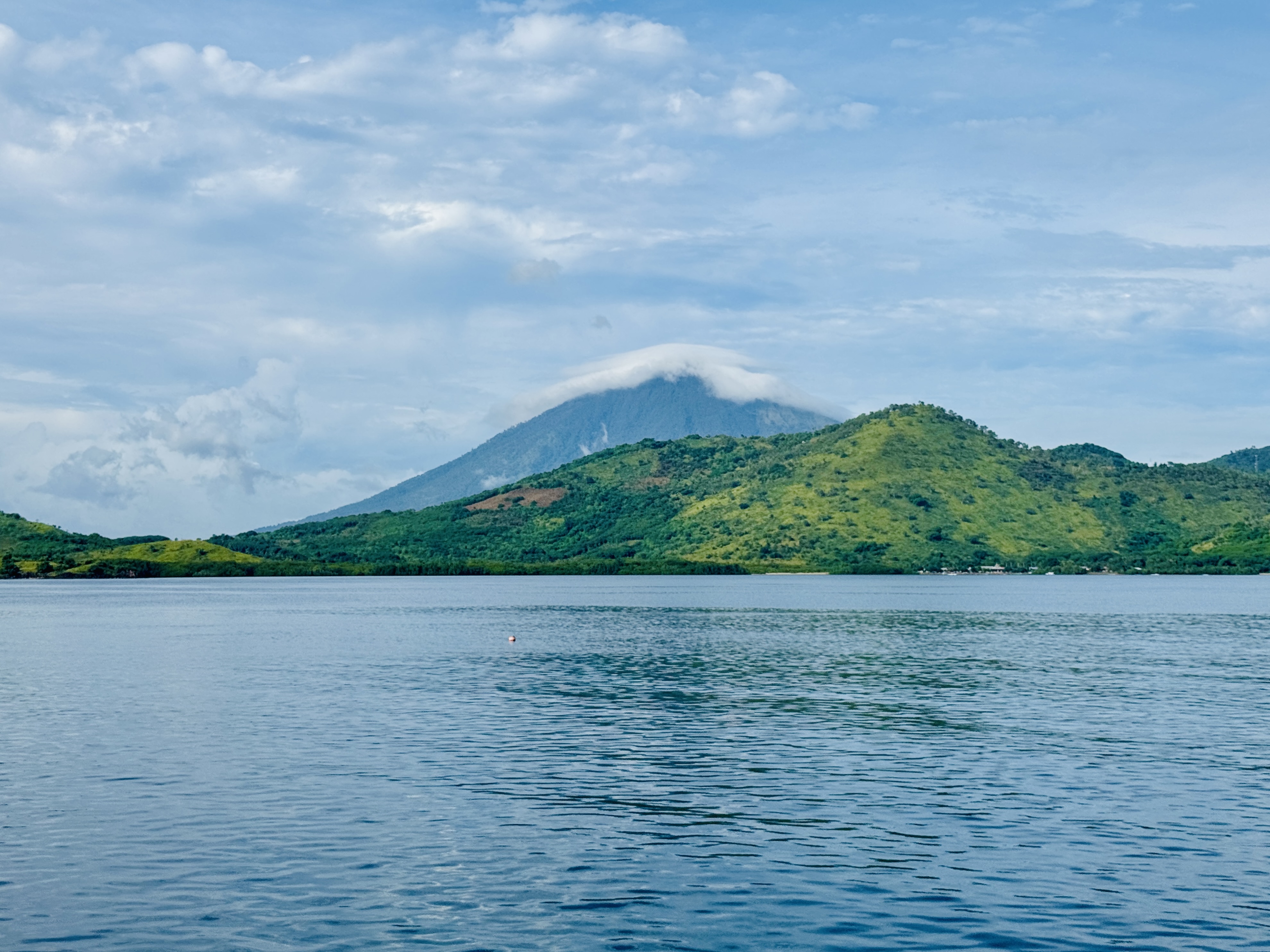
Mount Ducono is an active volcano reaching high above the town of Tobelo, belching an impressive plume of smoke and ash which blows downwind, away from our chosen anchorage. Until the wind changes in the night. On the first morning we woke in Tobelo, the boat was covered in a hefty layer of grey ash, like a dusting of powdery snow, only much more dirty. It’s everywhere, everything is covered. My deck looks like ancient Pompeii.
Matt had slept under his open hatch as the ash gently fell.

Well there’s no point trying to clean up all that until we leave, there could be another eruption. So I endure the dirt, comforted by the knowledge that we have had long, drenching rain showers every day, for weeks, so that will soon wash it all off. But after the ash storm, there was not a drop of rain.
Matt had left for the US, Bryan and I had re-provisioned. We were hoping to sail south, but struggling to find some usable wind in the forecast.
We had a plan. We would motor all night, hoping to intercept a band of wind in the morning and ride it south. If we missed it, there was no more wind for days. I screwed earplugs in and tried to sleep through the engine noise in the small hours.
Well that all worked out and I woke up to silent engines. Bryan had set the main and jib perfectly, we were sailing at 8 knots, sun shining and fishing lines out. We hoisted the big red gennaker to make the most of the light reaching breeze.

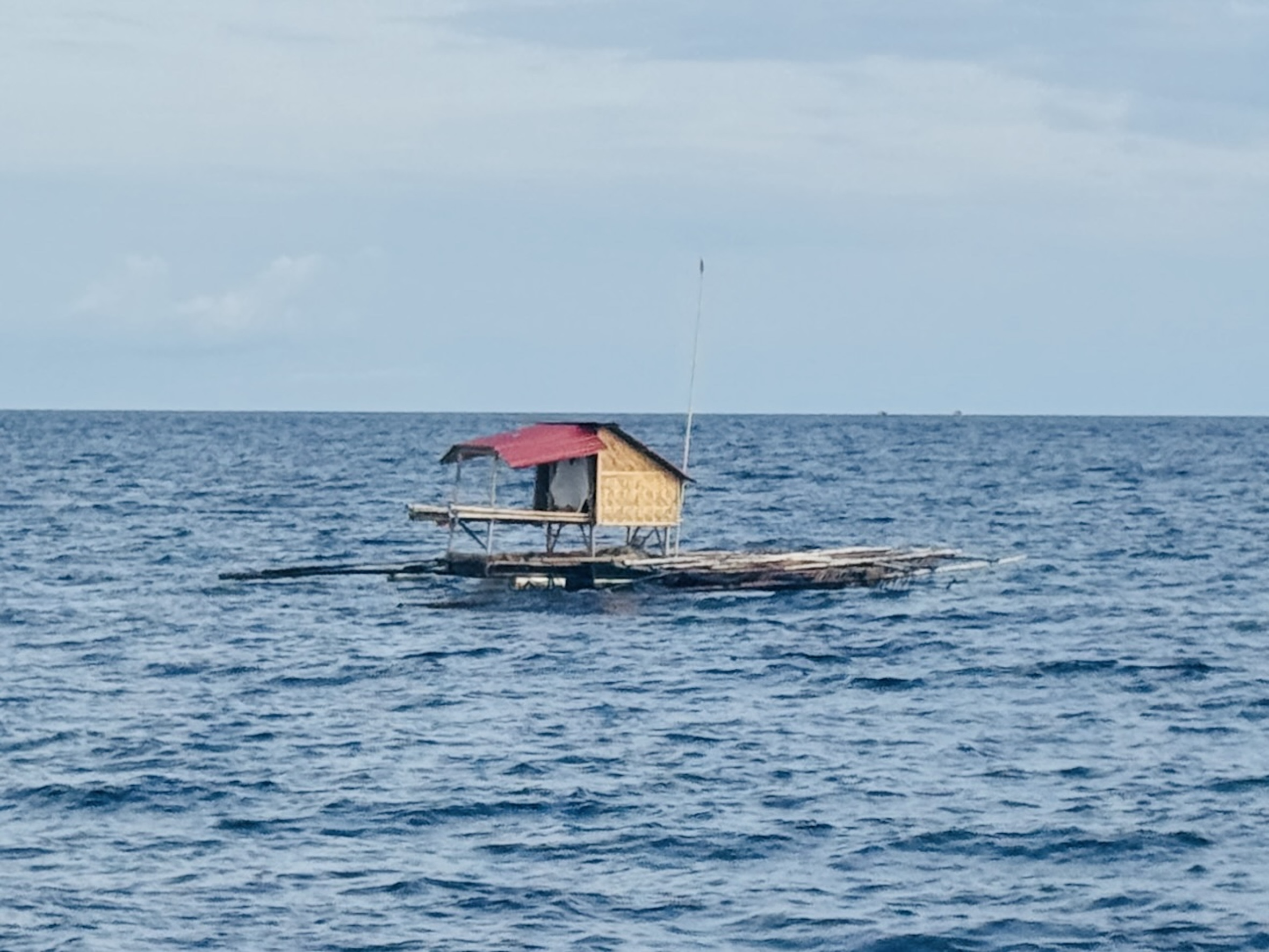
These things are everywhere, fishing platforms moored in deep water, way offshore and unlit at night.
10 knots
Something changes for me when Escapade reaches 10 knots. All the subtle sounds and sensations of the boat sailing through the water come together in a new pitch as the speed hits double figures. It seems to smooth out the ride, everything hums in unison. The gurgle of passing water sounds more purposeful and it still gets my attention every time. I look up from whatever I’m doing and glance at the nearest instrument. Ah, 10 knots!
It still feels great, the gentle push in the back from the padded helm seat as a gust hits the rig and the boat accelerates smoothly into a higher gear. I still love it. After 11 years and 40,000 miles riding this boat through all weathers, the simple pleasure of sailing efficiency.
A light boat, a powerful rig and a smooth sea. What a way to travel.
15 Knots
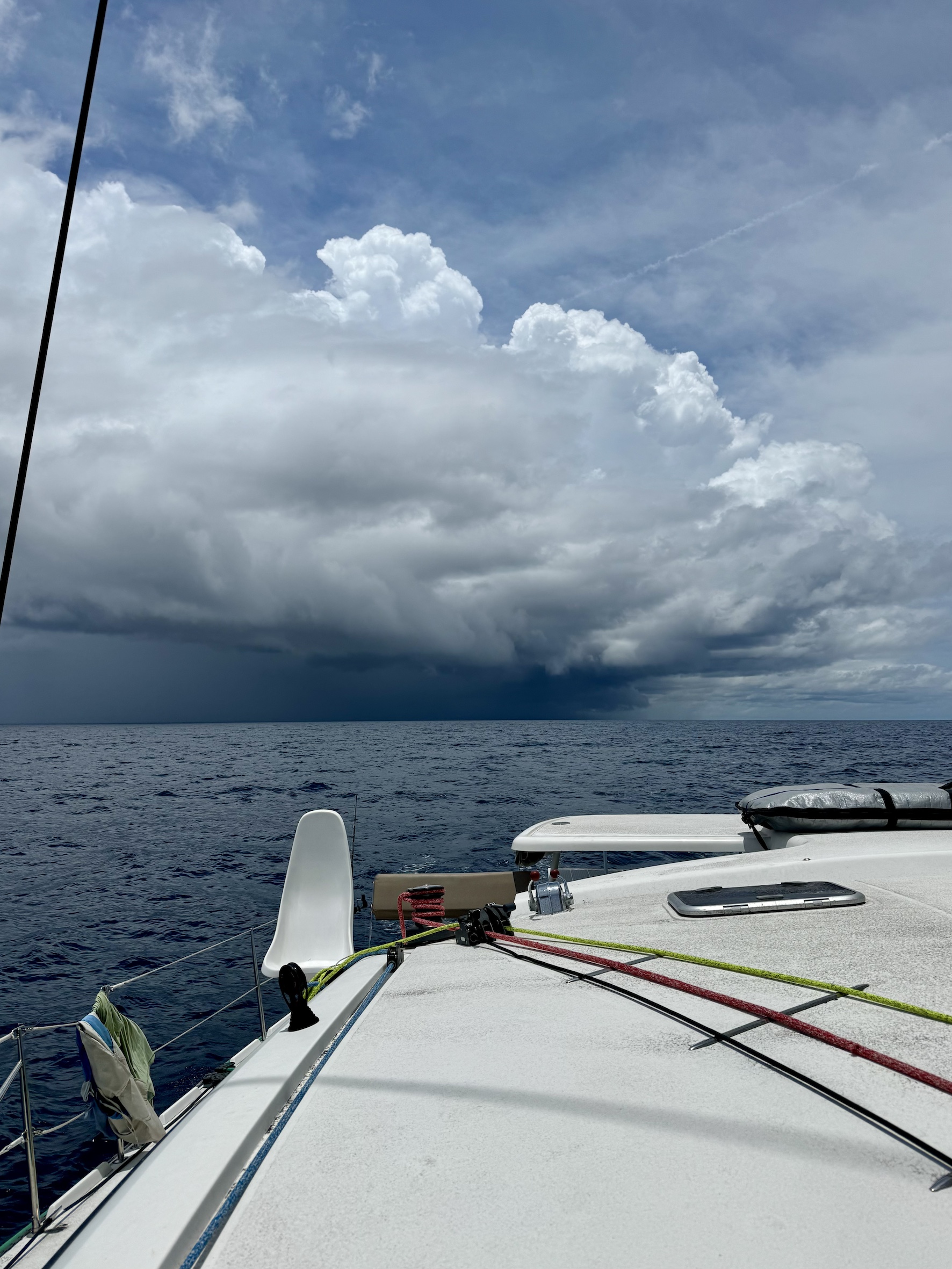
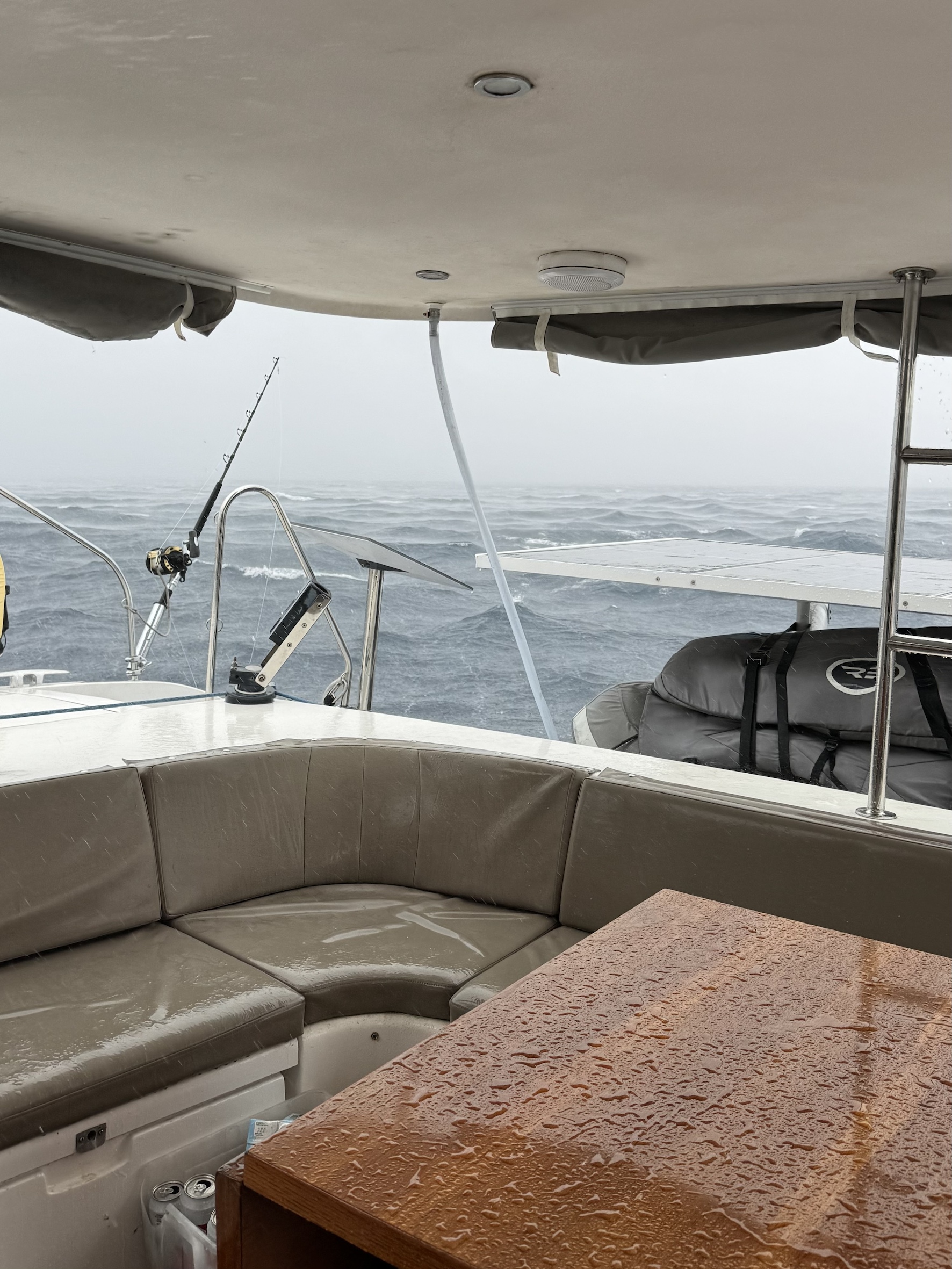
I had been enjoying those 10 knot surges all morning. Escapade stretching her legs on a 500 mile romp south. We were just finishing lunch when the line of black squalls started to threaten. The gennaker was furled, dropped and stowed, then we pulled down the first reef in the main and waited for the rainstorm. I had been hoping for this, a torrential downpour to power-wash all that volcanic ash away. Well I certainly got my rain. The first front arrived with a chilly breeze followed by 40 knots, we turned downwind and ran before it, as we have done many times. The boat surging downhill at 15 knots doing a great job of reducing the apparent wind and the load on the rig. Normally the excitement is all over in a few minutes, the rain passes, wind dies away and we get back on course. But this afternoon was different, the wind and rain sent us scudding downwind at full power for a full hour or more.
I was hand steering, wet and very cold while the un-forecasted equatorial storm lashed us with outrageous amounts of wind and rain. We actually crossed the line back to the Southern Hemisphere in the thick of the chaos.
At times sailing can be a bit uncomfortable, or stressful, but wow, it’s so elemental. It’s us, Escapade, and a massive Indonesian storm system. That’s it. And I still love that too. Sure, ten knots over the smooth Molucca Sea is dreamy, but a stormy afternoon like that adds the spice of adrenaline and some satisfaction having dealt with all the challenges. Boat and crew are safe. Bryan and I quickly remembered our reefing routines after those windless weeks up north. We have all the skills and experience to deal with this, and sometimes it’s good to get tested. A bit of hardship, keeps us on our toes. Anyway all that ash got rinsed away at last.
Azan
We had a couple of pit-stops to catch up on sleep, but the forecast kept sending us back to sea, to get south before this weather window closes.
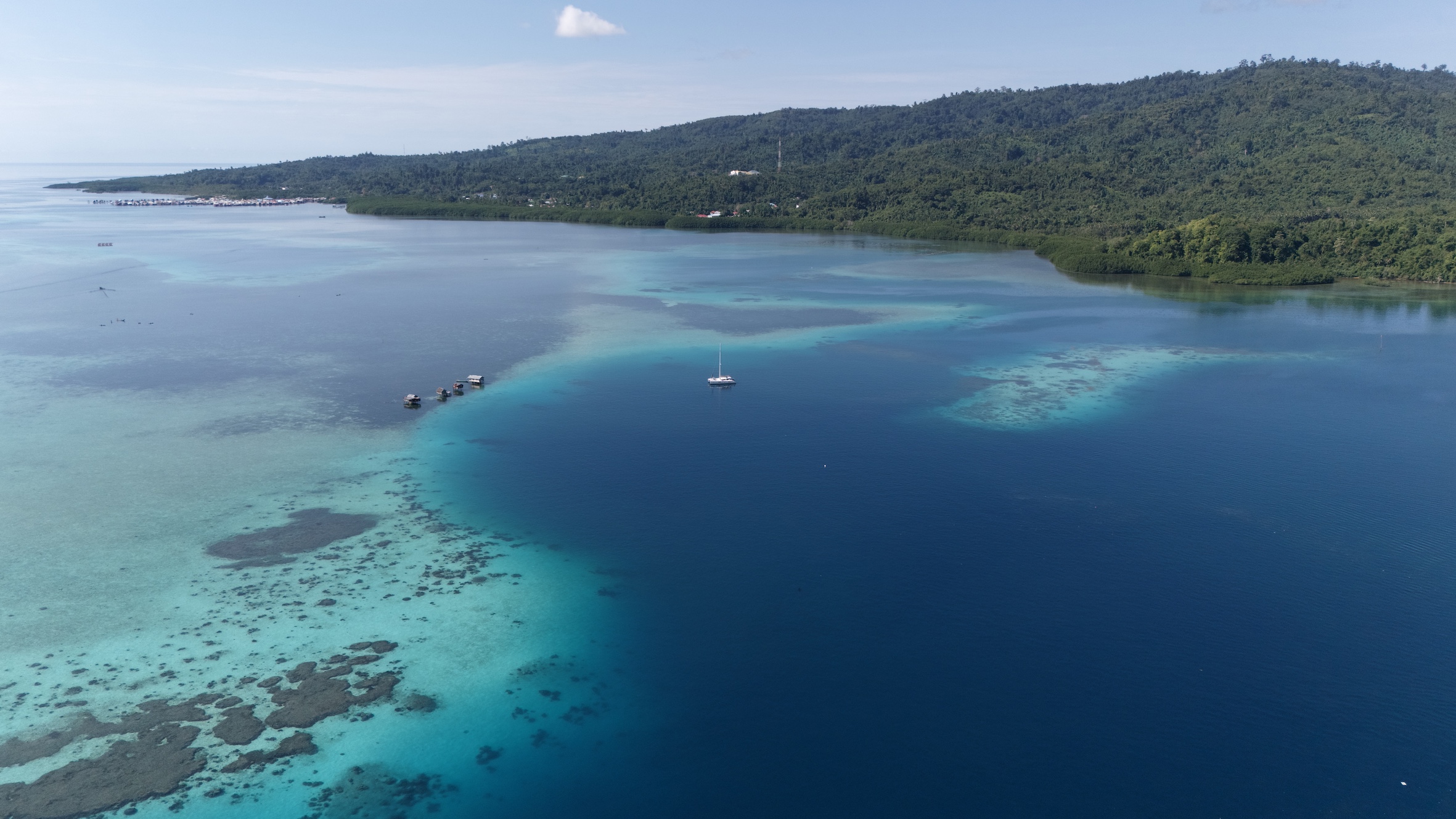
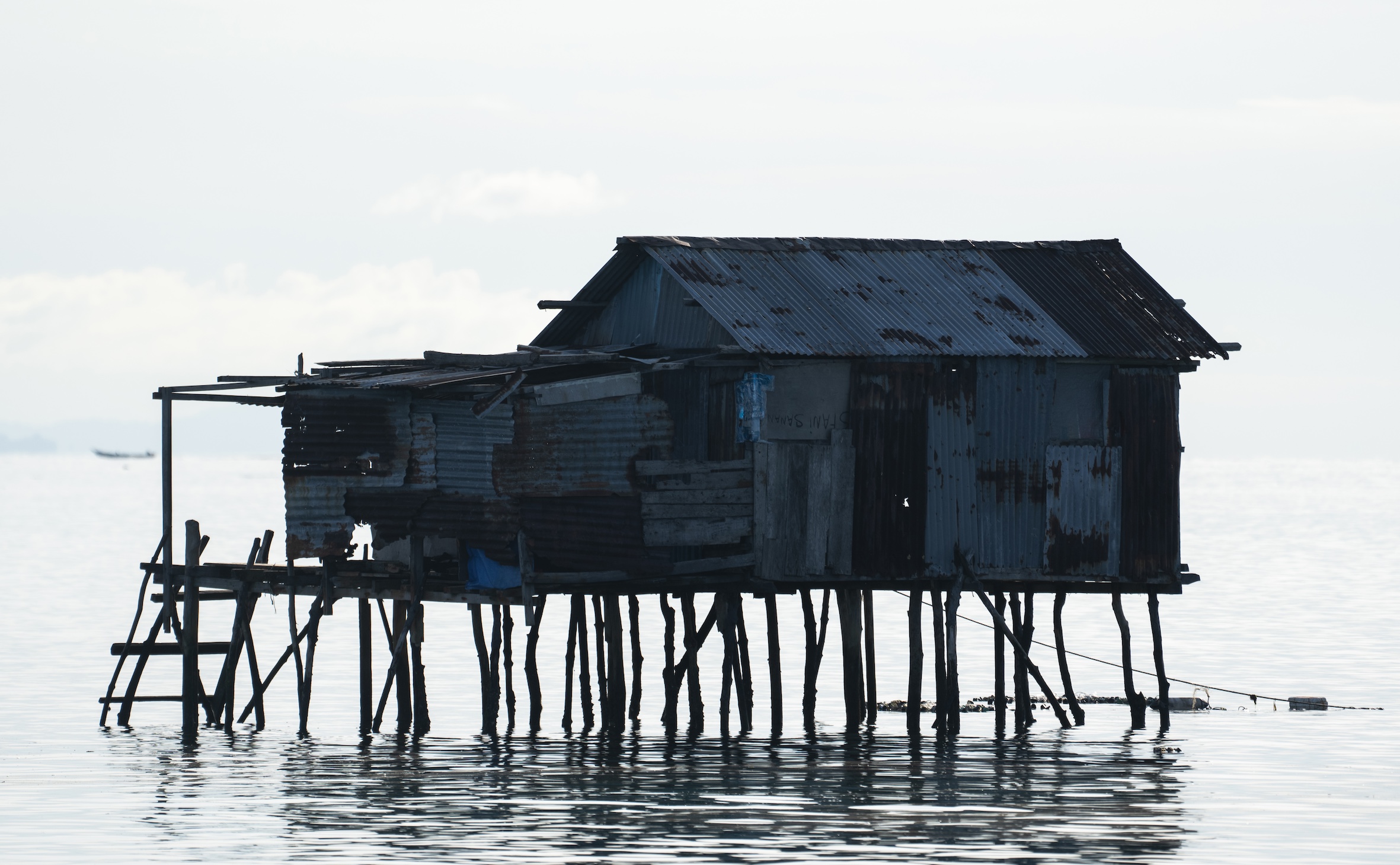

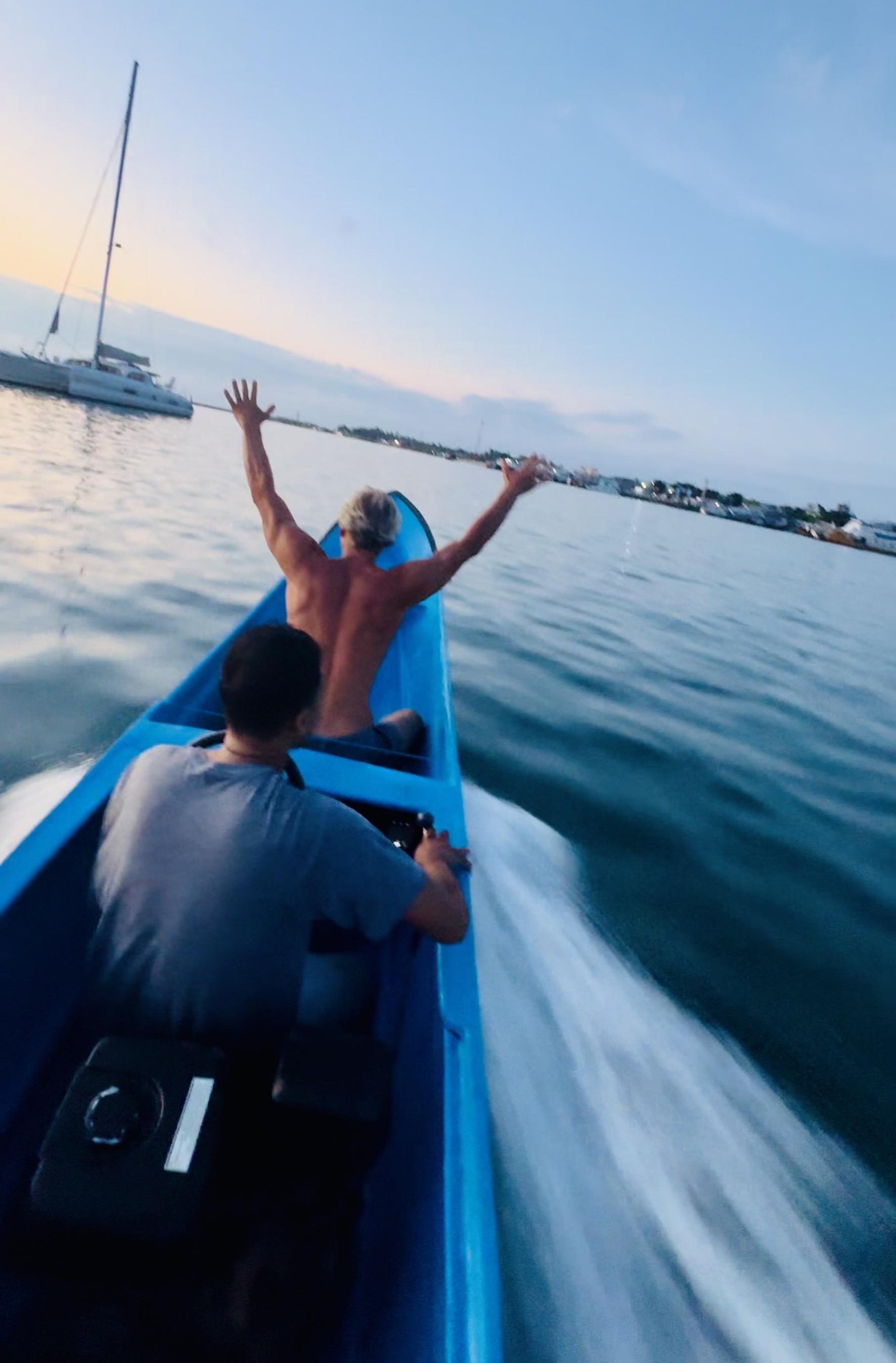
One stop-over was in Wangi Wangi, capital of the Wakatobi archipelago. We arrived in the last days of Ramadan, after two nights at sea. We are getting used to the Azan, the call to prayer which is broadcast five times a day from each mosque, via loudspeaker systems which will not be ignored. The calls are part of the rhythm of daily life here, like the rising and setting of the sun. In some harbours we have found the Azan is not the best soundtrack for short-handed sailors needing to pay off their sleep debt. As we entered the port of Wangi Wangi, we sighted the two shining domes at either end of town and strategically dropped anchor between them, to minimise the volume at 5am. We swung to our chain and looked across at the bustling town. Then the extraordinarily loud afternoon call began. We hadn’t noticed the third mosque with it’s tower of powerful speakers, right in front of the boat. To add to the din, this speed-crazed petrol-head was roaring around the harbour in his very loud, souped up pirogue.
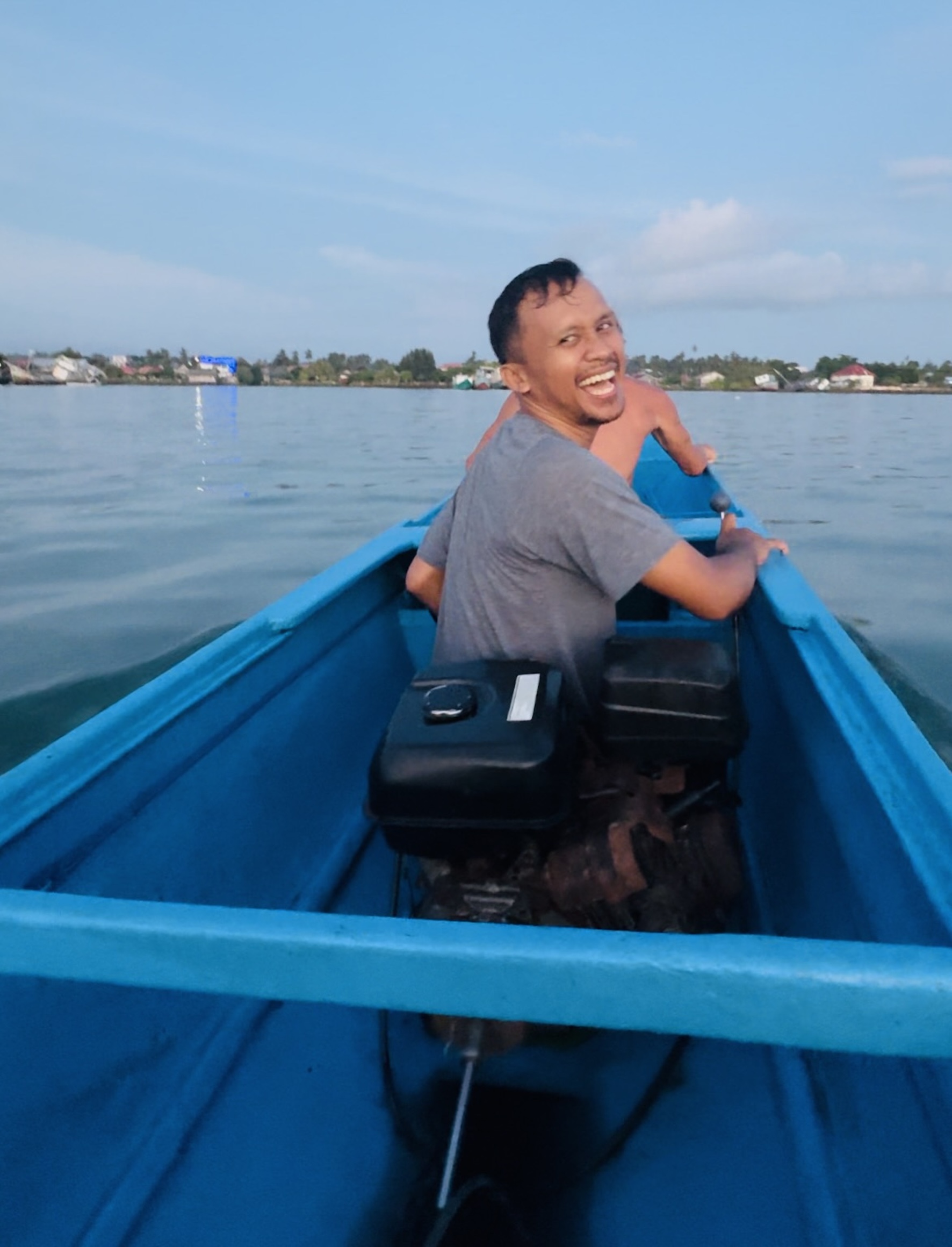
Bryan flagged him down and we hitched a ride. He moved a couple of fresh squid to make room for us and off we all went at 40 knots with no exhaust. Deafening.
Bakso
It was a fun time in Wangi Wangi, the end of Ramadan, a sighting of the new moon, and the fireworks and music to celebrate the start of Eid. We enjoyed the local street food and topped up our fresh fruit supplies.

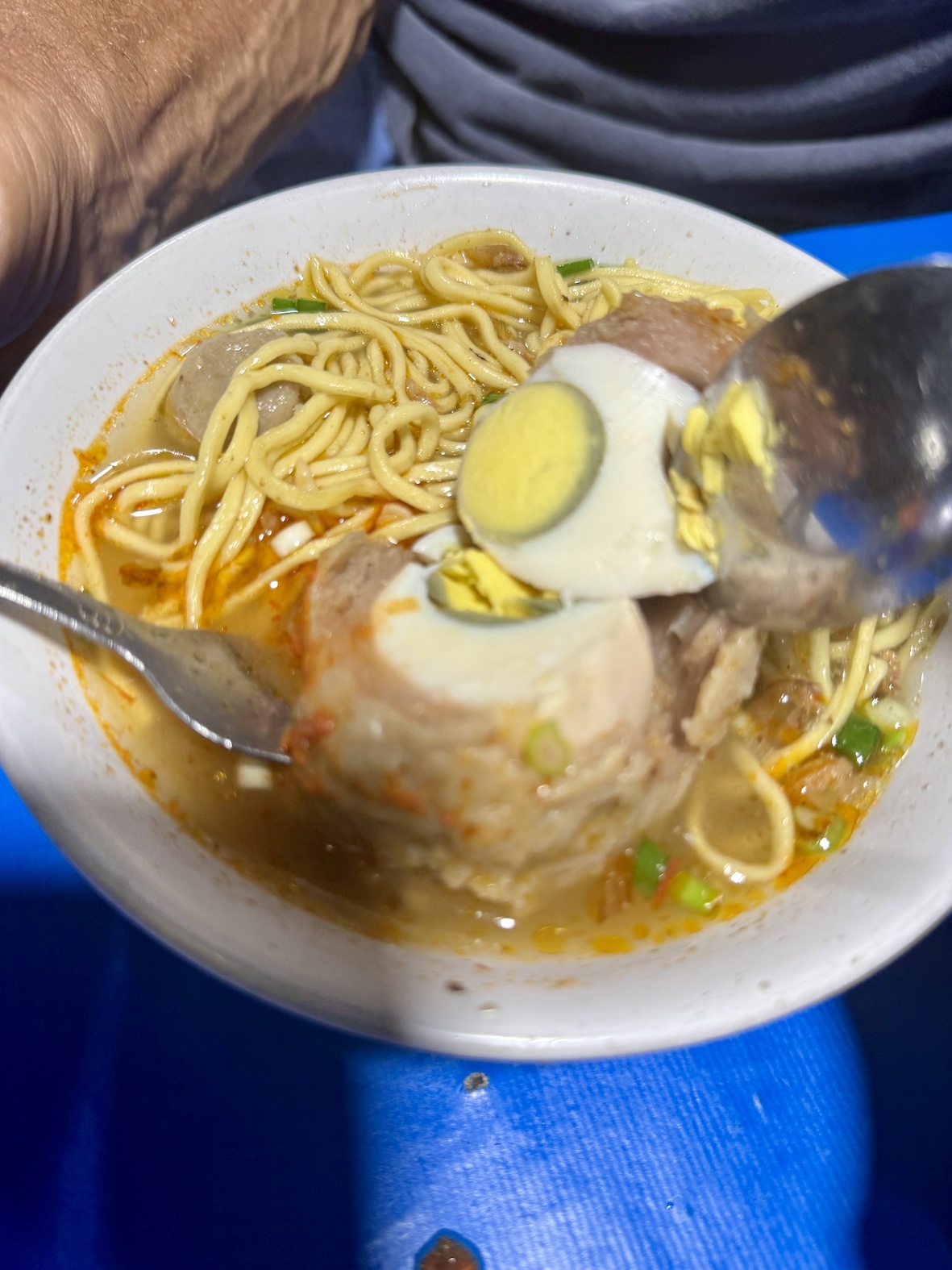
Bryan’s favourite new discovery was ‘Bakso Tenis’. A bowl of noodles in hearty broth, topped with two small grey meatballs and one enormous one, actually the size of a tennis ball, which this dish is named for. A daunting sight, that massive, grey, slimy meatball. Bryan added plenty of sambal and was even happier when he discovered the meatball’s hidden core was a boiled egg.
We actually took take-away street food with us on the next overnight passage. Southbound again over the Banda sea. The next stop was a pretty sandbar with reefs for snorkelling.


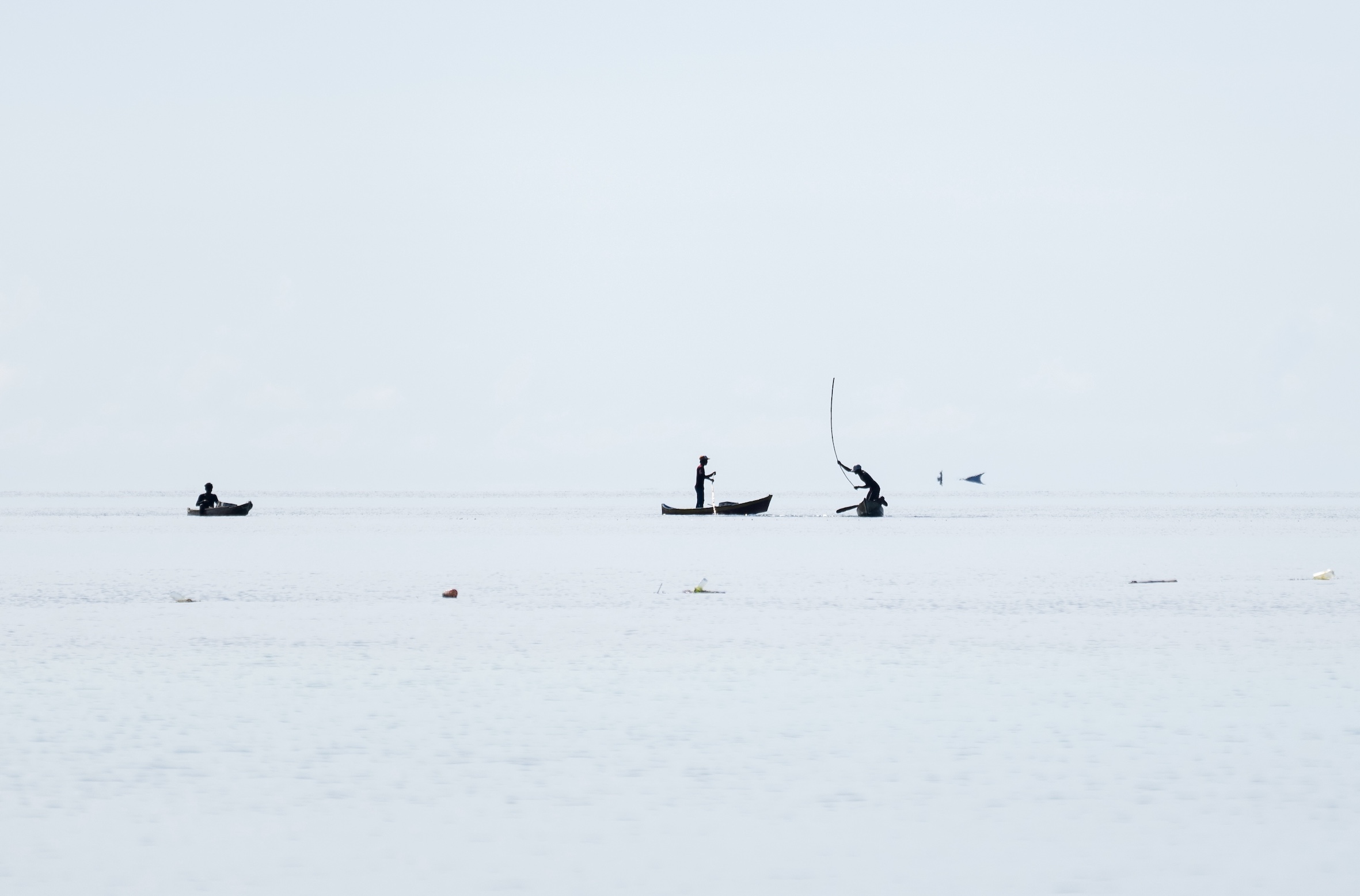
The locals seemed to be attracting fish by whacking the surface.
Bryan’s promising bite turned out to be a giant stingray, carefully released.

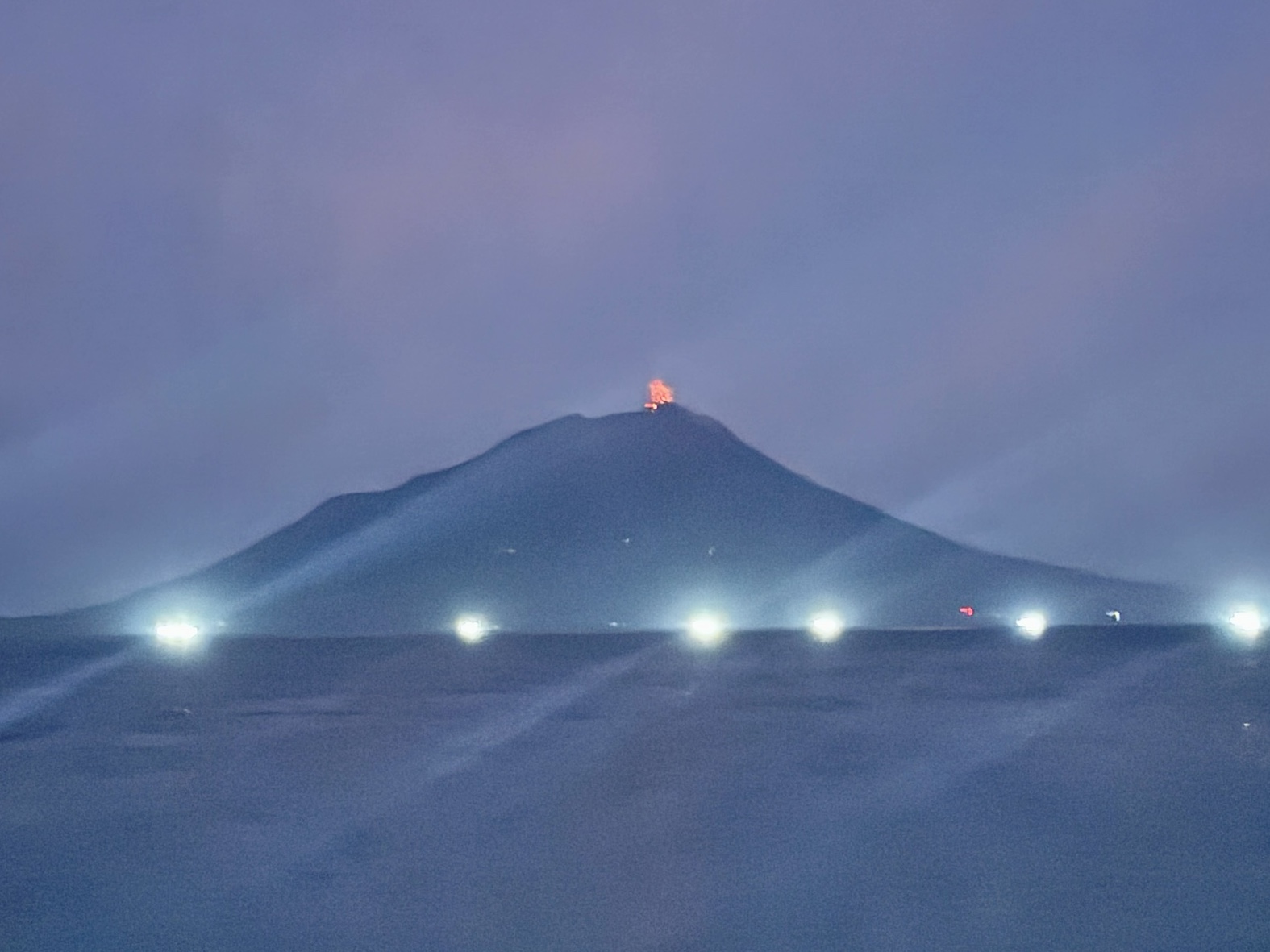
There were friendly locals trading for coconuts, and two more enormous volcanoes, one erupting every few minutes.
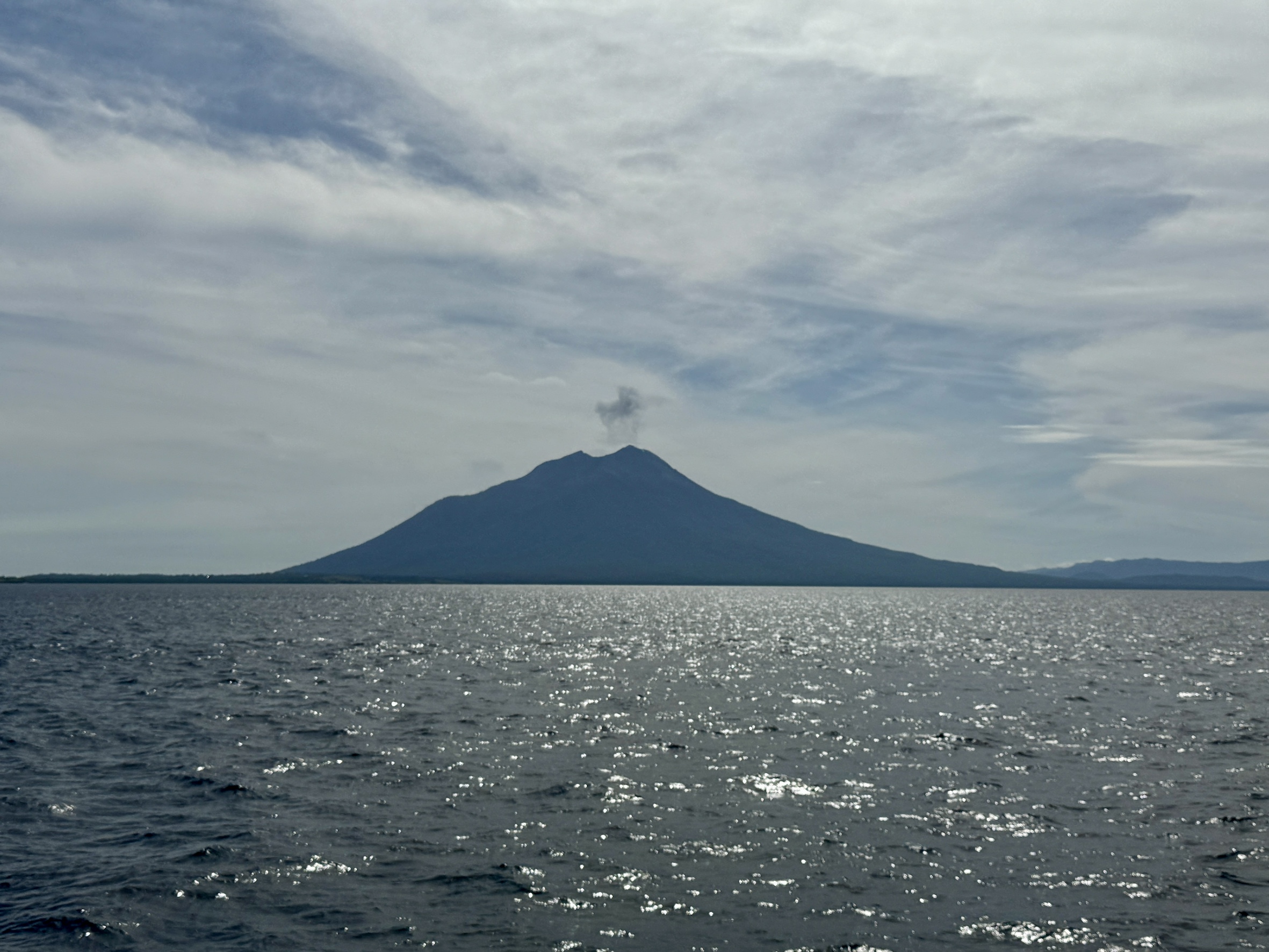
Here’s a phone pic of it at night, above a fleet of well-lit squid boats.
Kelapas
We are trying to keep supplies to trade with our visitors. Mainly we are given young green coconuts, ‘kelapas’. In return, I have been asked for all kinds of things. So far I have parted with my reading glasses, swimming goggles, hats, chocolate bars for the children, pens and paper, t-shirts, fishing hooks and line, cold beers, dried noodles, and cash. But the most common request is for “Coca Cola!” We’ll stock up at the next town.
Actually the fisherman who wanted my goggles didn’t even have coconuts. He just saw my goggles and clearly needed them more than I did. He was so happy and I’m sure those goggles will be put to good use every day.


Diesel.
Everywhere else in the world I have sailed, filling up with diesel is an occasional hassle. You get the lines and fenders out, tie up to a fuel dock, pump several hundred litres in to the tanks and forget about it for a few months. Well not in Indonesia. Not only is there no wind most of the time, but there are no fuel docks anywhere. So we need more diesel than ever before and it’s never been harder to get.

I have already described the whole sweaty process of getting our 5 x 20 litre jerrycans from boat to dinghy to dock to taxi to gas station and all the way back to siphon our 100 hard-won litres into our fuel tanks. That buys us about 120 miles of motoring. Then we decide whether we have the energy to go back to town for another 100 litres. It’s so lovely when we get a sailing breeze.

Hello Mister!
In all the towns and villages we have called at, from Morotai down to Timor, each trip ashore has been a real cultural adventure. We are ‘Bules’, foreigners, white men. A real novelty here. These islands are off the western tourist trail and rarely visited. We are greeted everywhere with smiles, waves, and what seems to be the standard salutation whenever a Bule is sighted: “HALLO MEESTAH!” This is shouted at us by children in canoes, passing adult fishermen, and when ashore, almost everybody. Old ladies selling vegetables, policemen, shopkeepers, whole families passing on scooters, people leaning out of speeding trucks to shriek at us. “HALLO MISTAHH!”
The language barrier is a big one. Apart from those two words, almost no English is spoken, and despite my months of daily study on Duolingo, we are still dependant on Google Translate for any detailed conversation in Basaha Indonesian. The people are charming and friendly and always trying to help. We feel welcomed almost everywhere, but we are also an unusual sight. Children point at me and giggle. One very small, naked child just stopped and stared at me, open mouthed, like he had just seen an alien appear outside his house. I suppose he had. I’m pretty sure I was the first Bule he’d ever seen.

Ikan Lemadang
Since that monster sailfish we have trolled lures for hundreds of miles without success.
Until sunset the other evening when we finally filled the fridge with protein again.
One of our favourite fish to eat, called Dorado in the Atlantic, Mahi Mahi in the Pacific, and Ikan Lemadang in Indonesia.
My daughter Jemima told me that Mahi Mahi mate for life. They stay close, swimming across whole oceans, chasing flying fish and squid and growing old together.
So if you catch one, it’s a tragedy for its mate, who will be left alone and heartbroken. It’s so sad, almost makes me want to stop fishing.
So to counteract this problem, we troll two lures. On our last night at sea, at sunset, both reels screeched a few seconds apart. Bryan and I brought in a fine matched pair and no lonesome Mahi Mahi was left behind.

Due South
We were steering 180, back under the southern skies. The Southern Cross rises on our left, soon after dark, by midnight it hangs straight above our bows, and in the morning rolls over to fade in the west as Venus rises before dawn.
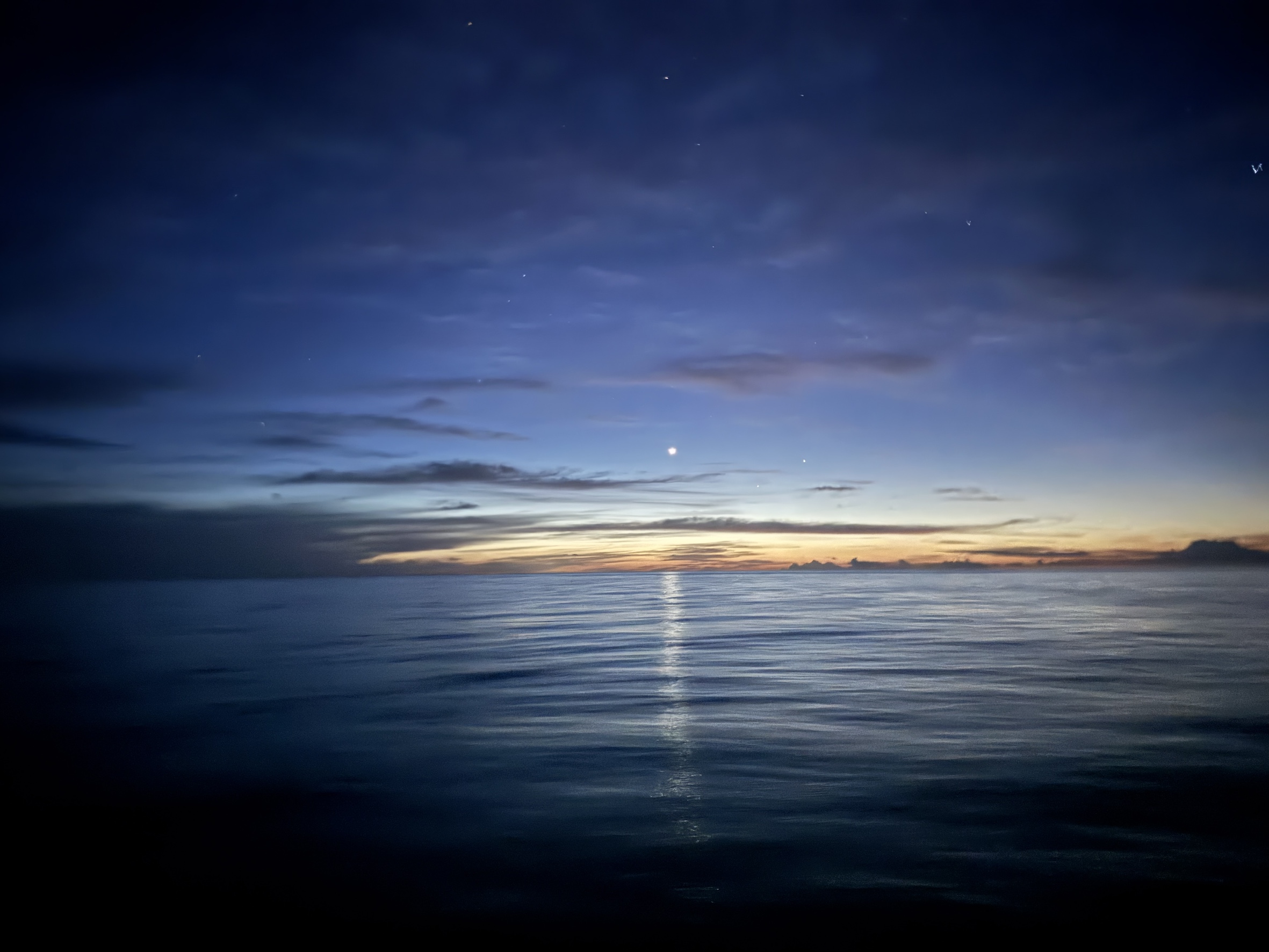
Our destination is the island of Rote, off the southern tip of Timor. As far south as you can go in Indonesia. Bryan and I have covered about a thousand miles in the last couple of weeks. Joining the dots between islands, sailing, resting up and moving on again. Last night we passed the bright loom of the city of Kupang just over the eastern horizon. This morning was our landfall, there’s Rote at daybreak.
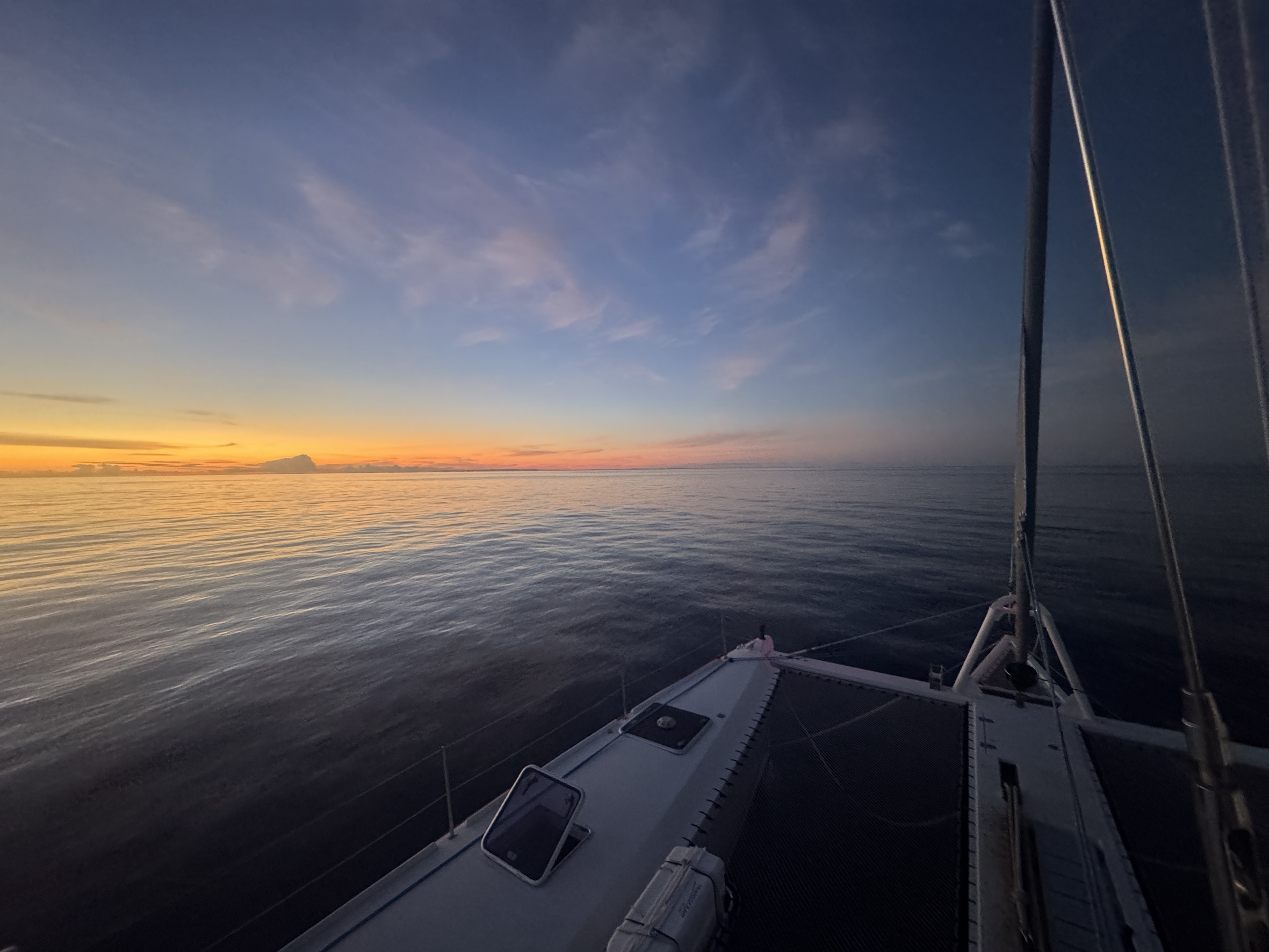
Escapade is about to push her bows into the Indian Ocean for the first time. And there’s a new, early season, long period south swell to greet her.
 escapade sailing
🤩 WOW ❣️❣️❣️ AMAZING SPECIAL BEAUTIFUL SAILING ADVENTURES Good to catch the dorado 😎👍🥰 LiliSent from my iPad
LikeLike